



Page 4
Page 4

Foreign Investor Misconduct in International Investment Law
examines the issue of foreign investor misconduct in modern international investment law, focusing on the approach that international investment law as it currently operates has developed towards foreign investor misconduct. The term ‘misconduct’ is not a legal notion, but is used to describe a certain phenomenon, namely, a group/class of actions. This term is convenient since it makes it possible to introduce and describe the phenomenon as such, without a division into concrete types of conduct, like ‘abuse of process’, ‘violation of national law’, ‘corruption’, ‘investment contrary to international norms and standards’, etc.

Food-Borne Parasitic Zoonoses : Fish and Plant-Borne Parasites
The focus of this book is on those zoonoses that are transmitted by fish, plant and invertebrate foods. While people, especially those living in developed countries, are commonly aware of meat-borne zoonoses such as trichinellosis and cysticercosis, fewer are acquainted with parasitic diseases caused by liver, lung and intestinal flukes, fish-borne tapeworms, and tissue roundworms. This book reviews not only the prevalence and distribution of these zoonoses, including available health and economic impact data, but also highlights gaps in our knowledge base that must be filled in order to gain insights on approaches to prevention. The topics on epidemiology, diagnosis, and clinical aspects emphasize knowledge gaps that limit a full understanding of these zoonoses, and target where greater research investments on these parasitic diseases should be focused.
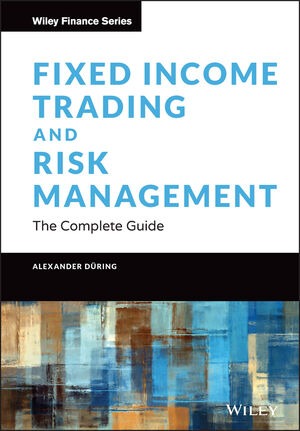
Fixed income trading and risk management : The complete guide
Fixed Income Trading and Risk Management: The Complete Guide delivers a comprehensive and innovative exposition of fixed income markets. Written by European Central Bank portfolio manager Alexander During, this book takes a practical view of how several different national fixed income markets operate in detail.
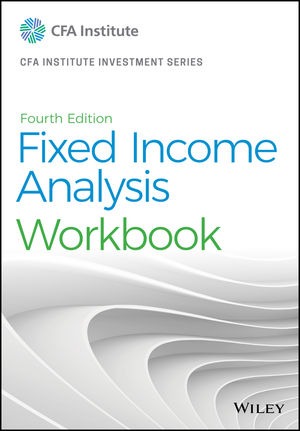
Fixed income analysis workbook
Offers a range of practical information and exercises that will enhance your understanding of the tools, strategies, and techniques associated with fixed-income portfolio management. Written by a team of knowledgeable contributors, this hands-on resource helps busy professionals and those new to the discipline apply the concepts and methodologies that are essential for mastery.

Financing clean energy access in Sub-Saharan Africa : Risk mitigation strategies and innovative financing structures
This book analyses barriers and challenges associated with the financing of clean energy access in sub-Saharan Africa. By considering various economic, financial, political, environmental and social factors, it explores the consequences of energy poverty across the region and maps the real and perceived investment risks for potential capital providers, both domestic and international. Furthermore, it analyses risk mitigation strategies and innovative financing structures available to the public and private sectors, which are aimed at leveraging capital in the clean energy sector at scale and fostering the creation of an enabling business and investment environment.
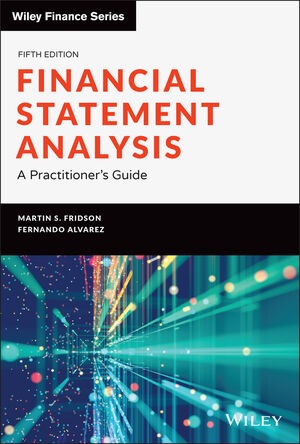
Financial statement analysis : A practitioner's guide
This fully revised and up-to-date 5th Edition offers fresh information that will help you to evaluate financial statements in today's volatile markets and uncertain economy. The declining connection between GAAP earnings and stock prices has introduced a need to discriminate between instructive and misleading non-GAAP alternatives. This book integrates the alternatives and provides guidance on understanding the extent to which non-GAAP reports, particularly from US companies, may be biased.
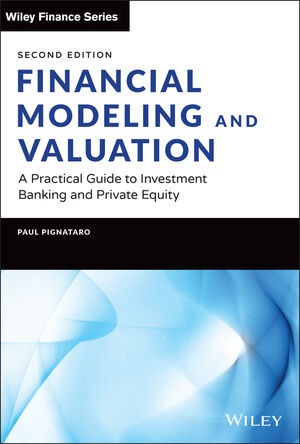
Financial modeling and valuation : A practical guide to investment banking and private equity
Built around an in-depth case study of global retail leader Amazon, this fully updated Second Edition shows you how to analyze the financial standing of a company using the methods of Wall Street professionals. Step-by-step, you will learn to build the core three statements—income statement, cash flow statement, and balance sheet—as well as the three major supporting schedules required for complete company valuation and analysis.
Financial mathematics, derivatives and structured products
Introduces readers to the financial markets, derivatives, structured products and how the products are modelled and implemented by practitioners. In addition, it equips readers with the necessary knowledge of financial markets needed in order to work as product structurers, traders, sales or risk managers. As the book seeks to unify the derivatives modelling and the financial engineering practice in the market, it will be of interest to financial practitioners and academic researchers alike. Further, it takes a different route from the existing financial mathematics books, and will appeal to students and practitioners with or without a scientific background. The book can also be used as a textbook for the following courses: Financial Mathematics (undergraduate level) Stochastic Modelling in Finance (postgraduate level) Financial Markets and Derivatives (undergraduate level) Structured Products and Solutions (undergraduate/postgraduate level)
Financial Markets in Continuous Time
In modern financial practice, asset prices are modelled by means of stochastic processes, and continuous-time stochastic calculus thus plays a central role in financial modelling. This approach has its roots in the foundational work of the Nobel laureates Black, Scholes and Merton. Asset prices are further assumed to be rationalizable, that is, determined by equality of demand and supply on some market. This approach has its roots in the foundational work on General Equilibrium of the Nobel laureates Arrow and Debreu and in the work of McKenzie. This book has four parts.
Financial market imperfections and corporate decisions : Lessons from the transition process in Hungary
The book presents the results of an empirical investigation of the behaviour of Hungarian firms during the transition process focusing in particular on the role of financial market imperfections for corporate capital structure and investment decisions. The results suggest that financial market reforms have succeeded, albeit partially, in hardening firms's budget constraints and improving the efficiency of the credit allocation process. In particular, following the introduction of the banking sector reform and of the new bankruptcy law, budget constraints became more binding for small private firms, while informational costs became less relevant for foreign-owned firms.

Financial management and corporate governance
This book provides an integrative perspective on financial management and corporate governance deployed in management decisions. It analyzes wide-ranging issues such as valuation, capital investment, capital structure, mergers and acquisitions, shareholder and stakeholder value management, and corporate governance structure. Throughout the analyses, the book provides a coherent view of firms, laws and markets, and offers practical financial modeling techniques to assist in financial decisions.

Financial economics and econometrics
Covers financial data and univariate models; asset returns; interest rates, yields and spreads; volatility and correlation; and corporate finance and policy. Each chapter begins with a theory in financial economics, followed by econometric methodologies which have been used to explore the theory. Next, the chapter presents empirical evidence and discusses seminal papers on the topic. Boxes offer insights on how an idea can be applied to other disciplines such as management, marketing and medicine, showing the relevance of the material beyond finance. Readers are supported with plenty of worked examples and intuitive explanations throughout the book, while key takeaways, ‘test your knowledge’ and ‘test your intuition’ features at the end of each chapter also aid student learning.

Finance for Engineers : Evaluation and Funding of Capital Projects
Finance for Engineers: Evaluation and Funding of Capital Projects provides a framework for engineers and scientists to undertake financial evaluations and assessments of engineering or production projects. The material covered enables the reader to understand how the economics of a technical project affects the finances of the company. The integration of the technical and financial decision-making is demonstrated through case studies and examples relevant to the practising engineer.

Exchange traded funds : Structure, regulation and application of a new fund class
The organization of traditional mutual funds as Exchange Traded Funds (ETFs) produced revolutionary changes in the fund industry. These changes, and the subsequent events to which they led, have greatly - creased the practical way of trading funds. Traditional mutual fund m- kets were fragmented, and transactions were both costly and from time to time difficult to arrange. Investments in emerging markets for example were anything but efficient. As a consequence of establishing ETF funds market segments, the efficiency of transactions has been broadly increased as well as transaction costs dramatically reduced. All this changed in the early Nineties with the introduction of the first ETF for the purpose of trading funds. Exchange Traded Funds – Structure, Regulation and Application of a New Fund Class is a comprehensive summary of articles covering all aspects of the Exchange Traded Fund industry.The present book is divided into four parts: The opening part, containing ETFs – A Leading Financial Innovation and From Continent to Sectors: Challenges and Uses of ETFs in Europe, is - signed to give the reader broad insight into the industry, developments and trends. Further, the article Spiders: Where Are the Bugs? examine the characteristics and performance of these instruments from an academic point of view.

Europes Automotive Industry on the Move : Competitiveness in a Changing World
The automotive industry is a major pillar of the modern global economy and one of Europe’s key industries. There can hardly be any doubt about the important role of this sector as an engine for employment, growth and innovation in Europe, and there are crucial challenges and opportunities ahead. The authors shed light on a broad range of issues – globalisation and restructuring, trade and foreign direct investment, innovation, regulation, and industry policy – and put a special focus on the new member states. While change may be inevitable, progress is not. This book shall serve as a map to all stakeholders: business executives and policy makers, investors and scholars.

EU External Action in International Economic Law : Recent Trends and Developments
The topic of the external action of the EU within international economic law, with a special focus on investment law. The aim of the volume is to provide the reader with an appraisal of the most recent trends and developments that have characterised a field that has been rapidly evolving and in which the EU has imposed itself as a leading actor.

EU Accession - Financial Sector Opportunities and Challenges for Southeast Europe
A distinguished international group of central bankers, commercial bankers, entrepreneurs, academic advisors, policymakers, and representatives of development finance organizations and donor agencies, brought together by KfW, examines in this book the future of financial sector development in Southeast Europe. They explore ways to strengthen the banking sector in Southeast Europe, further promote SMEs, and improve access to financial services in the region. Experts and decision-makers assess the opportunities and challenges presented by the EU accession process and Basel II, and offer candid insight into the expanding role of the private sector in developing the financial landscape. The perspectives presented in this book will prompt discussion and intellectual exchange that will serve as a new starting point for further successful cooperative initiatives.

Essentials of investment and risk analysis : Theory and applications
Provides an overview of the evolution of investment and risk, together with a synthesis of research on these developments. It explores how exposures can be modified by measuring and managing them and introduces readers to the latest strategies and trends in investment. Broad in scope, the book covers the most important aspects of investment risk management, including the time value of money, financial markets, equity markets, bond markets, and portfolio theory.

Essays on Accounting Theory in Honour of Joel S. Demski
This rigorous scholarly work focuses on the analysis of corporate accounting reports as a source of information used in corporate decision-making and in pricing securities by the capital market.

Equity markets, valuation, and analysis
The primary purpose of this scholarly book is to provide an objective look into the dynamic world of equity markets, valuation, and analysis. The coverage extends from discussing basic concepts and their application to increasingly intricate and real-world situations. This volume spans the gamut from theoretical to practical while attempting to offer a useful balance of detailed and user-friendly coverage.
