



Page 4
Page 4

Fundamentals and Methods of Machine and Deep Learning : Algorithms, Tools, and Applications
provides a practical approach by explaining the concepts of machine learning and deep learning algorithms, evaluation of methodology advances, and algorithm demonstrations with applications. In recent research studies, they are regarded as one of the disruptive technologies that will transform our future life, business, and the global economy. The recent explosion of digital data in a wide variety of domains, including science, engineering, Internet of Things, biomedical, healthcare, and many business sectors, has declared the era of big data, which cannot be analysed by classical statistics but by the more modern, robust machine learning and deep learning techniques. Since machine learning learns from data rather than by programming hard-coded decision rules, an attempt is being made to use machine learning to make computers that are able to solve problems like human experts in the field.

From Walras to Pareto
In this thought-provoking collection, ten international scholars offer reflections and new interpretations of Walras’and Pareto’s unique contributions to topics as broad as the over-arching important of the social sciences, the development of modern microeconomics and (in particular) econometrics, political economy and public choice, and political sociology. Their insights will be of particular interest to researchers and scholars of economic history, political sociology, and the social sciences.
Friedrich Nietzsche (1844-1900) : Economy and Society
Until now, Friedrich Nietzsche’s influence on the development of modern social sciences has not been well documented. This volume reconsiders some of Nietzsche’s writings on economics and the science of state and in doing so pioneers a line of research not previously available in English.

Freshwater Microplastics : Emerging Environmental Contaminants?
Focuses on microscopic plastic debris, also referred to as microplastics, which have been detected in aquatic environments around the globe and have accordingly raised serious concerns. The book explores whether microplastics represent emerging contaminants in freshwater systems, an area that remains underrepresented to date.Given the complexity of the issue, the book covers the current state-of-research on microplastics in rivers and lakes, including analytical aspects, environmental concentrations and sources, modelling approaches, interactions with biota, and ecological implications. To provide a broader perspective, the book also discusses lessons learned from nanomaterials and the implications of plastic debris for regulation, politics, economy, and society. In a research field that is rapidly evolving, it offers a solid overview for environmental chemists, engineers, and toxicologists, as well as water managers and policy-makers.
Formalizing the Shadow Economy in Serbia : Policy Measures and Growth Effects
The main objective of this book is to develop a strategy and policy measures to enhance the formalization of the shadow economy in order to improve the competitiveness of the economy and contribute to economic growth; it explores these issues with special reference to Serbia. The size and development of the shadow economy in Serbia and other Central and Eastern European countries are estimated using two different methods (the MIMIC method and household-tax-compliance method). Micro-estimates are based on a special survey of business entities in Serbia, which for the first time allows us to explore the shadow economy from the perspective of enterprises and entrepreneurs.
Forest Trees
Genome Mapping and Molecular Breeding in Plants presents the current status of the elucidation and improvement of plant genomes of economic interest. The focus is on genetic and physical mapping, positioning, cloning, monitoring of desirable genes by molecular breeding and the most recent advances in genomics. The series comprises seven volumes: Cereals and Millets; Oilseeds; Pulses, Sugar and Tuber Crops; Fruits and Nuts; Vegetables; Technical Crops; and Forest Trees. Forest trees cover one third of the global land surface, constitute many ecosystems and play a pivotal role in the world economy. Despite their importance in the economy, ecology and environment, genetic analysis and breeding efforts have lagged behind. Presented here are chapters on Populus trees, pines, Fagaceae trees, eucalypts, spruces, Douglas fir and black walnut, and a first-ever detailed review of Cryptomeria japonica. Innovative strategies to address the inherent problems of genome analysis of tree species are thoroughly discussed.

Food Anxiety in Globalising Vietnam
This book approaches the anxieties inherent in food consumption and production in Vietnam. The country’s rapid and recent economic integration into global agro-food systems and consumer markets spurred a new quality of food safety concerns, health issues and distrust in food distribution networks that have become increasingly obscured. This edited volume further puts the eating body centre stage by following how gendered body norms, food taboos, power structures and social differentiation shape people’s ambivalent relations with food. It uncovers Vietnam’s trajectories of agricultural modernisation against which consumers and producers manoeuvre amongst food self-sufficiency, security and abundance. It provides social science perspectives on anxieties related to food and surrounding discourses that travel between the local and the global, the individual and society and into the body. Therefore, the book’s lens of food anxiety matters for social theory and for understanding the embeddedness and discontinuities of food globalizations in Vietnam and beyond.
Fiscal Equalization : Challenges in the Design of Intergovernmental Transfers
These original essays highlight the state of knowledge in intergovernmental transfer design. They represent creative new thinking about challenging policy issues and offer useful options for policy makers. There is a genuine need for this book; it will become a 'benchmark' reference. I am impressed with its content, organization, readability, and fresh thematic approach.
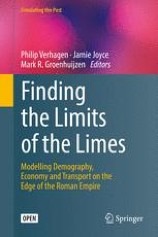
Finding the limits of the limes : Modelling demography, economy and transport on the edge of the Roman Empire
This book demonstrates the application of simulation modelling and network analysis techniques. The book shows the added value of state-of-the-art computer modelling techniques and bridges computational and conventional approaches. Topics that will be of particular interest to archaeologists are the question of (forced) surplus production, the demographic and economic effects of the Roman occupation on the local population, and the structuring of transport networks and settlement patterns. For modellers, issues of sensitivity analysis and validation of modelling results are specifically addressed. This book will appeal to students and researchers working in the computational humanities and social sciences, in particular, archaeology and ancient history.

Financial statement analysis : A practitioner's guide
This fully revised and up-to-date 5th Edition offers fresh information that will help you to evaluate financial statements in today's volatile markets and uncertain economy. The declining connection between GAAP earnings and stock prices has introduced a need to discriminate between instructive and misleading non-GAAP alternatives. This book integrates the alternatives and provides guidance on understanding the extent to which non-GAAP reports, particularly from US companies, may be biased.

Financial cryptography and data security Vol. 3570 ; 9th International Conference, FC 2005, Roseau, The Commonwealth Of Dominica, February 28 - March 3, 2005, Revised Papers
The 9th International Conference on Financial Cryptography and Data Security (FC 2005) was held in the Commonwealth of Dominica from February 28 to March 3, 2005. This conference, organized by the International Financial Cryptography Association (IFCA), continues to be the premier international forum for research, exploration, and debate regarding security in the context of finance and commerce. The conference title and scope was expanded this year to cover all aspects of securing transactions and systems. The goal is to build an interdisciplinary meeting, bringing together cryptographers, data-security specialists, business and economy researchers, as well as economists, IT professionals, implementers, and policy makers. We think that this goal was met this year. The conference received 90 submissions and 24 papers were accepted, 22 in the Research track and 2 in the Systems and Applications track. In addition, the conference featured two distinguished invited speakers, Bezalel Gavish and Lynne Coventry, and two interesting panel sessions, one on phishing and the other on economics and information security. Also, for the first time, some of the papers that were judged to be very strong but did not make the final program were selected for special invitation to our Works in Progress (Rump) Session that took place on Wednesday evening.

Financial crisis management and democracy : Lessons from Europe and Latin America
This book discusses financial crisis management and policy in Europe and Latin America, with a special focus on equity and democracy. Based on a three-year research project by the Jean Monnet Network, this volume takes an interdisciplinary, comparative approach, analyzing both the role and impact of the EU and regional organizations in Latin America on crisis management as well as the consequences of crisis on the process of European integration and on Latin America’s regionalism.

Feminist IR in Europe : Knowledge production in academic institutions
The aim of this book is to take stock of, critically engage, and celebrate feminist IR scholarship produced in Europe. Organized thematically, the volume highlights a wealth of excellent scholarship, while also focusing on the politics of location and the international political economy of feminist knowledge production.

Faith, finance, and economy : Beliefs and economic well-being
This book seeks to foster a multidisciplinary understanding of the ties between faith, financial intermediation, and economic progress by drawing on research across economics, finance, history, philosophy, ethics, theology, public policy, law, and other disciplines.

Examining Innovation Management from a Fair Process Perspective
Companies nowadays still differ considerably in that they interact with employees. This interaction depends on different organisational cultures, leadership styles, and the ways in which information and communication take place. A recent trend, even in economic theory, is that interactions are valued in themselves and not solely to achieve rational economic maximisation. People care about outcomes, but they also care about the interactional processes that produce those outcomes. Thomas Limberg investigates a new approach to the management of human relationships in a knowledge-based work environment and analyses the relationship between fair process and innovation performance. Key findings are that social interactions have a significant influence on execution performance in organisations, and fairness can have positive effects on innovative behaviour and therefore on innovation performance. In the transition from a production-based to a knowledge-based economy, fair process is becoming a powerful tool for managing human interactions and for influencing attitudes and behaviours that are so critical in reaching high innovation performance.

Evolution from Cellular to Social Scales
Evolution is a critical challenge for many areas of science, technology and development of society. The book reviews general evolutionary facts such as origin of life and evolution of the genome and clues to evolution through simple systems. Emerging areas of science such as "systems biology" and "bio-complexity" are founded on the idea that phenomena need to be understood in the context of highly interactive processes operating at different levels and on different scales. This is where physics meets complexity in nature, and where we must begin to learn about complexity if we are to understand it. Similarly, there is an increasingly urgent need to understand and predict the evolutionary behavior of highly interacting man-made systems, in areas such as communications and transport, which permeate the modern world. The same applies to the evolution of human networks such as social, political and financial systems, where technology has tended to vastly increase both the complexity and speed of interaction, which is sometimes effectively instantaneous.

Europes Automotive Industry on the Move : Competitiveness in a Changing World
The automotive industry is a major pillar of the modern global economy and one of Europe’s key industries. There can hardly be any doubt about the important role of this sector as an engine for employment, growth and innovation in Europe, and there are crucial challenges and opportunities ahead. The authors shed light on a broad range of issues – globalisation and restructuring, trade and foreign direct investment, innovation, regulation, and industry policy – and put a special focus on the new member states. While change may be inevitable, progress is not. This book shall serve as a map to all stakeholders: business executives and policy makers, investors and scholars.

Ethical Dimensions of the Economy : Making Use of Hegel and the Concepts of Public and Merit Goods
This book reflects philosophically about the socio-political dimension of economics. Part I provides normative reflections on the economy: Section I reflects on the interconnections between the multiple discourses on the economy, section II presents Hegel's claim that the economic order is an ethical institution and defends his ontological view of the economy against the one of Adam Smith. Section III dialogues with economists about their concepts of public and merit goods. This section defends a Hegelian ontology of the economy through an analysis of technical concepts used by economists. Part II provides applications derived from the normative analysis: Section I presents the views of authors in different academic disciplines pointing to failures in late capitalism, in particular failures of American capitalism and section II asks the question: " What must one pay attention to in a transition from a command economy to a free market?" Section III draws attention to an overlap of ideas found in Catholic Social Thought and in the publications of some recent Nobel prize winners in economics (Buchanan, Sen, Stiglitz).

Ester Boserup’s legacy on sustainability : Orientations for contemporary research
The contents are organized in three sections reflecting important focal points of Boserup’s own work: Long-Term Socio-Ecological Change; Agriculture, Land Use, and Development; and Gender, Population, and Economy. The first three chapters offer a comprehensive review of her political and scientific work. Section Two focuses on the applicability of Boserup’s reflections on land use, technology, and agriculture, incorporating case studies which illuminate and test Boserup’s hypotheses on land use intensification and soil degradation, the impact of population growth on land use, the agricultural transition, and the role of women in development. The case studies examine both long historical time series and present-day dynamics, and explore different levels of geographical scale, from the local to the regional and the global. Section Three emphasizes the key role of women and gender relations for agriculture and development.

Environmental Problems of Central Asia and their Economic, Social and Security Impacts
entral Asia is a developing region with great potential, but there are valid concerns that current resource management practices are not sustainable, particularly with regard to the management of water resources. Recent changes in social structures, accompanied by regional climate change, have caused substantial environmental changes leading to security concerns in the region. As a result, the local economy has been significantly impacted to the extent that the potential for social unrest is of great concern.
