



Page 4
Page 4
Katzung's basic and clinical pharmacology
The most comprehensive and authoritative pharmacology text --updated with new content and USMLE-style questions Presented in full-color and packed with hundreds of illustrations, Basic and Clinical Pharmacology is the wide-ranging, engaging guide students have counted on for decades. To be as clinically relevant as possible, the book includes sections that specifically address the clinical choice and use of drugs in patients and the monitoring of their effects, along with case studies that introduce clinical problems. Each chapter opens with a case study, covers drug groups and prototypes, and closes with summary tables and diagrams that encapsulate important information. Updated to reflect the latest research, this sixteenth edition features a new chapter on cannabinoids, USMLE-style questions, new drug tables, and more. Basic and Clinical Pharmacology, Sixteenth Edition features: * 330 full-color illustrations * NEW: 100 drug tables * NEW: 50 USMLE-style questions * NEW: Chapter on cannabinoids * A strong emphasis on drug groups and prototypes * Case studies and chapter-ending summary tables * Organization that reflects the syllabi of pharmacology courses * Descriptions of important new drugs

ITIL® Version 3 at a Glance : Information Quick Reference
The desk reference’s unique graphical approach will take otherwise complex textual descriptions and make the information accessible in a series of consistent, simple diagrams. ITIL® Version 3 At a Glance will be of interest to organizations looking to train their staffs in a consistent and cost-effective way. Further, this book is ideal for anyone involved in planning consulting, implementing, or testing an ITIL® Version 3 implementation.

Comprehensive biochemistry for dentistry : Textbook for dental students
Combines fundamental concepts of biochemistry and the dental sciences to provide an authentic, coherent and comprehensive text for dental students. It describes in simple language the intricate pathophysiology of biomolecules in health and in diseases of dental and oral tissues. This book also describes the evolution of biochemistry in a chronological order, provides information about the fundamental chemical structure, classification and biological significance of biomolecules, vitamins and hormones, enriched with flow charts and diagrams for easy understanding and quick reference. It includes chapters on nucleic acids, nutrition and serum enzymes and organ function tests, and offers an innovative approach to familiarize dental students with the biochemical composition of enamel, dentine, cementum and saliva, explaining the biochemical basis of dental caries, periodontal diseases, role of fluorides in caries prophylaxis, fluoride toxicity, and the role of amino acids as anti-hypersensitive agents
Chapel and Haeneys essentials of clinical immunology
Contains the knowledge necessary to understand the diagnosis and treatment of immunological disorders. With easy-to-read text and a wealth of colour clinical images and diagrams, this well-regarded textbook introduces complex concepts using effective pedagogical tools such as bulleted lists, key point boxes, real-life case studies, practical examples, figures and tables, chapter introductions, and keywords in bold integrated in each chapter.

Buchi neri nel mio bagno di schiuma : L’enigma di Einstein = Black holes in my bubble bath : Einstein's riddle
Einstein's Enigma, or black holes in my foam bath, tells the story of the theory of gravitation, from its beginnings to the latest developments in astrophysics, focusing on Albert Einstein's theory of general relativity and the physics of black holes. Through engaging conversations and diagrams scribbled on paper napkins, the rudiments of relativity, space-time and many aspects of modern physics follow one another. In skits narrated with pedagogical skill and remarkable literary talent, the reader will come across the informal lessons that a cosmopolitan astrophysicist gives to his friend Alfie, a free lance organizer of research projects. Join in the intellectual fun and get excited with sparkling ideas, while with your imagination you enjoy a relaxing soak in this magical tub!
Beginning Database Design : From novice to professional
Beginning Database Design: From Novice to Professional provides short, easy-to-read explanations of how to get database design right the first time. Through the help of use cases and class diagrams modeled in the UML, youll learn how to discover and represent the details and scope of the problem in question.
Bayesian networks and Influence diagrams : A guide to construction and analysis
Probabilistic networks, also known as Bayesian networks and influence diagrams, have become one of the most promising technologies in the area of applied artificial intelligence, offering intuitive, efficient, and reliable methods for diagnosis, prediction, decision making, classification, troubleshooting, and data mining under uncertainty. Bayesian Networks and Influence Diagrams: A Guide to Construction and Analysis provides a comprehensive guide for practitioners who wish to understand, construct, and analyze intelligent systems for decision support based on probabilistic networks. Intended primarily for practitioners, this book does not require sophisticated mathematical skills or deep understanding of the underlying theory and methods nor does it discuss alternative technologies for reasoning under uncertainty.
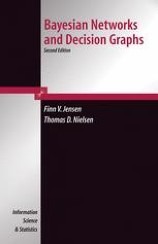
Bayesian Networks and Decision Graphs
Probabilistic graphical models and decision graphs are powerful modeling tools for reasoning and decision making under uncertainty. As modeling languages they allow a natural specification of problem domains with inherent uncertainty, and from a computational perspective they support efficient algorithms for automatic construction and query answering. This includes belief updating, finding the most probable explanation for the observed evidence, detecting conflicts in the evidence entered into the network, determining optimal strategies, analyzing for relevance, and performing sensitivity analysis. The book introduces probabilistic graphical models and decision graphs, including Bayesian networks and influence diagrams.It contians two parts. The first part focuses on probabilistic graphical models. Compared with the previous book, the new edition also includes a thorough description of recent extensions to the Bayesian network modeling language, advances in exact and approximate belief updating algorithms, and methods for learning both the structure and the parameters of a Bayesian network. The second part deals with decision graphs, and in addition to the frameworks described in the previous edition, it also introduces Markov decision processes and partially ordered decision problems.
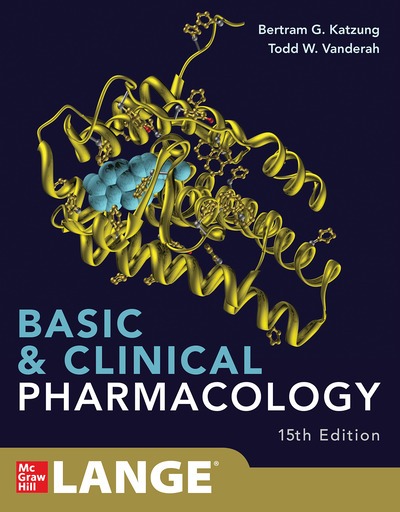
Basic & Clinical Pharmacology
Covers the important concepts students need to know about the science of pharmacology and its application to clinical practice. This edition has been extensively updated to provide expanded coverage of transporters, pharmacogenomics, and new drugs Delivers the knowledge and insight needed to excel in every facet of pharmacology!. Encompasses all aspects of medical pharmacology, including botanicals and over-the-counter drugs Major revisions of the chapters on immunopharmacology, antiseizure, antipsychotic, antidepressant, antidiabetic, anti-inflammatory, and antiviral drugs, prostaglandins, and central nervous system neurotransmitters New chapter on the increasingly relevant topic of cannabis pharmacology Each chapter opens with a case study, covers drug groups and prototypes, and closes with summary tables and diagrams that encapsulate important information Revised full-color illustrations provide more information about drug mechanisms and effects and help clarify important concepts Trade Name/Generic Name tables are provided at end of each chapter for easy reference when writing a chart order or prescription Includes descriptions of important new drugs released through May 2019 New and updated coverage of general concepts relating to recently discovered receptors, receptor mechanisms, and drug transporters
Atlas of Emergency Medicine Procedures
Provides a step-by-step, visual guide to the most common procedures in emergency medicine. Completely revised, it also includes new procedures such as REBOA, the HINTS test, sphenopalatine ganglion block, occipital nerve block, and lung ultrasonography. Procedures are described on a single page, or two-page spreads, so that the physician can quickly access and review the procedure at hand. The atlas contains more than 700 diagnostic algorithms, schematic diagrams, and photographic illustrations to highlight the breadth and depth of emergency medicine. Topics are logically arranged by anatomic location or by type of procedure, and all procedures are based on the most current and evidence-based practices.
Astroparticle physics
The book describes the branch of astrophysics in which processes in the universe are investigated with experimental methods known from particle physics experiments. After a historical introduction to the basics of elementary particles, their interactions and the relevant detection techniques are described. The main body of the book concerns cosmic rays. The modern aspects of astroparticle physics are described in a chapter on cosmology. The book provides an orientation in the field of astroparticle physics that many beginners might look for. The physics issues are presented with little mathematics, and the results are illustrated by many diagrams. The reader has a chance to enter this field of astrophysics with a book that closes the gap between expert and popular level.

Architectural drawings as investigating devices : Architecture’s changing scope in the 20th century
Explores how the changing modes of representation in architecture and urbanism relate to the transformation of how the addressees of architecture and urbanism are conceived. Diagnoses the dominant epistemological debates in architecture and urbanism during the 20th and 21st centuries. It traces their transformations, paying special attention to Le Corbusier and Ludwig Mies van der Rohe’s preference for perspective representation, to the diagrams of Team 10 architects, to the critiques of functionalism, and the upgrade of the artefactual value of architectural drawings in Aldo Rossi, John Hejduk, Peter Eisenman, and Oswald Mathias Ungers, and, finally, to the reinvention of architectural programme through the event in Bernard Tschumi and the Office for Metropolitan Architecture (OMA). Particular emphasis is placed on the spirit of truth and clarity in modernist architecture, the relationship between the individual and the community in post-war era architecture, the decodification of design process as syntactic analogy and the paradigm of autonomy in the 1970s and 1980s architecture, the concern about the dynamic character of urban conditions and the potentialities hidden in architectural programme in the post-autonomy era.

Architectonics and parametric thinking : computational modeling for beginning design
Architectonics and Parametric Thinking begins by clearly positioning the potentials of parametric design through a series of chapters written by leaders in their respective industries. This helps to situate the vast potential of parametric softwares, allowing the reader to understand the full range of what is made possible by working computationally. Following this theoretical introduction, the book presents a manual that walks readers through the step-by-step construction of parametric modeling scripts built through an architectonic lens using clear, compelling diagrams.
An introduction to relativistic processes and the standard model of electroweak interactions
The first part of the volume is devoted to the description of scattering processes in the context of relativistic quantum field theory. The use of the semi-classical approximation allows us to illustrate the relevant computation techniques in a reasonably small amount of space. Our approach to relativistic processes is original in many respects. The second part contains a detailed description of the construction of the standard model of electroweak interactions, with special attention to the mechanism of particle mass generation. The extension of the standard model to include neutrino masses is also described. We have included a number of detailed computations of cross sections and decay rates of pedagogical and phenomenological relevance.

An Introduction to Quantum and Vassiliev Knot Invariants
Provides an accessible introduction to knot theory, focussing on Vassiliev invariants, quantum knot invariants constructed via representations of quantum groups, and how these two apparently distinct theories come together through the Kontsevich invariant. Consisting of four parts, the book opens with an introduction to the fundamentals of knot theory, and to knot invariants such as the Jones polynomial. The second part introduces quantum invariants of knots, working constructively from first principles towards the construction of Reshetikhin-Turaev invariants and a description of how these arise through Drinfeld and Jimbo's quantum groups. Its third part offers an introduction to Vassiliev invariants, providing a careful account of how chord diagrams and Jacobi diagrams arise in the theory, and the role that Lie algebras play. The final part of the book introduces the Konstevich invariant. This is a universal quantum invariant and a universal Vassiliev invariant, and brings together these two seemingly different families of knot invariants. The book provides a detailed account of the construction of the Jones polynomial via the quantum groups attached to sl(2), the Vassiliev weight system arising from sl(2), and how these invariants come together through the Kontsevich invariant.
Advances in conceptual modeling : Foundations and applications ; ER 2007 Workshops CMLSA, FP-UML, ONISW, QoIS, RIGiM, SeCoGIS, Auckland, New Zealand, November 5-9, 2007, Proceedings
Covering data warehouses, security, model transformation, state diagrams development and model quality.
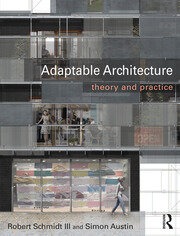
Adaptable Architecture : Theory and practice
provides thought-provoking and inquisitive insights into how we can prolong the useful life of buildings by designing them to be more adaptable, and hence create a more sustainable built environment. The book provides a theoretical foundation counterpointed by the experiences and ideas of those involved in the design and use of buildings. It explains many approaches to designing for change, with lessons from history, and case studies including The Cedar Rapids Public Library, Kentish Town Health Centre and Folkestone Performing Arts Centre, which stretch our thinking beyond the conventional notions of adaptability. The authors reveal the many conditions that make it a complex design phenomenon, by considering the purpose, design and business case of buildings as well as the physical product. Full of summaries, diagrams, reference charts, tables, and photos of exemplar solutions for use as conversational tools or working aids, this book is for any professional or student who wants to research, question, imagine, illustrate - and ultimately design for - adaptation.
Abord clinique en urologie = Clinical approach in urology
Seduced by the idea of commenting on the clinical experience they have acquired during their career, the authors have deliberately approached their specialty by describing the symptoms that give the chapters their titles. They nevertheless described the differential diagnoses, the diseases involved and the treatments. After a chapter devoted to the examination of the patient, including the detours of the interrogation, back pain or scrotal pain are analyzed. The authors then turned to voiding disorders and their causes. The peculiarities of hematuria, depending on their level of origin, are described and commented on. The semiology of tumor masses is carefully detailed and, conversely, the problem of prostate cancer screening by PSA is dealt with in a separate chapter. Erectile dysfunction and penile diseases are the last chapters. In the line of the “Clinical approach” collection, this manual is easy to consult thanks to a detailed index, easy to understand because it is written in clear language and, moreover, well illustrated (21 diagrams and 2 tables). In this little book, the authors have approached urology from a perspective close to how patients feel.

A Studio Guide to Interior Design
Provides a foundation of the analog and digital design processes in interior architecture, interior design and associated disciplines, such as architecture. Throughout the book there are key references to drawing, digital practice, author illustrated diagrams and design precedents. Ancillaries include web-based videos taking the reader through digital graphic principles and planned exercises for use in the classroom environment.
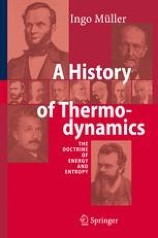
A History of Thermodynamics : The Doctrine of Energy and Entropy
The development of thermodynamics in the second half of the 19th century has had a strong impact on both technology and natural philosophy. It is true that the steam engine for the conversion of heat into work existed before thermodynamics was developed as a branch of physics. However, the systematic theory improved the conversion process, and it succeeded in developing other processes essential to modern life, notably refrigeration and rectification. So, altogether thermodynamics has provided humanity with cheap energy, and cheap fuel, -- consequently with cheap, and abundant, and unspoiled food. Thus thermodynamics has made populations grow, and life expectancy increase beyond anything people could possibly have imagined 200 years ago.
