


Refine Results
Sort By
From
To

Cancer Grading Manual addresses all histopathologic aspects of tumor pathology essential for grading of tumors. It discusses the history and basic tenets of tumor grading; principles of microscopic grading of tumors; ancillary methods currently used to improve tumor grading; and new techniques used in evaluating tumors and formulating prognosis. It is designed to be a practice-oriented, concise and well-illustrated resource for diagnostic surgical pathologists and pathology residents.
Etablir un diagnostic précoce, définir une stratégie adaptée et offrir une meilleure qualité de vie chez le sujet âgé atteint de cancer constituent les défis de l’Oncologie de ce début de siècle. Cet ouvrage a pour objectif de proposer aux médecins et aux étudiants un condensé des différents aspects de l’oncologie sur le sujet âgé. Dans une première partie, les aspects épidémiologiques et biologiques ainsi que l’évaluation gériatrique multiparamétrique sont abordés. Les particularités de l’application de la chimiothérapie, de la radiothérapie et de la chirurgie au sujet âgé sont passées en revue. Dans une troisième partie, la stratégie thérapeutique multidisciplinaire est ensuite détaillée par site.
Provides detailed methods on the mechanisms of underlying cancer cell biology. Chapters guide readers through techniques for culturing cancer cell lines, xenografts, cryopreservation of tumor cells, analyzing the co-culture of breast cancer cells, protein secretion by ELISA, flow cytometry-based, multi-parametric immunofluorescence analysis, protein expression by western blot, analysis of surface protein levels, protein recycling by biotinylation assay, and proteomics analysis by liquid chromatography-mass spectrometry.
This book is written by experts with clinical expertise on diagnosis, treatment, and follow-up of women with cancer during pregnancy. It provides a comprehensive review of data and an overview of psychological, ethical, and social aspects.
Calcium and Phosphate Metabolism Management in Chronic Renal Diseases provides an overview of the state-of-the-art clinical and basic science aspects of abnormal calcium and phosphate metabolism and its management.

This book comes after several decades of outstanding and successful research that has helped ameliorate some of the most important and controversial fisheries issues in the world – those associated with the unwanted wastage of fish from by-catch and discarding. The 8 chapters encompass contributions from 27 of the world’s leading experts in by-catch reduction. They take the reader through most aspects of the field at a variety of scales and viewpoints. They examine the methodologies used to develop by-catch reduction techniques and provide new avenues for assisting and broadening such work. Case studies are provided that encompass most of the world’s fishing techniques and regions.
Contemporary research on genetic control of disease-transmitting insects knows two kinds of scientists: those that work in the laboratory and those known as ‘field people’. Over the last decade, both groups seem to have developed differing research priorities, address fundamentally different aspects within the overall discipline of infectious-disease control, and worse, have developed a scientific ‘language’ that is no longer understood by the ‘other’ party. This gap widens every day, between the North and the South, between ecologists and molecular biologists, geneticists and behaviourists, etc. The need to develop a common research agenda that bridges this gap has been identified as a top priority by all parties involved. Only then shall the goal of developing appropriate genetic-control strategies for vectors of disease become reality.
The text walks the reader through the basics of MRI, making it especially accessible to beginners. From a detailed outline of equipment prerequisites for obtaining high quality breast MRI to instructions on how to optimize image quality, expanded discussions on how to obtain optimized dynamic information.
This superbly illustrated practical guide is an excellent resource on all aspects of breast MRI for practicing radiologists, oncologists, and surgeons, as well as residents and fellows. Drs. Elizabeth Morris and Laura Liberman, two experts in the field from the Memorial Sloan-Kettering Cancer Center, have collaborated with colleagues from their institution and selected medical centers to share their expertise. Introductory chapters are devoted to diagnosis and cover the basics of performing breast MRI exams, setting up a breast MRI program, and understanding clinical indications. Additional chapters discuss breast interventional procedures including MRI-guided needle localization, MRI-guided biopsy, and percutaneous ablation of breast cancer; MRI of breast implants.
Publishes comprehensive volumes on immune and genetic mechanisms of breast cancer diagnosis and prognosis. The role of molecular genetics, interleukins, chemokine receptor, and tumor-infiltrated lymphocytes-TILS in breast cancer are explained. Targeting myeloid determinants, SiRNA loaded in drug delivery nanosystems, nucleic acid and drug dual agent nanoplatforms, and oncolytic virotherapy are also discussed in the treatment of breast cancer, particularly in multidrug resistant and metastatic breast cancer.
In Breast Cancer Chemosensitivity, a group of world leading experts review critical aspects of resistance to systemic therapy in breast cancer patients. Beginning with a clinical overview of the problem Breast Cancer Chemosensitivity moves on to focus on the latest findings of molecular mechanisms of drug resistance. These include in-depth discussions on multidrug resistance by P-glycoprotein and the multidrug resistance protein family, resistance to therapeutic agent-induced apoptosis, cell cycle deregulation, deregulation of DNA repair, loss of tumor suppressor genes, integrin-mediated adhesion, insulin-like growth factors, epidermal growth factor, and ErbB2 in modulating breast cancer response to systemic therapy, especially, certain chemotherapeutic agents. Breast Cancer Chemosensitivity provides an example of using novel approaches for chemosensitization of breast cancer cells that gives readers an idea about the future direction in breast cancer treatment.
Since Bailey and Cushing (1926), all brain tumor classifications have been called histogenetic. The nosographic position that the tumor types progressively acquired in the classification systems derived from the resemblance of tumor cells to those of the cytogenesis, modified whenever new information became available from different biological research fields and especially from molecular genetics. Classically, on the basis of the rough correspondence between the mature/immature aspect of tumor cells and the benign/malignant biological behavior of the tumors, the histological labels contained a prognostic significance. The supposed origin of the tumors was thus a factor for prognosis. Later on, with the concept of anaplasia (Cox, 1933; Kernohan et al., 1949) new criteria were introduced for establishing the malignancy grades of tumors. Immunohistochemistry and later molecular genetics further refined the prognostic diagnoses, substantially increasing the opportunities to recognize the cell origin of tumors, beside revealing the pathogenetic mechanisms. Prognoses became more accurate, as required by the greater and more targeted possibilities of therapy.
The book is rich in references and leaves no aspect of the problem untouched. The morphological, pharmacological, physiological and mathematical modeling aspects of different components of the subject are treated to exhaustion...the book is richly illustrated and down-right comprehensive. It will delight those interested in the field, will inform those who need a context for their research efforts and is a must for graduate and medical libraries.
Bone Resorption, the second volume in the series Topics in Bone Biology, deals with the osteoclast, the bone-resorbing cell, its origins, its enzymes, the regulation of osteoclast activity, and structural aspects of bone resorption. Diseases involving osteoclast function are discussed from the genetic viewpoint in two chapters that span transgenic mouse models to human pathology. Another chapter treats diseases of osteoclast function. Because osteoporosis may be considered a disease in which the bone resorption rate exceeds formation, a separate chapter deals with current and potential therapeutic approaches to this widespread disease that affects both men and women. Bone metastases and an analysis of the central role of the osteoclast in this condition are treated in the concluding chapter.
Bone and Cartilage Engineering presents the theory and practice of cell-based regeneration of skeletal defects. Much of the focus is on the importance of the cell biological and biomaterial aspects for engineering a clinically relevant device. The basic key techniques for optimal engineering outcomes including cell and organ culture, biomaterial development, and bioreactor use are described in detail and highlighted by multiple figures.

Blood Traces provides an authoritative resource that reviews many of the aspects of the interpretation of blood traces that have not been treated with the thoroughness they deserve. With strict adherence to the scientific method, the authors — noted experts on the topic — address the complexities encountered when interpreting blood trace configurations. The book provides an understanding of the scientific basis for the use of blood trace deposits, i.e. bloodstain patterns, at crime scenes to better reconstruct a criminal event.
In this newly updated second edition of Blood Pressure Monitoring in Cardiovascular Medicine and Therapeutics, William B. White, MD, and a panel of highly distinguished clinicians give a critical review of every aspect of the evaluation of high blood pressure. This includes home and ambulatory blood pressure monitoring, the relationship between whole-day blood pressure and the cardiovascular disease process, and the effects of antihypertensive therapies on these blood pressure parameters. World-class contributors describe the significant advances in our understanding of the circadian pathophysiology of cardiovascular disorders and demonstrate that ambulatory blood pressure values are independent predictors of cardiovascular morbidity and mortality.
Covers critically investigated information on medicinal plants prioritized for their anti-allergy properties. It offers insights into strategies related to the distribution, mechanism of action, and assessment of antiallergic medicinal plants, and also delves into crucial aspects of modern biotechnological tools, addressing their implementation challenges, presenting innovative approaches through case studies, and exploring opportunities for nanotechnologies. These elaborated discussions aim to raise awareness and bridge the gap between human health and the biodiversity of antiallergic medicinal plants.
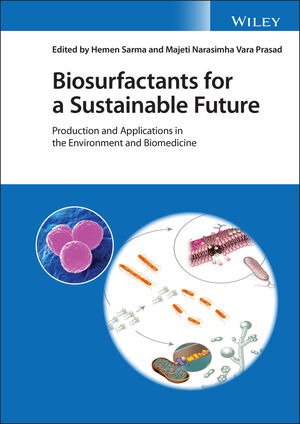
The book emphasizes the different techniques that are used for the production of biosurfactants from microorganisms and their characterization. Various aspects of biosurfactants, including structural characteristics, developments, production, bio-economics and their sustainable use in the environment and biomedicine, are addressed, and the book also presents metagenomic strategies to facilitate the discovery of novel biosurfactants producing microorganisms.
Provides a comprehensive overview of the biosimilar regulatory framework, the development process and clinical aspects for development of biosimilars. The development path of a biosimilar is just as unique as a development path of a new drug, tailored by the mechanism of action, the quality of the molecule, published information on the reference product, the current competitive environment, the target market and regulatory guidance, and most importantly, the emerging totality of evidence for the proposed biosimilar during development.

Daraa Highway - Ghabagheb - Syria
+963-15 2050 - 15 860 380 /1/2/3 - 11 662 3900