



Page 36
Page 36
Micro- and opto-electronic materials and Structures : Physics, mechanics, design, reliability, packaging ; Vol. I : Materials physics - materials mechanics ; Vol. II : Physical design - reliability and packaging
Micro- and Opto-Electronic Materials and Structures: Physics, Mechanics, Design, Reliability, Packaging is the first comprehensive reference to collect and present the most, up-to-date, in-depth, practical and easy-to-use information on the physics, mechanics, reliability and packaging of micro- and opto-electronic materials, assemblies, structures and systems. The chapters in these two volumes contain summaries of the state-of-the-art and present new information on recently developed important methods or devices. Furthermore, practical recommendations are offered on how to successfully apply current knowledge and recently developed technology to design, manufacture and operate viable, reliable and cost-effective electronic components or photonic devices. The emphasis is on the science and engineering of electronic and photonic packaging, on physical design problems, challenges and solutions.

Micro and Nanomanufacturing
Engineers seeking more knowledge of how nano and micro devices are designed and fabricated will learn: Manufacturing and fabrication at the micro and nanoscales Using bulk and surface micromachining techniques, LiGA and deep x-ray lithography to manufacture semiconductors Producing master molds with micromachining The deposition of thin films, pulsed water drop machining, and nanomachining Mark J. Jackson is an Associate Professor in the Department of Mechanical Engineering Technology at Purdue University. His current research focuses on understanding the properties of materials in the field of micro scale metal cutting, micro and nano abrasive machining, and laser micro machining.
Micro- and Macro-Properties of Solids : Thermal, Mechanical and Dielectric Properties
Each of the eight chapters treats an important aspect of solid state physics, comprising a complete review of the particular field. Typically, a chapter starts with basic information about a property of a solid and the related experimental techniques. This is followed by a global overview which brings together all important contributions by different research workers in the field. This overview is comprehensive and covers essential literature over the past 60 years. Each chapter concludes with a detailed discussion of the contributions made by the chapter authors and their associates, in some cases spanning the last 45 years. In addition, Micro- and Macro-Properties of Solids provides data on new materials such as rare-earth metals, semiconductors, ferroelectrics, mixed-valence compounds, superionic conductors, optical and optoelectronic materials and biomaterials.

Michael Van Valkenburgh Associates : Allegheny Riverfront Park
Part of the "Source Books in Landscape" series, this book focuses on Michael Van Valkenburgh's Allegheny Riverfront Park project for Pittsburgh, Pennsylvania. It provides documentation of this project, following its development from conception through completion using sketches, drawings, models, renderings, working drawings, and photographs.

Michael Graves : Images of a grand tour
Michael Graves: Images of A Grand Tour collects for the first time the stunning artwork produced during this trip. Delicate pencil sketches, striking ink washes, and colorful photographs show the deep connection Graves had to the places he visited, from the Roman Forum to the Grecian Acropolis to Wiltshires Stonehenge. They also tell something of the education of an architect, bringing to light the classical buildings that caused Graves to reexamine his early devotion to modernism. A foreword by Graves reflects on these travels from the distance of forty years

MICAI 2008 : Advances in Artificial Intelligence ;7th Mexican International Conference on Artificial Intelligence, Atizapán de Zaragoza, Mexico, October 27-31, 2008 Proceedings
The 96 revised full papers presented together with 2 invited lectures were carefully reviewed and selected from 363 submissions. The papers are organized in topical sections on logic and reasoning, knowledge-based systems, knowledge representation and acquisition, ontologies, natural language processing, machine learning, pattern recognition, data mining, neural networks, genetic algorithms, hybrid intelligent systems, computer vision and image processing, robotics, planning and scheduling, uncertainty and probabilistic reasoning, fuzzy logic, intelligent tutoring systems, multi-agent systems and distributed ai, intelligent organizations, bioinformatics and medical applications, as well as applications.
MICAI 2007 : Advances in artificial intelligence ; 6th Mexican International Conference on Artificial Intelligence, Aguascalientes, Mexico, November 4-10, 2007, Proceedings
The Mexican International Conference on Artificial Intelligence (MICAI), a yearly international conference series organized by the Mexican Society for Artificial Intelligence (SMIA), is a major international AI forum and the main event in the academic life of the country’s growing AI community.
MICAI 2006 : Advances in Artificial Intelligence ; 5th Mexican International Conference on Artificial Intelligence, Apizaco, Mexico, November 13-17, 2006, Proceedings
This volume contains the papers presented during the oral session of the 5 Mexican International Conference on Artificial Intelligence, held on November 13–17, 2006, at the Technologic Institute of Apizaco, Mexico. The conference received for evaluation 448 submissions by 1207 authors from 42 different countries
MICAI 2005 : Advances in Artificial Intelligence ; 4th Mexican International Conference on Artificial Intelligence, Monterrey, Mexico, November 14-18, 2005, Proceedings
Constitutes the refereed proceedings of the 4th Mexican International Conference on Artificial Intelligence, MICAI 2005, held Mexico, in November 2005. This book is organized in topical sections on knowledge representation and management, logic and constraint programming, uncertainty reasoning, multiagent systems and distributed AI, and others.

Mia candella : شركة لإنتاج شموع معطرة
ترویج لفكرة المشروع الذي یعتبر نقلة جدیدة لمفھوم تصمیم واستخدام الشّموع في شتىّ مناسباتنا الحیاتیّة؛ كون الحصول على ھذه الشموع عبارة عن عملیة متكاملة من صناعة وتعبئة وتغلیف وتحضیر وحتى التقدیم، بالإضافة إلى كونھا مُنتج غیر معروف بھذه التصمامیم المبتكرة بشكلٍ كافٍ في بلدنا الحبیب. و تعریف شرائح المجتمع المستھدفة باسم المنتج وممیزاته وخصیصاً ذوي الاھتمامات بالشّموع وعطورھا إضافة إلى كل من یبحث عن التمّیزّ في ھدیةّ تذكاریةّ ذات قیمة معنویةّ وأثر في النفس لا ینُسى، ولكلّ المحالّ التجّاریةّ التّي یرتادھا الناّس لشراء شمعة لینیروا بھا مناسباتھم.

Mezzi di contrasto in ecografia : Applicazioni addominali = Contrast media in ultrasound : Abdominal applications
Lopera presenta unanalisi completa delle applicazioni dei mezzi di contrasto ecografici a livello addominale. La parte introduttiva di natura tecnica presenta la classificazione generale e le proprietà fisiche dei mezzi di contrasto ecografici, nonché una dettagliata classificazione delle tecniche ecografiche contrasto-specifiche; segue una parte speciale che descrive le applicazioni delle microbolle a livello del fegato, della milza e del rene. Vengono quindi presentate le applicazioni speciali e innovative dei mezzi di contrasto ecografici nellambito dei traumi delladdome, della patologia del pancreas, della parete intestinale e dei vasi addominali, e della valutazione del reflusso vescico-ureterale. Infine, viene proposta unanalisi economica relativa allapplicazione dei mezzi di contrasto ecografici nella caratterizzazione delle lesioni focali epatiche. Il libro è principalmente rivolto ai medici impegnati nellattività ecografica quotidiana, particolarmente in ambito internistico, che desiderano ampliare le proprie competenze nel settore dellecografia con mezzo di contrasto
Metric Handbook : Planning and Design Data
A major handbook of planning and design data for architects and architecture students. Covering basic design data for all the major building types, it is the ideal starting point for any project. For each building type, the book gives the basic design requirements and all the principal dimensional data, and succinct guidance on how to use the information and what regulations the designer needs to be aware of.
Metric Driven Design Verification : An Engineer's and Executive's Guide to First Pass Success
A metric based flow is described that focuses on the four steps of: 1. Planning: Defining what needs to be done and the automatically trackable metrics that will be used to measure progress. 2. Execution: Implementing verification environments and then extensively exercising the device under verification utilizing comprehensive, massively parallel regression strategies. 3. Measurement: Automatically capturing the metrics defined in planning to provide objective data with which to manage the verification project. Custom tailoring those metrics through an automated reporting framework to provide all stakeholders a real-time meaningful view of project status. 4. Response: Utilizing the returned metrics to effectively adapt to changing project conditions. Making use of automated response mechanisms to automate engineering processed and management response to streamline project management processes
Methods of nonlinear analysis : Applications to differential equations
In this book, fundamental methods of nonlinear analysis are introduced, discussed and illustrated in straightforward examples. Every method considered is motivated and explained in its general form, but presented in an abstract framework as comprehensively as possible. Applications and generalizations are shown. In particular, a large number of methods is applied to boundary value problems for partial differential equations.
Methods of microarray data analysis V
In this volume, all investigators analyzed a single dataset on the lifecycle of the most deadly of malaria parasites, Plasmodium falciparum. The emphasis this year is on the application of novel and existing computational methodologies towards infectious disease. We highlight an introductory chapter by Raphael D. Isokpehi, a leading expert in the field of malaria. Ten of the papers presented at the conference are included, which range from the inference of genetic networks to the analysis of the spatial correlation of array data. This book is an excellent reference for academic and industrial researchers who want to keep abreast of the state-of-the-art in microarray data analysis.
Methods of microarray data analysis IV
As studies using microarray technology have evolved, so have the data analysis methods used to analyze these experiments. The CAMDA conference plays a role in this evolving field by providing a forum in which investors can analyze the same data sets using different methods. METHODS OF MICROARRAY DATA ANALYSIS IV is the fourth book in this series, and focuses on the important issue of associating array data with a survival endpoint. Previous books in this series focused on classification (Volume I), pattern recognition (Volume II), and quality control issues (Volume III). In this volume, four lung cancer data sets are the focus of analysis. We highlight three tutorial papers, including one to assist with a basic understanding of lung cancer, a review of survival analysis in the gene expression literature, and a paper on replication. In addition, 14 papers presented at the conference are included. This book is an excellent reference for academic and industrial researchers who want to keep abreast of the state-of-the-art of microarray data analysis.
Methods of Measuring Moisture in Building Materials and Structures : State-of-the-Art Report of the RILEM Technical Committee 248-MMB
Provides the most recent overview of methods for measuring moisture Covers major applications in civil engineering Gives both the scientific background of methods and examples of their application
Methods of Legal Reasoning
The book attempts to describe and criticize four methods used in legal practice, legal dogmatics and legal theory: logic, analysis, argumentation and hermeneutics. Apart from a presentation of basic ideas connected with the above mentioned methods, the essays contained in this book seek to answer questions concerning the assumptions standing behind these methods, the limits of using them and their usefulness in the practice and theory of law. A specific feature of the book is that in one study four different, sometimes competing concepts of legal method are discussed. The panorama, sketched like this, allows one to reflect deeply on the questions concerning the methodological conditioning of legal science and the existence of a unique, specific legal method. The authors argue that there exists no such method.
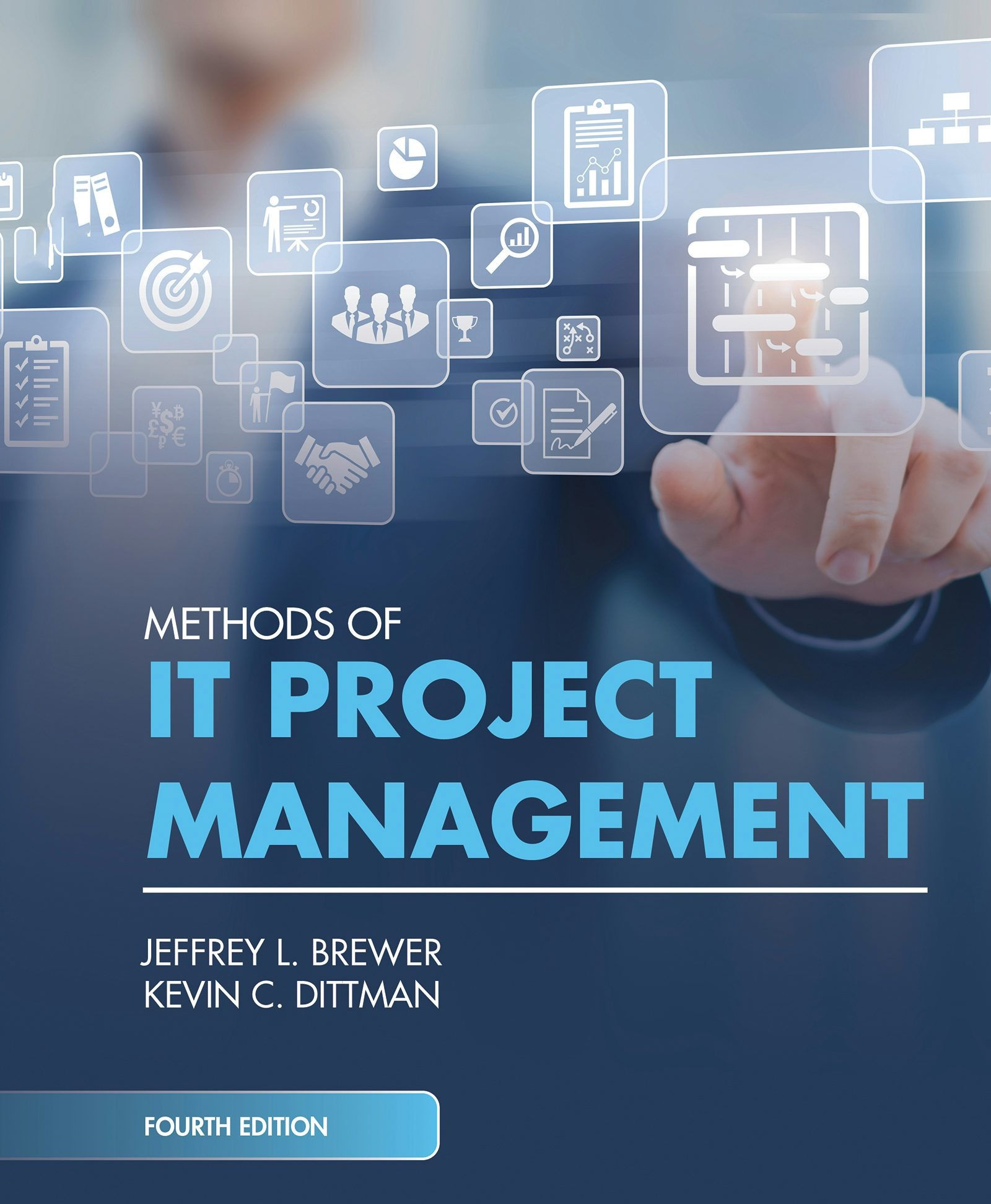
Methods of IT Project Management
Provides students with all the concepts, techniques, artifacts, and methods found in the leading project management reference books and modern development methodologies (agile, hybrid, and traditional), while also conveying practical knowledge that can immediately be applied in real-world settings.
Methods of Celestial Mechanics: Vol. I: Physical, Mathematical, and Numerical Principles
G. Beutler's Methods of Celestial Mechanics is a coherent textbook for students in physics, mathematics and engineering as well as an excellent reference for practitioners. This Volume I gives a thorough treatment of celestial mechanics and presents all the necessary mathematical details that a professional would need. After a brief review of the history of celestial mechanics, the equations of motion (Newtonian and relativistic versions) are developed for planetary systems (N-body-problem), for artificial Earth satellites, and for extended bodies (which includes the problem of Earth and lunar rotation). Perturbation theory is outlined in an elementary way from generally known mathematical principles without making use of the advanced tools of analytical mechanics. The variational equations associated with orbital motion - of fundamental importance for parameter estimation (e.g., orbit determination), numerical error propagation, and stability considerations - are introduced and their properties discussed in considerable detail. Numerical methods, especially for orbit determination and orbit improvement, are discussed in considerable depth. The algorithms may be easily applied to objects of the planetary system and to Earth satellites and space debris.
