



Page 32
Page 32

Logic and Theory of Algorithms ; 4th Conference on Computability in Europe, CiE 2008, Athens, Greece, June 15-20, 2008 Proceedings
Constitutes the refereed proceedings of the 4th International Conference on Computability in Europe, CiE 2008, held in Athens, Greece, in June 2008.The 36 revised full papers presented together with 25 invited tutorials and lectures were carefully reviewed and selected from 108 submissions. Among them are papers of 6 special sessions entitled algorithms in the history of mathematics, formalising mathematics and extracting algorithms from proofs, higher-type recursion and applications, algorithmic game theory, quantum algorithms and complexity, and biology and computation.
Living Rivers : Trends and Challenges in Science and Management
All over the world, sustainable river basin management is a leading principle of policy plans and legal instruments for water management (e.g. the European Water Framework Directive). The evidence, however, to underpin the full scope of sustainability is rather scanty. In this book an integrative perspective on trends and challenges in river science and management is demonstrated. The three pillars underneath sustainable water management, ecology, economy and sociology, are elaborated by experts in their fields. A number of papers integrate the current knowledge on the structure, functioning and management of ‘living rivers’. The book includes data and experiences concerning the rivers Allier, Meuse, Rhine, Sava and Tagliamento in Europe and the river Illinois in the USA. Sustainable river basin management asks for un-orthodox rehabilitation programmes and ecosystem based and transboundary management approaches.
Liver and Pancreatic Diseases Management
New therapeutical approaches, advances in oncology and in diagnostic imaging, which reduce the need for invasive techniques and reach an improvement in survival and quality of life in cancer, are considered in this book. Modern literature has been reviewed with special reference to articles of general interest. In the clinical management of patients with liver, bile duct and pancreas diseases, it is important to assess the degree of disturbance and to diagnose the causative insult, and therefore clinical and laboratory methods of assessing each of these pathologies are of high interest. This version is an up-to-date account of diseases of the liver, biliary tract and pancreas, including transplantation, which we trust will be of value for surgeons, physicians and pathologists and also a reference book for medical students.
Listeria Monocytogenes : Pathogenesis and Host Response
This comprehensive volume, written by experts in the field, includes concise and timely reviews of Listeria monocytogenes, one of the most intensively studied bacterial pathogens. Listeria monocytogenes is the cause of listeriosis, a potentially fatal disease that arises from the consumption of contaminated food. During the past two decades, studies of this organism have uncovered a wealth of information on its virulence factors, its genome organization, and its interactions with host cells and the immune system.
Liquid Culture Systems for in vitro Plant Propagation
High-efficiency micropropagation, with relatively low labour costs, has been demonstrated in this unique book detailing liquid media systems for plant tissue culture. World authorities contribute seminal papers together with papers from researchers across Europe This book is essential reading for all those in commercial micropropagation labs, as well as researchers worldwide who are keen to improve propagation techniques and lower economic costs of production.
Lipids in Health and Disease
Lipids are functionally versatile molecules. They have evolved from relatively simple hydrocarbons that serve as depot storages of metabolites and barriers to the permeation of solutes into complex compounds that perform a variety of signalling functions in higher organisms. This volume is devoted to the polar lipids and their constituents. We have omitted the neutral lipids like fats and oils because their function is generally to act as deposits of metabolizable substrates. The sterols are also outside the scope of the present volume and the reader is referred to volume 28 of this series which is the subject of cholesterol. The polar lipids are comprised of fatty acids attached to either glycerol or sphingosine. The fatty acids themselves constitute an important reservoir of substrates for conversion into families of signalling and modulating molecules including the eicosanoids amongst which are the prostaglandins, thromboxanes and leucotrienes. The way fatty acid metabolism is regulated in the liver and how fatty acids are desaturated are subjects considered in the first part of this volume. This section also deals with the modulation of protein function and inflammation by unsaturated fatty acids and their derivatives. New insights into the role of fatty acid synthesis and eicosenoid function in tumour progression and metastasis are presented.
Linking Restoration and Ecological Succession
Recognizes the critical roles of disturbance ecology, landscape ecology, ecological assembly, invasion biology, ecosystem health, and historical ecology in habitat restoration and argues that restoration within a successional context will best utilize the lessons from each of these disciplines.
Linear and Generalized Linear Mixed Models and Their Applications
This book covers two major classes of mixed effects models—linear mixed models and generalized linear mixed models—and it presents an up-to-date account of theory and methods in analysis of these models as well as their applications in various fields. It offers a systematic approach to inference about non-Gaussian linear mixed models. Furthermore, it discusses the latest developments and methods in the field, incorporating relevant updates since publication of the first edition. These include advances in high-dimensional linear mixed models in genome-wide association studies (GWAS), advances in inference about generalized linear mixed models with crossed random effects, new methods in mixed model prediction, mixed model selection, and mixed model diagnostics.

Limnology and Aquatic Birds ; Proceedings of the Fourth Conference Working Group on Aquatic Birds of Societas Internationalis Limnologiae (SIL), Sackville, New Brunswick, Canada, August 3-7, 2003
The importance of habitat conservation for the protection of birds has become widely acknowledged and accepted by natural resource managers and the general public. Papers presented in this volume further our understanding of the important role that limnology has in determining habitat suitability for waterbirds. Long-term population monitoring of waterbirds is an important tool in our quest to understand the role waterbirds play in their environment. Continued population declines of many species of aquatic birds indicate the need for additional understanding of how human activities negatively impact water quality and bird populations and what mitigative actions can be taken. The main objective of the Working Group on Aquatic Birds of the International Limnological Society (SIL) is to integrate waterbirds into hydrobiology and treat waterbird studies in a limnological context. To achieve this goal, the Working Group organizes conferences to facilitate communications among limnologists interested in aquatic birds and ornithologists interested in the aquatic habitat. The efforts of the SIL Working Group on aquatic birds has resulted in a new emphasis on the links between aquatic birds and their environment
Light Sensing in Plants
Presents overviews of and the latest findings in many of the interconnected aspects of plant photomorphogenesis, including photoreceptors (phytochromes, cryptochromes, and phototropins), signal transduction, photoperiodism, and circadian rhythms, in 42 chapters. Also included, is a prologue by Prof. Masaki Furuya that gives an overview of the historical background.

Life in the Universe : Expectations and Constraints
Energy, chemistry, solvents, and habitats -- the basic elements of living systems - define the opportunities and limitations for life on other worlds. This class-tested text examines each of these parameters in crucial depth and makes the argument that life forms we would recognize may be more common in our solar system than many assume. It also considers, however, exotic forms of life that would not have to rely on carbon as basic chemical element, solar energy as a main energy source, or water as primary solvent. Finally the question of detecting bio- and geosignature of such life forms is discussed, ranging from Earth environments to deep space. While speculative considerations in this emerging field of science cannot be avoided, the authors have tried to present their study with the breadth and seriousness that a scientific approach to this issue requires. They seek an operational definition of life and investigate the realm of possibilities that nature offers to realize this very special state of matter and avoid scientific jargon wherever possible to make this intrinsically interdisciplinary subject understandable to a broad range of readers.
Life in Extreme Environments
Investigating life processes under extreme conditions can also bring clues for understanding and predicting ecosystems' responses to global changes. Furthermore, this area of research has a wide application potential in the fields of (bio)technoloty, chemical industry, pharmaceutics, biomedicine or cosmetics.
Life as We Know It
Life As we Know It ["LAKI"] covers several aspects of Life, ranging from the prebiotic level, origin of life, evolution of prokaryotes to eukaryotes and finally to various affairs of human beings. Although it is hard to define Life, one can, however, characterize it and describe its features. Topics treated are categories of bacteria, algae and fungi, conscience, philosophy, theology, aesthetics, appearance of sport and life destiny, life after clinical death, and thoughts of the world to come ("Olam Haba"). The various chapters have been written so that they are accessible to all - from the avid lay reader to the specialist – and make available multidisciplinary sources of information about Life. This volume will interest open minded scholars, students at all levels of general sciences, natural and Life science, researchers of philosophy, theology, history of Life, astrobiology, and those who wish to widen their knowledge about "who are we in the universe".
Lessons Learned : Risk Management Issues in Genetic Counseling
The only book devoted exclusively to this specialty, Lessons Learned details the risk management issues involved in genetic counseling practice, and offers solid strategies for minimizing the risk of costly, career-damaging malpractice suits. Schmerler clearly identifies areas of practitioner liability and demonstrates how they may be averted, so counselors can better manage their practice while lowering the risk of legal action. Examples drawn from relevant court cases illustrate typical issues in malpractice, negligence, and breach of contract suits. With this in-depth knowledge, readers can refine their goals toward increased self-protection as well as client care.
Lentil : An ancient crop for modern times
Presents the most comprehensive and up to date review of research on lentil production systems, biotic and abiotic stresses management, quality seed production, storage techniques and lentil growing around the world. This book will be of great value to legume breeders, scientists, nutritionists, academic
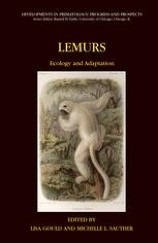
Lemurs : Ecology and Adaptation
In this comprehensive volume, written by experts in the field, information gathered on lemur ecology and adaptation over the past 15 years is presented by both seasoned and newer lemur researchers, and provides us with further knowledge concerning both well-studied and rarely studied extant species, as well as insights into the ecology and adaptation of some of the recently extinct lemurs.
Legionella Pneumophila : Pathogenesis and Immunity
Legionella pneumophila is an emerging human pathogen that resides in natural environments as a parasite of freshwater. The volume brings together all of the lastest research on this pathogen, the interest in which is rapidly growing.
Left-right asymmetry in vertebrate development
A host of studies has unravelled the involvement of many genes in the left right patterning pathway. Based on this knowledge the genetic basis of human laterality defects are beginning to be revealed. It is a major challenge now to understand how all these genes control left right development as well as the complex set of interactions established between them.
Lectins
In the intervening years well over 10,000 articles have appeared with lectins as the main subject, and more than twice as many in which they were touched upon, as well as around 20 books. In particular, great strides have been made in several areas of lectin research, about which little was known until the late 1980s. One prominent example is animal lectins, many of which have been discovered only during the last decade and the functions of several of which have been clarified, especially as to their key role in innate immunity.
Latency Strategies of Herpesviruses
This is the first book dealing with the intricate epigenetic mechanisms (DNA methylation, histone modification, alteration of chromatin structure) that regulate latency-associated transcription. Special attention is given to immune evasion "tricks" blocking immune responses to herpesvirus infected cells and viral RNAs and proteins involved in malignant transformation.
