



Page 308
Page 308

A healthcare professionals training system
The Objective Structured Clinical Examination (OSCE) is a type of examination often used in health sciences. It is designed to test clinical skill performance and competence in a range of skills. It is a practical, real-world approach to learning and assessment. Comprises a circuit of short (5-10 minutes) stations, in which each candidate is examined on a one-to-one basis with one or two impartial examiner(s) and patients who are either real or simulated (actors or electronic patient simulators). Each station has a different examiner; in comparison, the traditional method of clinical examination is when a candidate is assigned to an examiner for the entire examination.

A handful of happiness herbs
Depression is a multifactorial disorder that affects millions of people worldwide, and none of the currently available therapeutics can completely cure it. Thus, there is a need for developing novel, potent, and safer agents. Recent medicinal chemistry findings on the structure and function of the serotonin 2A (5-HT2A) receptor facilitated design and discovery of novel compounds with antidepressant action. The consumption of cocoa-based products rich in bioactive compounds can be related to decreased risk in coronary heart problems, hypertension, diabetes, and depression...

A Handbook of Sustainable Building Design and Engineering : An Integrated Approach to Energy, Health and Operational Performance
Equips students with the tools they will need to tackle the challenges of sustainable building design and engineering. The book looks at how to design, engineer and monitor energy efficient buildings, how to adapt buildings to climate change, and how to make buildings healthy, comfortable and secure. New material for this edition includes sections on environmental masterplanning, renewable technologies, retrofitting, passive house design, thermal comfort and indoor air quality. With chapters and case studies from a range of international, interdisciplinary authors, the book is essential reading for students and professionals in building engineering, environmental design, construction and architecture

A Guide to Methods in the Biomedical Sciences
A Guide to Methods in the Biomedical Sciences gives a basic description of common methods used in research. This is not intended to be a methods book. Rather, it is intended to be a book that outlines the purpose of the methods described, their limitations and provide alternative approaches as appropriate. Thousands of methods have been developed in the various biomedical disciplines and those covered in this book represent the basic, essential and most widely used methods in several different disciplines. The historical background (including some interesting anecdotes) leading to the development of ground-breaking techniques are described, especially those that significantly advanced the field of biomedical research. Advances that earned their inventors prestigious Nobel Prizes are emphasized. The book is divided into six sections, highlighting selected methods in protein chemistry, nucleic acids, recombinant DNA technology (including forensic based methods), antibody-based techniques, microscopy and imaging, and the use of animals in biomedical sciences.
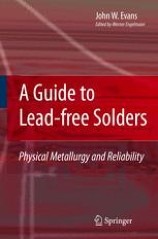
A Guide to Lead-free Solders : Physical Metallurgy and Reliability
While tin/lead solders have dominated the electronics industry for many years, environmental considerations and new legislation are forcing change. Backed by more than ten years of research in Pb-free solders, many electronics manufacturers are poised for conversion. A Guide to Lead-free Solders is intended as a tool to help industry as it moves into a new era in the production and use of solders. An overview of the principles of soldering technology is provided beginning with the theory underlying each concept. Focusing on the most up-to-date methods for testing and characterization, these theories are then reinforced by experimental examples and industrial applications.
A Guide to Graph Algorithms
Offers high-quality content in the research area of graph algorithms and explores the latest developments in graph algorithmics. The reader will gain a comprehensive understanding of how to use algorithms to explore graphs. It is a collection of texts that have proved to be trend setters and good examples of that. The book aims at providing the reader with a deep understanding of the structural properties of graphs that are useful for the design of efficient algorithms. These algorithms have applications in finite state machine modelling, social network theory, biology, and mathematics. The book contains many exercises, some up at present-day research-level. The exercises encourage the reader to discover new techniques by putting things in a clear perspective.

A Guide to Good Occlusal Practice
Considers occlusion within the different disciplines of clinical dentistry, taking into account the challenges specific to each, in order to develop guidelines of good occlusal practice (GGOP). The GGOP for each discipline has benefited from an authoritative contribution of a recognised specialist in that field. Readers will find full description of what constitutes good occlusal practice in, for example, simple and advanced restorative dentistry, removable prosthodontics, the restoration of the worn dentition and implantology. It is clearly explained why and how the GGOP differ in the various branches of dentistry, the key point being that it is the support for the occlusal surfaces that determines GGOP.
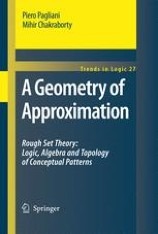
A Geometry of Approximation : Rough Set Theory: Logic, Algebra and Topology of Conceptual Patterns
A Geometry of Approximation' addresses Rough Set Theory, a field of interdisciplinary research first proposed by Zdzislaw Pawlak in 1982, and focuses mainly on its logic-algebraic interpretation. The theory is embedded in a broader perspective that includes logical and mathematical methodologies pertaining to the theory, as well as related epistemological issues. Any mathematical technique that is introduced in the book is preceded by logical and epistemological explanations. Intuitive justifications are also provided, insofar as possible, so that the general perspective is not lost.
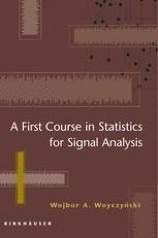
A First Course in Statistics for Signal Analysis
This essentially self-contained, deliberately compact, and user-friendly textbook is designed for a first, one-semester course in statistical signal analysis for a broad audience of students in engineering and the physical sciences. The emphasis throughout is on fundamental concepts and relationships in the statistical theory of stationary random signals, explained in a concise, yet fairly rigorous presentation.
A First Course in Harmonic Analysis
This book is a primer in harmonic analysis using an elementary approach. Its first aim is to provide an introduction to Fourier analysis, leading up to the Poisson Summation Formula. Secondly, it makes the reader aware of the fact that both, the Fourier series and the Fourier transform, are special cases of a more general theory arising in the context of locally compact abelian groups. The third goal of this book is to introduce the reader to the techniques used in harmonic analysis of noncommutative groups. There are two new chapters in this new edition. One on distributions will complete the set of real variable methods introduced in the first part. The other on the Heisenberg Group provides an example of a group that is neither compact nor abelian, yet is simple enough to easily deduce the Plancherel Theorem.
A First Course in Differential Equations
This text is designed for the standard post-calculus course in elementary differential equations. It is a brief, one-semester treatment of the basic ideas, models, and solution methods. The book, which serves as an alternative to existing texts for instructors who want more concise coverage, emphasizes graphical, analytical, and numerical approaches, and is written with clear language in a user-friendly format. It provides students with the tools to continue on to the next level in applying differential equations to problems in engineering, science, and applied mathematics.

A Field Guide to Algebra
Focuses on the structure of fields and is intended for a second course in abstract algebra. Besides providing proofs of the transcendance of pi and e, the book includes material on differential Galois groups and a proof of Hilbert's irreducibility theorem. The reader will hear about equations, both polynomial and differential, and about the algebraic structure of their solutions. In explaining these concepts, the author also provides comments on their historical development and leads the reader along many interesting paths. In addition, there are theorems from analysis: as stated before, the transcendence of the numbers pi and e, the fact that the complex numbers form an algebraically closed field, and also Puiseux's theorem that shows how one can parametrize the roots of polynomial equations, the coefficients of which are allowed to vary. There are exercises at the end of each chapter, varying in degree from easy to difficult. To make the book more lively, the author has incorporated pictures from the history of mathematics, including scans of mathematical stamps and pictures of mathematicians.
A Distributed Coordination Approach to Reconfigurable Process Control
A Distributed Coordination Approach to Reconfigurable Process Control presents research that addresses this critical question, via developing a new distributed framework that will enable the building of a process control system that is capable of reconfigurability.
A Dictionary of Neurological Signs
The Dictionary is not a handbook for treatment of neuropathies. While many entries provide the latest treatment options, up-to-the-minute therapies are not discussed in bedside level detail. The Dictionary is not a board review book because it is not in Q&A format but could easily serve in that capacity since each entry is a fairly complete snapshot of a specific disorder or disease. The Dictionary is an alphabetical listing of commonly presenting neurological diseases and disorders designed to guide the physician toward the correct clinical diagnosis. The content is focused, problem-based, concise and practical.

A dictionary of law
A Dictionary of Law' is an essential reference work, described by leading university lecturers as 'the best law dictionary' and favoured by law students and legal professionals alike. The tenth edition features over 4,900 clear and concise definitions on major terms, concepts, and processes within the English legal system, and is a useful source of information for any of the many countries that base their legal system on English law.

A Dictionary of Biomedicine
A Dictionary of Biomedicine fills the need to define the specialist language used within an evolving field by offering clear, concise definitions of even the most complex biomedical terms. It includes more than 10,000 A-Z entries on all areas of biomedicine, such as genomics and biomedical science. Entries are authoritative and wide-ranging, covering terms from the related areas of anatomy, genetics, molecular bioscience, pathology, pharmacology, and clinical medicine.

A Customer-oriented Manager for B2B Services : Principles and Implementation
A Customer-oriented Manager for B2B Services provides managers with the knowledge and tools necessary to implement customer orientation themselves, with the involvement of their extended team. To this end, this book presents a four-step approach: understand the fundamentals of customer orientation in B2B services, know the customer, make the most of the offer and deliver the service.

A Course in Microeconomic Theory
Offers a treatment of microeconomic theory - one that stresses the behavior of the individual actor in various institutional settings. This book begins with an exposition of the standard models of choice and the market. It is designed for the first-year graduate microeconomic theory course and is accessible to advanced undergraduates as well.
A Course in Derivative Securities : Introduction to Theory and Computation
Aims at a middle ground between the introductory books on derivative securities and those that provide advanced mathematical treatments. It is written for mathematically capable students who have not necessarily had prior exposure to probability theory, stochastic calculus, or computer programming. It provides derivations of pricing and hedging formulas (using the probabilistic change of numeraire technique) for standard options, exchange options, options on forwards and futures, quanto options, exotic options, caps, floors and swaptions, as well as VBA code implementing the formulas. It also contains an introduction to Monte Carlo, binomial models, and finite-difference methods.
A Course in Credibility Theory and its Applications
It covers the subject of Credibility Theory extensively and includes most aspects of this topic from the simplest case to the most general dynamic model. The first four chapters contain plenty of material The book therefore treats explicitly the tasks which the actuary encounters in his daily work such as estimation of loss ratios, claim frequencies and claim sizes. The models are worked out in detail (including the estimation of structural parameters) so that they can immediately be applied in practice. Most exercises are based on real insurance data and real situations from practice and many of them have the characteristics of a case study. The extension to practical problems arising from the general area of finance is often quite straightforward. This book deserves a place on the bookshelf of every actuary and mathematician who works, teaches or does research in the area of insurance and finance.for a first course on Credibility.
