



Page 30
Page 30
Methods of microarray data analysis V
In this volume, all investigators analyzed a single dataset on the lifecycle of the most deadly of malaria parasites, Plasmodium falciparum. The emphasis this year is on the application of novel and existing computational methodologies towards infectious disease. We highlight an introductory chapter by Raphael D. Isokpehi, a leading expert in the field of malaria. Ten of the papers presented at the conference are included, which range from the inference of genetic networks to the analysis of the spatial correlation of array data. This book is an excellent reference for academic and industrial researchers who want to keep abreast of the state-of-the-art in microarray data analysis.
Methods of microarray data analysis IV
As studies using microarray technology have evolved, so have the data analysis methods used to analyze these experiments. The CAMDA conference plays a role in this evolving field by providing a forum in which investors can analyze the same data sets using different methods. METHODS OF MICROARRAY DATA ANALYSIS IV is the fourth book in this series, and focuses on the important issue of associating array data with a survival endpoint. Previous books in this series focused on classification (Volume I), pattern recognition (Volume II), and quality control issues (Volume III). In this volume, four lung cancer data sets are the focus of analysis. We highlight three tutorial papers, including one to assist with a basic understanding of lung cancer, a review of survival analysis in the gene expression literature, and a paper on replication. In addition, 14 papers presented at the conference are included. This book is an excellent reference for academic and industrial researchers who want to keep abreast of the state-of-the-art of microarray data analysis.
Methods of Legal Reasoning
The book attempts to describe and criticize four methods used in legal practice, legal dogmatics and legal theory: logic, analysis, argumentation and hermeneutics. Apart from a presentation of basic ideas connected with the above mentioned methods, the essays contained in this book seek to answer questions concerning the assumptions standing behind these methods, the limits of using them and their usefulness in the practice and theory of law. A specific feature of the book is that in one study four different, sometimes competing concepts of legal method are discussed. The panorama, sketched like this, allows one to reflect deeply on the questions concerning the methodological conditioning of legal science and the existence of a unique, specific legal method. The authors argue that there exists no such method.
Methods of Celestial Mechanics: Vol. I: Physical, Mathematical, and Numerical Principles
G. Beutler's Methods of Celestial Mechanics is a coherent textbook for students in physics, mathematics and engineering as well as an excellent reference for practitioners. This Volume I gives a thorough treatment of celestial mechanics and presents all the necessary mathematical details that a professional would need. After a brief review of the history of celestial mechanics, the equations of motion (Newtonian and relativistic versions) are developed for planetary systems (N-body-problem), for artificial Earth satellites, and for extended bodies (which includes the problem of Earth and lunar rotation). Perturbation theory is outlined in an elementary way from generally known mathematical principles without making use of the advanced tools of analytical mechanics. The variational equations associated with orbital motion - of fundamental importance for parameter estimation (e.g., orbit determination), numerical error propagation, and stability considerations - are introduced and their properties discussed in considerable detail. Numerical methods, especially for orbit determination and orbit improvement, are discussed in considerable depth. The algorithms may be easily applied to objects of the planetary system and to Earth satellites and space debris.
Methods of Celestial Mechanics ; Vol. II : Application to Planetary System, Geodynamics and Satellite Geodesy
G. Beutler's Methods of Celestial Mechanics is a coherent textbook for students as well as an excellent reference for practitioners. Volume II is devoted to the applications and to the presentation of the program system CelestialMechanics. Three major areas of applications are covered: (1) Orbital and rotational motion of extended celestial bodies. The properties of the Earth-Moon system are developed from the simplest case (rigid bodies) to more general cases, including the rotation of an elastic Earth, the rotation of an Earth partly covered by oceans and surrounded by an atmosphere, and the rotation of an Earth composed of a liquid core and a rigid shell (Poincaré model). (2) Artificial Earth Satellites. The oblateness perturbation acting on a satellite and the exploitation of its properties in practice is discussed using simulation methods (CelestialMechanics) and (simplified) first order perturbation methods. The perturbations due to the higher-order terms of the Earth's gravitational potential and resonant perturbations are considered thereafter. Special attention is paid to satellites of the Global Navigation Satellite Systems and to geostationary satellites. The characteristics of and models for the two most important non-gravitational forces, atmospheric drag and radiation pressure, are presented as well as the most relevant forces acting on high- and low-orbiting satellites. (3) Evolution of the Planetary System. The outer planetary system consisting of the planets Jupiter to Pluto is studied over long time intervals using simulation methods and spectral analysis (CelestialMechanics). The properties of the inner systems, in particular of the Earth's orbit, are made visible by integrating the entire system over long time intervals relevant for climate change. The distribution of minor planets and their orbital properties, regular orbits, and chaotic orbits are easily generated and analyzed using CelestialMechanics. The volume concludes with the discussion of important mathematical tools of the program system and of the principles of spectral analysis.
Methods in Nonlinear Analysis
Nonlinear analysis has developed rapidly in the last three decades. Theories, techniques and results in many different branches of mathematics have been combined in solving nonlinear problems. This book collects and reorganizes up-to-date materials scattered throughout the literature from the methodology point of view, and presents them in a systematic way. It contains the basic theories and methods with many interesting problems in partial and ordinary differential equations, differential geometry and mathematical physics as applications.There are five chapters that cover linearization, fixed-point theorems based on compactness and convexity, topological degree theory, minimization and topological variational methods. Each chapter combines abstract, classical and applied analysis. Particular topics included are bifurcation, perturbation, gluing technique, transversality, Nash–Moser technique, Ky Fan's inequality and Nash equilibrium in game theory, setvalued mappings and differential equations with discontinuous nonlinear terms, multiple solutions in partial differential equations, direct method, quasiconvexity and relaxation, Young measure, compensation compactness method and Hardy space, concentration compactness and best constants, Ekeland variational principle, infinite-dimensional Morse theory, minimax method, index theory with group action, and Conley index theory.

Methods in Modern Biophysics
Incorporating recent dramatic advances, this textbook presents a fresh and timely introduction to modern biophysical methods. An array of new, faster and higher-power biophysical methods now enables scientists to examine the mysteries of life at a molecular level. This innovative text surveys and explains the ten key biophysical methods, including those related to biophysical nanotechnology, scanning probe microscopy, X-ray crystallography, ion mobility spectrometry, mass spectrometry, proteomics, and protein folding and structure. Incorporating much information previously unavailable in tutorial form, Nölting employs worked examples and 267 illustrations to fully detail the techniques and their underlying mechanisms.

Methods in consumer research ; Vol 1 : New approaches to classic methods
Brings together world leading experts in global consumer research who provide a fully comprehensive state-of-the-art coverage of advances in the classical methods of consumer science. The book touches on the latest developments in qualitative techniques, Including coverage of both focus groups and social media, While also focusing on liking, A fundamental principle of consumer science, Consumer segmentation, And the influence of extrinsic product characteristics, Such as packaging and presentation on consumer liking.
Methods for Constructing Exact Solutions of Partial Differential Equations: Mathematical and Analytical Techniques with Applications to Engineering
The book is primarily designed to present both fundamental theoretical and algorithmic aspects of these methods. The description of algorithms contains illustrative examples which are typically taken from continuum mechanics. Some sections of the book introduce new applications and extensions of these methods.
Methods and Tools for Drought Analysis and Management
Implementation of effective drought management policies requires both advanced technologies and appropriate methods. Monitoring and forecasting systems, practical tools for risk assessment, as well as simple and objective criteria to select and implement appropriate drought mitigation measures are key elements for a successful drought management strategy.These key issues have been tackled by universities and public agencies involved in the EU projects Sedemed and Sedemed II (Programme Interreg IIIB MEDOCC), aimed at the definition of an integrated network for real time monitoring of drought, the development of common methodologies for drought analysis and forecasting, as well as the definition of proper mitigation strategies for the Mediterranean countries.The book presents the main outcomes of such projects with a special focus on: drought monitoring and forecasting echniques at different spatial scales; new or modified agrometeorological indices and remote sensing technique for drought identification and characterization; tools to improve surface water resources management under drought conditions; methods and tools for groundwater resources monitoring and management, based on hydrogeological and hydrodynamics characteristics of aquifers; general criteria to select and implement mitigation strategies to prevent or minimize drought impacts.
Methods and Tools for Collaborative Networked Organizations
Provides a comprehensive set of reference materials derived from the results of the ECOLEAD project in one organized volume. The ECOLEAD project, a large 4-year European initiative, involved 28 organizations (from academia, research and industry), from 14 countries (in Europe and Latin America).Three main types of results from ECOLEAD are presented: (i) Conceptual frameworks and models, (ii) Methods and processes, and (iii) Software tools and systems.
Methods and Techniques for Cleaning-up Contaminated Sites
This publication is meant to foster links between groups facing challenges cleaning up contaminated sites through presentations that explore the problems currently being addressed and solutions that are emerging in the field.
Methods and Applications of Singular Perturbations : Boundary Layers and Multiple Timescale Dynamics
Perturbation theory, one of the most intriguing and essential topics in mathematics, and its applications to the natural and engineering sciences.In a systematic introductory manner, this unique book deliniates boundary layer theory for ordinary and partial differential equations, multi-timescale phenomena for nonlinear oscillations, diffusion and nonlinear wave equations. The book provides analysis of simple examples in the context of the general theory, as well as a final discussion of the more advanced problems.

Méthodes Numériques : Algorithmes, analyse et applications = Numerical Methods : Algorithms, Analysis and Applications
This book aims to present the theoretical and methodological foundations of numerical analysis. Particular attention is paid to the concepts of stability, precision and complexity of algorithms. Modern methods relating to the following topics are presented and analyzed in detail: solving linear and nonlinear systems, polynomial approximation, optimization, numerical integration, orthogonal polynomials, rapid transformations, ordinary differential equations. The techniques presented are illustrated by numerous tables and figures. Many examples and counter-examples are offered to allow the reader to develop his critical sense.
Méthodes mathématiques en chimie quantique : Une introduction = Mathematical methods in quantum chemistry : An introduction
This book presents the mathematical foundations of several models of quantum chemistry. It is intended for graduate students in mathematics (and possibly also for scientists from physics or chemistry interested in understanding the formal underpinnings of their models), and introduces techniques and methods from several mathematical fields, in particular variational techniques, nonlinear analysis, spectral theory and partial differential equations theory.

Metastasis of Breast Cancer
The book has covered a broad range of topics in the metastasis of breast cancer, from genetics, biology to clinical management. Main topics include genetic control, biology, growth factors, cell adhesion, cell motility and invasion, natures of bone metastasis, sentinel node therapies, hormonal links, new biomarkers and detection of micrometastasis, and diagnosis The book also covers the current treatment options including surgical management, chemotherapy and hormonal therapies.
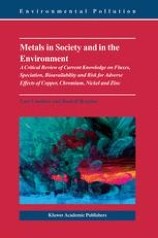
Metals in Society and in the Environment : A Critical Review of Current Knowledge on Fluxes, Speciation, Bioavailability and Risk for Adverse Effects of Copper, Chromium, Nickel and Zinc
In 2002, the Swedish Metal Information Task Force (MITF) engaged the Environmental Research Group (MFG) to update previous monographs on copper, zinc and major alloying metals (such as chromium, nickel and molybdenum) in society and in the environment. This book presents new results on metal fluxes from society to the environment, on metal speciation in water, soil and sediment, and its interpretation in terms of mobility, biological uptake and toxicity. The scientific fundamentals of new approaches, like the Acid Volatile Sulphide (AVS) concept to predict metal bioavailability in sediments, and the Biotic Ligand Model (BLM) to calculate the toxicity of metals to aquatic organisms, are critically evaluated, with a focus on copper, nickel, zinc, and, in part, chromium.
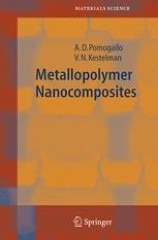
Metallopolymer Nanocomposites
Highly dispersed nanoscale particles in polymer matrices are currently attracting great interest in many fields of chemistry, physics and materials science. This book presents and analyzes the essential data on nanoscale metal clusters dispersed in, or chemically bonded with polymers. Special attention is paid to the in situ synthesis of the nanocomposites, their chemical interactions, and the size and distribution of the particles in the polymer matrix. Numerous novel nanocomposites are described with regard to their mechanical, electrophysical, optical, magnetic, catalytic and biological properties. Their applications, present and future, are outlined. The book is addressed both to researchers who actively use these materials and to students entering this multidisciplinary field.

Metal-containing molecules and nanomaterials : from diagnosis to therapy
Since the discovery and successful deployment of salvarsan to treat syphilis, as well as cisplatin as a cancer drug, the field of metallodrugs has been flourishing. In addition to therapeutic applications, metals and metal-containing molecules have properties, such as an electrochemical or an optical signal, used to diagnose biologically relevant molecules or unravel cellular metabolism. Metals are part of the essential elements for life, and of increased attention in nutraceuticals. Most of the current diagnosis processes, therapeutics and nutraceuticals are based on organic molecules. MILS-26 reviews the most recent metal-containing molecules and nanomaterials for diagnosis and therapy
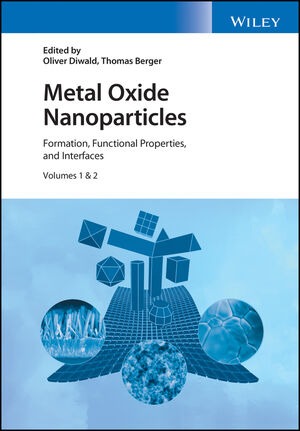
Metal Oxide Nanoparticles : Formation, Functional Properties, and Interfaces ; 2 Volume Set
Metal oxide nanoparticles are integral to a wide range of natural and technological processes—from mineral transformation to electronics. Additionally, the fields of engineering, electronics, energy technology, and electronics all utilize metal oxide nanoparticle powders. Metal Oxide Nanoparticles: Formation, Functional Properties, and Interfaces presents readers with the most relevant synthesis and formulation approaches for using metal oxide nanoparticles as functional materials. It covers common processing routes and the assessment of physical and chemical particle properties through comprehensive and complementary characterization methods.
