



Page 3
Page 3

La musica del Big Bang : Come la radiazione cosmica di fondo ci ha svelato i segreti dell’Universo = The music of the Big Bang : How the cosmic background radiation revealed the secrets of the Universe to us
Cosmic microwave background radiation is the residue of the great heat following the Big Bang. A tenuous sign, over 13 billion years old, in which the answers to many of the questions about the nature of our Universe are hidden. Discovered by chance in 1964, in the last forty years this fossil trace of the origins of the Cosmos has been explored with every available means. Two Nobel Prizes in physics have already been awarded for research involving it, the last in 2006 for the results of the COBE satellite. Much of the information encoded in the cosmic background radiation was impressed by the superimposition of acoustic waves present in the early Universe: a "music" of the Big Bang, which cosmologists have tried for years to reconstruct, using techniques similar to those that allow to distinguish the sound of different musical instruments. Only recently have the first notes of this extraordinary cosmic symphony finally been revealed, but the investigation is not over yet. This book illustrates, with a language suitable even for non-specialists, the theories, observations and discoveries that have brought cosmology into a new era.
La correspondance entre Henri Poincaré et les physiciens, chimistes et ingénieurs = The correspondence between Henri Poincaré and physicists, chemists and engineers
Cosmic microwave background radiation is the residue of the great heat following the Big Bang. A tenuous sign, over 13 billion years old, in which the answers to many of the questions about the nature of our Universe are hidden. Discovered by chance in 1964, in the last forty years this fossil trace of the origins of the Cosmos has been explored with every available means. Two Nobel Prizes in physics have already been awarded for research involving it, the last in 2006 for the results of the COBE satellite. Much of the information encoded in the cosmic background radiation was impressed by the superimposition of acoustic waves present in the early Universe: a "music" of the Big Bang, which cosmologists have tried for years to reconstruct, using techniques similar to those that allow to distinguish the sound of different musical instruments. Only recently have the first notes of this extraordinary cosmic symphony finally been revealed, but the investigation is not over yet. This book illustrates, with a language suitable even for non-specialists, the theories, observations and discoveries that have brought cosmology into a new era.

Ken Smith Landscape Architect : Urban projects
Ken Smith is one of the most interesting voices in landscape architecture today. His works reflect the intensity and energy of their surroundings and challenge the distinction between landscape and art. Ken Smith Landscape Architect/Urban Projects focuses on three prominent works in New York City: the East River Ferry Landings, P.S. 19, and a roof garden for the Museum of Modern Art. Featuring an interview with Ken Smith and extensive photographic documentation and drawings, as well as an essay by Nina Rappaport and a foreword by Peter Reed, the book reveals how each project expresses new relationships between landscape and place within the city
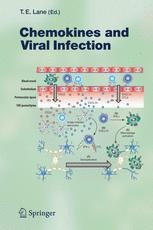
Chemokines and Viral Infection
This edition of Current Topics in Microbiology and Immunology examines the role of chemokines and chemokine receptors in host defense and disease development following viral infection. Chemokines represent a family of over 40 small proteins that, for the most part, are secreted into the environment and function by binding to G protein-coupled receptors (GPCRs) that are expressed on numerous different cell types. When initially identified close to 30 years ago, these molecules were associated with various human inflammatory diseases and it was recognized that expression may be integral in leukocyte recruitment to inflamed tissue. There are now four sub-families of chemokines identified based on defined structural criteria relating to the positional location of conserved cysteine residues within the amino-terminus of the protein. Chemokines are now recognized as important in numerous biological processes ranging from maintaining the organizational integrity of secondary lymphoid tissue to participating in various aspects of both innate and adaptive immune responses following microbial infection. With this in mind, this book highlights the functional roles of chemokines and their receptors in participating in various aspects of the immune response against well-known viral pathogens.

Cancer du sein ; Compte rendu cours supérieur francophone de cancérologie, (Saint-Paul-de-Vence 13-15 Janvier 2005) = Breast cancer ; Report on the advanced French-language course in oncology, (Saint-Paul-de-Vence, January 13-15, 2005)
In January 2005, the 9th Cours de Saint-Paul-de-Vence, devoted to Breast Cancer, was dominated by the establishment of "Recommendations for Clinical Practice". The five subjects of these recommendations, such as the management of the axillary cavity, neo-adjuvant treatments, the management of patients whose tumor overexpresses HER2, adjuvant hormone therapy and finally adjuvant chemotherapy have been widely discussed. As in each course, certain essential fields were treated such as organized screening, conventional radiology and MRI, prognostic and predictive factors. Ductal cancers and lobular cancers have been compared in a remarkable way in three papers which were produced by the Saint-Cloud school. Data on in situ cancers have been updated. Finally, advice was given for the use of the various standards, whether local, regional or national.R2, l¹hormonothérapie adjuvante et enfin la chimiothérapie adjuvante ont été largement abordés.
Basic principles and applications of probability theory
This introductory chapter discusses such notions as determinism, chaos and randomness, p- dictibility and unpredictibility, some initial approaches to formalizing r- domness and it surveys certain problems that can be solved by probability theory. This will perhaps give one an idea to what extent the theory can - swer questions arising in speci?c random occurrences and the character of the answers provided by the theory. 1. 1 The Nature of Randomness The phrase “by chance” has no single meaning in ordinary language. For instance, it may mean unpremeditated, nonobligatory, unexpected, and so on. Its opposite sense is simpler: “not by chance” signi?es obliged to or bound to (happen). In philosophy, necessity counteracts randomness. Necessity signi?es conforming to law – it can be expressed by an exact law. The basic laws of mechanics, physics and astronomy can be formulated in terms of precise quantitativerelationswhichmustholdwithironcladnecessity.
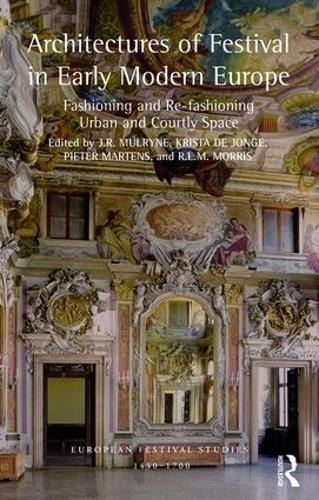
Architectures of festival in early modern Europe : Fashioning and re-fashioning urban and courtly space
Draws on up-to-date research by a Europe-wide group of academic scholars and museum and gallery curators to provide a unique, intellectually-stimulating and beautifully-illustrated account of temporary architecture created for festivals of the sixteenth and seventeenth centuries, together with permanent architecture pressed into service for festival occasions across major European locations including Italian, French, Austrian, Scottish and German.

Annual bibliography of the history of the printed book and libraries ; Vol.31 : Publications of 2000 and additions from the preceding years
The Annual Bibliography of the History of the Printed Book and Libraries aims at recording articles of scholarly value which relate to the history of the printed book, to the history of arts, crafts, techniques and equipment, and of the economic social and cultural environment, involved in its production, distribution, conservation and description.
Ages, generations and the social contract : The demographic challenges facing the welfare state
Our societies are ageing. The Family is changing. Labour force behaviour is evolving. How is the organisation of family and collective solidarity adapting in this context of longer life spans, low fertility, and work that is simultaneously scarce and abundant? The welfare states are currently facing three main challenges: ensure satisfactory living conditions for the elderly without increasing the cost burden on the active population, reduce social inequality, and maintain equity between successive generations. In this book, researchers from different countries compare their experiences and offer contrasting views on the future of social protection. They consider the theoretical aspects of the intergenerational debate, relations between generations within the family, the living standards of elderly people, and the question of social time.
