



Page 3
Page 3

Food lens = فود لينس
Food lens is an innovative application designed to revolutionize dietary management by leveraging advanced image recognition and nutritional analysis. The primary objective of this senior project is to develop a user-friendly tool that identifies various foods through a camera interface and provides detailed nutritional information. This application not only enhances the user's understanding of their dietary intake but also assists in achieving personalized health and fitness goals. The core functionality of Food Lens involves the integration of a robust image recognition system capable of accurately identifying a wide range of foods. Upon identification, the application retrieves comprehensive nutritional data, including calorie content, macronutrient distribution (proteins, fats, carbohydrates), and essential micronutrients (vitamins and minerals). This data is then seamlessly integrated into the user's dietary profile. Food Lens is designed to track the user's daily caloric intake and compare it against personalized recommendations based on age, gender, weight, height, and activity level. By maintaining a dynamic record of consumed foods, the application provides real-time feedback on the user’s nutritional progress. This feature is particularly beneficial for individuals aiming to manage weight, address dietary restrictions, or improve overall health.

Evidence based practice in Neuro-oncology
This book provides evidence-based management in neuro-oncology covering all aspects such as pathology, radiology, surgery, radiation, and chemotherapy.The field of neuro-oncology is rapidly evolving and new evidence is coming out every day towards the optimal management of brain tumors. This necessitates a requirement of a complete guide that shall provide an evidence-based and personalized approach towards dealing with patients. This book also covers recent advances in personalized treatment formed through the relevant basis of anatomy, imaging, radiology, surgical, radiation and systemic treatment of brain and spinal tumors. In addition it also covers the , practical aspects of the planning of the Gamma knife and other radio surgical aspects.
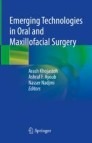
Emerging Technologies in Oral and Maxillofacial Surgery
Covers the application of emerging technologies, occurring after the 4th industrial revolution, in oral and maxillofacial surgery (OMFS) and introduces a new era of personalized medicine in this discipline. It describes the manufacturing and data acquisition methods, in detail, including the advantages and disadvantages of each process. The workflow of using the emerging technologies in reconstructive treatments, orthognathic surgery, implant dentistry, robotic surgery and bio‑fabrication have been covered in separate chapters.

Data Integration in the Life Sciences ; Vol. 4075 ; 3rd International Workshop, DILS 2006, Hinxton, UK, July 20-22, 2006, Proceedings
Data management and data integration are fundamental problems in the life sciences. Advances in molecular biology and molecular medicine are almost u- versallyunderpinned by enormouse?orts in data management,data integration, automatic data quality assurance, and computational data analysis. Many hot topics in the life sciences, such as systems biology, personalized medicine, and pharmacogenomics, critically depend on integrating data sets and applications producedby di?erent experimentalmethods, in di?erent researchgroups,andat di?erent levels of granularity.

Data driven : Harnessing data and AI to reinvent customer engagement
Data Driven will show you how to: Target and delight your customers with unprecedented accuracy and success, Bring customers closer to your brand and inspire them to engage, purchase, and remain loyal, Capture, organize, and analyze data from every source and activate it across every channel, Create a data-powered marketing strategy that can be customized for any audience, Serve individual consumers with highly personalized interactions, Deliver better customer service for the best customer experience, Improve your products and optimize your operating systems, Use AI and IoT to predict the future direction of markets. Also you’ll discover the three principles for building a successful data strategy and the five sources of data-driven power.

Critical issues in head and neck oncology : Key concepts from the eighth THNO meeting
Reviews the state-of-the-art knowledge with emphasis on multidisciplinary decision and management of head and neck cancer. The book provides significant detail on a wide range of topics including: the role of new targets for treatment, immunotherapy, resistance mechanisms, standardizing molecular profiling programs, and new methods to guide therapeutic approaches.

Computers and Education : E-Learning, From Theory to Practice
This book contains a selection of contributions presenting the latest research in the field of Computers in Education and, more specifically, in E-Learning. The topics covered range from proposals regarding the newest "de facto" standards in E-Learning - such as IMS Learning Design - to the more practical aspects of the design, i.e. implementations and the actual application of educational tools in real settings. The volume reflects the diverse scenario of the application of computers in the educational field by describing previous experiences and addressing some of the present key issues such as Learning Management Systems as well as more innovative aspects such as personalized or ubiquitous learning.

Clinical metabolomics applications in genetic diseases
Helps readers discover the forefront of personalized medicine on clinical metabolomics and its applications in genetic diseases. This comprehensive guide offers a functional relationship map between cell components and genetic variations in various diseases, providing insights that can be applied to personalized medicine. Covers the latest developments in metabolomics for health, with practical guidance for clinical experts looking to advance their laboratory techniques and career. The metabolomics profile is a powerful tool that has revolutionized our understanding of the relationship between genetics, clinical readouts, and disease outcomes. By integrating metabolomics with genomics and clinical phenotypes, the authors have developed diagnostic and prediction models that have vastly improved patient outcomes and deepened the understanding of disease mechanisms.

Children and the Dark Side of Human Experience : Confronting Global Realities and Rethinking Child Development
Synthesizing insights from psychology and philosophy with his own wide-ranging, first-hand experiences around the world, Dr. James Garbarino takes readers on a personalized journey into the dark side of human experience as it is lived by children. In these highly readable pages, Dr. Garbarino intertwines a discussion of children’s material and spiritual needs with a detailed examination of the clinical knowledge and experiential wisdom required to understand and meet complex developmental needs. Fusing anecdotal observations, empirical evidence, and an ecological perspective, he reveals a path to ensuring the fundamental human rights of all children: the right to safety, to equality, to economic parity, and to a meaningful life.
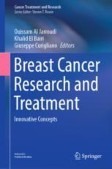
Breast cancer research and treatment : innovative concepts
Focuses on innovative treatment options for breast cancer, including surgery, radiotherapy, systemic therapy and of course immunotherapy that is changing outcomes in some aggressive breast cancer histotypes. Subsequent chapters also address the ongoing emerging research in the screening, diagnostics, and management of all subtypes of breast cancers. All current landscapes and future perspectives in each molecular subtype: luminal, HER2-positive, and triple-negative breast cancers are discussed within the different chapters. Breast cancer is still the most common cancer and cause of cancer deaths among women worldwide. The improvement of breast cancer outcome appears to be strictly related to the validation of precise biomarkers that enable us to better select personalized approaches in breast cancer management. The closing chapters deal with the challenges of low income countries of conducting research in the era of precision medicine for cancer. The book is edited and authored by leading experts in this field and will be of interest for clinicians and scientists alike

Biomarkers in drug discovery and development : A handbook of practice, application, and strategy
Discusses biomarker characterization and validation and applications throughout drug discovery and development. Explains where proper use of biomarkers can substantively impact drug development timelines and costs, enable selection of better compounds and reduce late stage attrition, and facilitate personalized medicine. Helps readers get a better understanding of biomarkers and how to use them, for example which are accepted by regulators and which still non-validated and exploratory. Updates developments in genomic sequencing, and application of large data sets into pre-clinical and clinical testing; and adds new material on data mining, economics, and decision making, personal genetic tools, and wearable monitoring. Includes case studies of biomarkers that have helped and hindered decision making

Biological mechanisms of tooth movement ; 3rd ed.
Cover subjects such as: The development of biological concepts in orthodontics, including the cellular and molecular biology behind orthodontic tooth movement Mechanics meets biology, including the effects of mechanical loading on hard and soft tissues and cells, and biological reactions to temporary anchorage devices Inflammation and orthodontics, including markers for tissue remodeling in the gingival crevicular fluid and saliva Personalized diagnosis and treatment based on genomic criteria, including the genetic influences on orthodontic tooth movement Rapid orthodontics, including methods to accelerate or decelerate orthodontic tooth movement Perfect for residents and PhD students of orthodontic and periodontal programs, Biological Mechanisms of Tooth Movement is also useful to academics, clinicians, bone biologists, and researchers with an interest in the mechanics and biology of tooth movement.

Big Data Recommender Systems ; Vol.2 : Application Paradigms
Combines experimental and theoretical research on big data recommender systems to help computer scientists develop new concepts and methodologies for complex applications. It includes original scientific contributions in the form of theoretical foundations, comparative analysis, surveys, case studies, techniques and tools. First designed to generate personalized recommendations to users in the 90s, recommender systems apply knowledge discovery techniques to users’ data to suggest information, products, and services that best match their preferences. In recent decades, we have seen an exponential increase in the volumes of data, which has introduced many new challenges. recommender systems. Volume 2 covers a broad range of application paradigms for recommender systems over 22 chapters
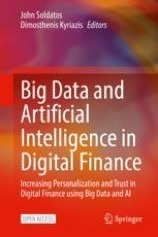
Big data and artificial intelligence in digital finance : Increasing personalization and trust in digital finance using big data and AI
This book presents how cutting-edge digital technologies like Machine Learning, Artificial Intelligence (AI), and Blockchain are set to disrupt the financial sector. The book illustrates how recent advances in these technologies facilitate banks, FinTechs, and financial institutions to collect, process, analyze, and fully leverage the very large amounts of data that are nowadays produced and exchanged in the sector. To this end, the book also introduces some of the most popular Big Data, AI and Blockchain applications in the sector, including novel applications in the areas of Know Your Customer (KYC), Personalized Wealth Management and Asset Management, Portfolio Risk Assessment, as well as variety of novel Usage-based Insurance applications based on Internet-of-Things data.

Autoimmunity : Methods and protocols
Brings together a comprehensive and up-to-date collection of protocols that reflect the diverse experimental strategies. Chapters detail T-cell, macrophage characterization, neutrophil functional assays, organoid culture methods, spatial transcriptomics, RNA FISH, microRNA profiling, and ribosome profiling. Written in the highly successful Methods in Molecular Biology series format, chapters include introductions to their respective topics, lists of the necessary materials and reagents, step-by-step, readily reproducible laboratory protocols, and key tips on troubleshooting and avoiding known pitfalls.

Artificial intelligence based nutrition app
As AI becomes a giant trend in the business world, mobile apps are one of the usage areas, which people can benefit from. People can automate their tasks with AI-based mobile apps. As the mobile app understand how processes work, it can automate some procedures and reduce the duration of them. In this way, people can save time and improve their productivity. In addition, personalized content also improves user engagement and meets user expectations more. Many other features of AI can be integrated into mobile apps and improve user experience.
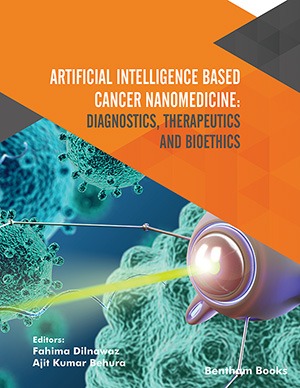
Artificial intelligence based cancer nanomedicine : Diagnostics, therapeutics and bioethics
Nanomedicine is evolving with novel drug formulations devised for multifunctional approaches towards diagnostics ad therapeutics. Nanomedicine-based drug therapy is normally explored at a fixed dose. The drug action is time-dependent, dose-dependent and patient-specific. To overcome challenges of nanomedicine testing, artificial intelligence (AI) serves as a helping tool for optimizing the drug and dose parameters. Real time conversions between these two features enables upgradation of patient data acquisition and improved design of nanomaterials. In this scenario, AI-based pattern analysis and algorithms models can greatly improve accuracy of diagnostics and therapeutics.

Arabic AI-generated adverts = إعلانات عربية مولدة بالذكاء الاصطناعي
In the ever-evolving landscape of digital marketing, our groundbreaking platform emerges, harnessing the power of artificial intelligence to revolutionize the creation of marketing campaigns. This innovative solution seamlessly combines neural networks, natural language generation, and multimedia processing capabilities to generate comprehensive and personalized marketing assets from a single product image. At its core, the platform leverages deep learning models that analyze the visual characteristics of the uploaded product image and identifies key features and attributes to define the product category, this enables the generation of compelling and persuasive marketing content tailored to the specific product. The platform's multi-faceted approach encompasses three distinct components: text generation, poster creation, and video advertisement production. Utilizing advanced natural language generation techniques, it crafts engaging marketing text that captures the essence and unique selling points of the product. Simultaneously, its image processing capabilities produce visually stunning promotional posters that blend the product image with eye-catching graphics and typography. along with creating captivating video advertisements optimized for social media and online advertising campaigns.

Agent Technology and e-Health
Multi-agent systems are one of the most exciting research areas in Artificial Intelligence. This book reports on the results achieved in this area, discusses the benefits (and drawbacks) that agent-based systems may bring to medical domains and society.

Advances in web mining and web usage analysis ; 6th International workshop on knowledge discovery on the web, WEBKDD 2004, Seattle, WA, USA, August 22-25, 2004, Revised Selected Papers
The Webisaliveenvironmentthatmanagesanddrivesawidespectrumofapp- cations in which a user may interact with a company, a governmental authority, a non-governmental organization or other non-pro?t institution or other users. User preferences and expectations, together with usage patterns, form the basis for personalized, user-friendly and business-optimal services. Key Web business metrics enabled by proper data capture and processing are essential to run an e?ective business or service. Enabling technologies include data mining, sc- able warehousing and preprocessing, sequence discovery, real time processing, document classi?cation, user modeling and quality evaluation models for them. Recipient technologies required for user pro?ling and usage patterns include recommendation systems, Web analytics applications, and application servers, coupled with content management systems and fraud detectors.
