



Page 27
Page 27
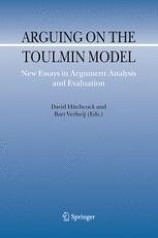
Arguing on the Toulmin model : New essays in argument analysis and evaluation
In The Uses of Argument Stephen Toulmin proposed a new model for the layout of arguments, with six components: claim, data, warrant, qualifier, rebuttal, backing. Toulmin’s model has been appropriated, adapted and extended by researchers in the fields of speech communications, philosophy and artificial intelligence. The volume aims to bring together the best contemporary reflection in these fields on the Toulmin model and its current appropriation.

Arguing Fundamental Rights
The book is unique in combining a challenging interpretation of one the foremost European conceptions of fundamental rights with the discussion of the pragmatics of constitutional adjudication.
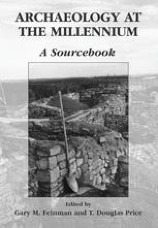
Archaeology at the millennium : A sourcebook
The sourcebook is divided into four substantive sections, each of which is introduced by a summary statement outlining the chapters in the section. Part I deals with the history of archaeology and the advance of archaeological theory. Part II ranges over the first four million years of our evolution as a cultural species and covers the first hominids to complex hunter-gatherers. Part III concerns the origins of agriculture and features discussions of such issues as craft production, the division of labor, warfare, and the rise of social inquality. Part IV analyzes the rise of states and empired in both the Old and New World; the archaeology of the classical Mediterranean states is also included in this section. A final chapter portends the future of archaeology.
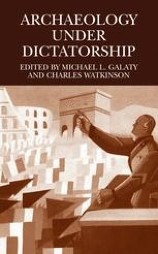
Archaelogy Under Dictatorship
This volume aims to provide a theoretical basis for understanding the specific effects of totalitarian dictatorship upon the practice of archaeology, both during and after the dictator's reign.
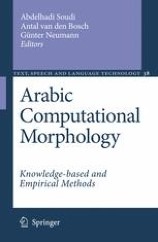
Arabic Computational Morphology : Knowledge-based and Empirical Methods
The morphology of Arabic poses special challenges to computational natural language processing systems. The exceptional degree of ambiguity in the writing system, the rich morphology, and the highly complex word formation process of roots and patterns all contribute to making computational approaches to Arabic very challenging. Indeed many computational linguists across the world have taken up this challenge over time, and many of the researchers with a track record in this research area have contributed to this book.
Aquinas and Maimonides on the Possibility of the Knowledge of God : An Examination of The Quaestio de attributis
This in-depth study of Thomas Aquinas’ Quaestio de attributis. Shows that the Quaestio contains Aquinas’ final answer to the dispute on the divine attributes, and thoroughly examines his interpretation of Maimonides’ position on the issue of the knowledge of God by analysing this and other texts related to it chronologically and doctrinally.
Approaches to Metaphysics
Today, when systematic philosophy - and reason itself - are challenged both outside of and within philosophy, is it still possible to do metaphysics? This volume provides a broad perspective on contemporary approaches to the nature and the fundamental questions of metaphysics. Drawing on scholars from continental Europe, Asia, Canada, the United States, and Great Britain, and representing a variety of philosophical cultures and traditions, this volume surveys and extends work in metaphysics and its implications for broader philosophical concerns (e.g., in ethics and social philosophy, in mathematics and logic, and in epistemology). It also addresses such questions as the role of history and historicity in undertaking metaphysics, the nature of metaphysics, the priority of metaphysics over epistemology, and the challenges of empiricism and postmodernism.
Apprehension and Argument : Ancient Theories of Starting Points for Knowledge
This book offers the first synoptic study of how the primary elements in knowledge structures were analysed in antiquity from Plato to late ancient commentaries, the main emphasis being on the Platonic-Aristotelian tradition. It argues that, in the Platonic-Aristotelian tradition, the question of starting points was treated from two distinct points of view: from the first perspective, as a question of how we acquire basic knowledge; and from the second perspective, as a question of the premises we may immediately accept in the line of argumentation. It was assumed that we acquire some general truths rather naturally and that these function as starting points for inquiry. In the Hellenistic period, an alternative approach was endorsed: the very possibility of knowledge became a central issue when sceptics began demanding that true claims should always be distinguishable from false ones.
Applied Rasch Measurement : A Book of Exemplars : Papers in Honour of John P. Keeves
While the primary purpose of the book is a celebration of John’s contributions to the field of measurement, a second and related purpose is to provide a useful resource. We believe that the combination of the developmental history and theory of the method, the examples of its use in practice, some possible future directions, and software and data files will make this book a valuable resource for teachers and scholars of the Rasch method. This book is a tribute to Professor John P Keeves for the advocacy of the Rasch model in Australia.
Applied Linguistics and Language Teacher Education
Applied Linguistics and Language Teacher Education is aimed at applied linguists who are interested in understanding more about the learning of novice teachers in their classes. The 21 studies in this volume provide information on the complexity of novice teachers’ learning and use of knowledge in a variety of applied linguistics classes such as SLA, Syntax, Pragmatics, Sociolinguistics, Phonetics and Phonology, L2 Reading and Writing, Testing, and Content Based Instruction. These studies were conducted in a variety of contexts, from North and South America to Europe, Asia and Australia, and look at the preparation of teachers of English, Spanish and Chinese.

Applied Demography in the 21st Century : Selected Papers from the Biennial Conference on Applied Demography, San Antonio, Texas, January 7–9, 2007
The work contains chapters on several major topical areas that are central to applied demography including works on data Use and measurement, including detailed analysis of the American Community Survey and Master Address File, population estimation and projection, applied demography and health, and surveys examples of applied demographic analysis in such diverse areas as urban planning, educational planning, church selection, and private-sector marketing. The work also contains a section on the process of educating applied demographers delineating the types of skills needed by the applied demographer and providing examples of a program designed to meet such needs.

Annual bibliography of the history of the printed book and libraries ; Vol.31 : Publications of 2000 and additions from the preceding years
The Annual Bibliography of the History of the Printed Book and Libraries aims at recording articles of scholarly value which relate to the history of the printed book, to the history of arts, crafts, techniques and equipment, and of the economic social and cultural environment, involved in its production, distribution, conservation and description.

Animal Welfare : Competing Conceptions and Their Ethical Implications
The thesis of this book is that members of what I shall call the “animal welfare science community,”3 which includes both scientists and philosophers, have illegitimately appropriated the concept of animal welfare by claiming to have given a scientific account of it that is more objectively valid than the more sentimental” account given by animal liberationists.
Andean Archaeology III : North and South
In this volume, the strong cultural differences between northern and southern regions of the Central Andes are examined and the conditions under which these differences evolved are explored.
Ancient Philosophy of the Self
This volume explores the various ways in which selfhood was approached and conceptualised in antiquity. They also describe how the ancient philosophers understood human agents as capable of causing changes and being affected in and by the world. The themes of persistence, identity, self-examination and self-improvement recur in many of these essays. The articles of the collection combine systematic and historical approaches to ancient sources that range from Socrates to Plotinus and Augustine.
Anaphora and Type Logical Grammar
This book develops a hybrid architecture that allows to incorporate anaphora resolution into grammatical deduction while avoiding these consequences. To this end, the grammar logic is enriched with a connective that specifically deals with anaphora.After giving a self-contained introduction into Type Logical Grammar in general, the book discusses the formal properties of this connective. In the sequel, Jäger applies this machinery to numerous linguistic phenomena pertaining to the interaction of pronominal anaphora, VP ellipsis and quantification. In the final chapter, the framework is extended to indefiniteness, specificity and sluicing.
Analogy in Indian and western philosophical thought
This book was assembled from numerous excerpts, notes, and fragments according to his initial plans. Zilberman’s legacy still awaits its true discovery and this book is a second installment to it after The Birth of Meaning in Hindu Thought (Kluwer, 1988). Zilberman’s treatment of analogy is unique in its approach, scope, and universality for Western philosophical thought.
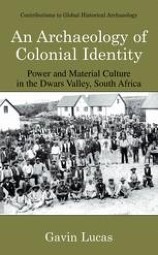
An Archaeology of Colonial Identity : Power and Material Culture in the Dwars Valley, South Africa
This book is the based on the work of many people, and while I discuss many of them in the general context of this book in Chapter 1. The backbone of the book is based on a project, 'Farm Lives' conducted between 1999 and 2002, funded exclusively by the McDonald Institute for Archaeolog-ical Research at the University of Cambridge.
An Archaeological Evolution
An Archaeological Evolution is a personal recounting of his life as it is played out among some of the most important debates and movements in archaeology starting in the 1960's up to the 21st century.This seminal volume will be of interest to archaeologists (both professional and academic), anthropologists, historians, and conservators in or studying the United States but also, wherever archaeology is taught and practiced.
An American scientist on the research frontier : Edward Morley, community, and radical ideas in nineteenth-century science
This important examination of Morley’s struggle for personal and professional legitimacy extends and transforms our understanding of science during a foundational period, and leads to a number of unique conclusions that are vital to the literature and historiography of science.
