



Page 27
Page 27

Modelling Regional Scenarios for the Enlarged Europe : European Competitiveness and Global Strategies
The aim of this book is to tackle the question of what the European territory will look like over the next fifteen years by providing quali-quantitative territorial scenarios for the enlarged Europe, under different assumptions on future globalisation strategies of BRIC (Brazil, Russia, India and China) and East and West European countries. The approach is as neutral as possible vis-à-vis the results, leaving to a new forecasting model, the MASST model, built by the authors, to produce the tendencies and behavioural paths of regional GDP and population growth in each individual European region under alternative assumptions on the competitiveness strategies of different blocks of countries. The results are accompanied by strong policy messages intended to encourage long-term strategic thinking among a wide range of actors, scientists and policy makers in response to the risks and opportunities that the European territory will face.

Modelling our Changing World
This book focuses on the concepts, tools and techniques needed to successfully model ever-changing time-series data. It emphasizes the need for general models to account for the complexities of the modern world and how these can be applied to a range of issues facing Earth, from modelling volcanic eruptions, carbon dioxide emissions and global temperatures, to modelling unemployment rates, wage inflation and population growth.

Modelling in Mathematical Programming : Methodology and Techniques
This book provides basic tools for learning how to model in mathematical programming, from models without much complexity to complex system models. It presents a unique methodology for the building of an integral mathematical model, as well as new techniques that help build under own criteria. It allows readers to structure models from the elements and variables to the constraints, a basic modelling guide for any system with a new scheme of variables, a classification of constraints and also a set of rules to model specifications stated as logical propositions, helping to better understand models already existing in the literature. It also presents the modelling of all possible objectives that may arise in optimization problems regarding the variables values. The book is structured to guide the reader in an orderly manner, learning of the components that the methodology establishes in an optimization problem. The system includes the elements, which are all the actors that participate in the system, decision activities that occur in the system, calculations based on the decision activities, specifications such as regulations, impositions or actions of defined value and objective criterion, which guides the resolution of the system.

Modelling community structure in freshwater ecosystems
"The book presents approaches and methodologies for predicting the structure and diversity of key aquatic communities (namely diatoms, benthic macroinvertebrates and fish), under natural conditions and under man-made disturbance. Such an approach will make it possible to: 1) set up procedures for robust and sensitive ecosystem evaluation, based on the prediction of the excepted community structure; 2) model community structure in disturbed ecosystems, taking into account all the relevant ecological variables; 3) test ecosystem sensitivity to natural and anthropic disturbance; and 4) explore specific actions to be taken for the restoration of ecosystem integrity."--Jacket.

Modelling and Reasoning with Vague Concepts
This volume outlines a formal representation framework for modelling and reasoning with vague concepts in Artificial Intelligence. The new calculus has many applications, especially in automated reasoning, learning, data analysis and information fusion. This book gives a rigorous introduction to label semantics theory, illustrated with many examples, and suggests clear operational interpretations of the proposed measures. It also provides a detailed description of how the theory can be applied in data analysis and information fusion based on a range of benchmark problems.
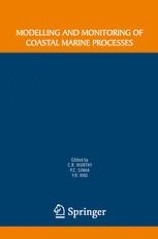
Modelling and Monitoring of Coastal Marine Processes
Although numerous books have been written on both monitoring and modelling of coastal oceans, there is a practical need for an introductory multi-disciplinary volume to non-specialists in this field. The articles commisioned for this book, organized into four major themes, are written by experts in their disciplines while the text is intended for scientists who do not have extensive training in marine sciences and coastal zone management. As such, the articles in this monograph can be a valuable reference for practicing professionals.

Modelling and Identification with Rational Orthogonal Basis Functions
Models of dynamical systems are of great importance in almost all fields of science and engineering and specifically in control, signal processing and information science.
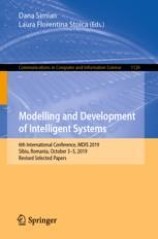
Modelling and Development of Intelligent Systems ; 6th International Conference, MDIS 2019, Sibiu, Romania, October 3–5, 2019, Revised Selected Papers
This volume constitutes the refereed proceedings of the 6th International Conference on Modelling and Development of Intelligent Systems, MDIS 2019, held in Sibiu, Romania, in October 2019. The 13 revised full papers presented in the volume were carefully reviewed and selected from 31 submissions. The papers are organized in topical sections on adaptive systems; conceptual modelling; data mining; intelligent systems for decision support; machine learning.

Modelli Matematici in Biologia = Mathematical Models in Biology
This text is addressed first of all to the students of the Specialist Degrees in Biology of the Universities, but it will also be of interest to students of Natural Sciences and Medicine. The topics covered include the most classic mathematical models of biological phenomena (population dynamics, spread of infectious diseases, simple physiology models), but a relevant part of the text is dedicated to the mathematical approach to the theory of natural evolution. The only prerequisites required of the reader are those provided by the basic courses of Mathematics of the Bachelor's Degree in Biology, Natural Sciences or Medicine.

Modélisation et statistique spatiales = Spatial modeling and statistics
Spatial statistics are undergoing significant development due to their use in many fields: earth sciences, environment and climatology, epidemiology, econometrics, image analysis, etc. This book presents the main spatial models used as well as their statistics for the three types of data: geostatistics (observation on a continuous domain), data on a discrete network, point data. The objective is to present in a concise but mathematically complete way the most classical models (second order and variogram; software model and Gibbs-Markov field; point processes) as well as their simulation by MCMC algorithm. Then comes the presentation of statistical tools useful for their study.

Modeling, Estimation and Control : Festschrift in Honor of Giorgio Picci on the Occasion of his Sixty-Fifth Birthday
Coefficients of Variations in Analysis of Macro-Policy Effects: An example of two-parameter Poisson-Dirichlet distributions.- How Many Experiments Are Needed to Adapt?- A Mutual Information Based Distance for Multivariate Gaussian Processes.- Differential Forms and Dynamical Systems.- An Algebraic Framework for Bayes Nets of Time Series.- A Birds Eye View on System Identification.- Further Results on the Byrnes-Georgiou-Lindquist Generalized Moment Problem.- Factor Analysis and Alternating Minimization.- Tensored PolynomialModels.- Distances Between Time-Series and Their Autocorrelation Statistics.- Global Identifiability of Complex Models, Constructed from Simple Submodels.- Identification of Hidden MarkovModels - Uniform LLN-s.- Identifiability and Informative Experiments in Open and Closed-Loop Identification.- On Interpolation and the Kimura-Georgiou Parametrization.- The Control of Error in Numerical Methods.- Contour Reconstruction and Matching Using Recursive Smoothing Splines.- Role of LQ Decomposition in Subspace Identification Methods.- Canonical Operators on Graphs.

Modeling Uncertainty : An Examination of Stochastic Theory, Methods, and Applications
Modeling Uncertainty: An Examination of Stochastic Theory, Methods, and Applications, is a volume undertaken by the friends and colleagues of Sid Yakowitz in his honor. Fifty internationally known scholars have collectively contributed 30 papers on modeling uncertainty to this volume. Each of these papers was carefully reviewed and in the majority of cases the original submission was revised before being accepted for publication in the book. The papers cover a great variety of topics in probability, statistics, economics, stochastic optimization, control theory, regression analysis, simulation, stochastic programming, Markov decision process, application in the HIV context, and others. There are papers with a theoretical emphasis and others that focus on applications. A number of papers survey the work in a particular area and in a few papers the authors present their personal view of a topic. It is a book with a considerable number of expository articles, which are accessible to a nonexpert - a graduate student in mathematics, statistics, engineering, and economics departments, or just anyone with some mathematical background who is interested in a preliminary exposition of a particular topic. Many of the papers present the state of the art of a specific area or represent original contributions which advance the present state of knowledge. In sum.

Modeling Solid Oxide Fuel Cells : Methods, Procedures and Techniques
The volume is structured in two parts. Part one presents the basic theory, and the general equations describing SOFC operation phenomena. Part two deals with the application of the theory to practical examples, where different SOFC geometries, configurations (from single cells to hybrid systems), operating conditions (steady-state and dynamic), and different phenomena (e.g. performance, temperature and chemical species, and mechanical stress distribution) are analyzed in detail.

Modeling Performance Measurement : Applications and Implementation Issues in DEA
MODELING PERFORMANCE MEASUREMENT: Applications and Implementation Issues in DEA presents unified results from authors’ recent DEA research. These new DEA methodology and techniques are developed in application-driven scenarios that go beyond the identification of the best-practice frontier and seek solutions to aid managerial decisions. These new DEA developments are well-grounded in real world applications. Both DEA researchers and practitioners will find this book helpful. Theory is provided for DEA researchers for further development and possible extensions. However, it should also be mentioned that each theory is presented in practical terms with numerical examples, simple real management cases and verbal descriptions. It is felt that these concrete examples will be of value to researchers, students, and practitioners , This book also provides an easy-to-use DEA software — DEAFrontier (www.deafrontier.com). This DEA software is an Add-In for Microsoft Excel and provides a custom menu of DEA approaches The DEAFrontier does not set limit on the number of units, inputs or outputs.

Modeling of Creep for Structural Analysis
"Creep Modeling for Structural Analysis" develops methods to simulate and analyze the time-dependent changes of stress and strain states in engineering structures up to the critical stage of creep rupture. The principal subjects of creep mechanics are the formulation of constitutive equations for creep in structural materials under multi-axial stress states; the application of structural mechanics models of beams, plates, shells and three-dimensional solids and the utilization of procedures for the solution of non-linear initial-boundary value problems. The objective of this book is to review some of the classical and recently proposed approaches to the modeling of creep for structural analysis applications as well as to extend the collection of available solutions of creep problems by new, more sophisticated examples.
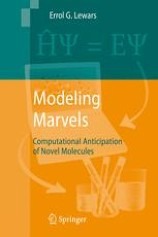
Modeling Marvels : Computational Anticipation of Novel Molecules
The aim of this book is to survey a number of chemical compounds that chemists, both theoretical and experimental, find fascinating. Some of these compounds, like planar carbon species or oxirene, offer no obvious practical applications; nitrogen oligomers and polymers, in contrast, have been touted as possible high-energy-density materials. What unites this otherwise eclectic collection is that these substances are unknown and offer a challenge to theory and to synthesis.

Modeling Longitudinal Data
This book teaches the art and statistical science of modern longitudinal data analysis. The author emphasizes specifying, understanding, and interpreting longitudinal data models. He inspects the longitudinal data graphically, analyzes the time trend and covariates, models the covariance matrix, and then draws conclusions. The book has many figures and tables illustrating longitudinal data and numerous homework problems. The associated web site contains many longitudinal data sets, examples of computer code, and labs to re-enforce the material.

Modeling Income Distributions and Lorenz Curves
The parameterization of income distributions and Lorenz Curves is a useful approach for representing how income is distributed within a given population. It provides a way of describing how the data are generated, why the level of inequality is what it is, and what happens to the poorer sections of the population. This book brings together classic papers in the field, including Camilo Dagum’s most influential contribution, survey papers outlining the state-of-the-art of the field, and cutting-edge research contributions. While providing a thorough overview of the methodology of income distribution modeling, the book emphasizes its relevance on development economics and its importance for policy makers who design and assess poverty alleviation and income redistribution policies.

Modeling in Biopharmaceutics, Pharmacokinetics and Pharmacodynamics : Homogeneous and Heterogeneous Approaches
The state of the art in Biopharmaceutics, Pharmacokinetics, and Pharmacodynamics Modeling is presented in this book. It shows how advanced physical and mathematical methods can expand classical models in order to cover heterogeneous drug-biological processes and therapeutic effects in the body. The book is divided into four parts; the first deals with the fundamental principles of fractals, diffusion and nonlinear dynamics; the second with drug dissolution, release, and absorption; the third with empirical, compartmental, and stochastic pharmacokinetic models, and the fourth mainly with nonclassical aspects of pharmacodynamics. The classical models that have relevance and application to these sciences are also considered throughout. Many examples are used to illustrate the intrinsic complexity of drug administration related phenomena in the human, justifying the use of advanced modeling methods.

Modeling Decisions for Artificial Intelligence ; Vol.3885 ; 3rd International Conference, MDAI 2006, Tarragona, Spain, April 3-5, 2006, Proceedings
This book constitutes the refereed proceedings of the Third International Conference on Modeling Decisions for Artificial Intelligence, MDAI 2006, held in Tarragona, Spain, in April 2006.
