



Page 26
Page 26
Dynamics of Rods
The book consists of nine chapters and appendices and may be conventionally divided into two parts. That is, Chapters 1 to 6 contain, in the main, theoretical material, whereas Chapters 7 to 9 illustrate the application of the theoretical results to problems of practical interest. Problems for self-study are found in Chapters 3, 5, and 7. The solutions to most of the problems are given in Appendix B.

Dynamics of Mercury Pollution on Regional and Global Scales : Atmospheric Processes and Human Exposures Around the World
Dynamics of Mercury Pollution on Regional and Global Scales: Atmospheric Processes and Human Exposures Around the World provides a detailed overview of our current understanding of different dynamic patterns involved in the redistribution of mercury in the global environment, and its impact on human health and ecosystems

Dynamics of Freezing-Thawing Soil around Subway Shield Tunnels
Addresses development laws for axial strain and excess pore water pressure in silty clay around subway shield tunnels before and after freezing-thawing when subjected to subway loading, as well as the effect of freezing-thawing on the dynamic parameters of silty clay, including the dynamic modulus and damping ratio, introducing readers to the design and construction of bypasses in subway tunnels with the artificial freezing method. On this basis, it then studies the microstructures of silty clay before and after freezing-thawing cyclic loading by means of scanning electron microscope tests and mercury intrusion porosimetry tests. Lastly, the book presents a numerical simulation of the dynamics of silty clay around subway tunnels before and after thawing.

Dynamic Programming : A Computational Tool
This book provides a practical introduction to computationally solving discrete optimization problems using dynamic programming. From the unusually numerous and varied examples presented, readers should more easily be able to formulate dynamic programming solutions to their own problems of interest. We also provide and describe the design, implementation, and use of a software tool, named DP2PN2Solver, that has been used to numerically solve all of the problems presented earlier in the book. This computational tool can be used by students to solve academic problems if this book is used in coursework, and by practitioners to solve many real-world problems if the state space is not too large.

Dynamic General Equilibrium Modelling : Computational Methods and Applications
Modern business cycle theory and growth theory uses stochastic dynamic general equilibrium models. Many mathematical tools are needed to solve these models. The book presents various methods for computing the dynamics of general equilibrium models. In part I, the representative-agent stochastic growth model is solved with the help of value function iteration, linear and linear quadratic approximation methods, parameterised expectations and projection methods. In order to apply these methods, fundamentals from numerical analysis are reviewed in detail. Part II discusses methods for solving heterogeneous-agent economies. In such economies, the distribution of the individual state variables is endogenous. This part of the book also serves as an introduction to the modern theory of distribution economics. Applications include the dynamics of the income distribution over the business cycle or the overlapping-generations model.

Dynamic brain : From neural spikes to behaviors ; 12th International Summer School on Neural Networks, Erice, Italy, December 5-12, 2007, Revised Lectures
The volume presents 12 thoroughly revised tutorial papers based on lectures given by leading researchers at the 12th International Summer School on Neural Networks in Erice, Italy, in December 2007.

Dynamic Analysis of Structures
Reflects the latest application of structural dynamics theory to produce more optimal and economical structural designs. The author includes carefully worked-out examples which are solved utilizing more recent numerical methods. These examples pave the way to more accurately simulate the behavior of various types of structures. The essential topics covered include principles of structural dynamics applied to particles, rigid and deformable bodies, thus enabling the formulation of equations for the motion of any structure.

Drugs in Ophthalmology
This drug handbook is divided into two sections: Alphabetical Listing of Drugs Entries in this section are listed by generic name. Information for each drug is arranged in a consistent format for easy reference. Summary of Anti-infectives This section summarizes the common doses of antibiotics, antifungals, and antivirals. For each drug, the dose for each route of administration is included.

Drug development for rare diseases
A disease is defined as rare if the prevalence is fewer than 200,000 in the United States. It is estimated that there are more than 7,000 rare diseases, which collectively affect 30 million Americans or 10% of the US population. This diverse and complex disease area poses challenges for patients, caregivers, regulators, drug developers, and other stakeholders. This book is proposed to give an overview of the common issues facing rare disease drug developers, summarize challenges specific to clinical development in small populations, discuss drug development strategies in the evolving regulatory environment, explain generation and utilization of different data and evidence
Drawn to Design : Analyzing Architecture Through Freehand Drawing
A guide for students and teachers to understand the need for, the role of and the methods and techniques of freehand analytical sketching in architecture. The presentation focuses on drawing as an approach to and phase of architectural design. The conceptual goal of this approach is to use drawing not as illustration or depiction, but as exploration. The first part of the book discusses underlying concepts of freehand sketching in design education and practice as a complement to digital technologies. The main component is a series of chapters that constitute a typology of fundamental issues in architecture and urban design; for instance, issues of "façade" are illustrated with sketch diagrams that show how façades can be explored and sketched through a series of specific questions and step-by-step procedures.
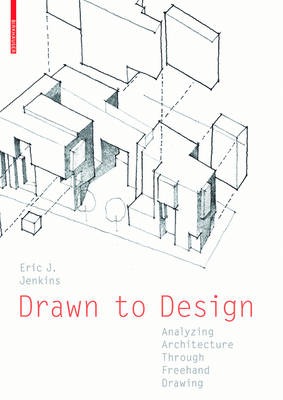
Drawn to Design : Analyzing Architecture Through Freehand Drawing
A guide for students and teachers to understand the need for, the role of and the methods and techniques of freehand analytical sketching in architecture. The presentation focuses on drawing as an approach to and phase of architectural design. The conceptual goal of this approach is to use drawing not as illustration or depiction, but exploration. The first part of the book discusses underlying concepts of freehand sketching in design education and practice as a compliment to digital technologies. The main component is a series of chapters that constitute a typology of fundamental issues in architecture and urban design; for instance, issues of "facade" are illustrated with sketch diagrams that show how facades can be explored and sketched through a series of specific questions and step-by-step procedures.

Domain Decomposition Methods in Science and Engineering XVII
This volume contains a selection of papers presented at the 17th International Conference on Domain Decomposition Methods in Science and Engineering held at St. Wolfgang / Strobl, Austria, July 3 - 7, 2006. Domain decomposition is an active, interdisciplinary research area concerned with the development, analysis, and implementation of coupling and decoupling strategies in mathematical and computational models. Domain decomposition techniques provide efficient tools for treating problems in all Computational Sciences. The reader will become familiar with the newest domain decomposition technologies and their use for modeling and simulating of complex problems from different fields of applications.

Domain Decomposition Methods in Science and Engineering XVI
The present volume sets forth new contributions in areas of numerical analysis, computer science, scientific and industrial applications, and software development.

Domain Decomposition Methods in Science and Engineering
Domain decomposition is an active, interdisciplinary research area that is devoted to the development, analysis and implementation of coupling and decoupling strategies in mathematics, computational science, engineering and industry.This book special focus has been on numerical analysis, computational issues,complex heterogeneous problems, industrial problems, and software development.

Domain Decomposition Methods for the Numerical Solution of Partial Differential Equations
Domain decomposition methods are divide and conquer methods for the parallel and computational solution of partial differential equations of elliptic or parabolic type. They include iterative algorithms for solving the discretized equations, techniques for non-matching grid discretizations and techniques for heterogeneous approximations. This book serves as an introduction to this subject, with emphasis on matrix formulations. The topics studied include Schwarz, substructuring, Lagrange multiplier and least squares-control hybrid formulations, multilevel methods, non-self adjoint problems, parabolic equations, saddle point problems (Stokes, porous media and optimal control), non-matching grid discretizations, heterogeneous models, fictitious domain methods, variational inequalities, maximum norm theory, eigenvalue problems, optimization problems and the Helmholtz scattering problem. Selected convergence theory is included.

Discrete geometry for computer imagery ; Vol. 3429 ; 12th International Conference, DGCI 2005, Poitiers, France, April 11-13, 2005, Proceedings
This book constitutes the refereed proceedings of the 12th International Conference on Discrete Geometry for Computer Imagery, DGCI 2005, held in Poitiers, France in April 2005. The 36 revised full papers presented together with an invited paper were carefully reviewed and selected from 53 submissions. The papers are organized in topical sections on applications, discrete hierarchical geometry, discrete tomography, discrete topology, object properties, reconstruction and recognition, uncertain geometry, and visualization.

Discrete Element Analysis Methods of Generic Differential Quadratures
This book presents numerical differential quadrature (DQ) - based methods recently developed by the author. Their ability for solving generic scientific and engineering problems is demonstrated. These methods are the generic differential quadrature, the extended differential quadrature and the related discrete element analysis methods. These novel numerical techniques are both efficient and reliable. They are suitable for developing solution algorithms for various computational mechanics problems with arbitrarily complex geometry. This is shown for several comprehensive examples such as bars and beams, trusses, frames, general field problems, elasticity problems or bending of plates.

Discontinuous Galerkin Methods for Viscous Incompressible Flow
Guido Kanschat reviews several discontinuous Galerkin schemes for elliptic and viscous flow problems. Setting out from Nitsche's method for weak boundary conditions, he studies the interior penalty and LDG methods. Combined with a stable advection discretization, they yield stable DG methods for linear flow problems of Stokes and Oseen type which are applied to the Navier-Stokes problem. The author not only presents the analytical techniques used to study these methods but also devotes a major discussion to the efficient numerical solution of discrete problems.

Direct and Large-Eddy Simulation VI ; Proceedings of the Sixth International ERCOFTAC Workshop on Direct and Large-Eddy Simulation, held at the University of Poitiers, September 12-14, 2005
this workshop addressed numerous theoretical and physical aspects of transitional and turbulent flows. At an applied level it contributed to the solution of problems related to energy production, transportation and the environment. Since the prediction and analysis of fluid turbulence and transition continues to challenge engineers, mathematicians and physicists, DLES-6 covered a large range of topics, from the more technical ones like numerical methods, initial and inflow conditions, the coupling of RANS and LES zones, subgrid and wall modelling to topics with a stronger focus on flow physics such as aero-acoustics, compressible and geophysical flows, flow control, multiphase flow and turbulent combustion, to quote only a few.

Direct and inverse Sturm-Liouville problems : A method of solution
This book provides an introduction to the most recent developments in the theory and practice of direct and inverse Sturm-Liouville problems on finite and infinite intervals. A universal approach for practical solving of direct and inverse spectral and scattering problems is presented, based on the notion of transmutation (transformation) operators and their efficient construction. Analytical representations for solutions of Sturm-Liouville equations as well as for the integral kernels of the transmutation operators are derived in the form of functional series revealing interesting special features and lending themselves to direct and simple numerical solution of a wide variety of problems.
