



Page 22
Page 22

Introduction to Nursing Informatics
In the series, eminent experts, as editors or authors, offer their accounts of innovations in health informatics. Increasingly, these accounts go beyond hardware and software toaddresstheroleofinformationinin?uencingthetransformationofheal- caredeliverysystemsaroundtheworld.Theseriesalsowillincreasinglyfocus on “peopleware” and the organizational, behavioral, and societal changes that accompany the diffusion of information technology in health services environments.

Introduction to Modern Number Theory: Fundamental Problems, Ideas and Theories
"Introduction to Modern Number Theory" surveys from a unified point of view both the modern state and the trends of continuing development of various branches of number theory. Motivated by elementary problems, the central ideas of modern theories are exposed. Some topics covered include non-Abelian generalizations of class field theory, recursive computability and Diophantine equations, zeta- and L-functions. This substantially revised and expanded new edition contains several new sections, such as Wiles' proof of Fermat's Last Theorem, and relevant techniques coming from a synthesis of various theories. Moreover, the authors have added a part dedicated to arithmetical cohomology and noncommutative geometry, a report on point counts on varieties with many rational points, the recent polynomial time algorithm for primality testing, and some others subjects.

Introduction to Mathematical Methods in Bioinformatics
This book looks at the mathematical foundations of the models currently in use. This book is unique in the sense that it looks at the mathematical foundations of the models, which are crucial for correct interpretation of the outputs of the models.

Introduction to materials science for engineers
Provides balanced, current treatment of the full spectrum of engineering materials, covering all the physical properties, applications and relevant properties associated with engineering materials. It explores all of the major categories of materials while also offering detailed examinations of a wide range of new materials with high-tech applications.
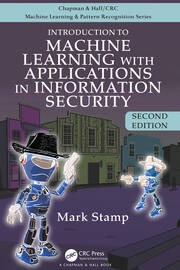
Introduction to Machine Learning with Applications in Information Security
Provides a classroom-tested introduction to a wide variety of machine learning and deep learning algorithms and techniques, reinforced via realistic applications. The book is accessible and doesn't prove theorems, or dwell on mathematical theory. The goal is to present topics at an intuitive level, with just enough detail to clarify the underlying concepts. The book covers core classic machine learning topics in depth, including Hidden Markov Models (HMM), Support Vector Machines (SVM), and clustering. Additional machine learning topics include k-Nearest Neighbor (k-NN), boosting, Random Forests, and Linear Discriminant Analysis (LDA). The fundamental deep learning topics of backpropagation, Convolutional Neural Networks (CNN), Multilayer Perceptrons (MLP), and Recurrent Neural Networks (RNN) are covered in depth. A broad range of advanced deep learning architectures are also presented, including Long Short-Term Memory (LSTM), Generative Adversarial Networks (GAN), Extreme Learning Machines (ELM), Residual Networks (ResNet), Deep Belief Networks (DBN), Bidirectional Encoder Representations from Transformers (BERT), and Word2Vec.

Introduction to Lie Algebras
This book provides an elementary introduction to Lie algebras. It starts with basic concepts. A section on low-dimensional Lie algebras provides readers with experience of some useful examples. This is followed by a discussion of solvable Lie algebras and a strategy towards a classification of finite-dimensional complex Lie algebras. The next chapters cover Engel's theorem, Lie's theorem and Cartan's criteria and introduce some representation theory. The root-space decomposition of a semisimple Lie algebra is discussed, and the classical Lie algebras studied in detail. The authors also classify root systems, and give an outline of Serre's construction of complex semisimple Lie algebras. An overview of further directions then concludes the book and shows the high degree to which Lie algebras influence present-day mathematics.The only prerequisite is some linear algebra and an appendix summarizes the main facts that are needed. The treatment is kept as simple as possible with no attempt at full generality.

Introduction to Fuzzy Logic using MATLAB
Fuzzy Logic, at present is a hot topic, among academicians as well various programmers. This book is provided to give a broad, in-depth overview of the field of Fuzzy Logic. The basic principles of Fuzzy Logic are discussed in detail with various solved examples. The different approaches and solutions to the problems given in the book are well balanced and pertinent to the Fuzzy Logic research projects. The applications of Fuzzy Logic are also dealt to make the readers understand the concept of Fuzzy Logic. The solutions to the problems are programmed using MATLAB 6.0 and the simulated results are given. The MATLAB Fuzzy Logic toolbox is provided for easy reference.

Introduction to Epigenetics
This textbook leads the reader from basic concepts of chromatin structure and function and RNA mechanisms to the understanding of epigenetics, imprinting, regeneration and reprogramming. The textbook treats epigenetic phenomena in animals, as well as plants.

Introduction to Engineering Statistics and Six Sigma : Statistical Quality Control and Design of Experiments and Systems
Introduction to Engineering Statistics and Six Sigma contains precise descriptions of all of the many related methods and details case studies showing how they have been applied in engineering and business to achieve millions of dollars of savings. Specifically, the methods introduced include many kinds of design of experiments (DOE) and statistical process control (SPC) charting approaches, failure mode and effects analysis (FMEA), formal optimization, genetic algorithms, gauge reproducibility and repeatability (R&R), linear regression, neural nets, simulation, quality function deployment (QFD) and Taguchi methods. A major goal of the book is to help the reader to determine exactly which methods to apply in which situation and to predict how and when the methods might not be effective.

Introduction to Drug Disposition and Pharmacokinetics
The application of knowledge of drug disposition, and skills in pharmacokinetics, are crucial to the development of new drugs and to a better understanding of how to achieve maximum benefit from existing ones. The book takes the reader from basic concepts to a point where those who wish to will be able to perform pharmacokinetic calculations and be ready to read more advanced texts and research papers.

Introduction to Computational Biology : An Evolutionary Approach
Molecular biology has changed dramatically over the past two decades. Until the early 1990s genes were studied one at a time by small teams of researchers; today entire genomes are sequenced by internationally collaborating laboratories. In the bygone gene-centered era the accumulation of data was the rate-limiting step in research. Now that step is often data interpretation. This is increasingly dependent on computational methods and as a consequence, computational biology has emerged in the past decade as a new subdiscipline of biology. This introduction to computational biology is centered on the analysis of molecular sequence data. There are two closely connected aspects to biological sequences: (i) their relative position in the space of all other sequences, and (ii) their movement through this sequence space in evolutionary time. Accordingly, the first part of the book deals with classical methods of sequence analysis: pairwise alignment, exact string matching, multiple alignment, and hidden Markov models. In the second part evolutionary time takes center stage and phylogenetic reconstruction, the analysis of sequence variation, and the dynamics of genes in populations are explained in detail. In addition, the book contains a computer program with a graphical user interface that allows the reader to experiment with a number of key concepts developed by the authors.

Introduction to Central Banking
This book gives a concise introduction to the practical implementation of monetary policy by modern central banks. It describes the conventional instruments used in advanced economies and the unconventional instruments that have been widely adopted since the financial crisis of 2007–2008. Illuminating the role of central banks in ensuring financial stability and as last resort lenders, it also offers an overview of the international monetary framework. A flow-of-funds framework is used throughout to capture this essential dimension in a consistent and unifying manner, providing a unique and accessible resource on central banking and monetary policy, and its integration with financial stability.

Introduction to Applied Optimization
This text presents a multi-disciplined view of optimization, providing students and researchers with a thorough examination of algorithms, methods, and tools from diverse areas of optimization without introducing excessive theoretical detail. This second edition includes additional topics, including global optimization and a real-world case study using important concepts from each chapter.

Introduction pratique aux bases de données relationnelles = A practical introduction to relational databases
Cet ouvrage introduit le lecteur dans le domaine des bases de données relationnelles en présentant une vaste sélection de sujets portant sur la modélisation des données, les langages de base de données, l'architecture des systèmes et l'évolution post-relationnelle. - Notions fondamentales: le modèle relationnel, les composants d’un système de gestion de bases de données, l’organisation de la mise en œuvre d’une base de données, les tâches de gestion des données. - De l'analyse à la base de données : le modèle entité association, la généralisation et l’agrégation, les dépendances et les formes normales,les contraintes d’intégrité. - Aperçu des langages de requête et de manipulation des données: l’algèbre relationnelle, le calcul des prédicats, SQL, QUEL, QBE, le traitement des valeurs nulles, la protection des données. - Les composants de l'architecture d'un système de bases de données : la compilation, l’interprétation et l’optimisation des requêtes, l’environnement multiutilisateur, le concept de transaction et la sérialisation, les méthodes optimiste et pessimiste, les structures de stockage et les méthodes d’accès. L’intégration et la migration des bases de données: l’exploitation des bases de données hétérogènes, les bases de données sur le Web, les règles de conversion pour effectuer l’intégration et la migration, les variantes de migration des bases de données hétérogènes, la planification de l’intégration et de la migration.

Introducing Biological Rhythms : A Primer on the Temporal Organization of Life, with Implications for Health, Society, Reproduction, and the Natural Environment
Biological rhythms are a fundamental property of all life and encompass a wide range of frequencies, from seconds to a century or more. Introducing Biological Rhythms is a primer that serves to introduce individuals to the area of biological rhythms. It describes the major characteristics and discusses the implications and applications of these rhythms, while citing scientific results and references. Also, the primer includes essays that provide in-depth historic and other background information for those interested in more specific topics or concepts. Introducing Biological Rhythms covers a basic cross-section of the field of chronobiology clearly enough so that it can be understood by a novice, or an undergraduate student, but it is also sufficiently technical and detailed for the scientist.

Introducing architectural tectonics
Focuses on the tectonic analysis of twenty contemporary works of architecture located in eleven countries including Germany, Italy, United States, Chile, Japan, Bangladesh, Spain, and Australia and designed by such notable architects as Tadao Ando, Herzog & de Meuron, Kengo Kuma, Olson Kundig, and Peter Zumthor. Although similarities do exist between the projects, their distinctly different characteristics – location and climate, context, size, program, construction methods – and range of interpretations of tectonic expression provide the most significant lessons of the book, helping you to understand tectonic theory. Written in clear, accessible language, these investigations examine the poetic creation of architecture, showing you lessons and concepts that you can integrate into your own work, whether studying in a university classroom or practicing in a professional office.

Intraperitoneal Cancer Therapy
The volume details major clinical trails to date, including immunotherapy, hyperthermic treatment of colo-rectal and ovarian cancers. Authors also examine regional approaches to therapy, systemic therapy, and the use of carboplatin and paclitaxel as the standard treatment for women with stages III and IV ovarian cancer. Other chapters also investigate techniques and procedures in treatment, as well as the future direction of both normothermic and hyperthermic intraperitoneal chemotherapy.

Intramembrane-Cleaving Proteases (I-CLiPs)
The aim of this book is to provide an update on this emerging group of unusual but important proteases for both the specialist and those with a broader interest in proteases. Amongst the target audience will be protease researchers, enzymologists, those working in academia and the pharmaceutical industry on biological processes and diseases involving I-CLiPs.

Intracellular Mechanisms for Neuritogenesis
This book present in novel, distinct, but highly related aspects of the intracellular mechanisms required for the formation of a functional neurite, which include cytoskeletal organization, membrane traffic, and signal transduction.

Intervention, Terrorism, and Torture : Contemporary Challenges to Just War Theory
Just war theory is the traditional approach taken to questions of the morality of war, but war today is far from traditional. War has been deeply affected in recent years by a variety of social and technological developments in areas such as international terrorism, campaigns of genocide and ethnic cleansing, the global human rights movement, economic globalization, and military technology. This book asks whether just war theory is adequate to the challenges these developments pose.
