



Page 214
Page 214
Forest Environments in the Mekong River Basin
Deforestation and forest degradation have continued over a long period of time, and the deterioration of forest environment management services is becoming one of the biggest concerns in the world. Especially in large continental river basins, sel? sh political attitudes and individual interests in some regions predispose other regions to problems downstream and bring about international issues. The Mekong is just such a river basin and its water is the most important resource, interdependent with the forest conditions in the region. The lives of millions of people are sustained by the water of the Mekong River, and mutual understanding on water resource mana- ment is essential in this region. Consequently, appropriate environment management to control water resources is required of each country along with scienti? c knowledge of forest management, including forest hydrology.

Forest Entomology in West Tropical Africa : Forests Insects of Ghana
The forests of West Africa are complex, beautiful and under continued threat of over exploitation. This monograph, in its second edition, remains the only comprehensive source of information on economically important forest insects in West Africa. Many pest insects discussed in this book have the potential to greatly alter the utilization of these valuable tropical forests. Several key pests such as mahogany shoot borer, odum gallfly and pests of endangered tree species like Pericopsis, are extensively discussed. This comprehensive treatise of insects includes information on the general forest cover types and insects of utilitarian value. The book will be a great value to foresters, forest entomologists, researchers, conservation biologists and others with a basic biological interest in West Africa forests.

Forest Entomology in East Africa : Forest Insects of Tanzania
East African forests, among the world’s most biologically rich and diverse, are subject to multiple pressures, including insects. As the first work to focus exclusively on East African forest insects, this monograph distils 135 years of scientific and historical literature extending from before the colonial era to the present into an authoritative survey of this region’s major pests of trees and wood, as well as their antagonists. This comprehensive treatise also addresses insects of social and economic importance, such as endemics, edible and collectible insects, wild bees and silk producers. It should be of great value to foresters, entomologists, conservation biologists, resource managers, safari outfitters and anyone else interested in the natural history of this fascinating region.
Forest ecosystems and environments : Scaling up from shoot module to watershed
The Global Change Impacts on Terrestrial Ecosystems in Monsoon Asia (TEMA) project was carried out as a unique contribution to the international project Global Change and Terrestrial Ecosystems. TEMA aimed to integrate forest ecosystem processes. This volume presents the scaling-up concept for better understanding of ecosystem functioning.
Forest Diversity and Management
Natural forests with thousands of years of ecological continuity are unrivalled as the treasure store of terrestrial biodiversity on Earth. And while there is currently no fully comprehensive inventory of the biota associated with any given forest, it is reasonable to assume that in conserving natural forests we can conserve the myriads of unnamed bacteria, fungi, insects, mites and nematodes that forests support. Drawing on diverse research from biodiversity experts around the world, this collection of papers reflects the diversity of forest types and forest issues that concern forest scientists globally. Forest types considered vary from savannah and tropical rainforests to the ancient oak forests of Poland; issues explored include the effects of logging, management practices, forest dynamics and climate change on forest structure and biodiversity.

Forest Diversity and Function : Temperate and Boreal Systems
One of the central research themes in ecology is evaluating the extent to which biological richness is necessary to sustain the Earth's system and the functioning of individual ecosystems. In this volume, for the first time, the relationship between biodiversity and ecosystem processes in forests is thoroughly explored. The text examines the multiple effects of tree diversity on productivity and growth, biogeochemical cycles, animals, pests, and disturbances.
Forest and Rangeland Soils of the United States Under Changing Conditions : A Comprehensive Science Synthesis
This book synthesizes leading-edge science and management information about forest and rangeland soils of the United States. It offers ways to better understand changing conditions and their impacts on soils, and explores directions that positively affect the future of forest and rangeland soil health.
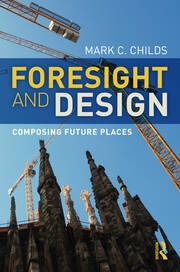
Foresight and Design: Composing Future Places
Every plan, pro-forma, design, building contract, and construction schedule is a proposal about future places. To help improve such proposals, Foresight and Design: Composing Future Places presents conceptual tools to inform design and outline the need for designers to rigorously think about potential futures. Our built compositions are constantly transforming due to continuing urbanization, demographic shifts, climate change, the evolution of virtual worlds, economic and health disparities, and other unforeseen trends. Five brief case studies interspersed between the chapters serve as examples of practitioners exercising foresight through these practices. Contributions include a description of a regional design process in Afghanistan by Anthony Fettes of Sasaki Architects, and an exploration into the Indigenous Futurism model-making competition by Anjelica Gallegos.

Forensic psychology: crime, justice, law, interventions
Provides an introduction for more detailed postgraduate courses. Introduces forensic psychology to students and professionals who want to better understand psychology's expanding influence on the study of law, crime and criminality Forensic psychology is a constantly growing discipline, both in terms of student interest and as a profession for graduates. This book highlights the often sizeable gap between media myths surrounding forensic practice and reality. Editors Graham Davies and Anthony Beech present an exciting and broad range of topics within the field, including detailed treatments of the causes of crime, investigative methods, the trial process.

Forensic Psychiatry : Influences of Evil
In Forensic Psychiatry: Influences of Evil, Tom Mason brings together an international panel of experts from diverse specialties to examine the idea of "evil" in a medical context, specifically a mental health setting, to consider how the concept can be usefully interpreted, and to elucidate its relationship to forensic psychiatry. The authors challenge the belief that the concept of "evil" plays no role in "scientific" psychiatry and is not helpful to our understanding of aberrant human thinking and behavior.
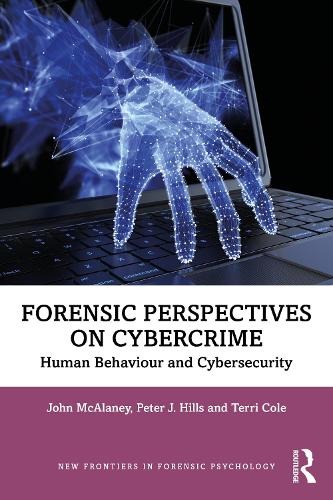
Forensic perspectives on cybercrime : Human behaviour and cybersecurity
Combines the disciplines of cyberpsychology and forensic psychology, helping to define this emergent area. It explores the psychological factors that influence the behaviour of all those involved in cybersecurity, drawing upon the research literatures in relevant areas including forensic, social, and cyberpsychology.

Forensic Pathology Reviews ; Vol. 4
Building on the excellent foundation laid in earlier volumes of the series, leading forensic pathologists from the United States and around the world again provide in Forensic Pathology Reviews, Volume 4 evidence-based accounts of special topics of current interest from various fields of forensic pathology and death-scene investigation. The authors offer cutting-edge insights into death from environmental conditions (lightning and elder abuse), homicide by sharp force, death from natural causes (asthma, Marfan syndrome, and peliosis of the liver and spleen), and pathology of human endothelium in septic organ failure.

Forensic pathology reviews ; Vol. 3
Maintaining the high quality achieved in earlier volumes, leading national and international forensic pathologists provide in Forensic Pathology Reviews, Volume 3 evidence-based accounts of special topics of current interest from various fields of forensic pathology and death-scene investigation. The authors offer cutting-edge insights into the medicolegal investigation of bodies found in water, the forensic aspects of the human immunodeficiency virus (HIV)-1 infection of the central nervous system, deaths in a head-down position, and forensic bitemark analysis. Additional chapters address taphonomic changes in human bodies during the early postmortem interval, arrhythmogenic ventricular dysplasia that produces sudden death in young people, the postmortem diagnosis of death in anaphylaxis, and iatrogenic deaths. The forensic aspects of suicide, murder-suicide, and suicide trends in the United States are also discussed, along with the evaluation of fatal pulmonary thromboembolism and the use of radiology in medicolegal investigations. A comprehensive, up-to-date review of the international literature is given for each chapter. Evidence-based and state-of-the-art, Forensic Pathology Reviews, Volume 3 synthesizes the practical advances made in a variety of important subspecialties of forensic pathology, demonstrating how the latest medical and scientific advances are being applied to solve current problems of high interest to forensic pathologists today.
Forensic pathology of trauma
The practice of forensic pathology includes the collection and analysis of evidence in relation to a corpse in order to establish the cause of death. Knowledge of the cause of death contributes to the determination of the manner of death by medical examiners and coroners, who are occasionally assisted by law enforcement officers. In the process of establishing the cause and manner of death, representatives of various investigative bodies have several responsibilities, including explaining the death to family members, attempting to reduce the risk of similar deaths in the future, and, if applicable, apprehending the individuals who are responsible for the death. The most well-known and popular role of a forensic pathologist is in the inves- gation of cases of suspicious death; however, most medicolegal autopsies involve unexpected deaths that are above suspicion, many of which are caused by trauma (trauma being defined as any physical force or agent that causes bodily harm). The purpose of Forensic Pathology of Trauma: Common Problems for the Pathologist is to provide practical advice and information about the conduct of the forensic autopsy in cases of trauma, and to offer guidance about the analysis of the autopsy findings in these cases.
Forensic neuropathology and associated neurology
Incorporating the most recent literature and state-of-the-art methods, this practical work and atlas covers the entire domain of neuropathology for forensic pathologists as well as for specialists in associated fields. Its concise, direct style provides the reader with succinct and easy-to-find answers to forensic, pathological, pathophysiological, biomechanical, and molecular biology problems.

Forensic Genetics in the Governance of Crime
This book uses a critical sociological perspective to explore contemporary ways of reformulating the governance of crime through genetics. Through the lens of scientific knowledge and genetic technology, Machado and Granja offer a unique perspective on current trends in crime governance. They explore the place and role of genetics in criminal justice systems, and show how classical and contemporary social theory can help address challenges posed by social processes and interactions generated by the uses, meanings, and expectations attributed to genetics in the governance of crime

Forensic Ethics and the Expert Witness
The expert witness’ job is often described as a balancing act: duty to clients on the one hand, duty to society on the other. Forensic Ethics and the Expert Witness probes beyond this familiar conflict of interest framework to present a new, innovative model of professional ethics. Richly illustrated with cases from medicine, psychiatry, and law, this elegantly written volume examines the common moral ground that links these usually separate domains, and relates forensic ethics to larger concepts of morality and justice. In this integrative approach, the expert witness is redefined as one who can balance professional with societal and personal codes in what the authors call "robust professionalism."

Forensic Document Examination : Principles and Practice
Forensic Document Examination introduces the reader to the basic principles of handwriting and the factors that affect their development. The book discusses the basic concept of the characteristics of writing that are compared when making an identification or elimination of a writer. In addition, readers will be able to recognize the signs of forgery and disguise and to distinguish between simulation and disguise.

Forensic Dentistry ; 2nd ed.
The identification of unknown individuals and the estimation of age, race, and gender are among the chief functions of forensic dentistry. Other important applications include the investigation and analysis of bitemarks and oral injuries in abuse cases and evaluating, reporting, and testifying in civil litigation cases. Twelve years after the benchmark first edition of this book explored these topics, the long-awaited Forensic Dentistry, Second Edition offers a comprehensive update and revision of the material.

Forensic Computing
In the second edition of this very successful book, Tony Sammes and Brian Jenkinson show how information held in computer systems can be recovered when it has been hidden or subverted by criminals, and give the reader the means to insure that it is accepted as admissible evidence in court.
