



Page 21
Page 21

Fashion-ology : Fashion studies in the postmodern digital era - Dress, body, culture
This new edition of a classic work offers a concise introduction to the sociology of fashion, and demystifies the workings of the fashion system. From the origins of fashion studies and the difference between clothing and fashion, through to an examination of 21st century subcultures, and the impact of the digital age on designers, Fashion-ology explores fashion as a global, institutionalized system.
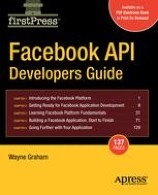
Facebook API Developers Guide
The Facebook API allows web developers to create Facebook applications and access Facebook data from other applications. Facebook API Developers Guide covers the use and implementation of the Facebook API—what the key features are and how you can access them. You will learn, through practical examples, the main features of the Facebook API including an introduction to the API–specific languages FQL and FBML. These examples are further supported by the introduction of other technologies like language libraries, relational database management systems, and XML. Covers all key features of the Facebook API Explains the API languages FQL and FBML Teaches by example, with useful code and tips you can use in your own applications
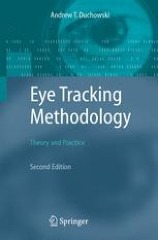
Eye Tracking Methodology : Theory and Practice
Despite the availability of cheap, fast, accurate and usable eye trackers, there is still little information available on how to develop, implement and use these systems. This second edition of Andrew Duchowski’s successful guide to these systems contains significant additional material on the topic and fills this gap in the market with this accessible and comprehensive introduction. Opening with useful background information, including an introduction to the human visual system and key issues in visual perception and eye movement, the second part surveys eye-tracking devices and provides a detailed introduction to the technical requirements necessary for installing a system and developing an application program. The book focuses on video-based, corneal-reflection eye trackers – the most widely available and affordable type of system, before closing with a look at a number of interesting and challenging applications in human factors, collaborative systems, virtual reality, marketing and advertising.

Extreme Value Theory : An Introduction
Extreme Value Theory offers a careful, coherent exposition of the subject starting from the probabilistic and mathematical foundations and proceeding to the statistical theory. The book covers both the classical one-dimensional case as well as finite- and infinite-dimensional settings. All the main topics at the heart of the subject are introduced in a systematic fashion so that in the final chapter even the most recent developments in the theory can be understood. The treatment is geared toward applications. The presentation concentrates on the probabilistic and statistical aspects of extreme values such as limiting results, domains of attraction and development of estimators without emphasizing related topics such as point processes, empirical distribution functions and Brownian motion.

Extreme Nonlinear Optics : An Introduction
Following the birth of the laser in 1960, the field of "nonlinear optics" rapidly emerged. Today, laser intensities and pulse durations are readily available, for which the concepts and approximations of traditional nonlinear optics no longer apply. In this regime of "extreme nonlinear optics," a large variety of novel and unusual effects arise, for example frequency doubling in inversion symmetric materials or high-harmonic generation in gases, which can lead to attosecond electromagnetic pulses or pulse trains. Other examples of "extreme nonlinear optics" cover diverse areas such as solid-state physics, atomic physics, relativistic free electrons in a vacuum and even the vacuum itself. This book starts with an introduction to the field based primarily on extensions of two famous textbook examples, namely the Lorentz oscillator model and the Drude model. Here the level of sophistication should be accessible to any undergraduate physics student. Many graphical illustrations and examples are given. The following chapters gradually guide the student towards the current "state of the art" and provide a comprehensive overview of the field. Every chapter is accompanied by exercises to deepen the reader's understanding of important topics, with detailed solutions at the end of the book.

Extragalactic Astronomy and Cosmology : An Introduction
This textbook introduces the astronomy of galaxies, their structure, their active galactic nuclei, their evolution and their large scale distribution. Starting with a detailed description of our Milky Way, the book examines the formation of structures and astronomical objects in the early universe.

Extraction of date seeds oil
Date seed oil is a valuable natural product with potential health benefits and diverse applications in various industries. This report aims to explore the extraction process of date seed oil and evaluate its components and properties. The project begins with an introduction that provides an overview of the components found in dates and date seeds, highlighting their significance in the extraction process...

Extensionalism : The Revolution in Logic
This vivid and thought-provoking book by the Israeli logician Nimrod Bar-Am impels one to rethink the place of logic in Western thought. It shows that the history of logic from Aristotle to Tarski is the history of the gradual undoing of the classic conflation of logic and empirical science. It sets tomorrow’s agenda for philosophers and historians of logic and scientific method by taking as its starting point the mere fact that, curiously, ancient logic is not as formal as current literature presents it. Rather, as Bar-Am explains, modern formal logic became possible only after a series of bold criticisms of the magnificent Aristotelian system. These criticisms begin with David Hume’s declaration that logic does not sanction induction, follow on with Kant’s view of logic as an extremely limited system, and culminating with Booles’ introduction of logic as an extensional system, and Russell’s solution to his own paradox.

Extended Working Life Policies : International Gender and Health Perspectives
This volume addresses the current debate on extended working life policy by considering the influence of gender and health on the experiences of older workers. Bringing together an international team of scholars, it tackles issues as gender, health status and job/ occupational characteristics that structure the capacity and outcomes associated with working longer.

Expounding the Mathematical Seed ; Vol.1 : The Translation : A Translation of Bhāskara I on the Mathematical Chapter of the Āryabhatīya
Subjects treated in Bhaskara’s commentary range from computing the volume of an equilateral tetrahedron to the interest on a loaned capital, from computations on series to an elaborate process to solve a Diophantine equation.This volume contains an introduction and the literal translation.The introduction aims at providing a general background for the translation and is divided in three sections: the first locates Bhaskara’s text, the second looks at its mathematical contents and the third section analyzes the relations of the commentary and the treatise.
Explainable Artificial Intelligence : An Introduction to Interpretable Machine Learning
Offers a curriculum for introducing interpretability to machine learning at every stage. The authors provide compelling examples that a core teaching practice like leading interpretive discussions can be taught and learned by teachers and sustained effort. And what better way to strengthen the quality of AI and Machine learning outcomes. I hope that this book will become a primer for teachers, data Science educators, and ML developers, and together we practice the art of interpretive machine learning.

Experimental rock deformation : The brittle field
The primary aim of this monograph is to present the current knowledge of brittle properties of rocks as determined in laboratory experiments. The principal aspects of brittle behavior are described with special attention to the fundamental physical aspects. Thus, the book provides a useful introduction to the basics of rock properties for engineering and earth science applications. Furthermore, it serves as a guide for graduate students and non specialists by presenting the relevant background material and where it can be found. For the new edition a further chapter has been added, and almost

Exoplanets : Detection, Formation, Properties, Habitability
This edited, multi-author volume will be an invaluable introduction and reference to all key aspects in the field of exoplanet research. The reviews cover: Detection methods and properties of known exoplanets, Detection of extrasolar planets by gravitational microlensing. The formation and evolution of terrestrial planets in protoplanetary and debris disks. The brown dwarf-exoplanet connection. Formation, migration mechanisms and properties of hot Jupiters. Dynamics of multiple exoplanet systems. Doppler exoplanet surveys. Searching for exoplanets in the stellar graveyard. Formation and habitability of extra solar planets in multiple star systems. Exoplanet habitats and the possibilities for life. Moons of exoplanets: habitats for life.

Exhibition Design : An Introduction ; 2nd ed.
Offers a thorough grounding in the principles of designing for exhibitions. It describesthe skills needed to become an exhibition designer, including: Developing a brief and working with clients Design principles for graphics, circulation, lighting, and accessibility Presenting ideas to clients The practicalities of productionVisual material includes photographs of completed exhibitions by world-renowned designers, concept drawings, computer renderings, charts, and tables of informationall for a wide range of exhibitions around the world, permanent and temporary, including museums and galleries, visitor centers, brand experiences, festivals, and trade fairs. The book will inform and inspire, as well as equip students and new exhibition designers with a valuable guide to the profession

Exercises in Modules and Rings
This Problem Book offers a compendium of 639 exercises of varying degrees of difficulty in the subject of modules and rings at the graduate level. The material covered includes projective, injective, and flat modules, homological and uniform dimensions, noncommutative localizations and Goldie’s theorems, maximal rings of quotients, Frobenius and quasi-Frobenius rings, as well as Morita’s classical theory of category dualities and equivalences. Each of the nineteen sections begins with an introduction giving the general background and the theoretical basis for the problems that follow. All exercises are solved in full detail; many are accompanied by pertinent historical and bibliographical information, or a commentary on possible improvements, generalizations, and latent connections to other problems.

Excimer Laser Technology
This comprehensive survey on Excimer Lasers investigates the current range of the technology, applications and devices of this commonly used laser source, as well as the future of new technologies, such as F2 laser technology. Additional chapters on optics, devices and laser systems complete this compact handbook. A must read for laser technology students, process application researchers, engineers or anyone interested in excimer laser technology. An effective and understandable introduction to the current and future status of excimer laser technology.

Exchange traded funds : Structure, regulation and application of a new fund class
The organization of traditional mutual funds as Exchange Traded Funds (ETFs) produced revolutionary changes in the fund industry. These changes, and the subsequent events to which they led, have greatly - creased the practical way of trading funds. Traditional mutual fund m- kets were fragmented, and transactions were both costly and from time to time difficult to arrange. Investments in emerging markets for example were anything but efficient. As a consequence of establishing ETF funds market segments, the efficiency of transactions has been broadly increased as well as transaction costs dramatically reduced. All this changed in the early Nineties with the introduction of the first ETF for the purpose of trading funds. Exchange Traded Funds – Structure, Regulation and Application of a New Fund Class is a comprehensive summary of articles covering all aspects of the Exchange Traded Fund industry.The present book is divided into four parts: The opening part, containing ETFs – A Leading Financial Innovation and From Continent to Sectors: Challenges and Uses of ETFs in Europe, is - signed to give the reader broad insight into the industry, developments and trends. Further, the article Spiders: Where Are the Bugs? examine the characteristics and performance of these instruments from an academic point of view.

Evolving Toolbox for Complex Project Management
Enhances learning about complex project management principles and practices through the introduction and discussion of a portfolio of tools presented as an evolving toolbox. Throughout the book, industry practitioners examine the toolsets that are part of the toolbox to develop a broader understanding of complex project management challenges and the available tools to address them.

Evolutionary Intelligence : An introduction to theory and applications with Matlab
This book gives a good introduction to evolutionary computation for those who are first entering the field and are looking for insight into the underlying mechanisms behind them. Emphasizing the scientific and machine learning applications of genetic algorithms instead of applications to optimization and engineering, the book could serve well in an actual course on adaptive algorithms.

Evolutionary Computation for Modeling and Optimization
Evolutionary Computation for Optimization and Modeling is an introduction to evolutionary computation, a field which includes genetic algorithms, evolutionary programming, evolution strategies, and genetic programming. The text is a survey of some application of evolutionary algorithms. It introduces mutation, crossover, design issues of selection and replacement methods, the issue of populations size, and the question of design of the fitness function. It also includes a methodological material on efficient implementation. Some of the other topics in this book include the design of simple evolutionary algorithms, applications to several types of optimization, evolutionary robotics, simple evolutionary neural computation, and several types of automatic programming including genetic programming. The book gives applications to biology and bioinformatics and introduces a number of tools that can be used in biological modeling, including evolutionary game theory. Advanced techniques such as cellular encoding, grammar based encoding, and graph based evolutionary algorithms are also covered.
