



Page 20
Page 20
Forms of List-Making : Epistemic, Literary, and Visual Enumeration
This book attempts to show that an examination of the list’s formal features has the potential to produce genuine insights into the production of knowledge, the poetics of literature and the composition of visual art. Following a conceptual introduction, the twelve single-authored chapters place the list in a variety of well-researched contexts, including ancient Roman historiography, medieval painting, Enlightenment periodicals, nineteenth-century botanical geography, American Beat poetry and contemporary photobooks.
Forest Road Operations in the Tropics
This book brings together information on road planning, location, design, construction and maintenance to support environmentally acceptable operations in tropical forests. It highlights the challenges of road operations in the tropics, includes techniques that have been shown to be successful, and discusses newer technologies. It is intended as a reference book for the forest engineer and others interested in the planning and management of tropical forests. Numerical examples are provided to provide clarity for interpreting graphs, procedures, and formulas. The book covers the various facets of road management from design objectives through practices to control environmental impacts.
Forest Landscape Ecology : Transferring Knowledge to Practice
Forest Landscape Ecology: Transferring Knowledge to Practice is the first book to introduce landscape ecologists to the discipline of knowledge transfer. The book considers knowledge transfer in general, critically examines aspects of transfer that are unique to forest landscape ecology, and reviews several case studies of successful applications for policy developers and forest managers in North America. Readers are encouraged to recognize the value of sharing their knowledge, and to understand their role in active knowledge transfer. The intent is to connect, as seamlessly and effectively as possible, ecological principles to policy and practice.
Forest Entomology in West Tropical Africa : Forests Insects of Ghana
The forests of West Africa are complex, beautiful and under continued threat of over exploitation. This monograph, in its second edition, remains the only comprehensive source of information on economically important forest insects in West Africa. Many pest insects discussed in this book have the potential to greatly alter the utilization of these valuable tropical forests. Several key pests such as mahogany shoot borer, odum gallfly and pests of endangered tree species like Pericopsis, are extensively discussed. This comprehensive treatise of insects includes information on the general forest cover types and insects of utilitarian value. The book will be a great value to foresters, forest entomologists, researchers, conservation biologists and others with a basic biological interest in West Africa forests.

Forces, Growth and Form in Soft Condensed Matter : At the Interface between Physics and Biology
This volume comprises the proceedings of a NATO Advanced Study Institute held at Geilo, Norway, 24 March - 3 April 2003, the seventeenth ASI in a series held every two years since 1971. The objective of this ASI was to identify and discuss areas where synergism between modern physics, soft condensed matter and biology might be most fruitful. The main pedagogical approach was to have lecturers focussing on basic understanding of important aspects of the relative role of the various interaction- electrostatic, hydrophobic, steric, conformational, van der Waals etc. Soft condensed matter and the connection between physics and biology have been the themes of several earlier Geilo Schools. A return to these subjects thus allowed a fresh look and a possibility for defining new directions for research. Examples of soft materials, which were discussed at this ASI, included colloidal dispersions, gels, biopolymers and charged polymer solutions, polyelectrolytes, protein/membrane complexes, nucleic acids and their complexes. Indeed, most forms of condensed matter are soft and these substances are composed of aggregates and macromolecules, with interactions that are too weak and complex to form crystals spontaneously. A characteristic feature is that small external forces, slight perturbations in temperature, pressure or concentration, can all be enough to induce significant structural changes. Thermal fluctuations are almost by definition strong in soft materials and entropy is a predominant determinant of structure, so that disorder, slow dynamics and plastic deformation are the rule. Hence the phrase ‘soft condensed matter’ has been coined.

Foodborne Parasites
Microbiologists are being challenged as foodborne outbreaks are increasingly being observed worldwide. Most of these outbreaks are associated with viral and bacterial pathogens such as Campylobacter, Salmonella, and lately Escherichia coli O157:H7.Foodborne Parasites examines the two major parasite groups that are transmitted via water or foods: the protozoa, which are single celled organisms, and the helminths. The helminths are classified in three sub groups: cestodes (tapeworms), nematodes (round worms), and trematodes (flukes). To better understand their significance, each chapter covers the biology, mechanisms of pathogenesis, epidemiology, treatment, and inactivation of these parasites.

FOBA : Buildings
The book also chronicles the FOB Homes systema FOBA subsidiary company established in 1999a uniquely creative response to the generic mass-produced pre-fabricated housing available in Japan. With five basic prototypes that can be easily adapted to any site or client, FOB Homes redefines the concept of standardized housing. Their simple, neutral white boxes counter the visual chaos of contemporary Japan and offer the elegance and experience of "architecture" to the general publica union of modernist aesthetics with the modernist ideology of democratic, affordable design.
Flux-corrected transport : Principles, algorithms, and applications
Addressing students and researchers as well as CFD practitioners, this book describes the state of the art in the development of high-resolution schemes based on the Flux-Corrected Transport (FCT) paradigm. Intended for readers who have a solid background in Computational Fluid Dynamics, the book begins with historical notes by J.P. Boris and D.L. Book. Review articles that follow describe recent advances in the design of FCT algorithms as well as various algorithmic aspects. The topics addressed in the book and its main highlights include: the derivation and analysis of classical FCT schemes with special emphasis on the underlying physical and mathematical constraints; flux limiting for hyperbolic systems; generalization of FCT to implicit time-stepping and finite element discretizations on unstructured meshes and its role as a subgrid scale model for Monotonically Integrated Large Eddy Simulation (MILES) of turbulent flows. The proposed enhancements of the FCT methodology also comprise the prelimiting and 'failsafe' adjustment of antidiffusive fluxes, the use of characteristic variables, and iterative flux correction. The cause and cure of detrimental clipping/terracing effects are discussed. Many numerical examples are presented for academic test problems and large-scale applications alike.
Fluid Transport in Nanoporous Materials : Proceedings of the NATO Advanced Study Institute, held in La Colle sur Loup, France, 16-28 June 2003
The most promising include molecular sieves which are being developed as inorganic or polymeric systems with 0. 3-30nm in pore dimensions. These nanoporous solids have a broad spectrum of applications in chemical and biochemical processes. The unique applications of molecular sieves are based on their sorption and transport selectivity. Yet, the transport processes in nanoporous systems are not understood well. At the same time, the theoretical capabilities have increased exponentially catalyzed by increases in computational capabilities. The interactions between a diffusing species and the host solid are being studied with increasing details and realism. Further, in situ experimental techniques have been developed which give an understanding of the interactions between diffusing species and nanoporous solids that was not available even a few years ago. The time was ripe to bring together these areas of common interest and study to understand what is known and what has yet to be determined concerning transport in nanoporous solids. Molecular sieves are playing an increasing role in a broad range of industrial petrochemical and biological processes. These include shape-selective separations and catalysis as well as sensors and drug delivery. Molecular sieves are made from inorganic as well as organic solids, e. g. , polymers. They can be employed in packed beds, as membranes and as barrier materials. Initially, the applications of molecular sieves were dominated by the use of zeolites.
Fluid Mechanics : An Introduction to the Theory of Fluid Flows
Advancements of fluid flow measuring techniques and of computational methods have led to new ways to treat laminar and turbulent flows. These methods are extensively used these days in research and engineering practise. This also requires new ways to teach the subject to students at higher educational institutions in an introductory manner. The book provides the knowledge to students in engineering and natural science needed to enter fluid mechanics applications in various fields. Analytical treatments are provided, based on the Navier-Stokes equations. Introductions are also given into numerical and experimental methods applied to flows. The main benefit the reader will derive from the book is a sound introduction into all aspects of fluid mechanics covering all relevant subfields.

Flowing Matter
This book presents an introduction to selected research topics in the broad field of flowing matter, including the dynamics of fluids with a complex internal structure -from nematic fluids to soft glasses- as well as active matter and turbulent phenomena. Flowing matter is a subject at the crossroads between physics, mathematics, chemistry, engineering, biology and earth sciences, and relies on a multidisciplinary approach to describe the emergence of the macroscopic behaviours in a system from the coordinated dynamics of its microscopic constituents. Depending on the microscopic interactions, an assembly of molecules or of mesoscopic particles can flow like a simple Newtonian fluid, deform elastically like a solid or behave in a complex manner. When the internal constituents are active, as for biological entities, one generally observes complex large-scale collective motions. Phenomenology is further complicated by the invariable tendency of fluids to display chaos at the large scales or when stirred strongly enough. This volume presents several research topics that address these phenomena encompassing the traditional micro-, meso-, and macro-scales descriptions, and contributes to our understanding of the fundamentals of flowing matter.
Flowering Plants. Eudicots : Berberidopsidales, Buxales, Crossosomatales, Fabales p.p., Geraniales, Gunnerales, Myrtales p.p., Proteales, Saxifragales, Vitales, Zygophyllales, Clusiaceae Alliance, Passifloraceae Alliance, Dilleniaceae, Huaceae, Picramniaceae, Sabiaceae
In this volume, the ninth of the series, treatments are offered for 52 families containing 432 genera belonging to 13 eudicot orders, many of which have recently been newly designed; four families remain unassigned to order. Emphasis is on the early-diverging eudicots and basal core eudicots the phylogenetic relationships and diversification of which have recently been in focus and are critically discussed. Systematically relevant information includes descriptions of families and genera, keys to the genera, and references to recent revisions. Introductions to the families provide convenient, in-depth overviews of key aspects of systematics. The wealth and precision of information contained in this volume will make it an important source of reference for both the scholar and the practitioner in the fields of pure and applied plant sciences.

Flow Shop Lot Streaming Problems
Lot streaming is a process of breaking a batch of jobs into smaller lots, and then processing these in an overlapping fashion on the machines. This important concept can significantly improve the overall performance of a production process, and thereby make the operation of a manufacturing system lean. Flow Shop Lot Streaming introduces the reader to this significant production process, presents various analysis techniques, and allows the reader to quickly become conversant with the state-of-the-art techniques necessary to embark on new research directions. This text begins with an introduction to and a brief historical perspective of the lot streaming problem, and continues with generic mathematical models for this problem. Flow Shop Lot Streaming presents systematic analysis, algorithms, key ideas and illustrative examples using 2-machine, 3-machine, and the general m-machine flow shop lot streaming problems.
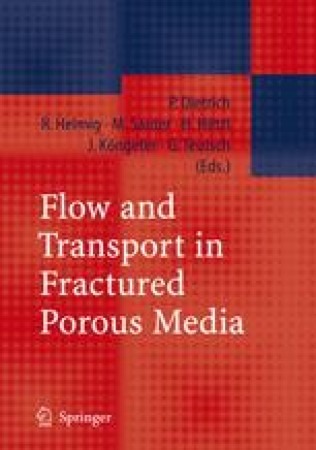
Flow and transport in fractured porous media
This book addresses the characterization of flow and transport in porous fractured media from experimental and modeling perspectives. The volume explores porous media problems, from the origin of the present natural porous structures, to their characterization, and various flow and transport phenomena that exist within the porous media. Examples are miscible displacements in porous media and fractured rock and the physical and chemical interactions within porous fractured aquifers. The book is a comprehensive presentation of investigations performed and analysed on different scales, supporting the understanding and application of experimental studies and numerical simulations.
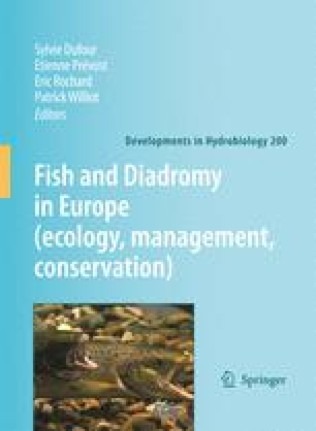
Fish and Diadromy in Europe (ecology, management, conservation)
This book contains selected papers from an international symposium organised by the Diadfish network held in Bordeaux (France) in 2005. Readers will find up-to-date information on the ecology, ecotoxicology and physiology of several diadromous species (Atlantic salmon, shads, lampreys, eels) and this whole group in Europe. Main impacts are also documented and analysed in case studies, and solutions or remediation actions are presented.

First floridians and last mastodons : The Page-Ladson Site in the Aucilla River
Over the last 20 years the Aucilla River Prehistory Project has been one of the most f- cinating stories unfolding in Florida. This project, uncovering the remains of plants and animals from the end of the last Ice Age and the beginning of Florida’s human oc- pation, is answering questions important to the entire western hemisphere. Questions such as when did people first arrive in the Americas? Were these newcomer scavengers or skillful hunters? Could they have contributed to the extinction of the great Ice Age beasts – animals such as elephants – that were creatures native to Florida for the pre- ous million or so years? And how did these first Florida people survive 12,000 years ago at a time when sea level was so low that this peninsula was double its present size, sprawling hugely into the warm waters of the Caribbean? Much of Florida at that time was almost desert.
Finite model theory and its applications
This book gives a broad overview of core topics of finite model theory: expressive power, descriptive complexity, and zero-one laws, together with selected applications to database theory and artificial intelligence, especially, constraint databases and constraint satisfaction problems. The final chapter provides a concise modern introduction to modal logic, which emphasizes the continuity in spirit and technique with finite model theory. This underlying spirit involves the use of various fragments of, and hierarchies within, first order, second order, fixed point, and infinitary logics to gain insight into phenomena in complexity theory and combinatorics.
Finite Element Methods in Civil and Mechanical Engineering : A Mathematical Introduction
The finite element method is widely employed for numerical simulations in engineering and science due to its accuracy and efficiency. This concise introduction to the mathematical theory of the finite element method presents a selection of applications in civil and mechanical engineering including beams, elastic membranes, the wave equation, heat transfer, seepage in embankment, soil consolidation, incompressible fluids, and linear elasticity.
Finite element design of concrete structures : Practical problems and their solutions
In Finite Element Design of Concrete Structures: practical problems and their solutions the author addresses this 'blind belief' in computer results by offering a useful critique that 'important details are overlooked due to the flood of information' from the output of computer calculations. Indeed, errors in the numerical model may lead in extreme cases to structural failures as the collapse of the so-called Sleipner platform has demonstrated.

Finite Element Analysis for Civil Engineering with DIANA Software
Introduces readers to the finite element analysis software DIANA (DIsplacement ANAlyzer) and its applications in civil engineering. Developed by TNO Corporation in the 1970s, DIANA is frequently used in civil engineering and engineering mechanics. This book presents a simplified overview of the basic background theory to help beginners master the software quickly. It also discusses GUI operation and the command console in Python language, and includes examples involving classical modeling operations to help readers review each section.
