



Page 2
Page 2

Business continuity management : A practical guide to organizational resilience and ISO 22301
Business continuity management and resilience are critical to maintaining a healthy business, but many organizations either do nothing (leaving themselves exposed to disruption), take short cuts (leaving major gaps) or fail to properly engage senior stakeholders. This book is a straightforward guide to delivering an effective business continuity capability, including practical solutions built from the author's personal experience managing hundreds of projects in a variety of business settings.

Building supply chain excellence in emerging economies
How can we manage supply chains well in emerging economies, coordinate information flows with multiple partners, tackle challenges such as unexpected disruptions, diversify the risks and increase flexibilities, are the topics and issues of the book.

Bridge design for economy and durability : Concepts for new, strengthened and replacement bridges
Describes a number of new or updated bridging concepts which were developed and s"Describes a number of new or updated bridging concepts which were developed and successfully applied during the author's forty years of close involvement with UK and international bridge design, construction, maintenance and research. The concepts mainly apply to the small/medium span range of bridges and viaducts and contribute to one or more of the following features: design and construction economy in both time and money / ease of inspection and minimum maintenance / ride quality and safety / good appearance / strengthening when required with minimum traffic disruption"
Beyond global food supply chains : Crisis, disruption, regeneration
Through a set of incisive essays, this incredibly timely book shows how much the COVID-19 pandemic has exposed both vulnerabilities and opportunities - for (racial) capitalism and its discontents alike to intervene in food supply chains. A most welcome publication! This book takes the upheaval of the global COVID-19 pandemic as a springboard from which to interrogate a larger set of structural, environmental and political fault lines running through the global food system. In a context in which disruptions to the production, distribution, and consumption of food are figured as exceptions to the smooth, just-in-time efficiencies of global supply chains, these essays reveal the global food system as one that is inherently disruptive of human lives and flourishing, and of relationships between people, places, and environments. The pandemic thus represents a particular, acute moment of disruption, offering a lens on a deeper, longer set of systemic processes, and shining new light on transformational possibilities.
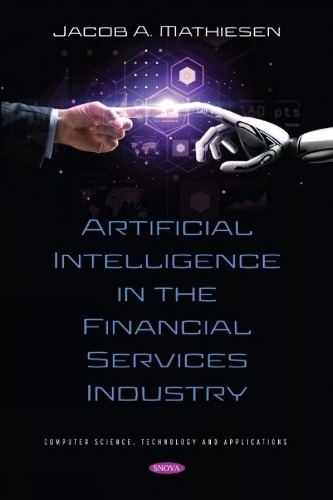
Artificial intelligence in the financial services industry
Today, the financial services sector is facing a period of rapid disruption and innovation, and artificial intelligence (AI) is at the heart of these changes. Artificial intelligence can be used to gather enormous amounts of data, detect abnormalities, and solve complex problems. Financial institutions are already experimenting extensively with AI strategies to enhance and streamline financial institutions, BSA and AML compliance, CRA requirements, fraud detection, and real estate valuations, all while reducing cost levels. This book looks at how artificial intelligence is affecting the financial services industry.
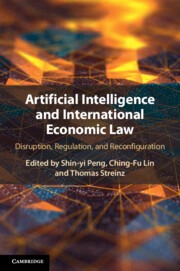
Artificial Intelligence and International Economic Law : Disruption, Regulation, and Reconfiguration
This book was finalized while countries around the world were still confronting a global public health crisis caused by the COVID-19 pandemic. Many came to rely on digital services as an infrastructure for social interaction and professional endeavors, including academic and educational work. The pandemic seems to have precipitated a further shift towards digital technologies and artificial intelligence. It is our hope that this book will contribute to an informed discussion about the relevance of and implications for international economic law beyond the pandemic"
Anticipating and preparing for emerging skills and jobs : Key issues, concerns, and prospects
Analyzes the main drivers that are influencing the dramatic evolution of work in Asia and the Pacific and identifies the implications for education and training in the region.
AI in learning : Designing the future
AI (artificial intelligence) is predicted to radically change teaching and learning in both schools and industry causing radical disruption of work. AI can support well-being initiatives and lifelong learning but educational institutions and companies need to take the changing technology into account. Moving towards AI supported by digital tools requires a dramatic shift in the concept of learning, expertise and the businesses built off of it. Based on the latest research on AI and how it is changing learning and education, this book will focus on the enormous opportunities to expand educational settings with AI for learning in and beyond the traditional classroom. This book also introduces ethical challenges related to learning and education, while connecting human learning and machine learning.
