



Page 2
Page 2

Modeling, Control and Implementation of Smart Structures : A FEM-State Space Approach
This monograph presents an introductory overview of smart structures, their concepts, their active involvement in the vibration control, their applications and the extensive research work done on it so far. The modelling of flexible beams using two types of beam theories, viz., the Euler-Bernoulli theory and the Timoshenko beam theory is presented, including a new concept of finite element modeling of the flexible structures using Timoshenko beam theory with the inclusion of the shear both in the piezo-patches as well as in the host structure. It presents the design of the periodic output feedback control system for smart structure systems, the design of the FOS controllers for active vibration control and the design of Discrete Sliding Mode controllers using multirate output feedback technique.

Modeling of Creep for Structural Analysis
"Creep Modeling for Structural Analysis" develops methods to simulate and analyze the time-dependent changes of stress and strain states in engineering structures up to the critical stage of creep rupture. The principal subjects of creep mechanics are the formulation of constitutive equations for creep in structural materials under multi-axial stress states; the application of structural mechanics models of beams, plates, shells and three-dimensional solids and the utilization of procedures for the solution of non-linear initial-boundary value problems. The objective of this book is to review some of the classical and recently proposed approaches to the modeling of creep for structural analysis applications as well as to extend the collection of available solutions of creep problems by new, more sophisticated examples.

Mechanics of Civil Engineering Structures
Presents the material needed by practicing engineers engaged in the design of civil engineering structures, and students of civil engineering. The book covers the fundamental principles of mechanics needed to understand the responses of structures to different types of load and provides the analytical and empirical tools for design. The title presents the mechanics of relevant structural elements—including columns, beams, frames, plates and shells—and the use of mechanical models for assessing design code application. Eleven chapters cover topics including stresses and strains; elastic beams and columns; inelastic and composite beams and columns; temperature and other kinematic loads; energy principles; stability and second-order effects for beams and columns; basics of vibration; indeterminate elastic-plastic structures; plates and shells.

Ion Implantation and Synthesis of Materials
This book presents the physics and materials science of ion implantation and ion beam modification of materials. It covers ion-solid interactions used to predict ion ranges, ion straggling and lattice disorder. Also treated are shallow-junction formation and slicing silicon with hydrogen ion beams. Topics important for materials modification, such as ion-beam mixing, stresses, and sputtering, are also described.

Introduction to Focused Ion Beams : Instrumentation, Theory, Techniques and Practice
Introduction to Focused Ion Beams is geared towards techniques and applications. The first portion of this book introduces the basics of FIB instrumentation, milling, and deposition capabilities. The chapter dedicated to ion-solid interactions is presented so that the FIB user can understand which parameters will influence FIB milling behavior. The remainder of the book focuses on how to prepare and analyze samples using FIB and related tools, and presents specific applications and techniques of the uses of FIB milling, deposition, and dual platform techniques. This is the only text that discusses and presents the theory directly related to applications and the only one that discusses the vast applications and techniques used in FIBs and Dual platform instruments.

Intense Electron and Ion Beams
Intense Ion and Electron Beams treats intense charged-particle beams used in vacuum tubes, particle beam technology and experimental installations such as free electron lasers and accelerators. It addresses, among other things, the physics and basic theory of intense charged-particle beams; computation and design of charged-particle guns and focusing systems; multiple-beam charged-particle systems; and experimental methods for investigating intense particle beams. The coverage is carefully balanced between the physics of intense charged-particle beams and the design of optical systems for their formation and focusing. It can be recommended to all scientists studying or applying vacuum electronics and charged-particle beam technology, including students, engineers and researchers.

How structures work : Design and behaviour from bridges to buildings ; 2nd ed.
How the building behaves when subjected to various forces – the weight of the materials used to build it, the weight of the occupants or the traffic it carries, the force of the wind etc – is fundamental to its stability. The alliance between architecture and structural engineering is therefore critical to the successful design and completion of the buildings and infrastructure that surrounds us. Yet structure is often cloaked in mathematics which many architects and surveyors find difficult to understand.

High Energy Polarized Proton Beams : A Modern View
This monograph begins with a review of the basic equations of spin motion in particle accelerators. It then reviews how polarized protons can be accelerated to several tens of GeV using as examples the preaccelerators of HERA, a 6.3 km long cyclic accelerator at DESY / Hamburg. Such techniques have already been used at the AGS of BNL / New York, to accelerate polarized protons to 25 GeV. But for acceleration to energies of several hundred GeV as in RHIC, TEVATRON, HERA, LHC, or a VLHC, new problems can occur which can lead to a significantly diminished beam polarization. For these high energies, it is necessary to look in more detail at the spin motion, and for that the invariant spin field has proved to be a useful tool. This is already widely used for the description of high-energy electron beams that become polarized by the emission of spin-flip synchrotron radiation. It is shown that this field gives rise to an adiabatic invariant of spin-orbit motion and that it defines the maximum time average polarization available to a particle physics experiment.

Fundamentals of Structural Dynamics : Theory and Computation
Emphasizes numerical methods, nonlinear response of structures, and the analysis of continuous systems (e.g., wave propagation). Fundamentals of Structural Dynamics: Theory and Computation builds the theory of structural dynamics from simple single-degree-of-freedom systems through complex nonlinear beams and frames in a consistent theoretical context supported by an extensive set of MATLAB codes that not only illustrate and support the principles, but provide powerful tools for exploration. The book is designed for students learning structural dynamics for the first time but also serves as a reference for professionals throughout their careers.

Fundamentals of nanoscale film analysis
The book describes the fundamentals of materials characterization from the standpoint of the incident photons or particles which interrogate nanoscale structures. These induced reactions lead to the emission of a variety of detected of particles and photons. It is the energy and intensity of the detected beams that is the basis of the characterization of the materials. The array of experimental techniques used in nanoscale materials analysis covers a wide range of incident particle and detected beam interactions.
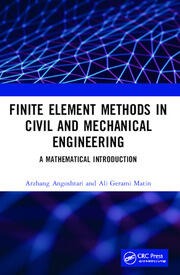
Finite Element Methods in Civil and Mechanical Engineering : A Mathematical Introduction
The finite element method is widely employed for numerical simulations in engineering and science due to its accuracy and efficiency. This concise introduction to the mathematical theory of the finite element method presents a selection of applications in civil and mechanical engineering including beams, elastic membranes, the wave equation, heat transfer, seepage in embankment, soil consolidation, incompressible fluids, and linear elasticity.

Examples in Structural Analysis
This code-independent and comprehensive collection of fully worked and graded examples shows undergraduates how to analyse different types of structure, with the main analysis techniques, with some detailed mathematics. Now with pin-jointed frames and arches and cables, with more on the direct stiffness method and influence lines for beams.

Essentials of mechanical stress analysis
Essentials of Mechanical Stress Analysis, updated for the second edition, covers stress analysis from an interdisciplinary perspective. Discussing techniques and theories essential to analysing structures, the book covers both analytical and numerical approaches. Also covering beams, plates, columns and elastic instability, the book discusses fatigue, life cycle, energy methods and MathCAD sample code.

Engineering mechanics 2 : Strength of materials : An introduction with many examples
Provides students with a clear introduction and to enable them to formulate and solve engineering problems in this field. For this purpose, the book provides a number of examples. The Contents : Introduction to linear elasticity – Plane stress state – Bars – Beams – Beam deflections – Shear stresses in beams – Torsion – Energy methods – Buckling of bars

Engineering Mechanics ; Vol.2 : Stresses, Strains, Displacements
"This is the second of two volumes … by Hartsuijker and Welleman (both, Dolft Univ. of Technology). … The concepts and applications are well presented; applications include both basic and advanced levels. The worked out examples nicely illustrate concepts. Figures and tables are clear and help understanding of the concepts. … In summary, the book is very well written and is a welcome addition to the literature of engineering mechanics. Summing Up: Recommended. Lower-division undergraduates through professionals." (M. G. Prasad, CHOICE, Vol. 45 (7), 2008)

Electrostatic Accelerators : Fundamentals and Applications
Electrostatic accelerators are an important and widespread subgroup within the broad spectrum of modern, large particle acceleration devices. They are specifically designed for applications that require high-quality ion beams in terms of energy stability and emittance at comparatively low energies (a few MeV). Their ability to accelerate virtually any kind of ion over a continuously tunable range of energies make them a highly versatile tool for investigations in many research fields including, but not limited to, atomic and nuclear spectroscopy, heavy ion reactions, accelerator mass spectroscopy as well as ion-beam analysis and modification. The book is divided into three parts. The first part concisely introduces the field of accelerator technology and techniques that emphasize their major modern applications. The second part treats the electrostatic accelerator per se: its construction and operational principles as well as its maintenance. The third part covers all relevant applications in which electrostatic accelerators are the preferred tool for accelerator-based investigations. Since some topics are common to all types of accelerators, Electrostatic Accelerators will also be of value those more familiar with other types of accelerators.

Electromagnetic Theory for Microwaves and Optoelectronics
This book is a first year graduate text on electromagnetic fields and waves. At the same time it serves as a useful reference for researchers and engineers in the areas of microwaves and optoelectronics. Following the presentation of the physical and mathematical foundations of electromagnetic theory, the book discusses the field analysis of electromagnetic waves confined in material boundaries, or so-called guided waves, electromagnetic waves in the dispersive media and anisotropic media, Gaussian beams and scalar diffraction theory. The theories and methods presented in the book are foundations of wireless engineering, microwave and millimeter wave techniques, optoelectronics and optical fiber communication.

Electromagnetic Technologies in Food Science
Electromagnetic Technologies in Food Science examines various methods employed in food applications that are based on the entire electromagnetic (EM) spectrum. Focusing on recent advances and challenges in food science and technology, this is an up-to-date volume that features vital contributions coming from an international panel of experts who have shared both fundamental and advanced knowledge of information on the dosimetry methods, and on potential applications of gamma irradiation, electron beams, X-rays, radio and microwaves, ultraviolet, visible, pulsed light, and more.

Discrete Element Analysis Methods of Generic Differential Quadratures
This book presents numerical differential quadrature (DQ) - based methods recently developed by the author. Their ability for solving generic scientific and engineering problems is demonstrated. These methods are the generic differential quadrature, the extended differential quadrature and the related discrete element analysis methods. These novel numerical techniques are both efficient and reliable. They are suitable for developing solution algorithms for various computational mechanics problems with arbitrarily complex geometry. This is shown for several comprehensive examples such as bars and beams, trusses, frames, general field problems, elasticity problems or bending of plates.

Design of Hybrid Structures : Where Steel Profiles Meet Concrete
Focuses on design approaches for concrete structures reinforced in an unconventional way by steel profiles. It explains force transfer mechanisms of steel profiles and oncrete interfaces, and an analysis of the characteristics of hybrid structures, including slendercomponents. Several types of hybrid designs are addressed: walls and columns with several embedded steel profiles, connections strengthened by steel profiles between steel and composite or reinforced concrete components, including the specific case of shear keys connecting deep beams or flat slabs to columns. The transition zones in partly reinforced concrete and partly composite columns are also covered.
