



Page 195
Page 195

Augmented reality, virtual reality, and computer graphics ; 7th International Conference, AVR 2020, Lecce, Italy, September 7–10, 2020, Proceedings, Part II
The 2-volume set LNCS 12242 and 12243 constitutes the refereed proceedings of the 7th International Conference on Augmented Reality, Virtual Reality, and Computer Graphics, AVR 2020, held in Lecce, Italy, in September 2020.* The 45 full papers and 14 short papers presented were carefully reviewed and selected from 99 submissions. The papers discuss key issues, approaches, ideas, open problems, innovative applications and trends in virtual reality, augmented reality, mixed reality, 3D reconstruction visualization, and applications in the areas of cultural heritage, medicine, education, and industry.
Augmented reality, virtual reality, and computer graphics ; 7th International conference, AVR 2020, Lecce, Italy, September 7–10, 2020, Proceedings, Part I
he 2-volume set LNCS 12242 and 12243 constitutes the refereed proceedings of the 7th International Conference on Augmented Reality, Virtual Reality, and Computer Graphics, AVR 2020, held in Lecce, Italy, in September 2020.* The 45 full papers and 14 short papers presented were carefully reviewed and selected from 99 submissions. The papers discuss key issues, approaches, ideas, open problems, innovative applications and trends in virtual reality, augmented reality, mixed reality, 3D reconstruction visualization, and applications in the areas of cultural heritage, medicine, education, and industry.

Auditory Trauma, Protection, and Repair
Protection and Repair presents recent developments in auditory research and their potential translation to the clinical setting. In particular the authors address the major entities of peripheral auditory trauma, discuss the underlying mechanisms, the central nervous system consequences, protective interventions and finally explore the possibilities to restore cochlear morphology and function.Two themes run through the chapters in this book: cellular homeostasis and cell death. In the broadest sense, all auditory pathologies are disorders of cellular homeostasis.

Au-delà de linformation, la prévention : Par l’équipe du département de prévention Épidaure = Prevention goes beyond information : By the Epidaure Prevention department team
The prevention of the most frequent and deadly pathologies (cancers, cardiovascular diseases, accidents) essentially involves modifying risky behavior, a challenge which cannot be resolved by the simple dissemination of information. To be able to modify behavior, it is necessary to take into account, on the one hand, the individuals themselves and what leads them to change their ways of living and, on the other hand, the cultural, social, physical and economic environment. who shapes people and whose modifications are necessary for individual changes. Thus, preventive health actions are effective as long as they strengthen the ability to exercise control over individual and collective health determinants.

Attention-deficit hyperactivity disorder (ADHD)
ADHD, called attention-deficit disorder, is a behavior disorder, usually first diagnosed in childhood, that is characterized by inattention, impulsivity, and, in some cases, hyperactivity. These symptoms usually occur together; however, one may occur without the other(s). The symptoms of hyperactivity, when present, are almost always apparent by the age of 7 and may be present in very young preschoolers. Inattention or attention-deficit may not be evident until a child faces the expectations of elementary school ADHD IN CHILDREN is a chronic condition that affects millions of children and often continues into adulthood.

Atoms, molecules and photons : An introduction to atomic- molecular- and quantum physics
This introduction to Atomic and Molecular Physics explains how our present model of atoms and molecules has been developed over the last two centuries both by many experimental discoveries and, from the theoretical side, by the introduction of quantum physics to the adequate description of micro-particles. It illustrates the wave model of particles by many examples and shows the limits of classical description. The interaction of electromagnetic radiation with atoms and molecules and its potential for spectroscopy is outlined in more detail and in particular lasers as modern spectroscopic tools are discussed more thoroughly. Many examples and problems with solutions are offered to encourage readers to actively engage in experimentation.

Atomistic approaches in modern biology : From quantum chemistry to molecular simulations
This volume of Topics in Current Chemistry presents an overview of atomistic theoreticalmethodsapplied tomolecular biologicalsystems. Itthus repesents abottom-upview of chemistryonbiologyfroma theoreticalperspective. The chapters arearrangedsuchthat important issuesareconsidered startingfrom a quantum mechanical perspective and proceeding to a molecular mechanics and molecular dynamics descriptiono fthemotionoftheelementaryparticles involved.which are responsible for the properties and function of biomolecules. Depending on the length and time scales relevant for a given phenomenon to be investigated, tailored theoretical methods are required to account for these. If one is interested in large scale motions of molecules, a molecul- mechnanics-based description willbeappropriate.

Atomic and Nuclear Analytical Methods : XRF, Mössbauer, XPS, NAA and Ion-Beam Spectroscopic Techniques
This book is a blend of analytical methods based on the phenomenon of atomic and nuclear physics. It comprises comprehensive presentations about X-ray Fluorescence (XRF), Mössbauer Spectroscopy (MS), X-ray Photoelectron Spectroscopy (XPS), Neutron- Activation Analysis (NAA), Particle Induced X-ray Emission Analysis (PIXE), Rutherford Backscattering Analysis (RBS), Elastic Recoil Detection (ERD), Nuclear Reaction Analysis (NRA), Particle Induced Gamma-ray Emission Analysis (PIGE), and Accelerator Mass Spectrometry (AMS). These techniques are commonly applied in the fields of medicine, biology, environmental studies, archaeology or geology et al. and pursued in major international research laboratories.

Atmospheric Boundary Layers : Nature, Theory, and Application to Environmental Modelling and Security
This collection of peer reviewed papers represents a concise, up-to-date summary of our current knowledge of planetary boundary layer (PBL) physics and parameterization. As such, it makes a major contribution to the interchange of knowledge and ideas between physicists, meteorologists and environmental modellers and sets out the course to be followed in subsequent research to improve PBL parameterizations in climate, numerical weather prediction, air quality, and emergency preparedness models. Major themes covered are: Nature and theory of turbulent boundary layers, Boundary layer flows - modelling and applications to environmental security, Nature, theory and modelling of boundary-layer flows, and Air flows within and above urban and other complex canopies - air-sea-ice interactions.

Atmospheric and space flight dynamics : Modeling and simulation with MATLAB® and Simulink®
Modern aerospace vehicles, such as the space shuttle, other launch vehicles, and long-range ballistic missiles, do not discriminate between atmospheric and space flight. Most texts on flight dynamics, however, make this artificial distinction and therefore do not simultaneously cover aircraft and spacecraft. Bridging this gap in the literature, Atmospheric and Space Flight Dynamics is a unified presentation, demonstrating that the two disciplines have actually evolved from the same set of physical principles.Primarily useful as a textbook for advanced undergraduate and beginning graduate-level students, the work is also an excellent reference or self-study guide for researchers and practitioners in aerospace engineering, aviation, mechanical engineering, dynamics, astrodynamics, aeronautics, and astronautics.

Atlas of Woody Plant Stems : Evolution, Structure, and Environmental Modifications
he „Atlas of Woody Plant Stems“ is a com- Naturally, it was impossible to cover completely the Tprehensively illustrated book with short, in- enormous variability of plant life forms. We have formative texts. We chose this layout because plant tried, however, to illustrate the main principles and anatomy and morphology can only be conveyed by features. Many decades of collection and prepa- detailed pictures. In addition, a vivid presentation tion provided the basis for this book.
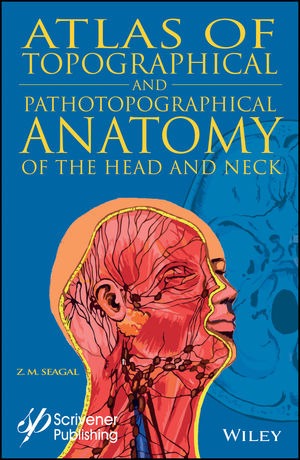
Atlas of topographical and pathotopographical anatomy of the head and neck
Presents the ultrasonic topographical and pathotopographical anatomy of the head and neck, offering further detail into these important areas for use by medical professionals. This atlas of topographic and pathotopographic human anatomy is a fundamental and practically important book designed for doctors of all specializations and students of medical schools. Here you can find almost everything that is connected with the topographic and pathotopographic human anatomy, including original graphs of logical structures of topographic anatomy and development of congenital abnormalities, topography of different areas in layers, pathotopography, computer and magnetic resonance imaging (MRI) of topographic and pathotopographic anatomy.

Atlas of seeds and fruits of Central and East-European Flora : The carpathian mountains region
The Carpathian flora occurs not only in the Carpathian Mountains, but also in large lowlands extending towards the south, north and east and involves introduced and invading flora of more than 7,500 species. Since the morphological characteristics of the seeds are usually constant they are very important for determination of systematic units. The present atlas of seeds with nearly 4,800 seed illustrations is supplemented with detailed seed descriptions, brief plant descriptions, locality and the native source of plants. This publication is unique, both in its extent – with so many plant seeds from such a wide-ranging region - and in the form of its presentation – with such detailed descriptions.
Atlas of Regional Anatomy of the Brain Using MRI : with functional correlations
The volume provides a unique review of the essential topographical anatomy of the brain from an MRI perspective, correlating high-quality anatomical plates with the corresponding high-resolution MRI images. The book includes a historical review of brain mapping and an analysis of the essential reference planes used for the study of the human brain. Subsequent chapters provide a detailed review of the sulcal and the gyral anatomy of the human cortex, guiding the reader through an interpretation of the individual brain atlas provided by high-resolution MRI.

Atlas of orthodontic case reviews
Offers a comprehensive resource to the treatment of orthodontic malocclusions with a case-based approach. Discusses and illustrates the treatment of orthodontic malocclusions using actual clinical casesPresents more than 800 clinical photographs showing the stages of each treatment, to act as a visual referenceIncludes a description of each malocclusion, an explanation of the desired treatment outcomes, an account of the changes, and review questions for each case

Atlas of Organ Transplantation
A comprehensive compilation of the majority of surgical procedures in transplant surgery, this book details the latest and most innovative procedures in one reference work. Atlas of Organ Transplantation is essential reading for all transplant surgeons, residents and fellows, as well as operating room nurses and transplant nurse coordinators.

Atlas of oral and maxillofacial radiology
Presents an extensive case collection of both common and less common conditions of the jaws and teeth. Focusing on the essentials of radiologic interpretation, this is a go-to companion for clinicians in everyday practice who have radiologically identified a potential abnormality, as well as a comprehensive study guide for students at all levels of dentistry, surgery and radiology. Unique lesion-based problem solving chapter makes this an easy-to-use reference in a clinical settingIncludes 2D intraoral radiography, the panoramic radiograph, cone beam CT, multidetector CT and MRIMultiple cases are presented in order to demonstrate the variation in the radiological appearances of conditions affecting the jaws and teethSpecial focus on conditions where diagnostic imaging may substantially contribute to diagnosisFeatures a useful chapter covering the temporomandibular joint
Atlas of Non-Invasive Coronary Angiography by Multidetector Computed Tomography
The multidetector CT scanner speeds diagnosis and treatment of patients. One of its many uses is to perform CT coronary angiography. Multidetector CT has generated excitement within the cardiology and radiology community as it provides clear pictures and takes less time than other non-invasive techniques, including conventional spiral and electron-beam CT which can take up to an hour or more. This atlas presents over 160 illustrations, with 116 in color and illustrates the capacity of multidetector CT for the analysis of the anatomy of the coronary arteries.
Atlas of lacrimal surgery
International experts provide a stepwise analysis and describe the clinical management of these patients with detailed medical and surgical treatment plans. Further, the accompanying DVD presents video clips on surgical methods such as endonasal and external DCR; endoscopic versus microscopic procedure; lacrimal endoscopy and transcanalicular surgery; laser DCR and DCR in children; traumatic lesions; interventional radiology and stenting; and conjunctivorhinostomy and Jones tube. With this excellent guide the reader will be able to solve any problem that may occur with the reconstruction of a disturbed or damaged lacrimal system.
Atlas of electroanatomic mapping in supraventricular arrhythmias
For decades clinical electrophysiology has been considered a discipline for adepts, able to interpret not so obvious intracardiac signals. With the advent of new technologies, offering a three-dimensional reconstruction of cardiac anatomy and generating colour-coded maps, the approach to the complex world of electrophysiology is changing: A three-dimensional colour-coded electroanatomic map of a left atrium could be a precise and self-explanatory representation based on intracavitary signals, on which correct diagnosis is made and successul ablation is performed. As expected, this makes the difference especially in cases exhibiting complex arrhythmias (atypical atrial flutters, postsurgical arrhythmias), in which the task could be really tough.
