



Page 175
Page 175
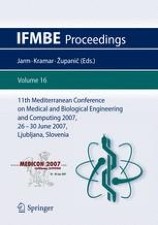
11th Mediterranean Conference on Medical and Biomedical Engineering and Computing 2007 ; MEDICON 2007, 26-30 June 2007, Ljubljana, Slovenia
Biomedical engineering today is a well-recognized area of research. It brings together bright minds from diverse disciplines ranging from engineering, physics, and computer sciences on one side to biology and medicine on the other side. With valuable assistance of members of the International Advisory Committee and Scientific Program Committee, the co-organizing institutions and societies, our sponsors, and distinguished invited lecturers we will ensure that the research and development presented at MEDICON 2007 plenary meetings, scientific sessions, and workshops will truly be relevant and up-to-date. The MEDICON conferences are international events of high scientific standards with long lasting tradition held every third year in one of the Mediterranean countries under the auspices of the International Federation for Medical and Biological Engineering.
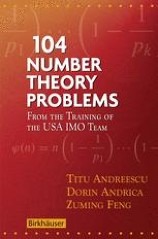
104 Number Theory Problems : From the Training of the USA IMO Team
This challenging problem book by renowned US Olympiad coaches, mathematics teachers, and researchers develops a multitude of problem-solving skills needed to excel in mathematical contests and research in number theory. Offering inspiration and intellectual delight, the problems throughout the book encourage students to express their ideas, conjectures, and conclusions in writing. Applying specific techniques and strategies, readers will acquire a solid understanding of the fundamental concepts and ideas of number theory.
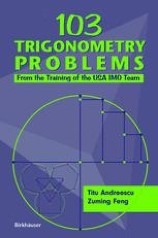
103 Trigonometry Problems : From the Training of the USA IMO Team
103 Trigonometry Problems contains highly-selected problems and solutions used in the training and testing of the USA International Mathematical Olympiad (IMO) team. Though many problems may initially appear impenetrable to the novice, most can be solved using only elementary high school mathematics techniques.
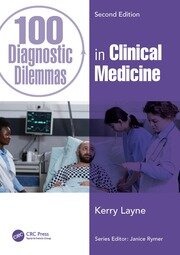
100 diagnostic dilemmas in clinical medicine
Presents 100 real-life scenarios seen in the hospital and community setting. A succinct summary of the patient's history, examination and any initial investigations is followed by a detailed consideration of the diagnosis and management of each case, in the short, medium and, where appropriate, long term.
100 cases in obstetrics and gynaecology
Presents 100 obstetric- or gynaecology-related scenarios commonly seen by medical students and junior doctors in the emergency department, outpatient clinic or on the ward. A succinct summary of the patient's history, examination and initial investigations – including photographs where relevant – is followed by questions on the diagnosis and management of each case. The answer includes a detailed discussion on each topic, with further illustration where appropriate, providing an essential revision aid as well as a practical guide for students and junior doctors.
100 cases in clinical pathology and laboratory medicine
Presents 100 clinical scenarios commonly seen by medical students and junior doctors in the emergency department, outpatient clinic, operating theatre or in general practice. A succinct summary of the patient's history, examination and initial investigations is followed by questions on each case, with particular emphasis on the interpretation of the results and in which an understanding of the underlying clinical pathology is central to arriving at the correct diagnosis. The answer includes a detailed discussion on each topic, providing an essential revision aid as well as a practical guide for students and junior doctors, especially those preparing for undergraduate and postgraduate examinations.
100 cases in acute medicine
A succinct summary of the patient's history, examination and initial investigations, including photographs where relevant, is followed by questions on the diagnosis and management of each case. The answer includes a detailed discussion on each topic, with further illustration where appropriate, providing an essential revision aid as well as a practical guide for students and junior doctors. Making clinical decisions and choosing the best course of action is one of the most challenging and difficult parts of training to become a doctor. Fully revised and updated for this second edition, these cases will teach students and junior doctors to recognize important clinical symptoms and signs, and to develop their diagnostic and management skills.
10 Years Southeast European Cooperative Initiative : From Dayton to Brussels
The Southeast European Cooperative Initiative (SECI) was the first international instrument for "peace keeping and peace making". Conceived by the United States with full partnership and participation of the European Union, SECI was a response to the Dayton Agreement. SECI was convinced that sending troops and diplomats did not suffice. It called for a new strategy and approach that would promote economic and social development through regional cooperation. SECI understood that despite their differences, the countries of South East Europe shared many mutual concerns. For the international community, SECI was a prelude to a broader instrument - the Stability Pact for South Eastern Europe, launched in 1999. The approach was a success! This compendium of documents, agreements, analyses and essays gives a glimpse into decision-making processes and results achieved.
