



Page 17
Page 17

Natural Disasters and Extreme Events in Agriculture : Impacts and Mitigation
Agricultural production is highly dependent on weather, climate and water availability and is adversely affected by the weather and climate-related disasters. Droughts and natural disasters such as floods can result in crop failures, food insecurity, famine, loss of property and life, mass migration and negative national economic growth. It may not be possible to prevent the occurrence of these natural disasters, but the resultant disastrous effects can be reduced considerably through proper planning and effective preparation. Vulnerability associated with the hazards of natural disasters can be controlled to some extent by accurate and timely prediction and by taking counter-measures to reduce their impacts on agriculture. This book based on an expert meeting held in Beijing, China should be of interest to all organizations involved in disasters reduction and mitigation of extreme events.

Natural Beauty Center
"سبب اختيارالمشروع : إيجاد فراغ معماري متكامل مصمم بطريقة فنية يتضمن عيادات تجميل / لون تجميل / نادي رياضي / متاجر/ سبا / داي كير للأطفال / كافيه / قاعة متعددة الاستعمالات / مكاتب إدارية الهدف من المشروع : دعم المرأة بجميع جوانب الحياة."

Natural anti-aging skin care
Ageing is a natural phenomenon which is a fold, ridge and crease in the skin that occurs due to loss of body mass, poor hydration, disintegration of dermis and epidermis junction. The Skin ageing process involves many changes that occur due to the combination of both endogenous factors and exogenous factors. The ageing of the skin occurs due to various mechanisms like glycation, free radical, cell cycle, and cellular and molecular mechanism of skin ageing. In this review article, we have discussed the treatment, worldwide newer therapies and marketed formulation that are currently available for the reduction of skin ageing.

Natriuretic Peptides : The Hormones of the Heart
The rapid knowledge in the field of neuro-humoral regulation of cardiovascular pathophysiology is changing the picture of current diagnosis and treatment of cardiac patients. The emerging conceptual revolutionary idea is that heart acts not as a pump, merely, but as a "gland", that is as a regulator of circulatory homeostasis and salt-water balance. Cardiovascular pathophysiology has to be written, indeed, on this basis: this physiology textbook gives an up-to-date description of the complexity and novelty of actual knowledge, with all its potential clinical implications.

National Tax Policy in Europe : To Be or Not to Be?
The book is dedicated to the question of how much room for national tax policy Member States of the European Union will find necessary and possible to maintain in the future. It focuses on the possibilities Member States have and the constraints they face, such as the need to enhance competitiveness and attractiveness to inward foreign direct investment, to finance social programmes and the limitations imposed by European and International Law. The research question is looked at from economic as well as from legal points of view. This comprehensive approach and the answers given will be of interest to scholars and policy makers alike and may guide the path for future tax developments in Europe.

National security exceptions in international trade and investment agreements : Justiciability and standards of review
provides a comprehensive analysis of national security exceptions in international trade and investment agreements. The subject has gained particular relevance in the past few years, as both the United States and the Russian Federation have invoked national security as justification for trade-restrictive measures in the context of WTO dispute settlement proceedings. describes the evolution of security exceptions in international economic law, from the GATT 1947 to the most recent economic treaties, such as the 2017 Buenos Aires Protocol for Intra-Mercosur Investment and the 2018 USMCA.

National Constitutions in European and Global Governance : Democracy, Rights, the Rule of Law: National Reports
It offers important insights into three areas. First, it explores how constitutions reflect the transfer of powers from domestic to European and global institutions. Secondly, it revisits substantive constitutional values, such as the protection of constitutional rights, the rule of law, democratic participation and constitutional review, along with constitutional court judgments that tackle the protection of these rights and values in the transnational context, e.g. with regard to the Data Retention Directive, the European Arrest Warrant, the ESM Treaty, and EU and IMF austerity measures. The responsiveness of the ECJ regarding the above rights and values, along with the standard of protection, is also assessed. Thirdly, challenges in the context of global governance in relation to judicial review, democratic control and accountability are examined. On a broader level, the contributors were also invited to reflect on what has increasingly been described as the erosion or ‘twilight’ of constitutionalism, or a shift to a thin version of the rule of law, democracy and judicial review in the context of Europeanisation and globalisation processes.

Narrating China's Governance : Stories in Xi Jinping's Speeches
This book captures and elaborates on the skill of storytelling as one of the distinct leadership features of Xi Jinping, the General Secretary of the Communist Party of China and the President of the People’s Republic of China.

Napoleonic Governance in the Netherlands and Northwest Germany : Conquest, Incorporation, and Integration
This Palgrave Pivot explores the ways in which French Emperor Napoleon tried to integrate the present-day Netherlands and Northwest Germany into his Empire, by replacing traditional institutions and governing practices with French ones ('Napoleonic governance'). The northern periphery of the Napoleonic Empire continues to be overlooked by the bulk of historians; this study shows that a transregional approach can yield important findings. In a broader sense, the study does not deal with these regions alone, but also with the difficulties that are inherent to European integration.
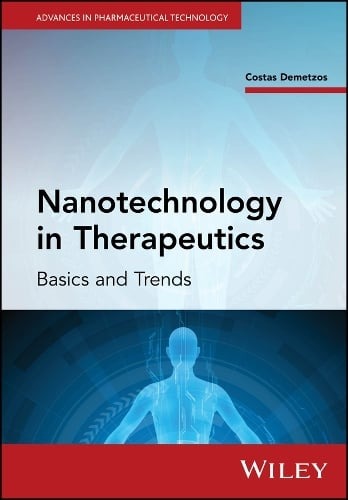
Nanotechnology in therapeutics : Basics and trends
Nanotechnology delivers a unique approach, which promises higher drug efficacy, targeted drug delivery, on demand delivery, biocompatibility, etc. For example, nanotechnology-based delivery systems can protect drugs from degradation and help reduce the number of doses required, make treatment a better experience and reduce treatment expenses and a number of nano-based systems allow delivery of insoluble drugs, allowing the use of previously rejected drugs or drugs which are difficult to administer.

Nanotechnology in Intelligent Food Packaging
This book is a state-of-the-art exposition of nanotechnology and food packaging which is undergoing rapid advancement. This book is specially designed with an emphasis on the state-of-the-art in nanotechnology and food packaging. It offers fascinating techniques for producing smart and active food packaging and also discusses its toxicity and the role that nanosensors play in detecting different pathogens in food packaging. The concluding chapters also explain recent developments concerning the incorporation of health supplements in food packaging and their future role in producing intelligent food packaging.
Nanotechnology in endodontics : Current and potential clinical applications
Provides detailed information on the emerging applications of nanomaterials and nanoparticles within endodontics, highlighting the exciting potential clinical impact of nanotechnology in the field. The range of applications covered is diverse, encompassing drug and gene delivery, tissue engineering, antibacterial strategies, dentin tissue stabilization, dentin pulp regeneration and use in restorative and endodontic materials. Important scientific background information relating to each application is provided, with clear coverage of basic principles. In addition, potential pitfalls are identified and explained. The cytotoxicity of nanomaterials and nanoparticles is also addressed in a separate chapter. The book will be of value both for endodontic practitioners and for all scientists and graduate students who are interested in the application of nanotechnology in endodontics.

Nanotechnology in Catalysis 3
This book is the third volume of Nanotechnology in Catalysis. Although has been only 2 years since the Volumes 1 and 2 were published, many new contributions and breakthroughs have been made by researchers all over the world, showing the dynamic of nanotechnology in catalysis area. The topics in the book are the most up-to-date information on the forefront of nanotechnology development in catalysis field. They include the new concept and applications of nanotechnology for catalysis, the preparation and characterization of nanoparticle and nanostructure catalysts, and the examples of the superior activity and selectivity achieved by using such nanocatalysts. This book provides an in-depth understanding of how nanotechnology can affect the future generation of catalyst development.

Nanotechnology for Smart Concrete
Nanomaterials can markedly improve the mechanical properties of concrete, as well as reduce the porosity and enhance the durability of concrete. The application of nanotechnology in concrete is still in its infancy. However, an ever-growing demand for ultra-high-performance concrete and recurring environmental pollution caused by ordinary Portland cement has encouraged engineers to exploit nanotechnology in the construction industry. Nanotechnology for Smart Concrete discusses the advantages and applications of nanomaterials in the concrete industry, including high-strength performance, microstructural improvement, self-healing, energy storage, and coatings. The book: Analyses the linkage of concrete materials with nanomaterials and nanostructures / Discusses the applications of nanomaterials in the concrete industry, including energy storage in green buildings, anti-corrosive coatings, and inhibiting pathogens and viruses / Covers self-healing concrete / Explores safety considerations, sustainability, and environmental impact of nanoconcrete / Includes an appendix of solved questions

Nanotechnology for Oral Drug Delivery : From Concept to Applications
Discusses the current challenges of oral drug delivery, broadly revising the different physicochemical barriers faced by nanotechnolgy-based oral drug delivery systems, and highlighting the challenges of improving intestinal permeability and drug absorption. Oral delivery is the most widely used form of drug administration due to ease of ingestion, cost effectiveness, and versatility, by allowing for the accommodation of different types of drugs, having the highest patient compliance.

Nanotechnology for Microfluidics
The book focuses on microfluidics with applications in nanotechnology. The first part summarizes the recent advances and achievements in the field of microfluidic technology, with emphasize on the the influence of nanotechnology. The second part introduces various applications of microfluidics in nanotechnology, such as drug delivery, tissue engineering and biomedical diagnosis.

Nanotechnology based cosmetics
Explores the applications and advantages of nanotechnology-based cosmetic products compared to conventional formulations. It examines the principles and mechanisms of nanotechnology in enhancing cosmetic product efficacy, delivery, and performance. Key applications covered include nanoparticles for sunscreens, nanoencapsulation for controlled release, nanoemulsions, liposomes for targeted delivery, and antimicrobial nanoparticles. Analyzes case studies from major international cosmetic companies utilizing nanotechnology. It also discusses challenges like safety concerns, potential toxicity, regulations, labeling, consumer awareness, and environmental impact.

Nanotechnology applied To pharmaceutical technology
Focuses on devising innovative nanopharmaceutical products and solutions to treat such diseases as cancer, infections, eye diseases, and in tackling multi-drug resistance threats. Nanotechnology Applied to Pharmaceutical Technology consists of four sections that include coverage of biosynthesis of nanoparticles, nano-material based formulations and toxicity, and safety issues.

Nanotechnology and drug delivery : Principles and applications
Presents an overview of the rapidly developing field of nanotechnology applications in drug delivery systems and covers a variety of technologies and materials that help in achieving vast variation in the particle size needed in technology and drug delivery-based research. It discusses nanotechnology’s use in healthcare for the development of target-specific drug therapy and smart field systems and in the pharmaceutical industry to improve the quality, efficacy, and shelf life of medicines. Bringing together principles, theory, practice, and applications of nanotechnology.

Nanotechnology ¿ Toxicological Issues and Environmental Safety and Environmental Safety
Nanotechnology is one of the fastest growing technological fields of the 21st century. Nanotechnologies will impact numerous industries, including daily consumer products, health care, energy, and transportation. However, the success of the emerging nanotechnology applications will depend on dynamic development of nanomaterial toxicology, risk and exposure assessment. Little is known about the potential adverse health and ecological effects of exposure to engineered nanomaterials, the main components of many nanotechnologies. Concerns are coming from the initial toxicological studies as well as the research and epidemiological reports on ultrafine particle toxicity. This book provides a summary of the state-of-art knowledge on nanomaterials and nanoparticles – toxicological issues; risk assessment and control measures.
