



Page 17
Page 17

Emergent Properties in Natural and Artificial Dynamical Systems
An important part of the science of complexity is the study of emergent properties arising through dynamical processes in various types of natural and artificial systems. This is the aim of this book, which is the outcome of a discussion meeting within the first European conference on complex systems. It presents multidisciplinary approaches for getting representations of complex systems and using different methods to extract emergent structures. This carefully edited book studies emergent features such as self organization, synchronization, opening on stability and robustness properties. Invariant techniques are presented which can express global emergent properties in dynamical and in temporal evolution systems. This book demonstrates how artificial systems such as a distributed platform can be used for simulation used to search emergent placement during simulation execution.

Electromagnetic and Optical Pulse Propagation 1 : Spectral Representations in Temporally Dispersive Media
Electromagnetic & Optical Pulse Propagation presents a systematic treatment of the radiation and propagation of transient electromagnetic and optical wave fields through causal, locally linear media which exhibit both temporal dispersion and absorption.

e-Health Care in Dentistry and Oral Medicine: A Clinician’s Guide
Presents the state of the art in e-health care within dentistry and oral medicine (“e-oral health”) with the aim of acquainting dentists and other oral health care professionals with its uses and advantages, especially with regard to diagnosis. It will assist all who wish to learn about teledentistry protocols and the e-oral health branch or to implement e-oral health solutions and procedures in clinical practice. The book opens by discussing general aspects of e-oral health, including tools, networks, and the very important ethical considerations. The use and specific benefits of e-oral health technologies in the diagnosis of different conditions, orthodontic assessment, implantology evaluation, and caries prevention are then fully explained. Finally, examples are provided of the ways in which teledentistry functions in different countries on different continents. e-Oral health is a burgeoning field that encompasses teledentistry as well as other uses of information and communication technologies for oral health care purposes.

Efficiency, Justice and Care : Philosophical Reflections on Scarcity in Health Care
This book attempts to answer the question how health care can be incorporated into a comprehensive theory of justice, while realising an acceptable balance between efficiency, justice and care. Essentially, the central question addressed by this book is the following: how best to square the proverbial welfare circle.

Educational Research : Networks and Technologies
In this book distinguished philosophers and historians of education focus on the way ‘networks’ and ‘technologies’ characterize education and educational research nowadays. Attention is paid for instance to online networks as ‘spaces’ and ‘places’ that are changing research practices and relations, to the involvement of the researcher in the moral debate, but also to particular educational technologies such as the use of experts’ advice concerning Internet use, the American True Love Waits movement and the practice of punishment in schools.

Education, Arts, and Morality : Creative Journeys
Inspired by Howard Gruber’s Evolving Systems Approach, these studies explore creativity in several domains. The idea that the creative person embodies a system of loosely coupled sub-systems – knowledge, purpose, and affect that work together, is viewed here in different chapters that explore this concept. These include autobiographies of incarcerated youth, curricula for moral and civic responsibility, changing attitudes of readers to text (romance novels), as well as case studies of highly creative individuals, such as George Bernard Shaw. Gruber’s approach provides concepts as well as methodological tools which the authors apply to diverse creative processes.

Education in the Era of Globalization
Education seems to have lost its orientation in Western culture and is in disarray all over the globe in time of global transitions. This book attempts to address the challenge of globalization to education in the broadest sense of the concept of education.

Economics, Sustainability, and Natural Resources: Economics of Sustainable Forest Management
The economics of sustainability is much more complex than the neoclassical (Newtonian) economic approach to economic efficiency. Forest resources provide the ideal starting point for the economic analysis of sustainability. This book provides a systematic critique of neoclassical economic approaches and their limitations with respect to sustainability. Leading economists from different streams of economics discuss key economic aspects of sustainability and sustainable forest management including complexity, ethical issues, consumer choice theory, intergenerational equity, non-convexities, and multiple equilibria. This is the book which integrates different streams of economics – complexity theory, behavioral economics, post-Keynesian consumer choice theory, social choice theory, and non-convexities – and suggests the main features of Post-Newtonian economics.

Earth Observation of Global Change : The Role of Satellite Remote Sensing in Monitoring the Global Environment
Global Change is increasingly considered a critical topic in environmental research. Remote sensing methods provide a relevant tool to monitor global variables, since they offer a systematic coverage of the Earth Surface, at different spatial, spectral and temporal resolutions. The data provided by Earth Observation Satellites are being operationally used for monitoring atmospheric conditions, ice sheets and glaciar movements, crop dynamism and land use changes, deforestation and desertification processes, as well as water conditions. The book includes an analysis of the leading missions in global Earth observation, and then reviews the main fields in which remote sensing methods are providing vital data for global change studies.

Early Childhood Oral Health
Addresses the biology and epidemiology of caries, the clinical management of early childhood caries, risk assessment, and early diagnosis. Other topics include public health approaches to managing caries worldwide, implementation of new caries prevention programs, fluoride regimens, and community programs, and family oral health education. Brand new are four chapters on the medical management of early childhood caries, considerations for children with special needs, interprofessional education and practice, and how the newest policy issues and the Affordable Care Act affect dental care.

Dynamical Systems : Examples of Complex Behaviour
Our aim is to introduce, explain, and discuss the fundamental problems, ideas, concepts, results, and methods of the theory of dynamical systems and to show how they can be used in specific examples. Itis also important to find out when a certain dynamic behavior is stable under small perturbations, as well as to understand the various scenarios of instability. Finally, an essential aspect of a dynamic evolution is the transformation of some given initial state into some final or asymptotic state as time proceeds. The temporal evolution of a dynamical system maybe continuous or discrete, but it turns out that many of the concepts to be introduced a reuseful in either case.

Dynamic Vision for Perception and Control of Motion
The book uniquely details an approach to real-time machine vision for the understanding of dynamic scenes, viewed from a moving platform that begins with spatio-temporal representations of motion for hypothesized objects whose parameters are adjusted by well-known prediction error feedback and recursive estimation techniques. A coherent and up-to-date coverage of the subject matter is presented, with the machine vision and control aspects detailed, along with reports on the mission performance of the first vehicles using these innovative techniques built at Munich. Pointers to the future development and likely applications of this hugely important field of research are presented.
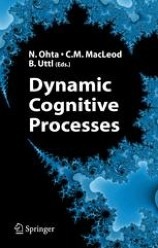
Dynamic Cognitive Processes
The conference from which this book derives took place in Tsukuba, Japan in March 2004. The fifth in a continuing series of conferences, this one was organized to examine dynamic processes in "lower order" cognition from perception to attention to memory, considering both the behavioral and the neural levels. We were fortunate to attract a terrific group of con tributors representing five countries, which resulted in an exciting confer ence and, as the reader will quickly discover, an excellent set of chapters.

Dynamic Asset Allocation with Forwards and Futures
DYNAMIC ASSET ALLOCATION WITH FORWARD AND FUTURES is an advanced text on the theory of forward and futures markets which aims at providing readers with a comprehensive knowledge of how prices are established and evolve over time, what optimal strategies one can expect from the participants, what characterizes such markets, and what major theoretical and practical differences distinguish futures from forward contracts. The book proposes an approach of these markets from the perspective of dynamic asset allocation and asset pricing theory within an inter-temporal framework. The main ingredients that are used are the assumed absence of frictions and arbitrage opportunities in financial and real markets, the uniqueness of the economic general equilibrium, when such an equilibrium is required and the tools of continuous time finance, namely martingale theory and stochastic dynamic programming. The scope of DYNAMIC ASSET ALLOCATION WITH FORWARD AND FUTURES is essentially theoretical, with emphasis on economic meaning and financial interpretation. Regarding investment and/or hedging, focus is on optimal strategies rather than on actual practice. Simulations, however, are performed when important insights can be delivered as to the practical relevance of some theoretical results. Also, optimal strategies using futures are shown to differ markedly from those using forwards. The following issues are examined: pure hedging, investment and hedging in complete or incomplete markets, currency risk, optimal spreading, presence of stochastic dividend or convenience yields, pricing of non-redundant futures or forwards by means of general equilibrium analysis, and revisiting of existing Capital Asset Pricing Models.

Dry Mouth : A Clinical Guide on Causes, Effects and Treatments
This wide-ranging guide to dry mouth, or xerostomia, is intended to meet the needs of dentists by providing information on all clinically relevant aspects. After introductory discussion of salivary secretion and function, the potential causes of dry mouth, including diseases affecting saliva production, drugs and irradiation, are examined.

Drugs, the brain, and behavior : The pharmacology of therapeutics and drug use disorders
Provides a comprehensive overview of the brain and explores the clinical and pharmacological issues surrounding drug abuse and dependence. Dr Brick provides definitions, historic discoveries about the nervous system, and original, eye-catching illustrations to discuss the brain/behavior relationship, basic neuroanatomy, neurophysiology, and the mechanistic actions of mood-altering drugs. Topics include: how psychoactive drugs affect cognition, behavior, and emotion; the brain/behavior relationship; the specific effects of major addictive and psychoactive drug groups; new definitions and thinking about abuse and dependence; and the medical uses of drugs, such as cannabinoids. A new chapter on biobehavioral markers explores how markers can guide the clinician in the diagnosis of some disorders. This book offers a quick reference guide which uses a balance of instruction, illustrations, tables, and formulas, that will give you a broad, lasting introduction to this intriguing subject.
Drug-Induced Oral Complications
Provides detailed information on the prevalence and manifestations of the most important oral complications associated with different drug treatments, focusing especially on recently developed therapies. Among the diverse adverse drug reactions covered are gingival overgrowth, ulcerations, lichenoid reactions, pigmentation, and bullous reactions. The potential direct toxic effects on bone of drugs that prevent bone mass loss, such as bisphosphonates and denosumab, are fully examined, as is the occurrence of spontaneous oral bleeding in patients receiving antithrombotic therapies. Further chapters focus on drug-induced taste disorders and salivary gland disturbances, including xerostomia, swelling, and hypersalivation. The enhanced risk of oral infections when using chemotherapy and biotherapy is addressed, and the closing chapter examines drug-related perioral and facial complications. This book is a collaborative work that brings together clinicians, surgeons, and specialists in drug safety surveillance.

Drug Delivery Systems for Metabolic Disorders
Covers recent developments in advanced drug delivery systems in various metabolic disorders, including disturbances in protein, lipid, carbohydrate and hormone metabolism and lysosomal and mitochondrial disorders. It provides a brief introduction to metabolic disorders, along with a focus on the current landscape and trends in understanding disease pathology using different in vitro and in vivo models required for clinical applications and developments of new therapeutics.

Drug Delivery Approaches : Perspectives from Pharmacokinetics and Pharmacodynamics
Delivers a thorough discussion of drug delivery options to achieve target profiles and approaches as defined by physical and pharmacokinetic models. The book offers an overview of drug absorption and physiological models, chapters on oral delivery routes with a focus on both PBPK and multiple dosage form options. It also provides an explanation of the pharmacokinetics of the formulation of drugs delivered by systemic transdermal routes.

Drug delivery : An integrated clinical and engineering approach
Offers a much needed comprehensive overview and patient-oriented approach for enhanced drug delivery optimization and advancement. Starting with an introduction to the subject and pharmacokinetics, it explores advances for such topics as oral, gastroretentive, intravitreal, and intrathecal drug delivery, as well as insulin delivery, gene delivery, and biomaterials-based delivery systems. It also describes drug delivery in cancer, cardiac, infectious diseases, airway diseases, and obstetrics and gynecology applications.
