



Page 16
Page 16

From GSM to LTE-Advanced Pro and 5G: An Introduction to Mobile Networks and Mobile Broadband
Offers an authoritative guide to the technical descriptions of the various wireless technologies currently in use. Explains the rationale behind their differing mechanisms and implementations while exploring the advantages and limitations of each technology. Reflects the significant changes in mobile network technology that have taken place since the third edition was published. Offers a new chapter on 5G NR that explores its non-standalone and standalone architecture. In the Wi-Fi chapter, additional sections focus on the new WPA3 authentication protocol, the new 802.11ax air interface and protocol extensions like 802.11k and 11v for meshed networks.
From Enterprise Architecture to IT Governance : Elements of Effective IT Management
This book shows its readers how to achieve the goal of genuine IT governance. The key here is the successful development of enterprise architecture as the necessary foundation. With its capacity to span and integrate business procedures, IT applications and IT infrastructure, enterprise architecture opens these areas up to analysis and makes them rich sources of critical data.
Fresh Dialogue ; Vol.5 : New Voices in Graphic Design
This book is a documentation wide range of disciplines and experience, looking of an inspiring evening of design and discussion.

Frei Otto: Forschen, Bauen, Inspirieren = A Life of Research, Construction and Inspiration - DETAIL Special
Provides insights on the key aspects of his work. At its heart was the search for natural designs and an exploration of form-finding and self-development processes. As such he created a whole universe of ideas using membrane, net and convertible roofs with umbrellas, grid shells, and pneumatic structures. The book highlights his key works and how his ideas were adopted throughout the world. Read more...

Freelancing platform = منصة للأعمال الحرة
The digital era has seen a significant rise in freelancing, providing a flexible and accessible employment model for professionals worldwide. This project introduces an advanced freelancing platform designed to enhance the interaction between freelancers and clients. By employing a microservices architecture, the platform ensures a seamless, efficient, and secure environment for managing project collaborations, communications, and payment processes. The platform supports three primary user roles: Administrators, Freelancers, and Users. Administrators oversee comprehensive system management, including user accounts, service categories, platform settings, and financial transactions. Freelancers can create detailed profiles showcasing their skills, experiences, and portfolios, and publish services with clear descriptions, pricing, and Service Level Agreements (SLAs). Users can post service requests, outlining project requirements and budgets, enabling freelancers to apply and engage in these projects.

Foundations of landscape architecture : Integrating form and space using the language of site design
Illustrates the importance of spatial language. It introduces concepts, typologies, and rudimentary principles of form and space. Including designs for projects such as parks, campuses, and memorials, this text provides the core concepts necessary for designers to shape functional landscapes. Additionally, chapters discuss organizational and spatial design structures based on orthogonal forms, angular forms, and circular forms.

Foundations of augmented cognition ; 3rd International Conference, FAC 2007, Held as Part of HCI International 2007, Beijing, China, July 22-27, 2007, Proceedings
These papers address the latest research and development efforts and highlight the human aspects of design and use of computing systems. This volume contains papers in the thematic area of Augmented Cognition.

Forty ways to think about architecture : Architectural history and theory today
How do we think about architecture historically and theoretically? Forty Ways to Think about Architecture provides an introduction to some of the wide-ranging ways in which architectural history and theory are being approached today.
Form-oriented analysis : A new methodology to model form-based applications
Form-based applications range from simple web shops to complex enterprise resource planning systems. Draheim and Weber adapt well-established basic modeling techniques in a novel way to achieve a modeling framework optimized for this broad application domain. They introduce new modeling artifacts, such as page diagrams and form storyboards, and separate dialogue patterns to allow for reuse. In their implementation they have developed new constructs such as typed server pages, and tools for forward and reverse engineering of presentation layers. The methodology is explained using an online bookshop as a running example in which the user can experience the modeling concepts in action. The combination of theoretical achievements and hands-on practical advice and tools makes this book a reference work for both researchers in the areas of software architectures and submit-response style user interfaces, and professionals designing and developing such applications. More information and additional material is also available online.
Formation and Early Growth of Business Webs: Modular Product Systems in Network Markets
Networks of firms have been in the focus of management research for several years. Recently, special attention has been paid to so-called business webs. Business webs are networks of firms which provide complements to a common product architecture.The present book explicitly examines the formation and early growth of business webs. The author illustrates the early growth phases with two in-depth cases of the formation of the wireless internet ecosystem i-mode and the leading person-to-person online auction platform eBay. The book uncovers the contingencies under which the establishment of business webs is likely to succeed. Business researchers will benefit from the theoretical framework, while interested business managers will find explanations and advice for establishing a business web.
Formal techniques for distributed objects, components, and systems ; 40th IFIP WG 6.1 International conference, FORTE 2020, Held as Part of the 15th International Federated Conference on distributed computing techniques, DisCoTec 2020, Valletta, Malta, June 15–19, 2020, Proceedings
This book constitutes the proceedings of the 40th IFIP WG 6.1 International Conference on Formal Techniques for Distributed Objects, Components, and Systems, FORTE 2020, held in Valletta, Malta, in June 2020, as part of the 15th International Federated Conference on Distributed Computing Techniques, DisCoTec 2020.*

Formal techniques for computer systems and business processes ; European performance engineering workshop, EPEW 2005 and International workshop on web services and formal methods, WS-FM 2005, Versailles, France, September 1-3, 2005, Proceedings
This book constitutes the refereed proceedings of two colocated international workshops EPEW 2005 (European Performance Engineering Workshop) and WS-FM 2005 (Web Services and Formal Methods) held in Versailles, France in September 2005. The 20 revised full papers presented were carefully reviewed and selected from 59 submissions. For EPEW 2005 only 10 papers - of the 32 submitted - were accepted for presentation; they deal with queueing theory, bounding techniques, stochastic model checking, communication schemes analysis for high-speed LAN, QOS analysis in wireless ad-hoc networks and optical networks analysis. The main topics of the 10 papers accepted for WS-FM 2005 - from 27 submissions - include: protocols and standards for WS (SOAP, WSDL, UDDI, etc.); languages and description methodologies for Choreography/Orchestration/Workflow (BPML, XLANG and BizTalk, WSFL, WS-BPEL, etc.); coordination techniques for WS (transactions, agreement, coordination services, etc.); semantics-based dynamic WS discovery services (based on Semantic Web/Ontology Techniques or other semantic theories); security, performance evaluation and quality of service of WS; semi-structured data and XML related technologies; comparisons with different related technologies/approaches.

Formal Methods for Open Object-Based Distributed Systems ; Vol. 4037 ; 8th IFIP WG 6.1 International Conference, FMOODS 2006, Bologna, Italy, June 14-16, 2006, Proceedings
This book constitutes the refereed proceedings of the 8th IFIP WG 6.1 International Conference on Formal Methods for Open Object-Based Distributed Systems, FMOODS 2006, held in Bologna, Italy, June 2006. The book presents 16 revised full papers together with an invited paper and abstracts of 2 invited talks. Coverage includes component- and model-based design, service-oriented computing, software quality, modeling languages implementation, formal specification, verification, validation, testing, and service-oriented systems.

Formal Methods for Components and Objects ; Vol. 3657 ; 3rd International Symposium, FMCO 2004, Leiden, The Netherlands, November 2-5, 2004, Revised Lectures
This book presents revised tutorial lectures given by invited speakers at the Third International Symposium on Formal Methods for Components and Objects, FMCO 2004, held in Leiden, The Netherlands, in November 2004. The 14 revised lectures by leading researchers present a comprehensive account of the potential of formal methods applied to large and complex software systems such as component-based systems and object systems. The book provides an unique combination of ideas on software engineering and formal methods that reflect the expanding body of knowledge on modern software systems.

Formal methods applications and technology ; 11th International workshop on formal methods for industrial critical systems, FMICS 2006, and 5th International Workshop on parallel and distributed methods in verification, PDMC 2006, Bonn, Germany, August 26-27, and August 31, 2006, Revised Selected
The workshop program included two invited talks, by Anna Slobodova from Intel on “Challenges for Formal Veri?cation in an Industrial Setting” and by Edward A. Lee from the University of California at Berkeley on “Making C- currency Mainstream.” The former full paper can be found in this volume.

Formal Approaches to Agent-Based Systems ; 3rd International Workshop, FAABS 2004, Greenbelt, MD, April 26-27, 2004, Revised Selected Papers
The 3rd Workshop on Formal Approaches to Agent-Based Systems (FAABS-III) was held at the Greenbelt Marriott Hotel (near NASA Goddard Space Flight Center) in April 2004 in conjunction with the IEEE Computer Society. The first FAABS workshop was help in April 2000 and the second in October 2002. Interest in agent-based systems continues to grow and this is seen in the wide range of conferences and journals that are addressing the research in this area as well as the prototype and developmental systems that are coming into use. Our third workshop, FAABS-III, was held in April, 2004. This volume contains the revised papers and posters presented at that workshop. The Organizing Committee was fortunate in having significant support in the planning and organization of these events, and were privileged to have wor- renowned keynote speakers Prof. J Moore (FAABS-I), Prof. Sir Roger Penrose (FAABS-II), and Prof. John McCarthy (FAABS-III), who spoke on the topic of se- aware computing systems, auguring perhaps a greater interest in autonomic computing as part of future FAABS events. We are grateful to all who attended the workshop, presented papers or posters, and participated in panel sessions and both formal and informal discussions to make the workshop a great success. Our thanks go to the NASA Goddard Space Flight Center, Codes 588 and 581 (Software Engineering Laboratory) for their financial support and to the IEEE Computer Society (Technical Committee on Complexity in Computing) for their sponsorship and organizational assistance.
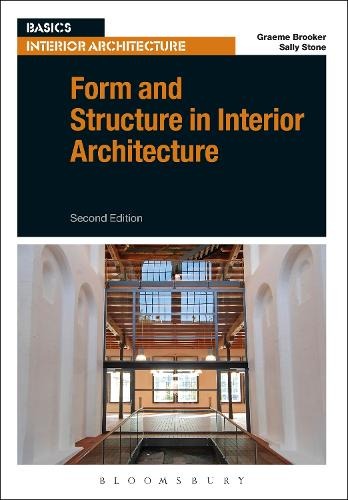
Form and structure in Interior Architecture : Basics interior architecture
This volume examines the basic ideas that underpin the design and remodelling of interior space, from the establishment of a relationship between the existing building and the new components that inhabit it, to the careful positioning and design of significant elements within the space

Forging New Frontiers : Fuzzy Pioneers II
The chapters of the book are evolved from presentations made by selected participants at the meeting and organized in two books. The papers include reports from the different front of soft computing in various industries and address the problems of different fields of research in fuzzy logic, fuzzy set and soft computing.
Foresight and Design: Composing Future Places
Every plan, pro-forma, design, building contract, and construction schedule is a proposal about future places. To help improve such proposals, Foresight and Design: Composing Future Places presents conceptual tools to inform design and outline the need for designers to rigorously think about potential futures. Our built compositions are constantly transforming due to continuing urbanization, demographic shifts, climate change, the evolution of virtual worlds, economic and health disparities, and other unforeseen trends. Five brief case studies interspersed between the chapters serve as examples of practitioners exercising foresight through these practices. Contributions include a description of a regional design process in Afghanistan by Anthony Fettes of Sasaki Architects, and an exploration into the Indigenous Futurism model-making competition by Anjelica Gallegos.

FOBA : Buildings
The book also chronicles the FOB Homes systema FOBA subsidiary company established in 1999a uniquely creative response to the generic mass-produced pre-fabricated housing available in Japan. With five basic prototypes that can be easily adapted to any site or client, FOB Homes redefines the concept of standardized housing. Their simple, neutral white boxes counter the visual chaos of contemporary Japan and offer the elegance and experience of "architecture" to the general publica union of modernist aesthetics with the modernist ideology of democratic, affordable design.
