



Page 16
Page 16

Construction and analysis of safe, secure, and interoperable smart devices ; Vol. 3362 : International workshop, CASSIS 2004, Marseille, France, March 10-14, 2004, Revised Selected Papers
History based access control and secure information flow / The spec# programming system / Mastering test generation from smart card software formal models / A mechanism for secure, fine-grained dynamic provisioning of applications on small devices / A type system for checking applet isolation in java card / Verification of safety properties in the presence of transactions / Modelling mobility aspects of security policies / Smart devices for next generation mobile services / A flexible framework for the estimation of coverage metrics in explicit state software model checking / Combining several paradigms for circuit validation and verification / Smart card research perspectives

Constitutional law : Model problems and outstanding answers
Constitutional law is one of the most engaging and yet challenging first year law classes. At the confluence of history, politics, legal theory, and judicial review, it requires students to learn a new framework for legal interpretation and thought unique from other areas of law. For the first time, Oxford University Press equips students with an accessible guide to acing these challenging constitutional law exams.

Consciousness : From Perception to Reflection in the History of Philosophy
Consciousness: From Perception to Reflection in the History of Philosophy shows that the concept of consciousness was explicated relatively late in the tradition, but that its central features, such as reflexivity, subjectivity and aboutness, attained avid interest very early in philosophical debates. This book reveals how these features have been related to other central topics, such as selfhood, perception, attention and embodiment. At the same time, the articles display that consciousness is not just an isolated issue of philosophy of mind, but is bound to ontological, epistemological and moral discussions. Integrating historical inquiries into the systematic ones enables understanding the complexity and richness of conscious phenomena.

Conflicts Between Generalization, Rigor, and Intuition : Number Concepts Underlying the Development of Analysis in 17th-19th Century France and Germany
Conflicts Between Generalization, Rigor, and Intuition undertakes a historical analysis of the development of two mathematical concepts -negative numbers and infinitely small quantities, mainly in France and Germany, but also in Britain, and the different paths taken there.This book not only discusses the history of the two concepts, but it also introduces a wealth of new knowledge and insights regarding their interrelation as necessary foundations for the emergence of the 19th century concept of analysis. The historical investigation unravels several processes underlying and motivating conceptual change: generalization (in particular, algebraization as an agent for generalizing) and a continued effort of intuitive accessibility which often conflicted with likewise desired rigor. The study focuses on the 18th and the 19th centuries.The book provides a productive unity to a large number of historical sources.

Computational formalism : Art history and machine learning
"Computational Formalism investigates examples of art historical analysis in the fields of computer and information sciences, and frames this research in the context of art historiography. The use of machine learning to analyze art images has ushered in a renewed interest in formalism in art history, but these new techniques create new critical challenges for the field"

Coming to Terms with Superdiversity: The Case of Rotterdam
This book discusses Rotterdam as clear example of a superdiverse city that is only reluctantly coming to terms with this new reality. Rotterdam, as is true for many post-industrial cities, has seen a considerable backlash against migration and diversity: the populist party Leefbaar Rotterdam of the late Pim Fortuyn is already for many years the largest party in the city. At the same time Rotterdam has become a majority minority city where the people of Dutch descent have become a numerical minority themselves. The book explores how Rotterdam is coming to terms with superdiversity, by an analysis of its migration history of the city, the composition of the migrant population and the Dutch working class population, local politics and by a comparison with Amsterdam and other cities. As such it contributes to a better understanding not just of how and why super-diverse cities emerge but also how and why the reaction to a super-diverse reality can be so different.

Color Theory For Dummies
Discover the history and science behind how we see colors Understand how colors mix, match, and contrast so you can create better color combinations Learn how certain colors have the ability to affect how we feel and think Apply color theory to design, art, décor, photography, and beyond Color Theory For Dummies simplifies and illuminates the world of color theory, outlining and defining color in a digestible and applicable way.

Collage and architecture
This new edition includes: A stronger focus on contemporary practices, including digital methods; New designers and architects, including Marshall Brown, WAI Architecture Think Tank, and Tatiana Bilbao, bringing their methods and work to life; An expanded global and diverse perspective of architecture as collage; Collage is an important instrument for analysis and design. Through its 261 color images, this book shows how this versatile medium can be adapted and transformed in your own work.

Cold-Water Corals and Ecosystems
Following the exciting exploration of hot vent and cold seep ecosystems, the rediscovery of cold-water coral ecosystems with high-technology instrumentation is currently another hot topic in multidisciplinary marine research. Conventionally, coral reefs are regarded as restricted to warm and well-illuminated tropical seas, not associated with cold and dark waters of higher latitudes. However, ongoing scientific missions have shed light on the global significance of this overlooked ecosystem. Cold-water coral ecosystems are involved in the formation of large seabed structures such as reefs and giant carbonate mounds, and they represent unexploited paleo-environmental archives of earth history. Like their tropical cousins, cold-water coral ecosystems harbour rich species diversity. Despite the great water depths, commercial interests overlap more and more with the coral occurrences. Human activities already impinge directly on cold-water coral reefs causing severe damage to this vulnerable ecosystem. In this volume, the current key institutions involved in cold-water coral research have contributed 62 state-of-the-art articles from geology and oceanography to biology and conservation.

Cold War Civil Defence in Western Europe : Sociotechnical Imaginaries of Survival and Preparedness
This edited collection brings together established and new perspectives on Cold War civil defence in Western Europe within a common analytical framework that also facilitates comparative and transnational dimensions. The current interest in creating disaster-resilient societies demands new histories of civil defence. Historical contextualization is essential in order to understand what is at stake in preparing, devising, and implementing forms of preparedness, protection, and security that are specifically targeted at societies and citizens. Applying the concept of sociotechnical imaginaries to civil defence history, the chapters of this volume cover a range of new themes, from technology and materiality to media, memory, and everyday experience.
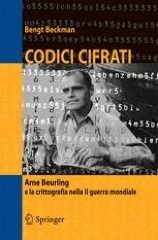
Codici cifrati: Arne Beurling e la crittografia nella II guerra mondiale = Cipher codes : Arne Beurling and cryptography in world war II
The story of the German codebreaking is told in detail for the first time and has all the makings of a thriller, but with elements that make it an excellent introduction to the field of cryptography, as well as a vibrant and human portrait of the society of the time: a desperate wartime situation, political and espionage intrigue, the sometimes incomprehensible yet always fascinating genius of the main architect of its success — mathematician Arne Beurling—the difficulties and tricks of the trade, but also the systematic and obscure work of a crowd of codebreakers who treat their situation as if it were a normal job. The author, Bengt Beckman, was for years, after the war, head of the cryptanalysis department of the Swedish intelligence agency.

Co-Creativity and engaged scholarship : Transformative methods in social sustainability research
This book explores creative and collaborative research methods within the social sustainability sciences. The term co-creativity is used in reference to both individual methods and overarching research approaches that, through socially inclusive forms of action and reflection, stimulate alternative understandings of why and how things are, and how they could be. Supported by a wide-ranging series of in-depth—including chapters on militant research and guerrilla narrative, decolonial participative approaches, appreciate inquiry and care-ethics, deep-mapping, photo-voice, community-arts, digital participatory mapping, and living labs—the edited collection critically reviews the potential of creative, collaborative and transdisciplinary forms of research praxis to nurture just and transformative processes of change.

Coastal architectures and politics of tourism : Leisurescapes in the global sunbelt
Offers a critical and complicated picture of how leisure tourism connected the world after the World War II, transforming coastal lands, traditional societies, and national economies in new ways. Analyzes selected case studies of architectures and landscapes around the world, contextualizing them within economic geographies of national development, the geopolitics of the Cold War, the legacies of colonialism, and the international dynamics of decolonization. Postwar leisure tourism evokes a rich array of architectural spaces and altered coastal landscapes, which is explored in this collection through discussions of tourism developments in the Mediterranean littoral, such as Greece, Turkey, and southern France, as well as compelling analyses of Soviet bloc seaside resorts along the Black Sea and Baltic coasts, and in beachscapes and tourism architectures of western and eastern hemispheres, from Southern California to Sri Lanka, South Korea, and Egypt.

Clocks in the Sky : The Story of Pulsars
In this book, Geoff McNamara explores the history, subsequent discovery and contemporary research into pulsar astronomy. The story of pulsars is brought right up to date with the announcement in 2006 of a new breed of pulsar, Rotating Radio Transients (RRATs), which emit short bursts of radio signals separated by long pauses. These may outnumber conventional radio pulsars by a ratio of four to one. Geoff McNamara ends by pointing out that, despite the enormous success of pulsar research in the second half of the twentieth century, the real discoveries are yet to be made including, perhaps, the detection of the hypothetical pulsar black hole binary system by the proposed Square Kilometre Array - the largest single radio telescope in the world.

Clinical text mining : Secondary use of electronic patient records
Describes the results of natural language processing and machine learning methods applied to clinical text from electronic patient records. It is divided into twelve chapters. Chapters 1-4 discuss the history and background of the original paper-based patient records, their purpose, and how they are written and structured. These initial chapters do not require any technical or medical background knowledge. The remaining eight chapters are more technical in nature and describe various medical classifications and terminologies such as ICD diagnosis codes, SNOMED CT, MeSH, UMLS, and ATC. Chapters 5-10 cover basic tools for natural language processing and information retrieval, and how to apply them to clinical text. The book’s closing chapters present a number of applications in clinical text mining and summarise the lessons learned from the previous chapters.

Mathematical Masterpieces : Further Chronicles by the Explorers
Experience the discovery of mathematics by reading the original work of some of the greatest minds throughout history. Here are the stories of four mathematical adventures, including the Bernoulli numbers as the passage between discrete and continuous phenomena, the search for numerical solutions to equations throughout time, the discovery of curvature and geometric space, and the quest for patterns in prime numbers. Each story is told through the words of the pioneers of mathematical thought. Particular advantages of the historical approach include providing context to mathematical inquiry, perspective to proposed conceptual solutions, and a glimpse into the direction research has taken.

Mathematical Events of the Twentieth Century
Russian mathematics (later Soviet mathematics, and Russian mathematics once again) occupies a special place in twentieth-century mathematics. In addition to its well-known achievements, Russian mathematics established a unique style of research based on the existence of prominent mathematical schools. These schools were headed by recognized leaders, who became famous due to their talents and outstanding contributions to science. The present collection is intended primarily to gather in one book the t- timonies of the participants in the development of mathematics over the past century. In their articles the authors have expressed their own points of view on the events that took place. The editors have not felt that they had a right to make any changes, other than stylistic ones, or to add any of their own commentary to the text. Naturally, the points of view of the authors should not be construed as those of the editors. The list of mathematicians invited to participate in the present edition was quite long.

Materials and meaning in architecture : Essays on the bodily experience of buildings
Interweaving architecture, philosophy and cultural history, Materials and Meaning in Architecture develops a rich and multi-dimensional exploration of materials and materiality, in an age when architectural practice seems otherwise preoccupied with image and visual representation.

Matematica e cultura 2008 = mathematics and culture 2008
In this new book, the tenth of the series that began in Venice with the meetings "Mathematics and culture" that many have tried to imitate, we talk about all this and among others Simon Singh (author of the best seller "The last theorem di Fermat "), in her third presence in Venice, and Siobhan Roberts (author of" The king of infinite space. History of the man who saved geometry "). Venice bridge between mathematics and culture.

Matematica e cultura 2006 = Mathematics and Culture 2006
The series Matematica e cultura, through a journey that began ten years ago, in an ever new, surprising and fascinating way, tries to describe the influences and links existing between the world of mathematics and that of aeronautics, medicine, biology, but also art, cinema. , of theater, literature or history: "A tribute to Mario Merz could not be missing, following his Fibonacci numbers towards infinity. And cinema, that of Davide Ferrario who takes up that thread, those numbers that fly over Turin. film on the axiom of parallels, a Venetian film E.
