



Page 15
Page 15

Innovations in Macroeconomics ; 1st ed.
Modern macroeconomics suffers from an unclear link between short-term Keynesian analysis and long-term growth modelling. Moreover, product and process innovations have been only partially integrated. The analysis suggests new approaches to innovations in open economies in many ways, including the Schumpeterian Mundell-Fleming model and new monetary growth models. A specific focus is on the role of innovations for output, employment and exchange rate developments. This book presents a new link between monetary analysis and growth modelling in open economies. Structural change, innovations and growth are considered from a new perspective. With respect to economic policy - in particular innovation policy - the analysis implies major changes, concerning both EU countries and other leading OECD economies.
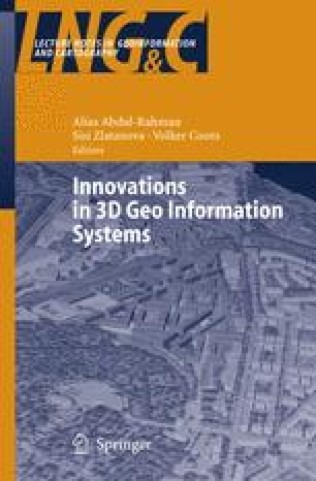
Innovations in 3D Geoinformation Science
Covers various aspects of spatial data modelling specifically regarding three-dimensional (3D) modelling and structuring. The realization of "true" 3D geoinformation spatial systems requires a high input, and the developmental process is taking place in various research centers and universities around the globe.

Information Systems Security and Privacy ; 5th International Conference, ICISSP 2019, Prague, Czech Republic, February 23-25, 2019, Revised Selected Papers
This book constitutes the revised selected papers of the 5th International Conference on Information Systems Security and Privacy, ICISSP 2019, held in Prague, Czech Republic, in February 2019. The 19 full papers presented were carefully reviewed and selected from a total of 100 submissions. The papers presented in this volume address various topical research, including new approaches for attack modelling andprevention, incident management and response, and user authentication andaccess control, as well as business and human-oriented aspects such as data pro-tection and privacy, and security awareness.

Information context : Nature, impact, and role ; 5th International conference on Conceptions of Library and Information Sciences, CoLIS 2005, Glasgow, UK, June 4-8, 2005 Proceedings
.CoLIS examinesthehistorical,theoretical,empiricalandtechnicalissuesrelatingtoour understanding and use of information, promoting an interdisciplinary approach to research. CoLIS seeks to provide a broad platform for the examination of context as it relates to our theoretical, empirical and technical development of information-centered disciplines. The theme for CoLIS 5 was the nature, impact and role of context within information-centered research. Context is a complex, dynamic and multi- - mensional concept that in?uences both humans and machines: how they behave individually and how they interact with each other. In CoLIS 5 we took an interdisciplinary approach to the issue of context to help us understand and the theoretical approaches to modelling and understanding context, incorporate contextual reasoning within technology, and develop a shared framework for promoting the exploration of context.
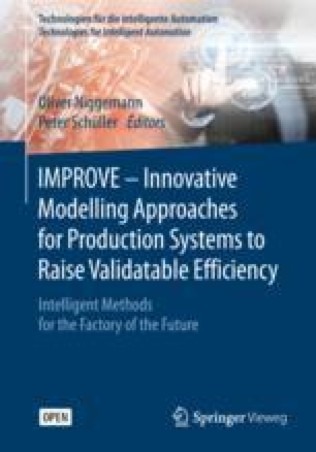
IMPROVE - Innovative modelling approaches for production systems to raise validatable efficiency : Intelligent methods for the factory of the future
This open access work presents selected results from the European research and innovation project IMPROVE which yielded novel data-based solutions to enhance machine reliability and efficiency in the fields of simulation and optimization, condition monitoring, alarm management, and quality prediction.

Hyperbolic Problems : Theory, Numerics, Applications ; Proceedings of the Eleventh International Conference on Hyperbolic Problems held in Ecole Normale Supérieure, Lyon, July 17-21, 2006
This volume contains papers that were presented at HYP2006, the eleventh international Conference on Hyperbolic Problems: Theory, Numerics and Applications held at the Ecole Normale Supérieure de Lyon, France, July 17-21, 2006. This biennial series of conferences has become one of the most important international events in Applied Mathematics. As computers became more and more powerful, the interplay between theory, modelling, and numerical algorithms gained considerable impact, and the scope of HYP conferences expanded accordingly. The field is currently in interaction with a variety of scientific domains, including fluid dynamics, physics, electromagnetism, chemistry, biology, road and network traffic, and engineering. Many of these papers present new effective numerical methods and their application in various contexts.

Hydrological modelling and the water cycle : Coupling the atmospheric and hydrological models
This collected work reports on the state of the art of hydrological model simulation, as well as the methods for satellite-based rainfall estimation. Mainly addressed to scientists and researchers, the contributions have the structure of a standard paper appearing in most cited hydrological, atmospheric and climate journals. Several already-known hydrological models and a few novel ones are presented, as well as the satellite-based precipitation techniques. As the field of hydrologic modeling is experiencing rapid development and transition to application of distributed models, many challenges including overcoming the requirements of compatible observations of inputs and outputs are addressed.

Hot cracking phenomena in welds II
This is the second in a series of compendiums devoted to weld hot cracking phenomena, where this subject has been further scrutinized, bringing to bare the most current thoughts on this complex and diverse subject. With 22 technical papers in total, this book is divided in such a way that specific classifications of hot cracks are examined in detail, including solidification, liquation, and ductility dip cracking. The first chapter looks at solidification cracking theory, applying the most modern approaches to modelling weld solidification. Also provided here is a comprehensive review of cracking models. This is followed by two chapters characterizing solidification cracking behaviour for specific alloy systems: ferrous plus nickel-based alloys and aluminium alloys, respectively. The fourth chapter considers liquation cracking in ferrous alloys, and the fifth examines ductility-dip cracking.

Hot cracking phenomena in welds
The first chapter provides an overview of the various hot cracking phenomena. Different mechanisms of solidification cracking proposed in the past decades are summarized and new insight is particularly given into the mechanism of ductility dip cracking. The effects of different alloying elements on the hot cracking resistance of various materials are shown in the second chapter and, as a special metallurgical effect, the initiation of stress corrosion cracking at hot cracks has been highlighted. The third chapter outlines how numerical analyses and other modelling techniques can be utilized to describe hot cracking phenomena and how such results might contribute to the explanation of the mechanisms. Various hot cracking test procedures are presented in the final chapter with a special emphasis on standardization. For the engineering and natural scientists in research and development the book provides both, new insight and a comprehensive overview of hot cracking phenomena in welds. The contributions additionally give numerous individual solutions and helpful advice for international welding engineers to avoid hot cracking in practice. Furthermore, it represents a very helpful tool for upper level metallurgical and mechanical engineering students.

Historical Seismology : Interdisciplinary Studies of Past and Recent Earthquakes
Modern seismology has faced new challenges in the study of earthquakes and their physical characteristics. This volume is dedicated to the use of new approaches and presents a state of the art in historical seismology. Selected historical and recent earthquakes are chosen to document and constrain related seismic parameters using updated methodologies in the macroseismic analysis, field observations of damage distribution and tectonic effects, and modelling of seismic waveforms. A critical re-evaluation of historical accounts and early seismograms provides us with the basis for a realistic seismic hazard assessment.

High-Performance Modelling and Simulation for Big Data Applications: Selected Results of the COST Action IC1406 cHiPSet
This book is the final compendium of case studies emanated from “High-Performance Modelling and Simulation for Big Data Applications” (cHiPSet).cHiPSet has created a sustainable reference network linking applied research in High Performance Computing (HPC) and Modelling & Simulation to tangibly address Big Data challenges.cHiPSet has also endeavoured to use and exploit results through Open Science practices, i.e., open access publication, open access to data repositories, and open-source software development. A testament to this philosophy, this compendium is set to become a required reference for the fast-changing fields of HPC, Big Data, and Modelling & Simulation.

High resolution numerical modelling of the atmosphere and ocean
This book includes 15 individual papers that highlight the emerging research in atmospheric and oceanic science that has been made possible by exploiting newly available computational resources. Results from regional atmospheric, global atmospheric, global ocean, and global coupled ocean-atmosphere models are discussed in the various contributions.

High performance computing on vector systems 2007 ; Conference proceedings
The following book presents contributions from the 6th TERAFLOP Workshop which was hosted by Tohoku University in Sendai, Japan in Autumn 2006 and the 7th Workshop in Stuttgart which was held in spring 2007 in Stuttgart. Focus is layed on current applications and future requirements, as well as developments of next generation hardware architectures and installations. The papers presented in this book lay out the wide range of fields in which sustained performance can be achieved if engineering knowledge, numerical mathematics and computer science skills are brought together. With the advent of hybrid systems, the Teraflop workbench project will continue the support of leading edge computations for future applications.

High performance computing on vector systems 2006 ; Proceedings of the High Performance Computing Center Stuttgart, March 2006
With this second issue of "High Performance Computing on Vector Systems ~ Proceedings of the High Performance Computing Center Stuttgart" we con tinue our publication of most recent results in high performance computing and innovative architecture. Together with our book series on "High Perfor mance Computing in Science and Engineering'06 - Transactions of the High Performance Computing Center Stuttgart" this book gives an overview of the most recent developments in high performance computing and its use in scientific and engineering applications. This second issue covers presentations and papers given by scientists in two workshops held at Stuttgart and Tokyo in spring and summer 2006.

High performance computing on vector systems ; Proceedings of the High Performance Computing Center Stuttgart, March 2005
The book presents the state of the art in high performance computing and simulation on modern supercomputer architectures. Innovative application fields like multiphysics simulations and material science are presented.

High performance computing in science and engineering 07 ; Transactions of the High Performance Computing Center, Stuttgart (HLRS) 2007
This book presents the state-of-the-art in simulation on supercomputers. Presenting results for both vector-based and microprocessor-based systems, the book allows comparison between performance levels and usability of various architectures.

High performance computing in science and engineering 04 ; Transactions of the High Performance Computing Center, Stuttgart (HLRS) 2004
This book presents the state-of-the-art in modelling and simulation on supercomputers. Leading German research groups present their results achieved on high-end systems of the High Performance Computing Center Stuttgart (HLRS) for the year 2004. The reports cover all fields of computational science and engineering ranging from computational fluid dynamics via computational physics and chemistry to computer science. Special emphasis is given to industrially relevant applications. Presenting results for both vector-systems and micro-processor based systems the book allows to compare performance levels and usability of a variety of supercomputer architectures. In the light of the success of the Japanese Earth-Simulator this book may serve as a guide book for a US response

High performance computing in science and engineering 06 ; Transactions of the High Performance Computing Center, Stuttgart (HLRS) 2006
In July 2005, the new building for HLRS as well as Stuttgart’s new NEC supercomputer – which is still leading edge in G- many – have been inaugurated. In these days, the SSC Karlsruhe is ?nalizing the installation of a very large high performance system complex from HP, built from hundreds of Intel Itanium processors and more than three th- sand AMD Opteron cores. Additionally, the fast network connection – with a bandwidth of 40Gbit/s and thus one of the frst installations of this kind in Germany – brings the machine rooms of HLRS and SSC Karlsruhe very close together.

High performance computing in science and engineering 05 ; Transactions of the High Performance Computing Center, Stuttgart (HLRS) 2005
This book presents the state-of-the-art in simulation on supercomputers. Leading researchers present results achieved on systems of the High Performance Computing Center Stuttgart (HLRS) for the year 2006. The reports cover all fields of computational science and engineering ranging from CFD via computational physics and chemistry to computer science with a special emphasis on industrially relevant applications. Presenting results for both vector-systems and micro-processor based systems the book allows to compare performance levels and usability of various architectures. As HLRS operates the largest NEC SX-8 vector system in the world this book gives an excellent insight into the potential of vector systems.

High Frequency Financial Econometrics : Recent Developments
This exciting volume presents cutting-edge developments in high frequency financial econometrics, spanning a diverse range of topics: market microstructure, tick-by-tick data, bond and foreign exchange markets and large dimensional volatility modelling. The chapters on market microstructure deal with liquidity, asymmetries of information, and limit order aggressiveness in pure limit order book markets. The chapters on tick-by-tick data present statistical techniques for the analysis of the discrete nature of price movements, the intraday seasonal patterns of financial durations, and the joint probability law of prices, volume and durations. Bond markets are brought into focus through the analysis of macroeconomic announcements in the future bond market as a function of the business cycle.
