



Page 14
Page 14

Mémento de la recherche biomédicale portant sur un médicament à usage humain = Summary of biomedical research on a medicinal product for human use
Presents the reference texts, structures and authorities that govern clinical research in France, as well as its practical aspects. It is aimed at all of its stakeholders, both caregivers and patients. It will allow the most novices to familiarize themselves with the specific vocabulary of this discipline, to answer the questions raised during the conduct or participation in a therapeutic trial, and the most experienced to consider setting up a research structure. clinic in the rules of art.

Medicinal spice and condiment crops
Spices are used in small quantities to add flavor, aroma, color, and texture in food preparation. However, spices and condiments have also been recognized as having medicinal value. They have been used traditionally as curative and preventive agents, the bioactive compounds obtained from these plants are used in herbal drug formulations in modern times.

Medicinal roots and tubers for pharmaceutical and commercial applications
The root and tuber are vital parts of medicinal plants providing mechanical support, producing critical growth regulators, and storing food. Bioactive compounds obtained from plant roots and tubers demonstrate health benefits presenting antioxidative, antimicrobial, hypoglycaemic, hypocholesterolaemic, and immunomodulatory properties. Roots of many medicinal plants have been used for the treatment of disease and formulation of drugs, and they are also known for their commercial value, being used as an ingredient in the pharmaceutical and cosmetic industries.

Medicinal plants of the world ; Vol.3 : Chemical constituents, traditional and modern medicinal uses
The author's exhaustive summary of available scientific data for each plant provides detailed information on how the plant is used in different countries, describing its traditional therapeutic applications and what is known from its use in clinical trials. Additional material presented includes a botanical description with a color photo of each plant for identification, the common names used for the plant throughout the world, and a listing of the plant's known chemical constituents. A comprehensive bibliography cites the literature available from a wide range of disciplines. Medicinal Plants of the World: Chemical Constituents, Traditional and Modern Medicinal Uses, Volume 3, offers a unique collection of vital scientific information for pharmacologists, herbal medicine practitioners, drug developers, phytochemists, medicinal chemists, phytologists, toxicologists, and researchers who want to explore the many uses of plant materials for medicinal and related purposes. Its wealth of significant information will reveal little-known facts about these plants and open new horizons of application for the many novel drugs and drug candidates found in them.

Medicinal Plants for Holistic Health and Well-Being
Medicinal Plants for Holistic Health and Well-Being discusses, in depth, the use of South African plants to treat a variety of ailments, including tuberculosis, cancer, periodontal diseases, acne, postmacular hypomelanosis, and more. Plants were selected on the basis of their traditional use, and the book details the scientific evidence that supports their pharmacological and therapeutic potential to safely and effectively treat each disease. Thus, this book is a valuable resource for all researchers, students and professors involved in advancing global medicinal plant research

Medicinal plants and antimicrobial therapies
Serves as an excellent comprehensive material covering the current understandings and updates on antimicrobial resistance (AMR) and the use of medicinal plant resources for tackling it. Chapters cover important aspects of AMR and strategies to address this threatening issue with medicinal plants and their resources. One health perspectives for addressing AMR have been presented for the readers. Antimicrobial medicinal plant therapeutic resources including crude extracts, active fractions, pure molecules and essential oils, besides using them as functionalizing agents for nano-antimicrobials have been covered. Further, plant endophytes as a source of antimicrobial compounds have been discussed. Chapters cover both the bactericidal as well as resistance-reversal (or potentiating/ combinatorial therapies) potencies of medicinal plant resources. The book also focuses on how medicinal plant resources effectively target major determinants of AMR.

Medicinal plants : From farm to pharmacy
Discuss current research on medicinal plants that connects traditionally accumulated botanical wisdom with current bioprospecting trends and (pre-clinical studies Provide an account of recent research activities on select medicinal plants from various phytogeographical regions all over the world Cater to the interest of a wide range of readers including lay enthusiasts, traditional practitioners as well as research and clinical professionals
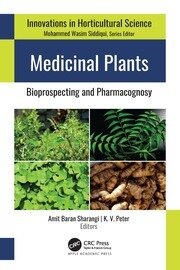
Medicinal plants : Bioprospecting and pharmacognosy
Touches on a diverse selection of topics related to medicinal plants. Chapters look at the use of medicinal plants in healthcare and disease management, such as to treat inflammation, anti-hyperglycemia, and obesity and as immunity boosters. The authors also address the conservation, maintenance, and sustainable utilization of medicinal plants along with postharvest management issues. Topics include consumption, supply chain, marketing, trade, and future directions of research. Some specific plants discussed include fennel, basil, clove, ginger, lavender, turmeric, ginsing, and asparagus in connection with their various therapeutic properties, including anti-rheumatic, anti-asthmatic, anti-diabetic, carminative, diuretic, fever-reducing, and hypotensive. Medicinal Plants: Bioprospecting and Pharmacognosy will prove informative for scientists and researchers in medicinal plants as well as for faculty and students, pharmaceutical researchers, and others.

Medicinal foods as potential therapies for type-2 diabetes and associated diseases : The chemical and pharmacological basis of their action
Focuses on active pharmacological principles that modulate diabetes, associated risk factors, complications and the mechanism of action of widely used anti-diabetic herbal plants—rather than just the nutritional composition of certain foods. Provides up-to-date information on acclaimed antidiabetic super fruits, spices and other food ingredients. Sections cover diabetes and obesity at the global level, the physiological control of carbohydrate and lipid metabolism, the pathophysiology of type-2 diabetes, the chemistry and pharmacology of a variety of spices, and much more. This book will be invaluable for research scientists and students in the medical and pharmaceutical sciences, medicinal chemistry, herbal medicine, drug discovery/development, nutrition science, and for herbal practitioners and those from the nutraceutical and pharm industries.

Medicinal compounds in modern healthcare : From tradition to innovation
Reviews the evolution, development, and application of medicinal compounds, beginning with their historical context and advancing to modern innovations. The book describes the therapeutic potential of bioactive compounds from microorganisms, the role of antioxidants and anti-inflammatory agents in managing chronic diseases, and the use of small molecules in pain management and mental healthcare. It further explores immunomodulatory compounds, epigenetic modifiers, and the latest advancements in drug development, including integrative medicine approaches and the applications of nanotechnology in traditional medicine. Additionally, the book addresses the use of immunomodulatory agents like methotrexate and paclitaxel in cancer treatment, regulatory considerations for ensuring safety and efficacy in medicinal compounds, and the growing field of nutraceuticals. Towards the end, the book covers the extraction, profiling, and ADMET evaluation of medicinal compounds, intellectual property challenges, and the significance of traditional medicine in modern healthcare.

Medicinal Chemistry for Practitioners
Presenting both a panoramic introduction to the essential disciplines of drug discovery for novice medicinal chemists as well as a useful reference for veteran drug hunters, this book summarizes the state-of-the-art of medicinal chemistry. It covers key drug targets including enzymes, receptors, and ion channels, and hit and lead discovery. The book hen surveys a drug's pharmacokinetics and toxicity, with a solid chapter covering fundamental bioisosteres as a guide to structure-activity relationship investigations.

Medicinal Chemistry and Pharmacological Potential of Fullerenes and Carbon Nanotubes
Medicinal Chemistry and Pharmacological Potential of Fullerenes and Carbon Nanotubes features important insights into the applications of fullerenes and carbon nanotubes. It discusses the fullerene and nanotubes derivatives which are effective against viruses, cells, and bacteria and those which are able to interact and inhibit certain enzymes. Also covered in this book are the formation of complex structures between biologically active molecules and carbon materials. Furthermore, the application of fullerenes in certain medical therapies is explored, including the very recent discovery of new bio-compatible media which could be used as carriers in the delivery of fullerenes in vivo. An additional topic of this text is the formation of hybrids between nanotubes and biological molecules and their use as chemical sensors.

Medication problems and consequences due to the misuse of chronic drugs
All medicines can cause harm as well as benefit. Without systematic scientific evidence of benefit, no harmful effect, however rare, is worth the risk. This message is hardly revolutionary; it is one of the key principles of drug regulation Across all care environments, pharmacists play an essential role in the care of people who use and misuse of drug Medication history errors potentially clinically important, Improved physician training, accessible community pharmacy databases and closer teamwork between patients, physicians and pharmacists could reduce the frequency of these errors.

Medical speech-language pathology across the care continuum : an introduction
Offers a comprehensive, engaging, and readable overview to the dynamic field of medical speech-language pathology. It is the first medical speech-language pathology textbook that is not focused on the various disorders, but instead examines the scope and key concepts of the profession, such as clinical reasoning, interprofessional practice, and the continuum of care. The book provides an in-depth overview of healthcare workplace settings (acute care, inpatient rehabilitation, skilled nursing, home health, outpatient care, pediatric service delivery, pharmacology, and neuroimaging)"
Medical Retina
Although the treatment of retinal diseases remains one of the most challenging fields in ophthalmology, the standard of knowledge has improved substantially over the past few years. The insight into basic mechanisms of disease has been expanded and novel diagnostic and therapeutic strategies have been developed, bridging the gap between laboratory and clinical science.

Medical Reprints: 3D ed.
3D printing or additive manufacturing is a novel method of manufacturing parts directly from a digital model by using layer by layer material build-up approaches. This discovery is predicted to have the greatest impact on the future industries. Additive manufacturing has numerous applications in different areas including healthcare. Applications encompass many medical fields such as dentistry, surgery, and medical devices as well as the pharmaceutical field. Due to transplant donor deficiencies, ‘bioprinting’ has been invented to print biocompatible organs. Adding ‘time’ as a 4th dimension, 4D printing uses ‘smart materials’ to initiate the ‘smart drugs’ era.

Medical product regulatory affairs : pharmaceuticals, diagnostics, medical devices
Based on a module prepared by the authors for an MSc course offered by the University of Limerick, Ireland, Medical Product Regulatory Affairs is a comprehensive and practical guide on how pharmaceutical and medical devices are regulated within the major global markets. The Second Edition builds on the success of the first with an even wider scope and full coverage of new EU regulations on the safe use of medical devices. Following a look at drug development, complete sections are devoted to national and EU regulatory issues, manufacturing license application and retention, and regulation in the USA. Other topics dealt with include CDER, CBER and marketing and manufacturing licenses, the ICH process and Good Laboratory/Clinical/ Manufacturing Practices.

Medical Pharmacology and Therapeutics
Provides all the information medical and healthcare students need throughout their degree programme and beyond, including for professional qualifications such as the PSA. This all-round textbook covers basic pharmacology through to drug prescribing in clinical contexts, covering the pathogenic mechanisms of disease; drug actions, side effects, and the therapeutic principles of drug use. It takes a helpful systems-based approach that orders information according to body systems and disease areas, rather than by drug class. Now in its sixth edition, the book has been fully updated to include latest scientific understanding of drug action and administration and current best practice in prescribing medications, informed by the latest national guidelines.

Medical image synthesis : Methods and clinical applications
Image synthesis across and within medical imaging modalities is an active area of research with broad applications in radiology and radiation oncology. This book covers the principles and methods of medical image synthesis, along with state-of-the-art research. First, various traditional non-learning-based, traditional machine-learning-based, and recent deep-learning-based medical image synthesis methods are reviewed. Second, specific applications of different inter- and intra-modality image synthesis tasks and of synthetic image-aided segmentation and registration are introduced and summarized, listing and highlighting the proposed methods, study designs, and reported performances with the related clinical applications of representative studies. Third, the clinical usages of medical image synthesis, such as treatment planning and image-guided adaptive radiotherapy, are discussed. Last, the limitations and current challenges of various medical synthesis applications are explored, along with future trends and potential solutions to solve these difficulties.
Medical Image Computing and Computer-Assisted Intervention – MICCAI 2005 ; 8th International Conference, Palm Springs, CA, USA, October 26-29, 2005, Proceedings, Part I
This paper presents a method for classification of medical images, using machine learning and deformation-based morphometry. A morphological representation of the anatomy of interest is first obtained using highdimensional template warping, from which regions that display strong correlations between morphological measurements and the classification (clinical) variable are extracted using a watershed segmentation, taking into account the regional smoothness of the correlation map which is estimated by a crossvalidation strategy in order to achieve robustness to outliers. A Support Vector Machine-Recursive Feature Elimination (SVM-RFE) technique is then used to rank computed features from the extracted regions, according to their effect on the leave-one-out error bound. Finally, SVM classification is applied using the best set of features, and it is tested using leave-one-out. The results from a group of 61 brain images of female normal controls and schizophrenia patients demonstrate not only high classification accuracy (91.8%) and steep ROC curves, but also exceptional stability with respect to the number of selected features and the SVM kernel size
