



Page 13
Page 13

Immunology and Immunopathogenesis of Malaria
This collection of reviews addresses many of these important issues of malarial immunity and immunopathology. They are of interest not only to malariologists, but hopefully also to the broader immunological community. Strong interactions with, and feedback from immunologists working in other infectious diseases and in basic immunology will help us to move the field of malaria immunology and therapeutic intervention forward more quickly.

Immunoinformatics
Immunoinformatics is an emerging subdiscipline of bioinformatics. It utilizes mathematics, information science, computer engineering, genomics, proteomics and immunological methods to bridge immunology and informatics. Similar to bioionformatics which became a driving force in genome research, immunoinformatics enables data-driven research strategies and systems approaches that aim at understanding the networks regulating the immune system. Considering the breath of topic, Immunoinformatics was composed to provide a cross-section of research ranging from data integration, epitope predictions to systems level applications. In ten chapters experts in the field introduce and discuss research strategies for immunologists and bioinformaticians who wish to endeavour existing and new approaches to gain insight into the workings of the immune system.

Immunogenicity of Biopharmaceuticals
This book is intended to give a broad overview of the current state-of-the-art regarding the immune response to biopharmaceuticals. The chapters range from an overview of the immune system and factors that may trigger the immune system, via detection of antibodies and clinical implications, to various case examples and the regulatory view on immunogenicity.

Immunogenetics of Autoimmune Disease
Utoimmunity is the downstream outcome of a rather extensive and coordinated series of events that include loss of self-tolerance, peripheral lymphocyte Aactivation, disruption of the blood-systems barriers, cellular infiltration into the target organs and local inflammation. Cytokines, adhesion molecules, growth factors, antibodies, and other molecules induce and regulate critical cell functions that perpetuate inflammation, leading to tissue injury and clinical phenotype. The nature and intensity of this response as well as the physiological ability to restore homeostasis are to a large extent conditioned by the unique amino acid sequences that define allelic variants on each of the numerous participating mol ecules. Therefore, the coding genes in their germline configuration play a primary role in determining who is at risk for developing such disorders, how the disease progresses, and how someone responds to therapy. Although genetic components in these diseases are clearly present, the lack of obvious and homogeneous modes of transmission has slowed progress by prevent ing the full exploitation of classical genetic epidemiologic techniques. Furthermore, autoimmune diseases are characterized by modest disease risk heritability and m- tifaceted interactions with environmental influences. Yet, several recent discoveries have dramatically changed our ability to examine genetic variation as it relates to human disease. In addition to the development of large-scale laboratory methods and tools to efficiently recognize and catalog DNA diversity, over the past few years there has been real progress in the application of new analytical and data-manage ment approaches

Immunobiology of natural killer cell receptors
Natural Killer (NK) cells are large granular lymphocytes of the innate immune system. They are widespread throughout the body, being present in both lymphoid organs and non-lymphoid peripheral tissues. NK cells are involved in direct innate immune reactions against viruses, bacteria, parasites and other triggers of pathology, such as malignant transformation, all of which cause stress in affected cells. Importantly, NK cells also link the innate and adaptive immune responses, contributing to the initiation of adaptive immune responses and executing adaptive responses using the CD16 FcgRIIIA immunoglobulin Fc receptor. Such responses are mediated through two major effector functions, the direct cytolysis of target cells and the production of cytokines and chemokines. The authors focus here on the nature of recognition events by NK cells and address how these events are integrated to trigger these distinct and graded effector functions.

Immunity against mucosal pathogens
This book will provide the readers in the areas of vaccinology, virology, bacteriology, epidemiology, immunology and mucosal immunology within academia (undergraduate, graduate, post doctoral fellows and professors), as well as preclinical and clinical scientists in vaccine and drug industries a thorough appreciation of the mucosal immune system and its importance in protecting humans against mucosal pathogens.

Immune-Mediated Diseases : From Theory to Therapy
Includes contributions from the speakers of the Second IMD Congress (September 10-15, 2007; Moscow, Russia) who are eager to share some of the academic and clinical enthusiasm that defines the IMD meetings.

Immune regulation and immunotherapy in autoimmune disease
Assembles the insights and experience of over twenty experts and thought leaders in the field of autoimmune disease and immunotherapy. These discussions represent some of the newest concepts in autoimmune mechanisms and an array of new treatments that would have been considered science fiction only two decades ago. This book provides a wide-ranging review of two main arenas of current research: that of autoimmune mechanisms of disease and that of the latest developments in immunotherapy, with an emphasis upon multiple sclerosis.

Immune Mechanisms in Inflammatory Bowel Disease
Immune Mechanisms in Inflammatory Bowel Disease is a highly, concise update of the most recent advances in the immunobiology, genetics and microbiology related to Inflammatory Bowel Disease. This book broadly treats the topics that lead to understanding of the pathogenesis of this disease in an organized, systematic approach.

Immediate Early Genes in Sensory Processing, Cognitive Performance and Neurological Disorders
This book reviews and details experiments and theories that challenge the reader to expand their view on how IEG research is currently being used to advance our understanding of static and active brain circuits, enabling the processing, acquisition and storage of new information in healthy systems. In addition, we explore roles of IEGs in clinical neuropathology, with potential utility in molecular modeling, to highlight, on a go-forward basis, candidate mechanisms for novel targets in clinical intervention.

Imaging Cellular and Molecular Biological Functions
Imaging cellular and molecular biological function’ provides a unique selection of essays by leading experts, aiming at scientist and student alike who are interested in all aspects of modern imaging, from its application and up-scaling to its development. Indeed the philosophy of this volume is to provide student, researcher, PI, professional or provost the means to enter this applications field with confidence, and to construct the means to answer their own specific questions.

I recettori dellangiotensina : Dalla biologia molecolare alla terapia con gli antagonisti recettoriali
Describes all the structural and functional characteristics of angiotensin receptors, with particular reference to their molecular and pharmacological properties. The therapeutic applications of AT1 receptor antagonists and the results obtained from large trials are also discussed, especially in arterial hypertension, heart failure, diabetic nephropathy and stroke.

Hypoxia and the circulation
The hypoxia volumes will focus on cutting edge research at the interface of hypoxia and biomedicine. Hypoxia is a constant threat to the human body and its vital organs throughout life. There are many situations in which the threat is heightened in health and disease, but mechanisms have evolved to lessen its detrimental effects.

Hypoxia and Exercise
The 14th volume in the series will focus on cutting edge research at the interface of hypoxia and exercise. The work will cover the range from molecular mechanisms of muscle fatigue and muscle wasting to whole body exercise on the world’s highest mountains. State of the art papers on training at high altitude for low altitude athletic performance will also be featured.

Hypocretins : Integrators of Physiological Signals
The first report that rapid eye movements occur in sleep in humans was published in 1953. The research journey from this point to the realization that sleep consists of two entirely independent states of being (eventually labeled REM sleep and non-REM sleep) was convoluted, but by 1960 the fundamental duality of sleep was well established including the description of REM sleep in cats associated with “wide awake” EEG patterns and EMG suppression.

Hyperthermia In Cancer Treatment : A Primer
Following an introductory overview, Hyperthermia In Cancer Treatment: A Primer comprehensively describes the biological reasons for associating hyperthermia with radiation and chemotherapy and the biological and clinical effects of hyperthermia on cancerous and normal tissues. The volume’s 20 chapters are arranged in three principal parts: physical and methodological studies, biologic principles, and clinical studies.

Hydrological and Biological Responses to Forest Practices : The Alsea Watershed Study
Through analyses of works generated by the study, Hydrological and Biological Responses to Forest Practices: The Alsea Watershed Study addresses the quantification of forest resource sustainability and bolsters the case for long-term monitoring at a time when managers and policy makers are searching for ways to restore the runs of salmon and steelhead to rivers and streams of the Pacific Northwest. Edited by John D. Stednick, a forest hydrologist responsible for the study’s reactivation, this book will be of interest to students in natural resources, land managers, policy makers, and researchers, particularly in water and fishery resources.

Hydrogenosomes and Mitosomes : Mitochondria of Anaerobic Eukaryotes
"Hydrogenosomes and Mitosomes: Mitochondria of Anaerobic Eukaryotes" provides a summary of the current knowledge of these organelles, which occur in unicellular, often parasitic organisms, including human pathogens. The distribution of these organelles is broad, but they were detected primarily in an anoxic habitat or nutrient rich intracellular niche that permits life without the efficient energy generating system of typical mitochondria. Their common characteristic is that they lack the aerobic energy conservation system of typical mitochondria and that they are usually the site of the synthesis of iron-sulfur clusters, regarded as the only indispensable function of eukaryotic mitochondria.These mitochondria-related organelles exhibit a variety of structures and functions. This work describes properties such as protein import, structure, metabolism, adaptation, proteome and their role in drug activation and resistance. Further topics include the evolution and biogenesis of these organelles.
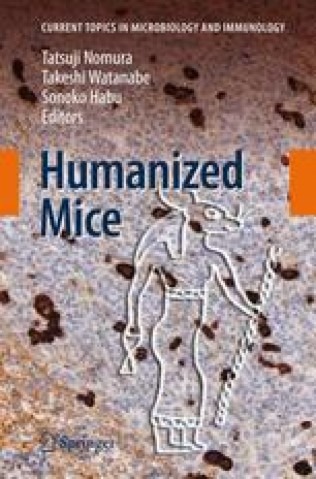
Humanized mice
The term humanized mouse in this text refers to a mouse in which human tissues and cells have been transplanted and show the same biological function as they do in the human body. That is, the physiological properties and functions of tra- planted human tissues and cells can be analyzed in the mouse instead of using a living human body. It should therefore be possible to study the pathophysiology and treatment of human diseases in mice with good reproducibility.

Human origins and environmental backgrounds
Human Origins and Environmental Backgrounds is a benchmark compendium of research that presents itself at a major paradigm shift in paleoanthropology. The editors offer a variety of theoretical approaches to puzzles on the place of the Hominidae, particularly Homo sapiens, among the Primates, including our unique bipedal positional behavior and social structure and the selective factors that might have been involved in our evolution in the broad context of Miocene and later environments. The contributors represent several generations of pioneering laboratory and field researchers from Japan, France and the United States, who have worked together over the past 40 years and who have trained future leaders in evolutionary anthropology and experimental primatology. This volume, compiled by the leading experts in the field, explores the interface between hominid origins and palaeoenvironments.
