



Page 126
Page 126

Applied cryptography and network security ; Vol. 3989 : 4th International Conference, ACNS 2006, Singapore, June 6-9, 2006, Proceedings
The 4th International Conference on Applied Cryptography and Network Security(ACNS 2006)washeldin Singapore,during June6-9,2006.ACNS 2006 brought together individuals from academia and industry involved in multiple research disciplines of cryptography and security to foster exchange of ideas. This volume (LNCS 3989) contains papers presented in the academic track. ACNS was set a high standard when it was initiated in 2003. There has been a steady improvement in the quality of its program in the past 4 years: ACNS 2003 (Kunming, China), ACNS 2004 (Yellow Mountain, China), ACNS 2005 (New York, USA), ACNS 2006 (Singapore). The average acc- tance rate is kept at around 16%. We wish to receive the continued support from the community of cryptographyand security worldwide to further improve its quality and make ACNS one of the leading conferences.

Applied cryptography and network security ; Vol. 3531 ; 3rd international conference, ACNS 2005, New York, NY, USA, June 7-10, 2005, Proceedings
The 3rd International Conference on Applied Cryptography and Network Security (ACNS 2005) was sponsored and organized by ICISA (the International Commu- cations and Information Security Association). It was held at Columbia University in New York, USA, 2005. This conference proceedings volume contains papers presented in the academic/research track. ACNS covers a large number of research areas that have been gaining importance in recent years due to the development of the Internet, wireless communication and the increased global exposure of computing resources. The papers in this volume are representative of the state of the art in security and cryptography research, worldwide.
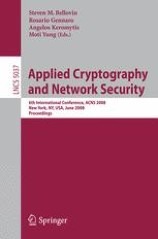
Applied cryptography and network security ; 6th International Conference, ACNS 2008, New York, NY, USA, June 3-6, 2008. Proceedings
This book constitutes the refereed proceedings of the 6th International Conference on Applied Cryptography and Network Security, ACNS 2008, held in New York, NY, USA, in June 2008.
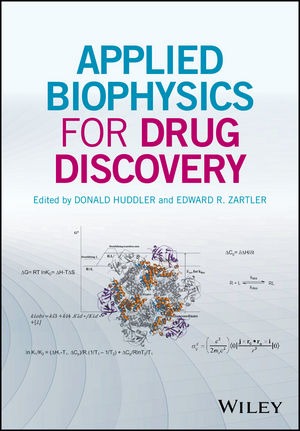
Applied biophysics for drug discovery
It is a guide to new techniques and approaches to identifying and characterizing small molecules in early drug discovery. Biophysical methods are reasserting their utility in drug discovery and through a combination of the rise of fragment-based drug discovery and an increased focus on more nuanced characterisation of small molecule binding, these methods are playing an increasing role in discovery campaigns.
Applications of random matrices in physics
Random matrices are widely and successfully used in physics for almost 60-70 years, beginning with the works of Dyson and Wigner. Although it is an old subject, it is constantly developing into new areas of physics and mathematics. It constitutes now a part of the general culture of a theoretical physicist. Mathematical methods inspired by random matrix theory become more powerful, sophisticated and enjoy rapidly growing applications in physics. Recent examples include the calculation of universal correlations in the mesoscopic system, new applications in disordered and quantum chaotic systems, in combinatorial and growth models, as well as the recent breakthrough, due to the matrix models, in two dimensional gravity and string theory and the non-abelian gauge theories. The book consists of the lectures of the leading specialists and covers rather systematically many of these topics.
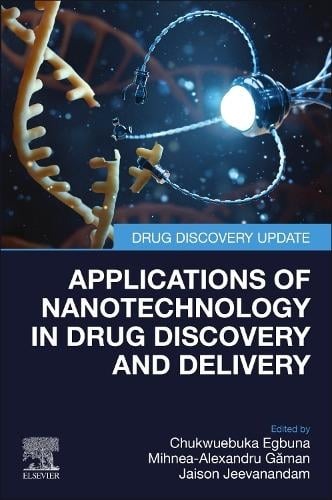
Applications of nanotechnology in drug discovery and delivery
Presents complete coverage of the application of nanotechnology in the discovery of new drugs and efficient target delivery of drugs. The book highlights recent advances of nanotechnology applications in the biomedical sciences, starting with chapters that provide the basics of nanotechnology, nanoparticles and nanocarriers. Part II deals with the application of nanotechnology in drug discovery, with an emphasis on enhanced delivery of pharmaceutical products, with Part III discussing toxicological and safety issues arising from the use of nanomaterials
Applications of Membrane Computing
Membrane computing is a branch of natural computing which investigates computing models abstracted from the structure and functioning of living cells and from their interactions in tissues or higher-order biological structures. The models considered, called membrane systems (P systems), are parallel, distributed computing models, processing multisets of symbols in cell-like compartmental architectures. In many applications membrane systems have considerable advantages – among these are their inherently discrete nature, parallelism, transparency, scalability and nondeterminism.

Applications of functional foods in disease prevention
Functional food sources are growing in popularity because they are exceptionally nutritious and provide amazing medical advantages. They can help ensure against infection, prevent supplement deficiency, and advance appropriate health development and improvement. With illustrative case studies, this new volume explores the many roles of functional foods in the prevention and management of various diseases, including diabetes, autism spectrum disorder, weight loss and obesity, microbial infections, ulcers and other gastrointestinal diseases, mental disorders and brain health, cardiac health and cardiovascular diseases, osteoporosis and bone health, and more.

Applications of evolutionary computing ; EvoWorkshops 2007 : EvoCOMNET, EvoFIN, EvoIASP, EvoINTERACTION, EvoMUSART, EvoSTOC, and EvoTransLog, Valencia, Spain, April 11-13, 2007, Proceedings
This volume contains contributions for EvoCOMNET, EvoFIN, EvoIHOT, EvoMUSART, EvoSTIM, and EvoTRANSLOC. The 51 revised full papers presented were carefully reviewed and selected from numerous submissions. This volume presents an overview about the latest research in EC. Areas where evolutionary computation techniques have been applied range from telecommunication networks to complex systems, finance and economics, games, image analysis, evolutionary music and art, parameter optimization, scheduling, and logistics. These papers may provide guidelines to help new researchers tackling their own problem using EC.

Applications and theory of Petri Nets 2005 ; 26th international conference, ICATPN 2005, Miami, FL, June 20-25, 2005, Proceedings
This volume contains the proceedings of the 26th International Conference on Application and Theory of Petri Nets and Other Models of Concurrency (ICATPN 2005). The Petri net conferences serve to discuss yearly progress in the ?eld of Petri nets and related models of concurrency, and to foster new - vancesintheapplicationandtheoryofPetrinets. Several tutorials and workshops were organized within the conf- ence, covering introductory and advanced aspects related to Petri nets.Detailed

Applications and Innovations in Intelligent Systems XIII ; Proceedings of AI-2005, the Twenty-fifth SGAI International Conference on Innovative Techniques and Applications of Artifical Intelligence
The papers in this volume present new and innovative developments in the field, divided into sections on Applied AI in Information Processing, Techniques for Applied AI, Industrial Applications and Medical Applications.This is the thirteenth volume in the Applications and Innovations series. The series serves as a key reference as to how AI technology has enabled organisations to solve complex problems and gain significant business benefit.

Applications and innovations in intelligent systems XII ; Proceedings of AI-2004, the Twenty-fourth SGAI International Conference on Innhovative Techniques and Applications of Artificial Intelligence
The papers in this volume are the refereed application papers presented at AI-2004, the Twenty-fourth SGAI International Conference on Innovative Techniques and Applications of Artificial Intelligence, held in Cambridge 2004. The papers present new and innovative developments in the field, divided into sections on Synthesis and Prediction, Scheduling and Search, Diagnosis and Monitoring, Classification and Design, and Analysis and Evaluation. This is the twelth volume in the Applications and Innovations series. The series serves as a key reference on the use of AI Technology to enable organisations to solve complex problems and gain significant business benefits. The Technical Stream papers are published as a companion volume under the title Research and Development in Intelligent Systems XXI.

Application of the Finite Element Method in Implant Dentistry
Part of the new series, Advanced Topics in Science and Technology in China, this book is designed to give the necessary theoretical foundation to new users of the finite element method in implant dentistry, and show how both the implant dentist and designer can benefit from finite element analysis.

Application of power electronics converters in smart grids and renewable energy systems
Focuses on the applications of Power Electronics Converters in smart grids and renewable energy systems. The topics covered include methods to CO2 emission control, schemes for electric vehicle charging, reliable renewable energy forecasting methods, and various power electronics converters. The converters include the quasi neutral point clamped inverter, MPPT algorithms, the bidirectional DC-DC converter, and the push–pull converter with a fuzzy logic controller.
Apoptotic pathways as targets for novel therapies in cancer and other diseases
The book attempts to review, summarize, and speculate on the apoptotic pathways, how are they regulated and how targeted therapies are being used to treat a wide variety of diseases. Special emphasis is placed on cancer since new treatments either being developed or currently in the clinical setting are showing great promise to increase survival rates for cancer patients.

Anxiety in health behaviors and physical illness
While the links between physical illness and depression have been well-documented and analyzed, little has been made of the data relating physical illness to anxiety—until now. Anxiety in Health Behavior and Physical Illness explores complex relationships between medical and anxiety pathology on the theoretical, research, and practical fronts. Over forty experts examine reciprocal roles of anxiety and medical illness as causal or exacerbating factors in each other’s onset and development, describe forms of anxiety typical to major disease entities, discuss common health behaviors as they impact anxiety, recast anxiety disorders as chronic illness, and identify patients for whom new forms of treatment may be warranted.

Anxiety and Anxiolytic Drugs
The present volume gives a comprehensive overview on the current state of basic and clinical research on Anxiety and Anxiolytic Drugs. Using newly developed methods and techniques researchers are now beginning to understand the molecular mechanisms of anxiety, anxiety disorders and their treatment. In parallel, new drug targets have been generated and the first clinical studies with new compounds have been started. In 20 chapters written by numerous experts in the field comprehensive information on all relevant topics is provided.
Anti-vivisection and the profession of medicine in Britain : A social history
This book explores the social history of the anti-vivisection movement in Britain from its nineteenth-century beginnings until the 1960s. It discusses the ethical principles that inspired the movement and the socio-political background that explains its rise and fall. Opposition to vivisection began when medical practitioners complained it was contrary to the compassionate ethos of their profession. Christian anti-cruelty organizations took up the cause out of concern that callousness among the professional classes would have a demoralizing effect on the rest of society. As the nineteenth century drew to a close, the influence of transcendentalism, Eastern religions and the spiritual revival led new age social reformers to champion a more holistic approach to science, and dismiss reliance on vivisection as a materialistic oversimplification.

Antisense RNA Technology
The following project aims to introducing the technology of RNA Antisense as new therapy for many diseases. Antisense RNA: In molecular biology, the strand complementary to a coding sequence of a nucleic acid. Antisense DNA is the non-coding strand complementary to the coding strand in double-stranded DNA. The antisense strand serves as the template for messenger RNA (mRNA) synthesis. This synthesized nucleic acid is termed an "anti-sense" oligonucleotide (AON) because its base sequence is complementary to the gene's messenger RNA (mRNA), which is called the "sense" sequence (so that a sense segment of mRNA " 5'-AAGGUC-3' " would be blocked by the anti-sense mRNA segment " 3'-UUCCAG-5' ").
Antisense RNA Design, Delivery, and Analysis
This volume gathers a variety of models, delivery systems, and approaches that can be used to assess RNA technology for exploiting antisense as a therapeutic intervention. Beginning with a section on the design of antisense technology and their delivery, the book continues by covering model systems developed to evaluate efficacy, both in vivo and in vitro, as well as methods to evaluate preclinically the toxicity associated with these new potential drugs, and intellectual property considerations. Written for the highly successful Methods in Molecular Biology series, chapters include introductions to their respective topics, lists of the necessary materials and reagents, step-by-step, readily reproducible laboratory protocols, and tips on troubleshooting and avoiding known pitfalls.
