



Page 121
Page 121
Groundwater Management in Asian Cities : Technology and Policy for Sustainability
The number of city dwellers who do not have access to piped water and rely on groundwater is also increasing. In many Asian cities, groundwater is not only the source of domestic water but also an important resource for industrial development, making better management of groundwater resources essential for sustainable development. Because groundwater is easier to access and costs less than water from piped systems, groundwater abstraction cannot be easily regulated. Policies for groundwater management adopted in Japan and other Asian countries are compared, and technologies for efficient use of groundwater are elucidated. Groundwater contamination is also a serious problem that exacerbates water scarcity in Asian cities. Case studies illustrate the cause and consequences of naturally occurring contaminants such as arsenic and fluoride, and groundwater contamination due to anthropogenic contaminants is described. Also discussed are technologies for treating contaminated groundwater to reduce the health risks of drinking contaminated groundwater.
Groundwater Geochemistry : A Practical Guide to Modeling of Natural and Contaminated Aquatic Systems
Numerical groundwater flow, transport, and geochemical models are important tools besides classical deterministic and analytical approaches. Solving complex linear or non-linear systems of equations, commonly with hundreds of unknown parameters, is a routine task for a PC. Modeling hydrogeochemical processes requires a detailed and accurate water analysis, as well as thermodynamic and kinetic data as input. Thermodynamic data, such as complex formation constants and solubility-products, are often provided as databases within the respective programs. However, the description of surface-controlled reactions (sorption, cation exchange, surface complexation) and kinetically controlled reactions requires additional input data. Unlike groundwater flow and transport models, thermodynamic models, in principal, do not need any calibration.
Groundwater Dynamics in Hard Rock Aquifers : Sustainable Management and Optimal Monitoring Network Design
Groundwater is of utmost importance in the arid and semi-arid environment. The areas in such regions are forced to face a variety of problems regarding groundwater as it is the main source of water no matter for any use viz., drinking, domestic, irrigation or industrial particularly for the rural population. The main challenges in hard rock areas in the semi-arid region are the water conservation, management and planning of the water resources. This is further complicated with several complexities of the geological formation. With the semi-arid environment, complex geological settings and over shooting stresses, the aquifer system becomes extremely fragile and sensitive. In spite of a good amount of research in this field, it is still needed to understand the behaviour of such complex system precisely and also apply the result in reasonably larger scales.

Groundwater : Resource evaluation, augmentation, contamination, restoration, modeling and management
The demand for water resources is increasing day by day due to ever increasing population, mostly from developing countries. This has resulted in abstracting more water from the subsurface stratum and forcing the water managers to manage the limited groundwater resources in a more scientific way, which in turn needs a more sophisticated way of assessing the underground resource and manage it optimally.

Ground bearing concrete slabs : Specification, design, construction and behaviour
Ground bearing concrete floors, industrial concrete hardstandings and concrete highway pavements have not, in the past, been perceived as a single type of structural element and their construction has taken place independently of each other. This is in spite of their obvious commonality in the areas of design, materials, geotechnical appreciation and construction.

Grippers in Motion : The Fascination of Automated Handling Tasks
This book shows you how to ensure process reliability on the basis of combining the right components with advanced application know-how. By explaining basic preconditions of the gripping process and highlighting the milestones of automation history, we guide you all the way through to the center of the handling process – the workpiece. Its ambient conditions and setup are clearly defined as well as the process of setting grippers in motion. Starting with simple linear movements up to multi-axis kinematics, you are provided with the details for practical solutions.

Grid computing in life science ; 1st International Workshop on Life Science Grid, LSGRID 2004 Kanazawa, Japan, May 31-June 1, 2004, Revised Selected and Invited Papers
Researchers in the ?eld of life sciences rely increasingly on information te- nology to extract and manage relevant knowledge. The complex computational and data management needs of life science research make Grid technologies an attractive support solution. However, many important issues must be addressed before the Life Science Grid becomes commonplace. The 1st International Life Science Grid Workshop (LSGRID 2004) was held in Kanazawa Japan, May 31–June 1, 2004. This workshop focused on life s- ence applications of grid systems especially for bionetwork research and systems biology which require heterogeneous data integration from genome to phenome, mathematical modeling and simulation from molecular to population levels, and high-performance computing including parallel processing, special hardware and grid computing.

Green techniques for organic synthesis and medicinal chemistry
Presents comprehensive coverage of green chemistry techniques for organic and medicinal chemistry applications, summarizing the available new technologies, analyzing each technique’s features and green chemistry characteristics, and providing examples to demonstrate applications for green organic synthesis and medicinal chemistry.

Green Chemistry and Sustainable Technology : Biological, Pharmaceutical, and Macromolecular Systems
Taking an interdisciplinary approach, this new volume brings together innovative research, new concepts, and novel developments in the application of new tools in green chemistry and sustainable technology. The diverse coverage includes chapters on ionic liquids as green solvents, an environmentally friendly approach to the synthesis and biological evaluation of α-aminophosphonate derivatives, the application of nanotechnology in biological sciences and green chemistry, ecofriendly polymers, the effect of global warming and greenhouse gases on environmental system, and more.

Gravity, Geoid and Space Missions ; GGSM 2004. IAG International Symposium. Porto, Portugal. August 30 - September 3, 2004
GGSM2004 aimed to bring together scientists from different areas in the geosciences, working with gravity and geoid related problems, both from the theoretical and practical points of view. Topics of interest included the integration of heterogeneous data and contributions from satellite and airborne techniques to the study of the spatial and temporal variations of the gravity field. In addition to the special focus on the CHAMP, GRACE, and GOCE satellite missions, attention was also directed toward projects addressing topographic and ice field mapping using SAR, LIDAR, and laser altimetry, as well as missions and studies related to planetary geodesy.

Gravity, Black Holes, and the Very Early Universe : An Introduction to General Relativity and Cosmology
In the early 1900s, Albert Einstein formulated two theories that would forever change the landscape of physics: the Special Theory of Relativity and the General Theory of Relativity. By 1925, quantum mechanics had been born out of the dissection of these two theories, and shortly after that, relativistic quantum field theory. We now had in place some important ties between the laws of physics and the types of particle interactions the new physics was uncovering. Gravity is one of the four types of forces that are found throughout the universe. In fact, although it is a relatively weak force, it operates at huge distances, and so must be accounted for in any cosmological system. Unfortunately, gravity continues to defy our neat categorization of how all the forces in nature work together.

Grassroots Politics and Oil Culture in Venezuela : The Revolutionary Petro-State
This book presents an ethnographic study of how grassroots activism in Venezuela during the Chávez presidency can be understood in relation to the country's history as a petro-state. Taking the contested relationship between the popular sectors and the Venezuelan state as a point of departure, Iselin Åsedotter Strønen explores how notions such as class, race, state, bureaucracy, popular politics, capitalism, neoliberalism, consumption, oil wealth, and corruption gained salience in the Bolivarian process. A central argument is that the Bolivarian process was an attempt to challenge the practices, ideas, and values inherited from Venezuela's historical development as an oil-producing state.

Graphs, networks and algorithms ; 3rd ed.
The third edition of this standard textbook contains additional material: two new application sections (on graphical codes and their decoding) and about two dozen further exercises (with solutions, as throughout the text). Moreover, recent developments have been discussed and referenced, in particular for the travelling salesman problem. The presentation has been improved in many places (for instance, in the chapters on shortest paths and on colorings), and a number of proofs have been reorganized, making them more precise or more transparent.

Graphics Recognition. Recent Advances and New Opportunities ; 7th International Workshop, GREC 2007, Curitiba, Brazil, September 20-21, 2007. Selected Papers
This book constitutes the thoroughly refereed post-proceedings of the 7th International Workshop on Graphics Recognition, GREC 2007, held in Curitiba, Brazil in September 2007.The 30 revised full papers presented together with a panel discussion report were carefully selected and improved during two rounds of reviewing and revision. The papers are organized in topical sections on technical documents, maps and diagrams understanding; symbol and shape description and recognition; information retrieval, indexing and spotting; sketching interfaces and on-line processing; feature and primitive analysis and segmentation; performance evaluation and ground truthing.
Graphics of Large Datasets : Visualizing a Million
Graphics are great for exploring data, but how can they be used for looking at the large datasets that are commonplace to-day? This book shows how to look at ways of visualizing large datasets, whether large in numbers of cases or large in numbers of variables or large in both. Data visualization is useful for data cleaning, exploring data, identifying trends and clusters, spotting local patterns, evaluating modeling output, and presenting results. It is essential for exploratory data analysis and data mining. New approaches to graphics are needed to visualize the information in large datasets and most of the innovations described in this book are developments of standard graphics. There are considerable advantages in extending displays which are well-known and well-tried, both in understanding how best to make use of them in your work and in presenting results to others. It should also make the book readily accessible for readers who already have a little experience of drawing statistical graphics. All ideas are illustrated with displays from analyses of real datasets and the authors emphasize the importance of interpreting displays effectively. Graphics should be drawn to convey information and the book includes many insightful examples.

Graphic design school : The principles and practice of graphic design ; 8th ed.
Graphic Design School, covers the fundamentals of design including: Color, typographic rules and typefaces, web design and layout, and app or social media design. Information architecture, file organization, and content management. The importance of coding requirements and SEO. Case studies, designer biographies, and student assignments for testing skills and concepts. Revisits traditional printing techniques such as risograph and screen printing

Graphic Design School : The principles and practice of graphic design ; 7th ed.
Develops design students' core competencies and provides practical advice and tips for how these fundamentals translate into new and evolving media. This Seventh Edition offers all new examples from web, app, social media, magazines, websites and books, presenting a comprehensive overview of the visual communications profession. This updated edition includes guidance and media examples using the latest in grahpic design software, and traditional printing techniques such as risograph and screen printing are revisited. Pedagogical tools throughout the text focus on the growth of interdisciplinary learning and collaborations between design specialists, as well as highlights on key players in the past and present of graphic design. Coveres : color, typographic rules and typefaces, coding requirements, information architecture, file organization, web design and layout, mobile device composition, app design, CMS, designing for social media, and SEO. Graphic Design School, 7th Edition includes full-color illustrations throughout, as well as case studies, designer biographies, and student assignments for testing skills and concepts.

Graphic design : Learn it, do it
An introduction to the fundamentals of graphic design and the Adobe Creative Cloud applications used to put these concepts into practice. This book is intended for production-oriented audiences, those interested in the what, why and how of graphic design. The "what" is effective graphic design, a visual solution created using the design principles that stands out in a crowded marketplace. This discussion includes color theory, typography and page layout. Focus on the "why" of design begins with the reasons why we communicate.

Granite genesis : in-situ melting and crustal evolution
In this book we suggest an alternative model for the origin of granite in terms of in-situ meltingintracrustal convection that physically determines the process from partial melting of mid-upper crustal rocks to formation of a convecting magma layer. We illustrate the model using the geological, geochemical and geophysical studies from Australia, North and South America, Europe and China, and conclude that heat convection within a crustal partial melting layer is essential for formation of granite magma and that without convection, partial melting of rocks produces migmatites rather than granites. Granite is layer-like within the crust, and shape and size of granite bodies reflect the geometric relationship between an irregular upper surface of the crystallised magma layer and erosion surface. Repeated melting of the crust generates downward-younging granite sequences. Chemical and isotopic compositions of granites indicate differentiation within the magma rather than different deep sources.
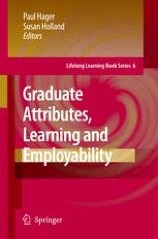
Graduate Attributes, Learning and Employability
In these complex and challenging times, students, teachers and employers are all interested in the development of generic abilities as these typically make the difference between good and indifferent employees, successful and unsuccessful learners. This book explains why generic capacities have become so important and argues that the process of acquiring them is both lifelong and developmental. By using case studies and theoretical analyses the authors collectively provide a comprehensive and contemporary coverage of the issues concerning generic abilities.
