



Page 120
Page 120
Foundations of Multi-Paradigm Modelling for Cyber-Physical Systems
This book coherently gathers well-founded information on the fundamentals of and formalisms for modelling cyber-physical systems (CPS). Highlighting the cross-disciplinary nature of CPS modelling, it also serves as a bridge for anyone entering CPS from related areas of computer science or engineering.

Foundations of Microsoft® Expression Web : The Basics and Beyond
Expression Web, one of the excellent programs within the suite, is a powerful web site creation tool that allows you to rapidly build up standards-compliant web pages, style them with CSS, add dynamic ASP.NET functionality to them, and publish them to the weball from the comfort of one program, and "Foundations of Microsoft Expression Web: The Basics and Beyond" is one of the first books available on the program.

Foundations of learning classifier systems
This volume brings together recent theoretical work in Learning Classifier Systems (LCS), which is a Machine Learning technique combining Genetic Algorithms and Reinforcement Learning. It includes self-contained background chapters on related fields (reinforcement learning and evolutionary computation) tailored for a classifier systems audience and written by acknowledged authorities in their area - as well as a relevant historical original work by John Holland.

Foundations of landscape architecture : Integrating form and space using the language of site design
Illustrates the importance of spatial language. It introduces concepts, typologies, and rudimentary principles of form and space. Including designs for projects such as parks, campuses, and memorials, this text provides the core concepts necessary for designers to shape functional landscapes. Additionally, chapters discuss organizational and spatial design structures based on orthogonal forms, angular forms, and circular forms.
Foundations of Intelligent Systems ; Vol. 4203 ; 16th International Symposium, ISMIS 2006, Bari, Italy, September 27-29, 2006, Proceedings
This book constitutes the refereed proceedings of the 16th International Symposium on Methodologies for Intelligent Systems, ISMIS 2006. The book presents 81 revised papers together with 3 invited papers. Topical sections include active media human-computer interaction, computational intelligence, intelligent agent technology, intelligent information retrieval, intelligent information systems, knowledge representation and integration, knowledge discovery and data mining, logic for AI and logic programming, machine learning, text mining, and Web intelligence.
Foundations of Intelligent Systems ; Vol. 3488 ; 15th International Symposium ISMIS 2005, Saratoga Springs, NY, USA, May 25-28, 2005, Proceedings
This volume contains the papers selected for presentation at the 15th International S- posiumonMethodologiesforIntelligentSystems, ISMIS2005, heldinSaratogaSprings, NewYork,25-28May,2005. ThesymposiumwasorganizedbySUNYatAlbany. Itwas sponsored by the Army Research Of?ce and by several units of the University at Albany including its Division for Research, College of Arts and Sciences, Department of C- puter Science, and Institute for Informatics, Logics, and Security Studies (formerly the Institute for Programming and Logics). The Program Committee selected the following major areas for ISMIS 2005: intelligent information systems, knowledge discovery and data mining, knowledge - formation and integration, knowledge representation, logic for arti?cial intelligence, soft computing, Web intelligence, Web services, and papers dealing with applications of intelligent systems in complex/novel domains. The contributed papers were selected from almost 200 full draft papers by the Program Committee members.
Foundations of Intelligent Systems ; 17th International Symposium, ISMIS 2008 Toronto, Canada, May 20-23, 2008 Proceedings
This book constitutes the refereed proceedings of the 17th International Symposium on Methodologies for Intelligent Systems, ISMIS 2008, held in Toronto, Canada, in May 2008.The 68 revised papers presented together with 3 plenary talks were carefully reviewed and selected from over 100 submissions. The papers are organized in topical sections on knowledge discovery and data mining: foundations, advances, mining changes and actional patterns; logic for artificial intelligence, autonomic and evolutionary computation, soft computing, databases and data warehouses, digital library, intelligent information retrieval.
Foundations of Intelligent Systems ; 13th International Symposium, ISMIS 2002, Lyon, France, June 27-29, 2002. Proceedings
This volume contains the papers selected for presentation at the 13th International Symposium on Methodologies for Intelligent Systems ISMIS 2002, held in Lyon, France, 27-29 June, 2002. The symposium was organized by the UniversitØ ClaudThe program committee selected the following major areas for ISMIS 2002: Intelligent Multimedia, Intelligent Information Retrieval, Intelligent Information Systems, Knowledge Representation and Integration, Learning and Knowledge Discovery, Logic for Artificial Intelligence, Methodologies (modeling, design, validation, performance evaluation), and Soft Computing.
Foundations of information and knowledge systems ; 5th International Symposium, FoIKS 2008, Pisa, Italy, February 11-15, 2008. Proceedings
This book constitutes the refereed proceedings of the 5th International Symposium on Foundations of Information and Knowledge Systems, FoIKS 2008 held in Pisa, Italy, in February 2008. The 13 revised full papers presented together with 9 revised short papers and 3 invited lectures were carefully selected during two rounds of reviewing and improvement from from 79 submissions. The papers deal with any foundational aspect of information and knowledge systems, including submissions from researchers working in fields such as discrete mathematics, logic and algebra, model theory, information theory, complexity theory, algorithmics and computation, geometry, analysis, statistics and optimisation who are interested in applying their ideas, theories and methods to research on information and knowledge systems.

Foundations of information and knowledge systems ; 4th International Symposium, FoIKS 2006, Budapest, Hungary, February 14-17, 2006, Proceedings
This book constitutes the refereed proceedings of the 4th International Symposium on Foundations of Information and Knowledge Systems, held in February 2006. The 14 revised full papers presented together with three revised short papers and one invited paper were carefully reviewed and selected from 54 submissions. Among the topics covered are the theoretical foundations of information and knowledge systems, as well as mathematical fields such as discrete mathematics, combinatorics, logics and finite model theory, and applications thereof for research on database and knowledge base theory.

Foundations of Global Genetic Optimization
This book is devoted to the application of genetic algorithms in continuous global optimization. Some of their properties and behavior are highlighted and formally justified. Various optimization techniques and their taxonomy are the background for detailed discussion. The nature of continuous genetic search is explained by studying the dynamics of probabilistic measure, which is utilized to create subsequent populations. This approach shows that genetic algorithms can be used to extract some areas of the search domain more effectively than to find isolated local minima. The biological metaphor of such behavior is the whole population surviving by rapid exploration of new regions of feeding rather than caring for a single individual. One group of strategies that can make use of this property are two-phase global optimization methods. In the first phase the central parts of the basins of attraction are distinguished by genetic population analysis. Afterwards, the minimizers are found by convex optimization methods executed in parallel.

Foundations of Genetic Algorithms ; 9th International Workshop, FOGA 2007, Mexico City, Mexico, January 8-11, 2007, Revised Selected Papers
Readers will find here a fascinating text that is the thoroughly refereed post-proceedings of the 9th Workshop on the Foundations of Genetic Algorithms, FOGA 2007, held in Mexico City in January 2007.

Foundations of genetic algorithms ; 8th International Workshop, FOGA 2005, Aizu-Wakamatsu City, Japan, January 5-9, 2005, Revised Selected Papers
The8thWorkshopontheFoundationsofGeneticAlgorithms,FOGA-8,washeld at the University of Aizu in Aizu-Wakamatsu City, Japan, January 5–9, 2005. This series of workshops was initiated in 1990 to encourage further research on the theoretical aspects of genetic algorithms, and the workshops have been held biennially ever since. The papers presented at these workshops are revised, edited and published as volumes during the year following each workshop. This series of (now eight) volumes provides an outstanding source of reference for the theoretical work in this ?eld. At the same time this series of volumes provides a clear picture of how the theoretical research has grown and matured along with the ?eld to encompass many evolutionary computation paradigms including evolution strategies (ES), evolutionary programming (EP), and genetic programming (GP), as well as the continuing growthininteractionswith other ?elds suchas mathematics,physics, and biology.

Foundations of generic optimization ; Vol.2 : Applications of fuzzy control, genetic algorithms and neural networks
This is a comprehensive overview of the basics of fuzzy control, which also brings together some recent research results in soft computing, in particular fuzzy logic using genetic algorithms and neural networks. This book offers researchers not only a solid background but also a snapshot of the current state of the art in this field.

Foundations of generic optimization : Vol.1 : A combinatorial approach to epistasis
This is a comprehensive overview of the basics of fuzzy control, which also brings together some recent research results in soft computing, in particular fuzzy logic using genetic algorithms and neural networks. This book offers researchers not only a solid background but also a snapshot of the current state of the art in this field.

Foundations of fuzzy logic and soft computing ; 12th International Fuzzy Systems Association World Congress, IFSA 2007, Cancun, Mexico, Junw 18-21, 2007, Proceedings
This book comprises a selection of papers from IFSA 2007 on new methods and theories that contribute to the foundations of fuzzy logic and soft computing. methodologies. Soft computing consists of several computing paradigms which can be used to produce powerful intelligent systems for solving real-world problems.
Foundations of Computer Security
Foundations of Computer Security provides a succinct, yet authoritative introduction to the underlying theory, history, vocabulary, and concepts that drive this pivotal area of computer science. With its user-friendly approach and clarity of style, the text conveys—in simple terms—the core principles and developments underlying computer security in its many ramifications in the rapidly evolving computing arena. Following its opening framework laid out in a broad preface and introductory chapter, the book features chapters dedicated to a wide array of security-related subtopics: physical security, viruses and worms, malware and spyware, privacy and trust, and cryptography.
Foundations of C++/CLI : The Visual C++ Language for .NET 3.5
Foundations of C++/CLI: The Visual C++ Language for .NET 3.5 introduces C++/CLI, Microsoft's extensions to the C++ syntax that allow you to target the common language runtime, the key to the heart of the .NET Framework 3.5. This book gives you a small, fast–paced primer that will kick–start your journey into the world of C++/CLI. In 13 no–fluff chapters, Microsoft insiders take readers into the core of the C++/CLI language and explain both how the language elements work and how Microsoft intends them to be used. This book is a beginner's guide, but it assumes a familiarity with programming basics. And it concentrates on explaining the aspects of C++/CLI that make it the most powerful and fun language of the .NET Framework. As such, this book is ideal if you're thinking of migrating to C++/CLI from another language.
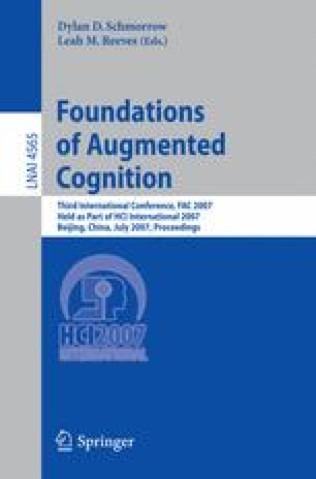
Foundations of augmented cognition ; 3rd International Conference, FAC 2007, Held as Part of HCI International 2007, Beijing, China, July 22-27, 2007, Proceedings
These papers address the latest research and development efforts and highlight the human aspects of design and use of computing systems. This volume contains papers in the thematic area of Augmented Cognition.

Foundations of Agile Python Development
You've long been enamored with the Python language, and have mastered its many nuances. Yet something seems to be missing—a productivity boost that you know is possible but you're not sure how to go about it. This was the sentiment of so many developers before discovering Agile programming paradigm, which embraces concepts such as automation, effective code management, and test–driven development. Foundations of Agile Python Development is the first book to apply these sought–after principles to Python developers, introducing both the tools and techniques built and supported by the Python community. Authored by Jeff Younker, a well–known member of Python's agile community who is perhaps best known for his creation of a popular Python testing framework
