


Refine Results
Sort By
From
To

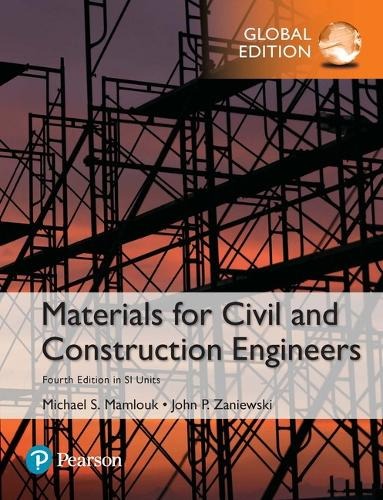
For courses in Civil Engineering Materials, Construction Materials, and Construction Methods & Materials offered in Civil, Environmental, or Construction engineering departments. Civil and Construction Engineering Materials: Properties, Uses, and Evaluations Materials for Civil and Construction Engineers helps students understand and select the materials involved in supporting the infrastructure needs of society--from buildings, to water and treatment distribution systems, to dams, highways, and airport pavements. By gaining a deep understanding of material behavior and the material selectio
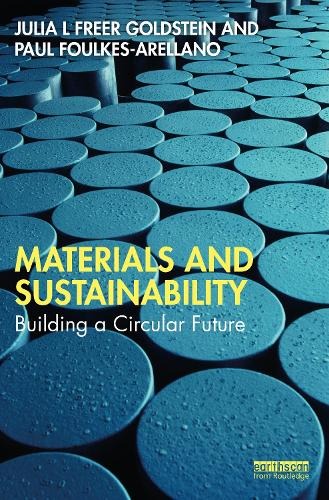
Examines sustainable manufacturing, from the extraction of materials to processing, use, and disposal, and argues that significant changes in all of the above are needed for the world to progress toward a more circular economy. Materials and processing methods are usually chosen with performance as the key metric.
Discusses machine learning and deep learning models for different civil engineering applications. These models work for stochastic methods wherein internal processing is done using randomized prototypes. The book explains various machine learning model designs that will assist researchers to design multi domain systems with maximum efficiency. It introduces Machine Learning and its applications to different Civil Engineering tasks, including Basic Machine Learning Models for data pre-processing, models for data representation, classification models for Civil Engineering Applications, Bioinspired Computing models for Civil Engineering, and their case studies.
Pesents buildings developed using modular assembly approaches based on lightweight and corrosion-resistant fiber reinforced polymer (FRP) composites. Construction methods and the choice of building materials offer great opportunities for more productive and environmentally friendly solutions. This book includes valuable experimental data on large-scale structural components (beams, slabs, amd columns), connections (shear connections, wall stud connections, beam-column connections, column-column connections) and structures (composite floor system, structural sandwich assemblies, and full-scale structural demonstrations), supported with detailed numerical modelling and analytical methods.
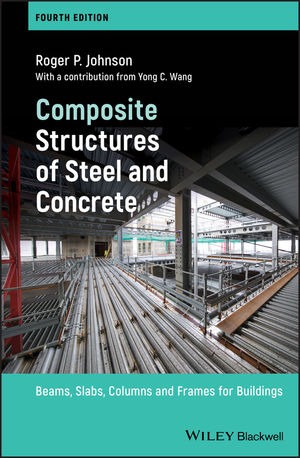
Provides an introduction to the theory and design of composite structures of steel and concrete. Material applicable to both buildings and bridges is included, with more detailed information relating to structures for buildings. Throughout, the design methods are illustrated by calculations in accordance with the Eurocode for composite structures, EN 1994, Part 1-1, 'General rules and rules for buildings' and Part 1-2, 'Structural fire design', and their cross-references to ENs 1990 to 1993.
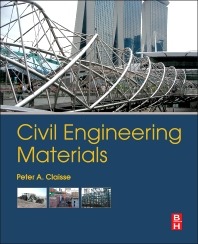
Concentrates on demonstrating methods to obtain, analyse and use information rather than focusing on presenting large amounts of data. Beginning with basic properties of materials, it moves on to more complex areas such as the theory of concrete durability and corrosion of steel.
Brings together all diverse disciplines of civil engineering and related areas (for example, geotechnical engineering, water resources engineering, structural engineering, transportation engineering, environmental engineering, construction management, GIS, and remote sensing) towards a common goal of disaster resilience through an interdisciplinary approach. It contains methods and case studies focusing on civil engineering solutions to reduce the disaster risk. The book contents are aligned in line with the priorities set by UN-Sendai Framework for Disaster Risk Reduction and UN-SDGs to promote a global culture of risk-awareness and disaster reduction. The book will be a useful comprehensive reference for disaster risk reduction beneficial for engineering students, teaching faculty, researchers, industry professionals and policymakers.
Presents the theoretical background of building physics, dealing with the evaluation of physical phenomena related to heat transfer and energy use in buildings, water and water vapour transfer in building structures, daylighting and electric lighting of buildings, sound transmission in building structures and protection against noise, the occurrence and spread of fires in buildings and the thermal response of cities. It contains numerical and computational evaluation methods, numerous computational case studies and examples of experimental analyses. The book demonstrates that the considered physical processes affect the quality of living and working comfort in indoor and outdoor environment.

Presents practical information about the design and construction of building projects by addressing the principles of each method, unveiling background factors for requirements, and state-of-the-art application details, and presents general design and application principles of construction methods and technologies without diving into engineering calculations and formulas to keep the content easily understandable by all AEC practitioners and participants.

It is devoted to bridges that are built by incremental launching methods, using prestressed composite materials. It integrates the static, aesthetic, and economic aspects of construction techniques for building these state-of-the-art structures. Bridge launching is a comprehensive handbook, offering explanations of both the theoretical and technological aspects of the construction process. Both beam bridges and arch bridges are thoroughly analysed,and special theories aimed at optimising static aspects, as well as local phenomena, are developed.

Provides the latest practical guidance on designing buildings to optimise their resilience to blast loading. Focused specifically on the design of commercial buildings, it is an indispensible guide to help engineers reduce the risks posed to building occupants and businesses from terrorist and other explosions. This book provides the engineer with a single and comprehensive source of reference for all the main elements of blast engineering design in modern practice. Industry-accepted methods for the design of glazing to resist blast loading are published for the first time, as well as a new chapter on hostile vehicle mitigation techniques. Guidance on structural steelwork and reinforced concrete design is extended and enhanced, supplemented with material on design in new materials such as steel-concrete-steel composites, this latter addition being published for the first time.

Offers state-of-the-art contributions in the area of AI and its applications in the field of civil engineering presenting methods and implementation of AI and machine learning in multiple facets of civil engineering

In the twentieth century bridge engineers have seen many changes. Advances in technology, materials and engineers understanding of structural behaviour and methods of analysis has presented opportunities for innovation and have led to increasingly sophisticated solutions to the basic problem of providing a bridge over an obstacle. However, despite these innovative technological changes, the masonry arch bridge has shown itself to be a durable, cost-effective structure, tolerant of its modern environment and out-performing many of its competitors.

Applied Geotechnics for Construction Projects 3 first presents the basic theoretical principles and rules governing the designing and validation of foundations; shallow, semi-deep and deep, then presents real foundation projects with a detailed comparison of the approaches and methods of calculating foundations in relation to the reference systems and rules in force, closely compared to and validated by the Eurocodes. The third chapter presents examples of foundation projects, covering high-side building rafts, strip footings, piles and embankments, enriched by an unprecedented level of experience in the field of foundations for civil and industrial construction projects.

Applied Geotechnics for Construction Projects 1 first defines, identifies and classifies soils, exploring their complexities and weaknesses, and then outlines the basic principles of stresses and strains that establish and develop within soils. The third chapter of the book introduces and develops methods of soil investigation in order to experimentally determine the geotechnical parameters that are useful in the design stage of construction projects.

Povides readers with the tools needed to determine the probability of failure, and when multiplied by the consequences of failure, illustrates how to assess the risk of civil engineering problems. Presenting methods for quantifying uncertainty that exists in engineering analysis and design, with an emphasis on fostering more accurate analysis and design.

Presents an analysis of structures using numerical methods and mathematical modeling. This structural analysis also includes beam, plate, and pipe elements, and examines deflection and frequency or buckling loads. The various engineering theories of beams/plates/shells are comprehensively presented, and the relationships between stress and strain, and the governing equations of the structure are extracted. To solve governing equations with numerical methods, there are two general types, including methods based on derivatives or integrals. Derivative-based methods have the advantage of flexibility in modeling boundary conditions, low analysis time, and a very high degree of accuracy.

Outlines methods for analysis and design the construction of shallow and deep foundations with particular reference to case studies in Hong Kong and China, as well as a discussion of methods used in other countries. It introduces the main approaches used by geotechnical and structural engineers, and the precautions required for planning and designing foundation structures. Some computational methods and computer programs are reviewed to provide tools for performing more realistic analysis of foundation systems.

Deals with the analysis of engineering structures made of skeletal members and covers the type of structures that are commonly used in practice. It builds up on the subject matter dealing with matrix algebra, analysis of bar elements, special forms of members, stability and vibration of structures, and pin-connected, rigid-plane, and 3D frames. It treats the important step of formulating the overall stiffness matrix of a structure in a systematic and straightforward manner and uses simple mathematical approaches wherever possible.

Provides structural engineers with a concise introduction to the architectural, structural and technological aspects of cable roofs, and supplies sufficient information for engineers to carry out their own designs. The improved methods for generating wind and earthquake histories have been included as the trend in modern design codes seem increasingly to require that dynamic response of other forms of non-linear structures such as guyed masts is considered at the design stage.

Daraa Highway - Ghabagheb - Syria
+963-15 2050 - 15 860 380 /1/2/3 - 11 662 3900