


Refine Results
Sort By
From
To


For specialist contractors, large consultants and owners of corrosion damaged structures, and looks at international experience with this technique. It examines why corrosion is occurring, the differences in the application of CP with the stark dichotomy in its success and failure, and finally ways in which its performance can be improved on future installations.
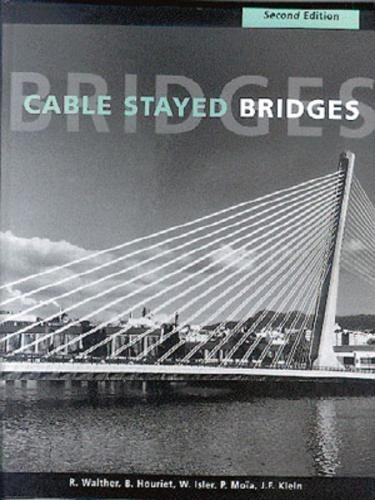
The cable stayed bridge is an elegant, economical and efficient structure. Virtually unknown 40 years ago, these bridges have become increasingly important as their properties have been more fully understood. They have recently proved to be highly cost-effective for short to medium spans. The second edition of this extremely popular book has been updated and enhanced to cover the rapid technological progress in this field. Exceptionally well illustrated, the book examines all aspects of the design of cable stayed bridges.

Provides complete coverage of the Building Services Engineering for Construction qualification's core units and will equip you with the skills you need to shape your career. - Break down complex topics with summary tables and hundreds of images and artworks - Apply your knowledge in real-world case studies and discover some of the dilemmas you can.
Presents the theoretical background of building physics, dealing with the evaluation of physical phenomena related to heat transfer and energy use in buildings, water and water vapour transfer in building structures, daylighting and electric lighting of buildings, sound transmission in building structures and protection against noise, the occurrence and spread of fires in buildings and the thermal response of cities. It contains numerical and computational evaluation methods, numerous computational case studies and examples of experimental analyses. The book demonstrates that the considered physical processes affect the quality of living and working comfort in indoor and outdoor environment.

Presents practical information about the design and construction of building projects by addressing the principles of each method, unveiling background factors for requirements, and state-of-the-art application details, and presents general design and application principles of construction methods and technologies without diving into engineering calculations and formulas to keep the content easily understandable by all AEC practitioners and participants.

Delivers not just the state-of-the-art of vertical loading, but also to provide recommendations of best-practice for all the major challenges in the field – short-span, single and multi-lane bridge loading, dynamic allowance and long-span bridges. It reviews issues that continue to be debated, such as which statistical distribution is most appropriate, whether free-flowing or congested traffic governs and dealing with future traffic growth. Specialist consultants and bridge owners should find this invaluable, as will regulators.

The last five years have seen the art of bridge management develop into a mature subject. Bridge owners and engineers recognise the importance of implementing fully operational bridge management strategies to ensure that all road and rail bridges remain functional for as long as possible.Bridge structures form a major part of the vast financial investment in infrastructure and consequently their careful management involving structural appraisal, repair and strengthening is of paramount importance.

It is devoted to bridges that are built by incremental launching methods, using prestressed composite materials. It integrates the static, aesthetic, and economic aspects of construction techniques for building these state-of-the-art structures. Bridge launching is a comprehensive handbook, offering explanations of both the theoretical and technological aspects of the construction process. Both beam bridges and arch bridges are thoroughly analysed,and special theories aimed at optimising static aspects, as well as local phenomena, are developed.

Describes a number of new or updated bridging concepts which were developed and successfully applied during the author's forty years of close involvement with UK and international bridge design, construction, maintenance and research. The concepts mainly apply to the small/medium span range of bridges and viaducts and contribute to one or more of the following features: design and construction economy in both time and money ease of inspection and minimum maintenance ride quality and safety good appearance strengthening when required with minimum traffic disruption

Provides a unique approach, combining the fundamentals of concept design and structural analysis of bridges in a single volume. The book provides insights into conceptual design with concrete, steel or composite bridge solutions as alternatives.

Provides the latest practical guidance on designing buildings to optimise their resilience to blast loading. Focused specifically on the design of commercial buildings, it is an indispensible guide to help engineers reduce the risks posed to building occupants and businesses from terrorist and other explosions. This book provides the engineer with a single and comprehensive source of reference for all the main elements of blast engineering design in modern practice. Industry-accepted methods for the design of glazing to resist blast loading are published for the first time, as well as a new chapter on hostile vehicle mitigation techniques. Guidance on structural steelwork and reinforced concrete design is extended and enhanced, supplemented with material on design in new materials such as steel-concrete-steel composites, this latter addition being published for the first time.

The only dedicated book on fire performance of connections in steel and composite structures. Recent experimental and numerical studies indicate that connections are among the most vulnerable and critical parts of these structures. This book synthesises these research findings and explains the essential features in one single source.

Presents readers with extensive information on the behavior of high-strength constructional steels, providing them with the confidence they need to use them in a safe and economic manner to design and construct steel structures. The book includes detailed discussions on the mechanical properties of HHS while explaining the latest progress in research and design guidelines, including material properties at ambient and elevated temperatures. In addition, the book explains the behavior of elementary members subject to different types of loads and load combinations, and those that are integral to the design of bolted and welded connections.

Presents specific aspects of how fracture mechanics is used to address fatigue crack growth, environment assisted cracking, and creep and creep-fatigue crack growth. Other topics include mixed-mode fracture and materials testing and selection for damage tolerant design, alongside in-depth discussions of ensuring structural integrity of components through real-world examples. There is a strong focus throughout the book on the practical applications of fracture mechanics. It provides a clear description of the theoretical aspects of fracture mechanics and also its limitations.

Based mainly on domestic and residential buildings—and filled with extensive illustrations throughout—this concise text is the ideal introduction to the subject of building construction. It provides the basic material that readers need in order to understand the construction process for the majority of low rise buildings. The book explains construction technology through the key functional and performance requirements for the main elements common to all buildings. With a strong focus on building efficiency and meeting the challenges posed by limiting the environmental impact of buildings, and new “at a glance” summaries allowing you to grasp the salient points of each chapter, readers will find the text fully up to date with the latest building regulations and construction technology. Deals with design, technology, site assembly, and environmental issues of domestic and residential buildings. Thoroughly updated, with particular attention paid to the concept of building efficiency and improved integration of the topics covered to match current student needs. New “at a glance” summaries at the beginning of each chapter.

Presents all aspects of automation in construction pertaining to the use of information technologies in design, engineering, construction technologies, and maintenance and management of constructed facilities. The broad scope encompasses all stages of the construction life cycle from initial planning and design, through the construction of the facility, its operation, and maintenance, to the eventual dismantling and recycling of buildings and engineering structures

Presents a methodology for the assessment of structural building details, taking into account the contemporary guidelines for earthquake-resistant and energy-efficient buildings. A review of structural details for energy-efficient buildings revealed that in some cases the structural system is interrupted, leading to solutions which are not suitable for earthquake-prone regions. Such typical examples would be the use of thermal insulation under the building foundation and reduction of the load-bearing elements’ dimensions – also at the potential locations of plastic hinges which are crucial for the dissipation of seismic energy.

This book is the first comprehensive guideline for the beryllium-7 (Be-7) technique that can be applied to evaluate short-term patterns and budgets of soil redistribution in agricultural landscapes. While covering the fundamental and basic concepts of the approach, this book distinguishes itself from other publications by offering step-by-step instructions on how to use this isotopic technique effectively. It covers experimental design considerations and clear instruction is given on data processing. As accurate laboratory measurement is crucial to ensure successful use of Be-7 to investigate soil erosion, a full chapter is devoted to its specific determination by gamma spectrometry.

This book introduces readers to a new methodology for assessing the risks to the marine environment following accidental oil spills. The methodology will soon be implemented on the Norwegian Continental Shelf and will be complemented by guidelines for its use in a regulatory framework.

Recent studies highlight the application of artificial intelligence, machine learning, and simulation techniques in engineering. This book covers the successful implementation of different intelligent techniques in various areas of engineering focusing on common areas between mechatronics and civil engineering. The power of artificial intelligence and machine learning techniques in solving some examples of real-life problems in engineering is highlighted in this book. The implementation process to design the optimum intelligent models is discussed in this book.

Daraa Highway - Ghabagheb - Syria
+963-15 2050 - 15 860 380 /1/2/3 - 11 662 3900