



Page 12
Page 12

Fuel cell technologies : State and perspectives ; Proceedings of the NATO advanced research workshop on fuel cell technologies: State and perspectives, Kyiv, Ukraine from 6 to 10 June 2004.
This book has brought together a team of world-renowned experts in all aspects of fuel cell development for both SOFC and PEM in a workshop environment. The workshop held between June 6–10, 2004 was held in the capital city of the Ukraine, Kiev. The reason for the venue was that Ukraine is the third largest resource of zircon sands, a major source of material for the solid oxide fuel cell. Ukraine is looking at undertaking a very large effort in the solid oxide fuel cell arena, and hopes, one day, to be an international player in this market, and this book is an outcome from the workshop. The book focuses on the issues related to fuel cells, particularly the state-of-the-art internationally, the issues that were of particular interest for getting fuel cells fully commercialized, and advances in fuel cell materials and technology. The focus was on all types of fuel cells, but the emphasis was particularly on solid oxide fuel cells (SOFC), due to their importance to the host country. The book is an essential reference to researchers, academics and industrialists interested in up-to-date information on SOFC and PEM development.

Fuel Cell Electronics Packaging
Today's commercial, medical and military electronics are becoming smaller and smaller. At the same time, these devices are packed with more functions and demand more power. This power requirement is currently met almost exclusively by battery power. A fuel cell is like a battery converting chemical energy directly to electricity. The convergence of fuel cell technology and microelectronics is enabling the new design and manufacturing of fuel cells.Fuel Cell Electronics Packaging presents the latest developments in the technology convergence of microelectronics and fuel cells. Using the well established manufacturing methods used in microelectronics packaging, fuel cells can be further fabricated in smaller sizes with higher energy density, at a faster pace and lower cost.

Frontiers of Ferroelectricity : A Special Issue of the Journal of Materials Science
The book presents theory, fundamentals and applications of ferroelectricity. It describes the current levels of understanding of various aspects of the subject as presented by authorities in the field. Reviews and research reports cover the spectrum of ferroelectricity. Topics include relaxors, piezoelectrics, microscale and nanoscale studies, polymers and composites, unusual properties, and techniques and devices. The information in this book is intended for physicists, engineers and materials scientists working with ferroelectric materials including ceramics, single crystals, polymers, composites and even some biological materials.

Frontiers of Computational Science ; Proceedings of the International Symposium on Frontiers of Computational Science 2005
With the dramatic increase in speed and capacity of modern computers, computational approaches are becoming of crucial importance in various fields of science and engineering. Computational science is the interdisciplinary science, which promotes systematic development of methodologies and framework of computational approaches, basic studies of algorithms and soft-computation technologies and vast areas of applications. This volume is the proceedings of International Symposium on Frontiers of Computational Science 2005, containing papers from 7 plenary and keynote lecturers, 17 invited lecturers and 33 contributed papers. This book discusses the high-level use of computers in a wide variety of areas such as fluid mechanics, material and genome sciences.
From Hyperbolic Systems to Kinetic Theory : A Personalized Quest
Equations of state are not always effective in continuum mechanics. Maxwell and Boltzmann created a kinetic theory of gases, using classical mechanics. How could they derive the irreversible Boltzmann equation from a reversible Hamiltonian framework? By using probabilities, which destroy physical reality! Forces at distance are non-physical as we know from Poincaré's theory of relativity. Yet Maxwell and Boltzmann only used trajectories like hyperbolas, reasonable for rarefied gases, but wrong without bound trajectories if the "mean free path between collisions" tends to 0. Tartar relies on his H-measures, a tool created for homogenization, to explain some of the weaknesses, e.g. from quantum mechanics: there are no "particles", so the Boltzmann equation and the second principle, can not apply. He examines modes used by energy, proves which equation governs each mode, and conjectures that the result will not look like the Boltzmann equation, and there will be more modes than those indexed by velocity!

From Hahn-Banach to Monotonicity
In this new edition of LNM 1693 the essential idea is to reduce questions on monotone multifunctions to questions on convex functions. However, rather than using a “big convexification” of the graph of the multifunction and the “minimax technique”for proving the existence of linear functionals satisfying certain conditions, the Fitzpatrick function is used. The journey begins with a generalization of the Hahn-Banach theorem uniting classical functional analysis, minimax theory, Lagrange multiplier theory and convex analysis and culminates in a survey of current results on monotone multifunctions on a Banach space.
From Enterprise Architecture to IT Governance : Elements of Effective IT Management
This book shows its readers how to achieve the goal of genuine IT governance. The key here is the successful development of enterprise architecture as the necessary foundation. With its capacity to span and integrate business procedures, IT applications and IT infrastructure, enterprise architecture opens these areas up to analysis and makes them rich sources of critical data.

Free Convection Film Flows and Heat Transfer
This book presents recent developments in systematic studies of hydrodynamics and heat and mass transfer in laminar free convection, accelerating film boiling and condensation of Newtonian fluids, as well as accelerating film flow of non-Newtonian power-law fluids (FFNF). A novel system of analysis models is provided with a developed velocity component method, instead of traditional Falkner-Skan type transformation, and a system of models for treatment of variable thermophysical properties is presented with an innovative temperature parameter method that makes it easier to similarly treat related governing differential equations for consideration of fluid variable thermophysical properties. A pseudo-similarity method is applied for dealing with thermal boundary layer of FFNF, furthermore, with an induced local Prandtl number, which greatly simplifies the heat-transfer analysis and numerical calculation.

Fragmentation of Rings and Shells : The Legacy of N.F. Mott
The present book surveys the theoretical analysis put forth by Mott with particular focus on his efforts to characterize the size and distribution of fragments resulting from a dynamic fragmentation event. Copies of the original internal reports of Mott and his co-workers are included. The book also pursues additional theoretical analysis with the intent of delving further into the physical ideas and unfinished analysis implicit in Mott`s original studies. This book will be of interest to all scientists and engineers concerned with the dynamic fracture and fragmentation of solid bodies subject to intense transient loads imparted by explosive detonation and high-velocity impact from both the historical and modern perspective.

Fracture Mechanics : Inverse Problems and Solutions
This book presents, in a unified manner, a variety of topics in Continuum and Fracture Mechanics: energy methods, conservation laws, mathematical methods to solve two-dimensional and three-dimensional crack problems.
Foundations of software science and computation structures ; 24th International conference, FOSSACS 2021, Held as Part of the European joint conferences on theory and practice of software, ETAPS 2021, Luxembourg City, Luxembourg, March 27 – April 1, 2021, proceedings
This book constitutes the proceedings of the 24th International Conference on Foundations of Software Science and Computational Structures, FOSSACS 2021, which was held during March 27 until April 1, 2021, as part of the European Joint Conferences on Theory and Practice of Software, ETAPS 2021. The conference was planned to take place in Luxembourg and changed to an online format due to the COVID-19 pandemic.

Foundations of Genetic Algorithms ; 9th International Workshop, FOGA 2007, Mexico City, Mexico, January 8-11, 2007, Revised Selected Papers
Readers will find here a fascinating text that is the thoroughly refereed post-proceedings of the 9th Workshop on the Foundations of Genetic Algorithms, FOGA 2007, held in Mexico City in January 2007.

Foundations of genetic algorithms ; 8th International Workshop, FOGA 2005, Aizu-Wakamatsu City, Japan, January 5-9, 2005, Revised Selected Papers
The8thWorkshopontheFoundationsofGeneticAlgorithms,FOGA-8,washeld at the University of Aizu in Aizu-Wakamatsu City, Japan, January 5–9, 2005. This series of workshops was initiated in 1990 to encourage further research on the theoretical aspects of genetic algorithms, and the workshops have been held biennially ever since. The papers presented at these workshops are revised, edited and published as volumes during the year following each workshop. This series of (now eight) volumes provides an outstanding source of reference for the theoretical work in this ?eld. At the same time this series of volumes provides a clear picture of how the theoretical research has grown and matured along with the ?eld to encompass many evolutionary computation paradigms including evolution strategies (ES), evolutionary programming (EP), and genetic programming (GP), as well as the continuing growthininteractionswith other ?elds suchas mathematics,physics, and biology.

Foundation in construction and building services engineering - core (wales) : For city & guilds / EAL
Lay the foundation for a career in the Construction and Building Services Engineering industries with this comprehensive textbook published in association with City & Guilds.
Foundation ActionScript animation : Making things move!
In this book Keith Peters guides you through some basic animation theory and then demystifies the math and physics behind creating realistic animation, looking at trigonometry, velocity and acceleration, and bouncing & friction. This book will teach you how to use Flash ActionScript to move the objects in your movies, rather than letting Flash's tween engine do it for you. The benefit of this is smaller, more realistic, more dynamic interactive movies that seem to come alive on your screen. Almost all of the code featured in this book will work fine in either Flash MX 2004 or Flash 8, and with a few minor adjustments, most of it can even be applied to Flash MX.
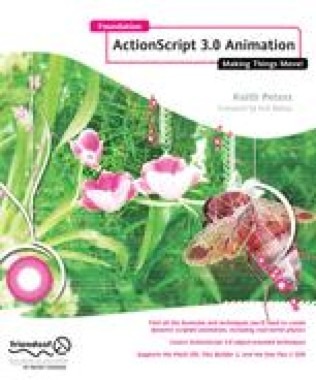
Foundation ActionScript 3 Animation : Making Things Move!
The material inside this book covers everything you need to know to harness the power of ActionScript 3.0. The book goes on to provide information on all the relevant trigonometry you will need, before moving on to physics concepts such as acceleration, velocity, easing, springs, collision detection, conservation of momentum, 3D, and forward and inverse kinematics.
Formal Techniques for Networked and Distributed Systems - FORTE 2008 ; 28th IFIP WG 6.1 International Conference Tokyo, Japan, June 10-13, 2008 Proceedings
This book constitutes the refereed proceedings of the 28th IFIP WG 6.1 International Conference on Formal Techniques for Networked and Distributed Systems, FORTE 2008, held in Tokyo, Japan, in June 2008 co-located with TestCom/FATES 2008.The 19 revised full papers and 1 revised short paper presented together with 1 invited talk were carefully reviewed and selected from 44 submissions. The papers cover new approaches, concepts and experience in the application of formal methods for the specification and verification of distributed systems and applications.
Formal Methods and Software Engineering ; Vol. 3785 ; 7th International Conference on Formal Engineering Methods, ICFEM 2005, Manchester, UK, November 1-4, 2005, Proceedings
This volume contains papers presented at the 7th International Conference on Formal Engineering Methods (ICFEM 2005), 1-4 November 2005, Manchester, UK. Formal engineering methods are changing the way that systems are dev- oped. With language and tool support, these methods are being used for se- automatic code generation, and for the automatic abstraction and checking of implementations. In the future, they will be used at every stage of development: requirements, speci?cation, design, implementation, testing, anddocumentation. The aim of ICFEM 2005 was to bring together those interested in the - plication of formal engineering methods to computer systems. Researchers and practitioners, from industry, academia, and government, were encouraged to - tend, and to help advance the state of the art. The conference was supported by sponsorships from Microsoft Research, USA, the Software Engineers Association of Japan, the University of Man- ester, Manchester City Council, FormalMethods Europe (FME) and the British Computer Society FormalAspects ofComputing Specialist Group(BCS-FACS). We wish to thank these sponsors for their generosity. The ?nal programme consisted of 3 invited talks and 30 technical papers selected from a total of 74 submissions. The invited speakers were: Anthony Hall, independent consultant, UK; Egon B] orger, University of Pisa, Italy; John Rushby, SRI, USA. Their talks were sponsored by BCS-FACS, Microsoft - search and FME respectively. We wish to thank the invited speakers for their inspiring talks.

Formal Methods and Software Engineering ; 10th International Conference on Formal Engineering Methods, ICFEM 2008, Kitakyushu-City, Japan, October 27-31, 2008. Proceedings
This book constitutes the refereed proceedings of the 10th International Conference on Formal Engineering Methods, ICFEM 2008, held in Kitakyushu-City, Japan, October 2008.The 20 revised full papers together with 3 invited talks presented were carefully reviewed and selected from 62 submissions. The papers address all current issues in formal methods and their applications in software engineering. They are organized in topical sections on specification and verification; testing; verification; model checking and analysis; tools; application of formal methods; semantics.
Forging New Frontiers : Fuzzy Pioneers I
The 2005 BISC International Special Event-BISCSE’05 " FORGING THE FRONTIERS" was held in the University of California, Berkeley, “WHERE FUZZY LOGIC BEGAN, from November 3 – 6, 2005. The successful applications of fuzzy logic and it’s rapid growth suggest that the impact of fuzzy logic will be felt increasingly in coming years. Fuzzy logic is likely to play an especially important role in science and engineering, but eventually its influence may extend much farther. In many ways, fuzzy logic represents a significant paradigm shift in the aims of computing - a shift which reflects the fact that the human mind, unlike present day computers, possesses a remarkable ability to store and process information which is pervasively imprecise, uncertain and lacking in categoricity.
