



Page 119
Page 119
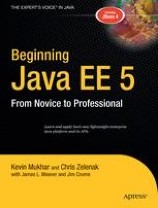
Beginning Java EE 5 : From novice to professional
Sun's new lightweight Java Enterprise Edition (EE) 5 is an extremely powerful platform for developing enterprise-level Java-based applications, primarily for the server. This book shows you how to harness that power, examining how the pieces of the new Java EE 5 platform fit together, including the redesigned annotations-driven EJB 3 spec as well as JavaServer Faces (JSF), integrated into the platform for the first time. Hands-on tutorials are also included, along with clear explanations and working code examples. You will grow to take the next step—from writing client-side desktop applications to writing enterprise applications. You will also learn how to use the individual APIs and tools in the Java EE 5 platform, and how to merge these to create your own enterprise applications.
Beginning Google Maps Applications with PHP and Ajax : From novice to professional
Until recently, building interactive web-based mapping applications has been a cumbersome affair. This changed when Google released its powerful Maps API. Beginning Google Maps Applications with PHP and Ajax was written to help you take advantage of this technology in your own endeavorswhether you're an enthusiast playing for fun or a professional building for profit. This book covers version 2 of the API, including Google's new Geocoding service. As well as providing hands-on examples of real mapping projects, this book supplies a complete reference for the Maps API, along with the relevant aspects of JavaScript, CSS, PHP, and SQL. Visit the authors' website for additional tips and advice.
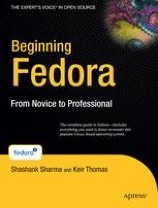
Beginning Fedora :From novice to professional
Beginning Fedora: From Novice to Professional guides you through the tasks most new Linux users desire to perform, while explaining potentially confusing concepts along the way. It will steer you through system customization opportunities and common tasks like listening to audio CDs and MP3s, watching movies, and performing office- and Internet-related jobs.
Beginning deep learning with TensorFlow : Work with Keras, MNIST data sets, and advanced neural networks
Stats with an introduction to AI, where you’ll learn the history of neural networks and what sets deep learning apart from other varieties of machine learning. Discovery the variety of deep learning frameworks and set-up a deep learning development environment. Next, you’ll jump into simple classification programs for hand-writing analysis. Once you’ve tackled the basics of deep learning, you move on to TensorFlow 2 specifically. Find out what exactly a Tensor is and how to work with MNIST datasets. Finally, you’ll get into the heavy lifting of programming neural networks and working with a wide variety of neural network types such as GANs and RNNs. Deep Learning is a new area of Machine Learning research widely used in popular applications, such as voice assistant and self-driving cars. Work through the hands-on material in this book and become a TensorFlow programmer! You will: Develop using deep learning algorithms Build deep learning models using TensorFlow 2 Create classification systems and other, practical deep learning applications
Beginning Databases with PostgreSQL : From novice to professional
The book continues with a complete tutorial on PostgreSQL features and functions and include information on database construction and administration. Key features such as transactions, stored procedures and triggers are covered, along with many of the capabilities new to version 8. To help you get started quickly, step-by-step instructions on installing PostgreSQL on Windows and Linux/UNIX systems are included. In the remainder of the book, we show you how to make the most of PostgreSQL features in your own applications using a wide range of programming languages, including C, Perl, PHP, Java and C#. Many example programs are presented in the book, and all are available for download from the Apress web site. By the end of the book you will be able to install, use, and effectively manage a PostgreSQL server, design and implement a database, and create and deploy your own database applications.
Beginning ASP.NET 2.0 Databases : From novice to professional
Beginning ASP.NET 2.0 Databases: From Novice to Professional is a comprehensive introduction to connecting a website to many different data sourcesnot just databases. You'll learn how to build a relational database, use SQL to communicate with it, and leverage both in your web applications. You'll also learn about the new features of ADO.NET and ASP.NET in .NET 2.0. The authors cover mission-critical issues, such as design, transactions, error handling, optimization, and scalability. They examine SQL Server, Jet, and MySQL databases, and highlight the differences among them.
Beginning ASP .NET 2.0 E-Commerce in C# 2005 : From novice to professional
This title enables readers to learn how to build a complete e-commerce web site, following the entire design and build process. The website will be constructed following industry best practices in a modular manner, with a new module introduced and completed in each chapter.
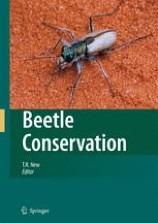
Beetle conservation
Interest in beetle conservation has long been evident, with many papers treating these abundant, ecologically important and popular insects. However, this issue of Journal of Insect Conservation is the first to be dedicated entirely to beetles, and contains a number of papers, predominantly from outside western Europe, to demonstrate the variety and scope of problems and conservation concerns that surround these insects. A short introductory perspective is followed by eight original contributions, in which beetles from many parts of the world are considered, and in which some major threats to their wellbeing are evaluated.
Becoming citizens in a changing world : IEA international civic and citizenship education study 2016 International Report
Presents the results from the second cycle of the IEA International Civic and Citizenship Education Study (ICCS 2016). Using data from 24 countries in Asia, Europe and Latin America, the study investigates the ways in which young people are prepared to undertake their roles as citizens in a range of countries in the second decade of the 21st century. It also responds to the enduring and emerging challenges of educating young people in a world where contexts of democracy and civic participation continue to change. New developments of this kind include the increase in the use of social media by young people as a tool for civic engagement, growing concerns about global threats and sustainable development, as well as the role of schools in fostering peaceful ways of interaction between young people. Besides enabling the evaluation of a wide range of aspects of civic and citizenship education, including those related to recent developments in a number of countries, the inclusion of test and questionnaire material from the first cycle of the study in 2009 allows the results from ICCS 2016 to be used to examine changes in civic knowledge, attitudes and engagement over seven years.

Bearing Witness : Ruth Harrison and British Farm Animal Welfare (1920–2000)
This book is the biography of one of Britain’s foremost animal welfare campaigners and of the world of activism, science, and politics she inhabited. In 1964, Ruth Harrison’s bestseller Animal Machines triggered a gear change in modern animal protection by popularising the term ‘factory farming’ alongside a new way of thinking about animal welfare.
Bayesian Networks and Decision Graphs
Probabilistic graphical models and decision graphs are powerful modeling tools for reasoning and decision making under uncertainty. As modeling languages they allow a natural specification of problem domains with inherent uncertainty, and from a computational perspective they support efficient algorithms for automatic construction and query answering. This includes belief updating, finding the most probable explanation for the observed evidence, detecting conflicts in the evidence entered into the network, determining optimal strategies, analyzing for relevance, and performing sensitivity analysis. The book introduces probabilistic graphical models and decision graphs, including Bayesian networks and influence diagrams.It contians two parts. The first part focuses on probabilistic graphical models. Compared with the previous book, the new edition also includes a thorough description of recent extensions to the Bayesian network modeling language, advances in exact and approximate belief updating algorithms, and methods for learning both the structure and the parameters of a Bayesian network. The second part deals with decision graphs, and in addition to the frameworks described in the previous edition, it also introduces Markov decision processes and partially ordered decision problems.

Bauhaus effects in art, architecture, and design
Bringing together an international team of scholars, this book offers new perspectives on the impact that the Bauhaus and its teaching had on a wide range of artistic practices.
Basic theoretical physics : A concise overview
This concise treatment embraces, in four parts, all the main aspects of theoretical physics (I . Mechanics and Basic Relativity, II. Electrodynamics and Aspects of Optics, III. Non-relativistic Quantum Mechanics, IV. Thermodynamics and Statistical Physics). It summarizes the material that every graduate student, physicist working in industry, or physics teacher should master during his or her degree course. It thus serves both as an excellent revision and preparation tool, and as a convenient reference source, covering the whole of theoretical physics. It may also be successfully employed to deepen its readers' insight and add new dimensions to their understanding of these fundamental concepts. Recent topics such as holography and quantum cryptography are included, thus making this a unique contribution to the learning material for theoretical physics.
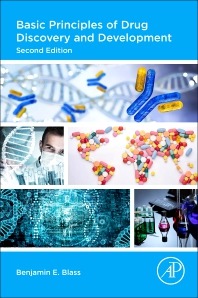
Basic principles of drug discovery and development ; 2nd ed.
Presents the multifaceted process of identifying a new drug in the modern era, which requires a multidisciplinary team approach with input from medicinal chemists, biologists, pharmacologists, drug metabolism experts, toxicologists, clinicians, and a host of experts from numerous additional fields. Enabling technologies such as high throughput screening, structure-based drug design, molecular modeling, pharmaceutical profiling, and translational medicine are critical to the successful development of marketable therapeutics. Given the wide range of disciplines and techniques that are required for cutting edge drug discovery and development, a scientist must master their own fields as well as have a fundamental understanding of their collaborator’s fields.
Basic perspective drawing : A visual approach
Introduces students, both those in formal design courses and self-learners, to the basic principles and techniques of perspective drawing. Clear and accessible illustrations show how to construct perspective views one step at a time. The new, streamlined Sixth Edition contains must-have content for students and instructors in art and design, architecture, and interior design programs. Updated illustrations reflect the most current drawing styles and examples while supplementary tutorial videos, grouped by architectural disciplines, interior design, and studio art/illustration, provide live-action demonstrations of key topics discussed in the book.

Basic immunology : Functions and disorders of the immune system
Includes recent important advances in our understanding and knowledge of the immune system. A student favorite through six outstanding editions, this new edition uses full-color illustrations and clinical images, useful tables, and practical features such as Summary Point boxes, end-of-chapter review questions, glossary terms, and clinical cases—all designed to help you master this complex topic in the most efficient, effective manner possible.

Basic guide to oral health education and promotion ; 3rd ed.
An essential guide to help dental nurses prepare for a qualification in Oral Health Education and thereafter practice as an Oral Health Educator. It will help readers confidently educate patients about diseases and conditions that affect the oral cavity, and support their prevention, treatment, and management. Offers a guide for dental nurses taking a post-registration Certificate in Oral Health Education Is fully updated to reflect changes in the industry, science, and course syllabus Incorporates information on the new classification of periodontal and peri-implant diseases Contains new information on topics including dementia, denture advice, and burning mouth syndrome Includes an expanded section on promotion

Basic guide to dental procedures
Basic Guide to Dental Procedures serves as essential overview of procedures for members of a practice team, whether in general or specialized practice. Readers of the third edition of Basic Guide to Dental Procedures will also find : A new chapter on treatment under conscious sedation, Additional and updated sections on subjects including dietary advice, vitality tests, implants. thermoplastic dentures, and more.
Basic bundle theory and K-Cohomology invariants
Based on several recent courses given to mathematical physics students, this volume is an introduction to bundle theory with the aim to provide newcomers to the field with solid foundations in topological K-theory. A fundamental theme, emphasized in the book, centers around the gluing of local bundle data related to bundles into a global object. One renewed motivation for studying this subject, which has developed for almost 50 years in many directions, comes from quantum field theory, especially string theory, where topological invariants play an important role.
Basic & Clinical Pharmacology
Covers the important concepts students need to know about the science of pharmacology and its application to clinical practice. This edition has been extensively updated to provide expanded coverage of transporters, pharmacogenomics, and new drugs Delivers the knowledge and insight needed to excel in every facet of pharmacology!. Encompasses all aspects of medical pharmacology, including botanicals and over-the-counter drugs Major revisions of the chapters on immunopharmacology, antiseizure, antipsychotic, antidepressant, antidiabetic, anti-inflammatory, and antiviral drugs, prostaglandins, and central nervous system neurotransmitters New chapter on the increasingly relevant topic of cannabis pharmacology Each chapter opens with a case study, covers drug groups and prototypes, and closes with summary tables and diagrams that encapsulate important information Revised full-color illustrations provide more information about drug mechanisms and effects and help clarify important concepts Trade Name/Generic Name tables are provided at end of each chapter for easy reference when writing a chart order or prescription Includes descriptions of important new drugs released through May 2019 New and updated coverage of general concepts relating to recently discovered receptors, receptor mechanisms, and drug transporters
