



Page 113
Page 113
Human–computer interaction ; International Workshop, HCI 2007 Rio de Janeiro, Brazil, October 20, 2007 Proceedings
Constitutes the refereed proceedings of the International Workshop on Human Computer Interaction, HCI 2007, held in Rio de Janeiro, Brazil, October 20, 2007. This book covers such topics as: Affective detection and recognition, Smart interfaces, Human motion tracking, Gesture recognition, and Multimedia data modeling and visualization.

Human-computer interaction : Interaction platforms and techniques ; 12th International Conference, HCI International 2007, Beijing, China, July 22-27, 2007, Proceedings, Part II
The 12th International Conference on Human-Computer Interaction, HCI Inter- tional 2007, was held in Beijing, P.R. This volume, edited by Julie A. Jacko, contains papers in the thematic area of Human-Computer Interaction, addressing the following major topics: • Graphical User Interfaces and Visualization • Mobile Devices and Mobile Interaction • Virtual Environments and 3D Interaction • Ubiquitous Interaction • Emerging Interactive Technologies.

Human-Computer Interaction : Interaction design and usability ; 12th International Conference, HCI International 2007, Beijing, China, July 22-27, 2007, Proceedings, Part I
The 12th International Conference on Human-Computer Interaction, HCI Inter- tional 2007, was held in Beijing, P.R. This volume, edited by Julie A. Jacko, contains papers in the thematic area of Human-Computer Interaction, addressing the following major topics: • Interaction Design: Theoretical Issues, Methods, Techniques and Practice • Usability and Evaluation Methods and Tools • Understanding Users and Contexts of Use • Models and Patterns in HCI

Human-computer interaction – INTERACT 2007 ; 11th IFIP TC 13 International Conference, Rio de Janeiro, Brazil, September 10-14, 2007, Proceedings, Part II
This book is part of a two-volume work that constitutes the refereed proceedings of the 11th IFIP TC13 International Conference on Human-Computer Interaction, INTERACT 2007, held in Rio de Janeiro, Brazil in September 2007. It covers tangible user interfaces and interaction; as well as software engineering and HCI.

Human-computer interaction – INTERACT 2007 ; 11th IFIP TC 13 International Conference, Rio de Janeiro, Brazil, September 10-14, 2007, Proceedings, Part I
The two volume set LNCS 4662 and LNCS 4663 constitutes the refereed proceedings of the 11th IFIP TC13 International Conference on Human-Computer Interaction, INTERACT 2007, held in Rio de Janeiro, Brazil, in September 2007.
Human-computer interaction – INTERACT 2005 ; IFIP TC 13 International Conference, Rome, Italy, September 12-16, 2005, Proceedings
We will be, sooner or later, not only handling personal computers but also mul- purpose cellular phones, complex personal digital assistants, devices that will be context-aware, and even wearable computers stitched to our clothes…we would like these personal systems to become transparent to the tasks they will be performing. In fact the best interface is an invisible one, one giving the user natural and fast access to the application he (or she) intends to be executed. The working group that organized this conference (the last of a long row!) tried to combine a powerful scientific program (with drastic refereeing) with an entertaining cultural program, so as to make your stay in Rome the most pleasant one all round: I do hope that this expectation becomes true. July 2005 Stefano Levialdi, IEEE Life Fellow INTERACT 2005 General Chairman [1] Peter J. Denning, ACM Communications, April 2005, vol. 48, N° 4, pp. 27-31. Editors’ Preface INTERACT is one of the most important conferences in the area of Human-Computer Interaction at the world-wide level. We believe that this edition, which for the first time takes place in a Southern European country, will strengthen this role, and that Rome, with its history and beautiful setting provides a very congenial atmosphere for this conference. The theme of INTERACT 2005 is Communicating Naturally with Computers.

Human-computer interaction - HCI Intelligent Multimodal interaction environments ; 12th International Conference, HCI International 2007, Beijing, China, July 22-27, 2007, Proceedings, Part III
The 12th International Conference on Human-Computer Interaction, HCI Inter- tional 2007, was held in Beijing, P.R. This volume, edited by Julie A. Jacko, contains papers in the thematic area of Human-Computer Interaction, addressing the following major topics: • Multimodality and Conversational Dialogue • Adaptive, Intelligent and Emotional User Interfaces • Gesture and Eye Gaze Recognition • Interactive TV and Media.

Human-computer interaction - HCI : Applications and services ; 12th International Conference, HCI International 2007, Beijing, China, July 22-27, 2007, Proceedings, Part IV
The 12th International Conference on Human-Computer Interaction, HCI Inter- tional 2007, was held in Beijing, P.R. This volume, edited by Julie A. Jacko, contains papers in the thematic area of - man-Computer Interaction, addressing the following major topics: • Business Applications • Learning and Entertainment • Health Applications • Work and Collaboration Support • Web-Based and Mobile Applications and Services • Advanced Design and Development Support.
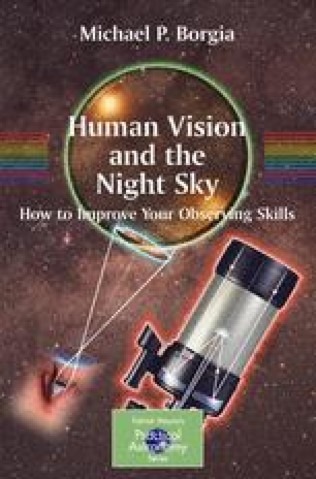
Human vision and the night sky : How to improve your observing skills
This book is not for beginners. Nor is it for experts – instead it addresses the needs of practical amateur astronomers who want to make the jump to the new challenges of serious visual observing. Second Steps in Observational Astronomy begins by teaching you, as an amateur astronomer, to use the most important tool you have: your eyes. Visual observing is very definitely a skill that can be learned. Of course it is important to have your other optical equipment – telescope and accessories – set up and operating as perfectly as possible. This book describes how. After these vital preliminaries, subsequent chapters include a series of observing challenges that will entertain you and push your observing skills to continually higher levels of excellence for years to come. Take a tour of the solar-system as you never viewed it before, then beyond into the realm of deep space – using just your own eyes to reveal more detail than you ever thought possible.

Human tooth and developmental dental defects : compositional and genetic implications
Focuses on the qualitative and quantitative properties of the sound enamel and dentin as well as the affected human tooth structures. It examines how genetics impact oral and dental health, the role of fluoride and trace elements in mineralization and the related clinical implications, and the impact of different approaches to diagnose and treat these developmental disorders.
Human origins and environmental backgrounds
Human Origins and Environmental Backgrounds is a benchmark compendium of research that presents itself at a major paradigm shift in paleoanthropology. The editors offer a variety of theoretical approaches to puzzles on the place of the Hominidae, particularly Homo sapiens, among the Primates, including our unique bipedal positional behavior and social structure and the selective factors that might have been involved in our evolution in the broad context of Miocene and later environments. The contributors represent several generations of pioneering laboratory and field researchers from Japan, France and the United States, who have worked together over the past 40 years and who have trained future leaders in evolutionary anthropology and experimental primatology. This volume, compiled by the leading experts in the field, explores the interface between hominid origins and palaeoenvironments.
Human motion : Understanding, modeling, capture and animation ; 2nd Workshop, HumanMotion 2007, Rio de Janeiro, Brazil, October 20, 2007, Proceedings
This LNCS volume contains the papers presented at the second Workshop on Human Motion Understanding, Modeling, Capture and Animation. The accepted papers re?ect the state of the art in the ?eld and cover various topicsrelatedto humanmotiontrackingandanalysis.Thepapersinthisvolume have been classi?ed into three categories based on the topics they cover: human motion capture and pose estimation, body and limb tracking and segmentation, and activity recognition.
Human Missions to Mars : Enabling Technologies for Exploring the Red Planet
In Human Missions to Mars Donald Rapp looks at human missions to Mars from an engineering perspective. He begins by describing the pros and cons of robotic exploration versus human exploration and then examines the ideas for sending humans to Mars from the point of view of both the enthusiast and the skeptic. Chapter 2 describes how space missions are planned and how they may be achieved as a sequence of separate steps. Chapter 3 deals with the complex issues relating to the outward journey to Mars and the return leg. The author deals with propulsion systems and with the analysis of the.

Human interface and the management of information : Methods, techniques and tools in information design ; Symposium on human interface 2007, Held as Part of HCI International 2007, Beijing, China, July 22-27, 2007, Proceedings, Part I
The 12th International Conference on Human-Computer Interaction, HCI Inter- tional 2007, was held in Beijing, P.R. This volume, edited by Michael J. Smith and Gavriel Salvendy, contains papers in the thematic area of Human Interface and the Management of Information, addressing the following major topics: • Design and Evaluation Methods and Techniques • Visualizing Information • Retrieval, Searching, Browsing and Navigation • Development Methods and Techniques • Advanced Interaction Technologies and Techniques.

Human interface and the management of information : Interacting in information environments ; Symposium on Human Interface 2007, Held as Part of HCI International 2007, Beijing, China, July 22-27, 2007, Proceedings, Part II
The 12th International Conference on Human-Computer Interaction, HCI Inter- tional 2007, was held in Beijing, P.R. This volume, edited by Michael J. Smith and Gavriel Salvendy, contains papers in the thematic area of Human Interface and the Management of Information, addressing the following major topics: • Communication and Collaboration • Knowledge, Learning and Education • Mobile Interaction • Interacting with the World Wide Web and Electronic Services • Business Management and Industrial Applications • Environment, Transportation and Safety.
Human Interaction with Machines ; Proceedings of the 6th International Workshop held at the Shanghai JiaoTong University, March 15-16, 2005
The International Workshop on “Human Interaction with Machines” is the sixth in a successful series of workshops that were established by Shanghai Jiao Tong University and Technische Universität Berlin. The goal of those workshops is to bring together researchers from both universities in order to present research results to an international community. The series of workshops started in 1990 with the International Workshop on “Artificial Intelligence” and was continued with the International Workshop on “Advanced Software Technology” in 1994.

Human factors and voice interactive systems
Human Factors and Voice Interactive Systems, Second Edition provides in-depth information on current topics of major interest to speech application developers, and updates material from chapters that appeared in the previous edition.

Human Exploitation and Biodiversity Conservation
The sustainable use of biodiversity is one of the three key objectives of the 1992 "Convention on Biological Diversity". To achieve this, sound conservation practice has to be recognized as beneficial and implemented by all who access, or use it – from subsistence farmers to skiers and pharmaceutical bioprospectors. At the same time, indigenous peoples necessarily utilize enormous numbers of plants, fungi, and fish, particularly for foods and medicines. This book gathers together a wide range of contributions addressing diverse aspects of front-line human involvement in biodiversity exploitation and conservation. Its scope is broad, the organisms explored ranging from birds, invertebrates and mammals – both terrestrial and aquatic – to crops and medicinal plants. Meanwhile, the issues addressed include land use changes, the importance of gardens, hedges and green lanes, housing developments, hunting, invasive species, local community involvement, sacred groves, socioeconomic factors and trade.

Human Cytomegalovirus
The golden age of cytomegalovirus research was ushered in during the late 1970s and early 1980s by a set of powerful new technologies that included restriction enzymes, DNA cloning, DNA sequencing, and open reading frame prediction. The genetic manipulation and propagation of novel CMV strains was accelerated with the app- cation of bacterial artificial chromosome technology. Today, we still struggle to understand the full spectrum of disease associated with human CMV. To the molecular biologist, CMV is a master of regulation in the eukaryotic cell where it either replicates or remains latent. To the immunologist, CMV is a master of immune evasion with tools to escape both the innate and acquired immune responses. The use of animal models with non-human CMVs has become significantly more sophisticated and tied to a more certain understanding of the interrelationships of non-human and human CMV genes.

Hugo and Russell's pharmaceutical microbiology
Microbiology is one of the essential pharmaceutical sciences upon which the study and practice of pharmacy is built. It has a bearing on all aspects of the manufacture of medicines and sterile products, from their design and development to their delivery as quality products. Few interventions are more central to modern medicine than the treatment of infection, where antibiosis, vaccination and hygienic practices have essential roles to play. The COVID-19 pandemic, the appearance of new pathogens and the rise of antibiotic resistance have demonstrated most completely the need for pharmaceutical practitioners, researchers and industrial scientists to be fully conversant with this field. The 9th edition of Hugo and Russell’s Pharmaceutical Microbiology has been updated to meet this need. Having long served as the sole comprehensive textbook covering this subject, it has now been adapted to a critical new period in the advancement of medical and pharmaceutical research and development. Its experienced editors have incorporated contributions from subject experts and created a text which will serve the next generation of pharmacy students, pharmaceutical industry scientists and researchers.
