



Page 104
Page 104

Aalto in Detail : A Catalogue of Components
Celebrates the rich detail in the work of Aino, Elissa, and Alvar Aalto. Every support, railing, and handle is the result of intensive formal and functional research. The authors document 50 Aalto buildings - some well-known and others less so - and arrange their photographs by component into 20 chapters. The result is a rich photographic record that will serve as a source of inspiration for every architect. From door handles to skylights: Aalto's infinite wealth of components Inspiring documentation with 400 systematically arranged photos Unconventionally detailed solutions with special attention paid to technical feasibility

A short guide to clinical pharmacokinetics
Consists of seven chapters that cover various aspects of pharmacokinetics and its clinical applications. The chapters are structured to provide clear objectives and keywords are bolded throughout the text to facilitate understanding. The topics covered include the significance of pharmacokinetics in clinical practice, factors affecting pharmacokinetic parameters, pharmacokinetic drug interactions, therapeutic drug monitoring, dosage adjustment in different population groups, the influence of hepatic diseases on pharmacokinetics and the impact of pharmacogenomics on pharmacokinetics and pharmacodynamics.
A Prodigy of Universal Genius : Robert Leslie Ellis, 1817-1859
Written by a diverse team of experts, the chapters in the book’s first part contain in-depth examinations of, among other things, Ellis’s family, education, Bacon scholarship and mathematical contributions. The second part consists of annotated transcriptions of a selection of Ellis’s diaries and correspondence. Taken together, A Prodigy of Universal Genius: Robert Leslie Ellis, 1817–1859 is a rich resource for historians of science, historians of mathematics and Victorian scholars alike.
A primer on theoretical soil mechanics
A Primer to Theoretical Soil Mechanics is about adapting continuum mechanics to granular materials. The field of continuum mechanics offers many fruitful concepts and methods, however there is declining interest in the field due to its complex and fragmented nature. This book's purpose is therefore to facilitate the understanding of the theoretical principles of soil mechanics, as well as introducing the new theory of barodesy.

A practical guide on behaviour change support for self-managing chronic disease
Developed under the auspices of the Train4Health project, funded by the Erasmus+ program of the European Union, the book contains six chapters written by international contributors from different disciplines. Chapter one introduces the competencies necessary for delivering effective behavior change support, based on an established program of work, and related learning outcomes. The four following chapters describe how these competencies can be acquired, focusing on concepts and theories, assessing self-management behaviors, implementing change strategies and person-centered communication, using a practical approach.

A Modern Approach to Intelligent Animation : Theory and Practice
Part of the new series, Advanced Topics in Science and Technology in China, this book discusses concepts, theory, and core technologies of intelligent theory and human animation, including video based human animation, and intelligent technology of motion data management and reusing. It introduces systems developed to demonstrate the technologies of video based animation. Each chapter is independent. Lively pictures and demos will be presented to make the theory and technologies more understandable.
A life cycle for clusters? : The dynamics of agglomeration, change, and adaption
The phenomenon of non-random spatial concentrations of firms in one or few related sectors (clusters) is intensively debated in economic theory and policy. The euphoria about successful clusters however neglects that historically, many thriving clusters did deteriorate into old industrial areas. This book studies the determinants of cluster survival by analyzing their adaptability to change in the economic environment. Linking theoretic knowledge with empirical observations, a simulation model (based in the N/K method) is developed, which explains when and why the cluster's architecture assists or hampers adaptability. It is found that architectures with intermediate degrees of division of labour and more collective governance forms foster adaptability. Cluster development is thus path dependent as architectures having evolved over time impact on the likelihood of future survival.

A Legacy for Living Systems : Gregory Bateson as Precursor to Biosemiotics
This book represents a major attempt to revise this deficiency. Scholars from ecology, biochemistry, evolutionary biology, cognitive science, anthropology and philosophy discuss how Bateson's thinking might lead to a fruitful reframing of central problems in modern science. Most important perhaps, Bateson's bioanthropology is shown to play a key role in developing the set of ideas explored in the new field of biosemiotics. The idea that organismic life is indeed basically semiotic or communicative lies at the heart of the biosemiotic approach to the study of life.The only book of its kind, this volume provides a key resource for the quickly-growing substratum of scholars in the biosciences, philosophy and medicine who are seeking an elegant new approach to exploring highly complex systems.
A History of Limb Amputation
This book traces humanity’s long experience of natural amputations due to congenital absence, disease, frostbite, toxins, domestic and wild animal trauma, and for non-medical reasons related to punitive, ritual, and legal actions, ultimately leading to the development of elective surgical amputation. While the evolution of surgical techniques forms a major chapter in the book, many ancillary problems are addressed including the control of hemorrhage and infection, the approach to pain relief, the development of suitable instruments and equipment, and the invention of prostheses, all suitably illuminated with case histories and relevant illustrations. In addition, alternative procedures designed to avoid amputation, increasingly important in the last two centuries, are debated, and factors associated with self-amputation in extremis, not rare according to press reports, are also examined. A separate chapter considers the philosophy and interpretations of society, patients, and surgeons faced with amputation, particularly before anesthesia.

A History of Atmospheric CO2 and Its Effects on Plants, Animals, and Ecosystems
The authors address the future role of atmospheric CO2 and its likely effects on ecosystems. This book incorporates the advances of various earth science, environmental, and ecological fields into an overall account of global change and the changing dynamics of life on Earth.

A Handbook of Sustainable Building Design and Engineering : An Integrated Approach to Energy, Health and Operational Performance
Equips students with the tools they will need to tackle the challenges of sustainable building design and engineering. The book looks at how to design, engineer and monitor energy efficient buildings, how to adapt buildings to climate change, and how to make buildings healthy, comfortable and secure. New material for this edition includes sections on environmental masterplanning, renewable technologies, retrofitting, passive house design, thermal comfort and indoor air quality. With chapters and case studies from a range of international, interdisciplinary authors, the book is essential reading for students and professionals in building engineering, environmental design, construction and architecture

A guide to dental sedation
This concise guide bridges the gap between classroom instruction and the actual application of various methods of sedation. The considerations for each dental specialty are covered, with special focus on pediatric and special needs patients. Chapters summarize the medications used in sedation, including dosages, warnings, and reversal agents, and sections on nitrous oxide discuss how to administer it without harm to the provider.

A guide to business mathematics
A guide to using metrics to manage and measure performance, and business economics. Foundations on algebra, number theory, sequences and series, matrix theory and calculus are included as is a complete chapter on using software.
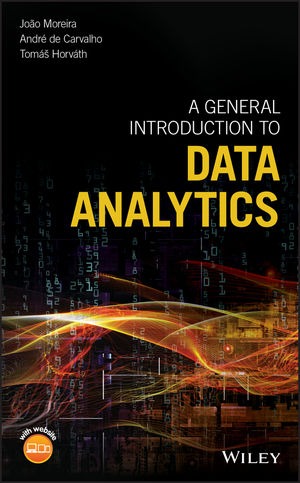
A General introduction to data analytics
A guide to the principles and methods of data analysis that does not require knowledge of statistics or programming. A guide to the reasoning behind data mining techniques. A unique illustrative example that extends throughout all the chapters. Exercises at the end of each chapter and larger projects at the end of each of the text’s two main parts
A First Course in Statistical Inference
Offers a modern and accessible introduction to Statistical Inference, the science of inferring key information from data. Aimed at beginning undergraduate students in mathematics, it presents the concepts underpinning frequentist statistical theory. Written in a conversational and informal style, this concise text concentrates on ideas and concepts, with key theorems stated and proved. Detailed worked examples are included and each chapter ends with a set of exercises, with full solutions given at the back of the book. Examples using R are provided throughout the book, with a brief guide to the software included. Topics covered in the book include: sampling distributions, properties of estimators, confidence intervals, hypothesis testing, ANOVA, and fitting a straight line to paired data.

A First Course in Harmonic Analysis
This book is a primer in harmonic analysis using an elementary approach. Its first aim is to provide an introduction to Fourier analysis, leading up to the Poisson Summation Formula. Secondly, it makes the reader aware of the fact that both, the Fourier series and the Fourier transform, are special cases of a more general theory arising in the context of locally compact abelian groups. The third goal of this book is to introduce the reader to the techniques used in harmonic analysis of noncommutative groups. There are two new chapters in this new edition. One on distributions will complete the set of real variable methods introduced in the first part. The other on the Heisenberg Group provides an example of a group that is neither compact nor abelian, yet is simple enough to easily deduce the Plancherel Theorem.

A Field Guide to Algebra
Focuses on the structure of fields and is intended for a second course in abstract algebra. Besides providing proofs of the transcendance of pi and e, the book includes material on differential Galois groups and a proof of Hilbert's irreducibility theorem. The reader will hear about equations, both polynomial and differential, and about the algebraic structure of their solutions. In explaining these concepts, the author also provides comments on their historical development and leads the reader along many interesting paths. In addition, there are theorems from analysis: as stated before, the transcendence of the numbers pi and e, the fact that the complex numbers form an algebraically closed field, and also Puiseux's theorem that shows how one can parametrize the roots of polynomial equations, the coefficients of which are allowed to vary. There are exercises at the end of each chapter, varying in degree from easy to difficult. To make the book more lively, the author has incorporated pictures from the history of mathematics, including scans of mathematical stamps and pictures of mathematicians.
A Course in Derivative Securities : Introduction to Theory and Computation
Aims at a middle ground between the introductory books on derivative securities and those that provide advanced mathematical treatments. It is written for mathematically capable students who have not necessarily had prior exposure to probability theory, stochastic calculus, or computer programming. It provides derivations of pricing and hedging formulas (using the probabilistic change of numeraire technique) for standard options, exchange options, options on forwards and futures, quanto options, exotic options, caps, floors and swaptions, as well as VBA code implementing the formulas. It also contains an introduction to Monte Carlo, binomial models, and finite-difference methods.
A Course in Credibility Theory and its Applications
It covers the subject of Credibility Theory extensively and includes most aspects of this topic from the simplest case to the most general dynamic model. The first four chapters contain plenty of material The book therefore treats explicitly the tasks which the actuary encounters in his daily work such as estimation of loss ratios, claim frequencies and claim sizes. The models are worked out in detail (including the estimation of structural parameters) so that they can immediately be applied in practice. Most exercises are based on real insurance data and real situations from practice and many of them have the characteristics of a case study. The extension to practical problems arising from the general area of finance is often quite straightforward. This book deserves a place on the bookshelf of every actuary and mathematician who works, teaches or does research in the area of insurance and finance.for a first course on Credibility.

A Contingency-Based View of Chief Executive Officers' Early Warning Behaviour : An Empirical Analysis of German Medium-Sized Companies
Organizations need to identify risks and chances of environmental changes in order to adapt to or possibly even to influence them. Early warning which comprises scanning and interpretation plays an important role in this process. Whereas the traditional contingency approach considers early warning as a part of the organizational structure, the extended contingency theory assumes the additional influence of an individual’s personality on early warning. Andreas Kirschkamp empirically analyses the early warning behavior of Chief Executive Officers in German medium-sized companies. First, he presents the design variables of early warning, then the influencing contingency variables. On the basis of the scholarly research on psychological and contingency theory, the author deduces hypotheses and tests them. The results show that early warning behavior is not only influenced by traditional contingency variables but also by personal attitudes.
