



Page 10
Page 10

Earthquakes : Simulations, Sources and Tsunamis
This book includes a variety of studies that focus on the modeling of tsunamis and earthquakes, both large-scale simulation and visualization programs, as well as detailed models of small-scale features. Particular attention is paid to computational techniques, languages, and hardware that can be used to facilitate data analysis, visualization, and modeling. Also included are studies of several earthquake forecasting techniques and associated comparisons of their results with historic earthquake data. Finally, the volume ends with theoretical analyses of statistical properties of seismicity by internationally recognized experts in the field. This volume will be of particular interest to researchers interested in the multiscale simulation and visualization of large earthquakes and tsunamis.

Dynamical Systems : Examples of Complex Behaviour
Our aim is to introduce, explain, and discuss the fundamental problems, ideas, concepts, results, and methods of the theory of dynamical systems and to show how they can be used in specific examples. Itis also important to find out when a certain dynamic behavior is stable under small perturbations, as well as to understand the various scenarios of instability. Finally, an essential aspect of a dynamic evolution is the transformation of some given initial state into some final or asymptotic state as time proceeds. The temporal evolution of a dynamical system maybe continuous or discrete, but it turns out that many of the concepts to be introduced a reuseful in either case.

Drug safety evaluation
Presents an all-inclusive practical guide for those who are responsible for developing new drugs and ensuring the safety of an ever-expanding spectrum of therapeutics. This book helps readers understand how the safety of these products are evaluated for use. Extensively revised to reflect up-to-date information, this edition includes changes to the scope of products (vaccines, small synthetic, large protein moieties, cells and tissues), harmonized global and national regulatory requirements, the therapeutic development process, and available technologies to identify and evaluate the relevance of potential patient risks

Drug development for rare diseases
A disease is defined as rare if the prevalence is fewer than 200,000 in the United States. It is estimated that there are more than 7,000 rare diseases, which collectively affect 30 million Americans or 10% of the US population. This diverse and complex disease area poses challenges for patients, caregivers, regulators, drug developers, and other stakeholders. This book is proposed to give an overview of the common issues facing rare disease drug developers, summarize challenges specific to clinical development in small populations, discuss drug development strategies in the evolving regulatory environment, explain generation and utilization of different data and evidence

Drug delivery trends ; Vol. 3 : Expectations and realities of multifunctional drug delivery systems
Examines a drift in the pharmaceutical field across the wide range of dosage forms, drug delivery systems (micro and nanoparticulate), at the regulatory front and on new types of therapies in the market. This book covers the challenges on drug delivery systems in terms of preclinical and current ways of determining quality and the options to solve the challenges associated with this. Most small-medium scale industries and academics struggle with initial regulatory challenges so a detailed discussion on regulatory trend covers the necessary basic understanding of regulatory procedures and provides the required guidance.

Drones and the Creative Industry : Innovative Strategies for European SMEs
Presents innovative strategies in the use of civil drones in the cultural and creative industry. Specially aimed at small and medium-sized enterprises (SMEs), the book offers valuable insights from the fields of marketing, engineering, arts and management. With contributions from experts representing varied interests throughout the creative industry, including academic researchers, software developers and engineers, it analyzes the needs of the creative industry when using civil drones both outdoors and indoors. The book also provides timely recommendations to the industry, as well as guidance for academics and policymakers.

Double Balloon Endoscopy : Theory and Practice
The chapters of this book describe the principles, insertion technique, and clinical applications of double-balloon endoscopy, which will become the gold standard of enteroscopy and may well eliminate the need for intraoperative enteroscopy in many patients.

Distributed Services with OpenAFS : For Enterprise and Education
This book shows in detail how to build enterprise-level secure, redundant, and highly scalable services from scratch on top of the open source Linux operating system, suitable for small companies as well as big universities. The core architecture presented is based on Kerberos, LDAP, AFS, and Samba. It is shown how to integrate web, message related, data base and other services with this backbone. This architecture provides a Single-Sign-On solution for different client platforms and can also be employed for clustering. Although it is implemented with Debian GNU/Linux, the content can be applied to other UNIX flavors.

Diseases of the Pancreas : Current Surgical Therapy
"Diseases of the Pancreas" is based on the latest comprehensive data about molecular mechanism of acute pancreatitis, chronic pancreatitis and pancreatic cancer. The diagnostic techniques including histology, radiology, sonography etc.

Digital Towns : Accelerating and Measuring the Digital Transformation of Rural Societies and Economies
This book explores the digital transformation of small and rural towns, in particular, how to measure the evolution and development of digital towns. In addition to access to resources, competition from urban and global markets, and population trends, rural communities present lesser access and use of digital technologies and have lower digital competencies and skills than their urban counterparts. Consequently, they experience less beneficial outcomes from increased digitalisation than urban areas. This book defines what a digital town is and explores digitalisation from the perspective of the four basic economic sectors in towns - individuals and households, businesses, the public sector, and civil society - and three types of enabling infrastructure - digital connectivity, education, and governance.

Digital Peripheries : The Online Circulation of Audiovisual Content from the Small Market Perspective
This is book. Media industry research and EU policymaking are predominantly tailored to large (and, in the latter case, Western) European markets. This open access book addresses the specific qualities of smaller media markets, highlighting their vulnerability to global digital competition and outlining survival strategies for them.

Digital economies at global margins
Investigations of what increasing digital connectivity and the digitalization of the economy mean for people and places at the world's economic margins. Within the last decade, more than one billion people became new Internet users. Once, digital connectivity was confined to economically prosperous parts of the world; now Internet users make up a majority of the world's population. In this book, contributors from a range of disciplines and locations investigate the impact of increased digital connectivity on people and places at the world's economic margins.

Difference Equations : From Rabbits to Chaos
Difference equations are models of the world around us. From clocks to computers to chromosomes, processing discrete objects in discrete steps is a common theme. Difference equations arise naturally from such discrete descriptions and allow us to pose and answer such questions as: How much? How many? How long? Difference equations are a necessary part of the mathematical repertoire of all modern scientists and engineers.The book cover the basics of difference equations and some of their applications in computing and in population biology. Each chapter leads to techniques that can be applied by hand to small examples or programmed for larger problems. Along the way, the reader will use linear algebra and graph theory, develop formal power series, solve combinatorial problems, visit Perron—Frobenius theory, discuss pseudorandom number generation and integer factorization, and apply the Fast Fourier Transform to multiply polynomials quickly.

Dialogue as a Collective Means of Design Conversation
Dialogue as a Collective Means of Design Conversation is the second volume edited by Patrick M. Jenlink and Bela H. Banathy to offer a cross-disciplinary approach to examining dialogue as a communicative medium. In this Compendium, the contributing authors set forth their ideas, experiences, and perspectives as the path of a learning journey—a journey of new meaning, of new understanding, and of becoming self-aware of design conversation as future creating and consciousness evolving. In particular, this volume comes at a time when we as a global society are faced with the question of how we shape our actions and in turn shape our future, through conversation that is focused on resolving global conflict and fostering world peace. The volume evokes in the reader a realization that our greatest potential rests, in no small measure, with our collective capacity for cultural creativity and in our capacity to achieve new levels of consciousness through dialogue and design conversation.
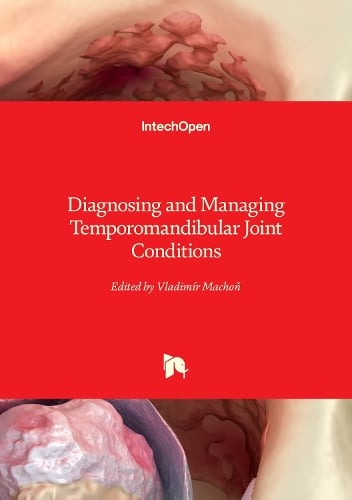
Diagnosing and managing temporomandibular joint conditions
Aims to contribute to current knowledge in diagnosing and managing temporomandibular joint (TMJ) disease. Individual chapters cover imaging techniques, myofascial pain, minimally invasive techniques, and operative arthroscopy. The book includes two chapters on condylar head changes regarding condylar resorption and condylar hyperplasia. The book concludes with the issues of TMJ reconstruction with total joint replacement. This book is intended for dentists, oral surgeons, maxillofacial surgeons, ENT physicians, students, and anyone interested in TMJ disease.

Developing Organogel of CoEnzyme Q10
Coenzyme Q10 is a small lipophilic molecule composed of a benzoquinone ring and a hydrophobic isoprenoid tail and is present in all cell membranes. It is also an antioxidant. It plays a substantial role in energy production by acting as a mobile electron carrier in the electron transport chain. It has poor intestinal absorption and is prepared in topical forms. Organogel is a non-crystalline, non-glassy thermoreversible (thermoplastic) solid material and viscoelastic system can be regarded as a semi-solid preparation which has an immobilized external apolar phase, it is compatible with high molecular weight ingredients. The objective of present work is to prepare new dosage form with studying of different factors and conditions affecting preparation. Materials and methods: stearic acid and Flaxseed oil organogel was prepared by three methods and confirmed by quality assessment methods including: transparency, structure analysis, inverted tube test, kinetic of organogalation and stability test.

Developing Ambient Intelligence ; Proceedings of the International Conference on Ambient Intelligence Developments (AmI.d’07)
The research papers included in the AmI.d proceedings are devoted to both theoretical and applied research, cover the most leading-edge research and contain contributions that have been formally reviewed and chosen by a selected International Program Committee. The contributions cover a wide range of AmI topics.

Detection and Disposal of Improvised Explosives
It including: Methods of detection of Improvised Explosives (IE). Methods of detection of Improvised explosives devices (IED). Disposal and safe handling of ID and IED. The treatment of detection methods may be divided in the following groups: Overview about the different methods; Trace- and vapor detection; Electromagnetic methods; Neutron methods; Laser techniques. Because of different definitions of Improvised Explosives the parti- pants of the workshop agreed after some discussions with the following definition: An Improvised Explosive (IE) can be any chemical compound or mixture capable of an explosive reaction. They are normally easily prepared by a knowledgeable layman under simple conditions. Components of IE are typically inorganic salts containing molecular bound oxygen like nitrates, chlorates or perchlorates etc. or organic compounds with nitro-, nitami- or nitrate-groups or peroxides. Admixtures of military or commercial explosive materials are also used. From the chemical point of view IE can be divided into the following types: Salts containing chemical groups with oxygen (like nitrates, chlorates or perchlorates etc.) in mixtures with combustible substances like carbon-hydrogen compounds.

Designing sustainable and resilient cities : Small interventions for stronger urban food-water-energy management
Explores the link between the food-water-energy nexus and sustainability, and the extraordinary value that small tweaks to this nexus can achieve for more resilient cities and communities. Using data from Urban Living Labs in six participating cities (Eindhoven, Gdansk, Miami, Southend-on-Sea, Taipei and Uppsala) to co-define context-specific challenges, the results from each city are collated into an Integrated Decision Support System to guide and improve robust decision making on future urban development. The book presents contributions from CRUNCH, a transdisciplinary team of scholars and practitioners whose expertise spans urban climate modelling; food, water and energy management; the design of resilient public space; collecting better urban data; and the development of smart city technology. Whilst previous works on the food-water-energy nexus have focused on large, transnational cases, this book explores local ways to use the food-water-energy nexus to improve urban resilience.

Designing a world-class architecture firm : The people, stories, and strategies behind HOK
Offers exclusive insights into the revolutionary strategies behind one of the top ten largest architecture firms in the world. Written with dashes of memoir by the former CEO, Patrick MacLeamy, this book offers practicing architecture professionals in small to mid-sized firms and other design professionals such as interior designers and urban planners with detailed guidance for reinvigorating company culture, establishing financial metrics, attracting and retaining talent, diversifying services and firm expansion. This book is flavored with dozens of quirky stories from MacLeamy's time at the helm of HOK, and while it is not a design book - MacLeamy offers insights into many of HOK's most iconic projects, including: Smithsonian National Air and Space Museum in Washington, D.C., Oriole Park at Camden Yards in Baltimore, MD, and more
