




Iberian World Empires and the Globalization of Europe 1415–1668
This book analyses Iberian expansion by using knowledge accumulated in recent years to test some of the most important theories regarding Europe’s economic development. Adopting a comparative perspective, it considers the impact of early globalization on Iberian and Western European institutions, social development and political economies. This book finds its impact decisive for institutional development, political economies, and processes of state-building in Iberia and Europe. The book engages current historiographies and revindicates the need to take the concept of composite monarchies as a point of departure in order to understand the period’s economic and social developments, analysing the institutions and societies resulting from contact with Iberian peoples in America and Asia. The outcome is a study that nuances and contests an excessively-negative yet prevalent image of the Iberian societies, explores the difficult relationship between empires and globalization and opens paths for comparisons to other imperial formations.
Related Books

No Truth Without Beauty : God, the Qur’an, and Women's Rights
In this comprehensive book, written for readers from any or no religious background, Leena El-Ali does something remarkable. Never before has anyone taken on every last claim relating to Islam and women and countered it not just with Qur’anic evidence to the contrary, but with easy-to-use tools available to all.
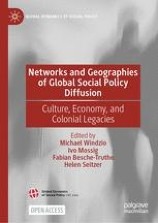
Networks and Geographies of Global Social Policy Diffusion : Culture, Economy, and Colonial Legacies
This book analyses the global diffusion of social policy as a process driven by multiplex ties between countries in global social networks. The contributions analyze links between countries via global trade, colonial history, similarity in culture, and spatial proximity. Networks are viewed as the structural backbone of the diffusion process, and diffusion is anlaysed via several subfields of social policy, in order to interrogate which network dimensions drive this process.

Neighbourhoods in Transition : Brownfield Regeneration in European Metropolitan Areas
This book is focused on the intersection between urban brownfields and the sustainability transitions of metreopolitan areas, cities and neighbourhoods. It provides both a theoretical and practical approach to the topic, offering a thorough introduction to urban brownfields and regeneration projects as well as an operational monitoring tool.
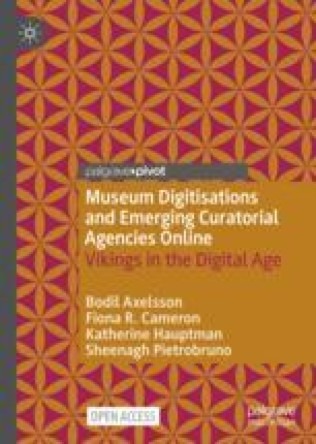
Museum Digitisations and Emerging Curatorial Agencies Online : Vikings in the Digital Age
This book explores the multiple forms of curatorial agencies that develop when museum collection digitisations, narratives and new research findings circulate online. Focusing on Viking Age objects, it tracks the effects of antagonistic debates on discussion forums and the consequences of search engines, personalisation, and machine learning on American-based online platforms. Furthermore, it considers eco-systemic processes comprising computation, rare-earth minerals, electrical currents and data centres and cables as novel forms of curatorial actions.
