



Page 1
Page 1

Nonunion of the Long Bones : Diagnosis and treatment with compression-distraction techniques
The primary purpose of this book is to discuss currently available tools for diagnosing long bone nonunions, to illustrate the means of prevention, and to specify the indications for management using compression-distraction techniques.
Integrated Procedures in Facial Cosmetic Surgery
Integrated Procedures in Facial Cosmetic Surgery includes chapters that focus on facial analysis and clinical evaluation and best practices in surgical techniques such as: principles of bone contouring; genioplasty; mentoplasty; malarplasty; rhinoplasty; orthognatic surgery and intra-oral plastic surgery; lifting procedures like blepharoplasty; surgical approaches to cleft lip and palate surgery; as well as the principles of facial photography.

Imaging of the Shoulder : Techniques and Applications
This volume covers the broad spectrum of imaging methods and abnormalities of relevance in the diagnostic workup of the shoulder. In the first part of the book, individual chapters are devoted to radiography, arthrography, computed tomography and CT arthrography, magnetic resonance imaging and MR arthrography, ultrasound and interventional procedures. The second part of the book then documents the application of these techniques to each of the clinical problems and diseases encountered in the shoulder. The authors are all experts in their field and include rising stars of musculoskeletal radiology.

Fundamentals of Implant Dentistry : Vol.2: Surgical Principles
Significant improvements have been achieved in patient evaluation, methods used to enhance the bone and soft tissues of potential implant sites, and surgical techniques to prepare the osteotomy sites and place the implants. In particular, CBCT scans and associated software planning programs now enable the implant team to analyze the bone sites in three dimensions in relation to the proposed contours of the implant-retained prosthesis; select implants of suitable diameter, length, and configuration; position them virtually in ideal locations; and fabricate surgical templates that enable surgeons to prepare the osteotomy sites and place the implants with great precision.

Forefoot Reconstruction
For a long time, forefoot surgery had many disadvantages including a painful postoperative period and recurrence of deformities. New techniques – notably Scarf, the first metatarsal osteotomy and the Weil osteotomy of the lesser metatarsal – provide a significant improvement in the treatment of static forefoot disorders. The great toe osteotomy has also been greatly improved. Since 1991, the author has introduced these techniques in many countries, while developing and studying the corresponding implants and the postoperative period. He has also developed surgical management techniques that bridge these different osteotomies. More than 1000 surgeons around the world are using these techniques, which are now widely taught. In this second edition of the book the general presentation is clearer and more pleasant and many pictures have been replaced. Several topics are emphasized, notably the great toe proximal phalanx osteotomy, the joint preservative surgery in severe forefoot disorders, including revision after failed bunionectomy and rheumatoid forefoot following the "ms” point for an accurate and effective metatarsal shortening. Lastly, new procedures are exposed, particularly in Claw toe and hammer with the PIP plantar release and the surgery of the middle phalanx and also the Weil osteotomy of the first metatarsal in hallux limitus.
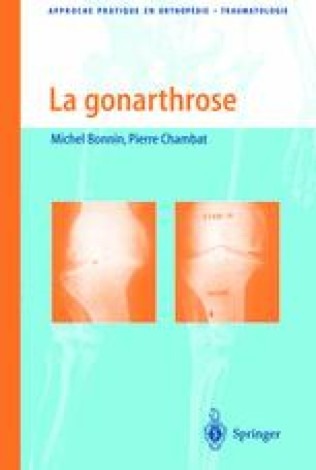
La gonarthrose : Traitement chirurgical : De l´arthroscopie à la prothèse = Knee osteoarthritis : Surgical treatment : from arthroscopy to prosthesis
The aim of this work is to take stock in a clear and didactic way on all the current knowledge on osteoarthritis of the knee and its treatment. It successively addresses the diagnosis and the medical treatment, then the surgical treatments then finally the various aspects of the total knee prosthesis. This book is designed to be read at several levels: basic information is intended particularly for non-specialist or trainee surgeons, rheumatologists, rehabilitation physicians, radiologists and physiotherapists. More specialized aspects are discussed in a second part of the book concerning the future of medical treatment (biology, gene therapy) and certain complex problems of surgical techniques. The points of controversy concerning the total knee replacement are discussed in the last part of the book, of interest to physicians and surgeons.

Clinical Maxillary Sinus Elevation Surgery
Dr. Kao and a team of experts begin by discussing anatomy, radiographic image applications and limitations, and then provide step-by-step clinical procedures for the lateral window technique, including piezosurgery, and the trans-alveolar methods, including balloon and controlled hydostatic sinus elevation. Also included are chapters on post-operative care and complication management.
Cartilage Repair Strategies
Cartilage Repair Strategies is a comprehensive update of the present state of cartilage repair and regeneration. The information in this volume addresses what methods are effective, what methods are safe, and what methods will lead to an alteration in the short history of articular cartilage injury repair. Contributors present examinations of a variety of topics including the structure and function of articular cartilage, the evaluation of cartilage repair techniques, and the latest cartilage sensitive imaging techniques.
