



Page 1
Page 1

Myosins : A Superfamily of Molecular Motors
Application of state-of-the-art cellular and molecular biological, structural biological, genetic, biochemical and biophysical techniques has provided and continues to provide critical information regarding the structure–function relationship; and the cellular roles of various myosins in organisms as diverse as protozoa, yeast, plants and higher animals. The association of myosins with diseases including neurological disorders, immu- deficiencies, cardiomyopathies, hearing and vision loss testify to the importance of understanding the biochemical properties and cellular roles of myosins. The 16 chapters in this volume summarize the tremendous progress made in studying members of the myosin superfamily in recent years and offer critical insight into what future research will yield.

Imaging Cellular and Molecular Biological Functions
Imaging cellular and molecular biological function’ provides a unique selection of essays by leading experts, aiming at scientist and student alike who are interested in all aspects of modern imaging, from its application and up-scaling to its development. Indeed the philosophy of this volume is to provide student, researcher, PI, professional or provost the means to enter this applications field with confidence, and to construct the means to answer their own specific questions.

Mathematical Modeling of Complex Biological Systems : A Kinetic Theory Approach
Describes the evolution of several socio-biological systems using mathematical kinetic theory. Specifically, it deals with modeling and simulations of biological systems—comprised of large populations of interacting cells—whose dynamics follow the rules of mechanics as well as rules governed by their own ability to organize movement and biological functions. The authors propose a new biological model for the analysis of competition between cells of an aggressive host and cells of a corresponding immune system.Because the microscopic description of a biological system is far more complex than that of a physical system of inert matter, a higher level of analysis is needed to deal with such complexity. Mathematical models using kinetic theory may represent a way to deal with such complexity, allowing for an understanding of phenomena of nonequilibrium statistical mechanics not described by the traditional macroscopic approach. The proposed models are related to the generalized Boltzmann equation and describe the population dynamics of several interacting elements (kinetic population models).The particular models proposed by the authors are based on a framework related to a system of integro-differential equations, defining the evolution of the distribution function over the microscopic state of each element in a given system. Macroscopic information on the behavior of the system is obtained from suitable moments of the distribution function over the microscopic states of the elements involved.

Carotenoids ; Vol.4 : Natural Functions
The Carotenoids book series provides detailed accounts of the fundamental chemistry of carotenoids and the basic methods used in carotenoid research, and critical discussions of the biochemistry, functions and applications of these important compounds. Volume 4 and its companion, Volume 5, deal with the functions of carotenoids in all kinds of living organisms and the actions of carotenoids in human nutrition and health. The material presented in the earlier Volumes is all relevant to studies of biological functions and actions. In particular, biological studies must be supported by a rigorous analytical base. The various analytical procedures described in Volumes 1A and 1B, supplemented by the data for individual compounds given in the Carotenoids Handbook, must be understood and applied correctly, whether they are being used for quantitative analysis, identification or in complex studies of carotenoids in situ.

Calcium in Human Health
Calcium performs diverse biological functions in the human body and is a micronutrient essential to human health and well-being. It serves as a second messenger for nearly every biological process, stabilizes many proteins, and in deficient amounts is associated with a large number diseases and disorders. In Calcium in Human Health, a panel of highly respected researchers and clinical practitioners comprehensively reviews the state of our knowledge concerning this ubiquitous micronutrient, not only demonstrating its importance to human health, but also defining its many complex roles.
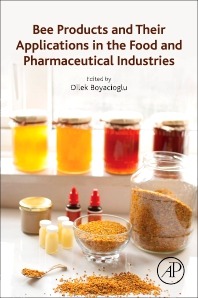
Bee products and their applications in the food and pharmaceutical industries ; 1st ed.
Focuses on the health benefits of selected bee products by looking more closely at their pharmacological potentials and therapeutic applications in coping with various diseases. The book explores some of these products, such as royal jelly, propolis and bee venom, which is highly attractive to the food supplement sector due to the biological actions that are proved by scientific studies. Bee products also attract the cosmetics industry by utilizing those products in various applications such as hair products, toothpaste, sunscreen creams, lip balsams, or facial moisturizing creams. Each chapter focuses on a particular health benefit, providing more compact and detailed information about each activity for a specific interest. The mainframe of the book is based on the medicinal and pharmacological functions of bee products, with the therapeutic applications for each bee product supporting the mechanism of action of their biological functions.

Bee products : Chemical and biological properties
Presents an updated discussion on the chemical composition and biological properties of the main bee products, which until now have been presented separately in different editions This book scoops out studies about bee products most used in marketing and in traditional medicine such as honey, royal jelly, propolis, bee pollen and bee venom Discusses chemical composition and biological function of the different bee products on topics such as nutrition, aging and age-related diseases, cancer, neurodegenerative diseases and pathogen infections Bee products are rich in several essential nutrients and non essential nutrients, as sugars, minerals, proteins, free amino acids, vitamins, enzymes and polyphenols, that seem to be closely related to their biological functions. The effects of these products in nutrition, aging and age-related diseases, cancer, neurodegenerative diseases and pathogen infections are discussed.

Artificial neural networks : Biological Inspirations – ICANN 2005 ; 15th International Conference, Warsaw, Poland, September 11-15, 2005, Proceedings, Part I
The two volume set LNCS 3696 and LNCS 3697 constitutes the refereed proceedings of the 15th International Conference on Artificial Neural Networks, ICANN 2005, held in Warsaw, Poland in September 2005. The over 600 papers submitted to ICANN 2005 were thoroughly reviewed and carefully selected for presentation. The first volume includes 106 contributions related to Biological Inspirations; topics addressed are modeling the brain and cognitive functions, development of cognitive powers in embodied systems spiking neural networks, associative memory models, models of biological functions, projects in the area of neuroIT, evolutionary and other biological inspirations, self-organizing maps and their applications, computer vision, face recognition and detection, sound and speech recognition, bioinformatics, biomedical applications, and information- theoretic concepts in biomedical data analysis.

Algorithms in Bioinformatics : Theory and Implementation
Explores a comprehensive and insightful treatment of the practical application of bioinformatic algorithms in a variety of fields. Delivers a fulsome treatment of some of the main algorithms used to explain biological functions and relationships. It introduces readers to the art of algorithms in a practical manner which is linked with biological theory and interpretation. The book covers many key areas of bioinformatics, including global and local sequence alignment, forced alignment, detection of motifs, Sequence logos, Markov chains or information entropy. Other novel approaches are also described, such as Self-Sequence alignment, Objective Digital Stains (ODSs) or Spectral Forecast and the Discrete Probability Detector (DPD) algorithm. Readers will also benefit from the inclusion of: A detailed presentation of new methods, such as Self-sequence alignment, Objective Digital Stains and Spectral Forecast ; A treatment of sequence alignment, including local sequence alignment, global sequence alignment and forced sequence alignment with full implementations ; Discussions of position-specific weight matrices, including the count, weight, relative frequencies, and log-likelihoods matrices ; A detailed presentation of the methods related to Markov Chains as well as a description of their implementation in Bioinformatics and adjacent fields ; An examination of information and entropy, including sequence logos and explanations related to their meaning ; A chapter on philosophical transactions that allows the reader a broader view of the prediction process ; Extensive worked examples with detailed case studies that point out the meaning of different results
