



Page 7
Page 7

Knowledge Integration : The Practice of Knowledge Management in Small and Medium Enterprises
The ability to manage knowledge is relevant for millions of small and medium sized enterprises (SMEs) that operate in high-tech environments. They strongly depend on external knowledge about customers, technologies, and competitors because, as opposed to large companies, they have limited internal knowledge resources and little power to control their business environments.
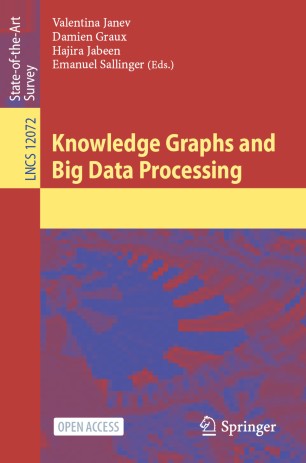
Knowledge graphs and big data processing
This book is part of the LAMBDA Project (Learning, Applying, Multiplying Big Data Analytics), funded by the European Union, GA No. 809965. Data Analytics involves applying algorithmic processes to derive insights.

Knowledge Enterprise : Intelligent Strategies in Product Design, Manufacturing, and Management ; Proceedings of PROLAMAT 2006, IFIP TC5, International Conference, June 15-17 2006, Shanghai, China
Contains the edited version of the technical presentations of PROLMAT 2006, the IFIP TC5 international conference held on June 15-17, 2006 at the Shanghai University in China. The main theme of this conference is Knowledge Enterprise – Intelligent Strategies in Product Design, Manufacturing and Management. These proceedings focus on the issue of how to translate data and information into knowledge in manufacturing enterprises.

Knowledge Engineering : Practice and Patterns ; 16th International Conference, EKAW 2008, Acitrezza, Italy, September 29 - October 2, 2008. Proceedings
Constitutes the refereed proceedings of the 16th International Conference on Knowledge Engineering and Knowledge Management, EKAW 2008, held in Acitrezza, Sicily, Italy, in September/October 2008.The 17 revised full papers and 15 revised short papers presented together with 3 invited talks were carefully reviewed and selected from 102 submissions. The papers are organized in topical sections on knowledge patterns and knowledge representation, matching ontologies and data integration, natural language, knowledge acquisition and annotations, search, query and interaction, as well as ontologies.

Knowledge discovery, knowledge engineering and knowledge management ; 10th International Joint Conference, IC3K 2018, Seville, Spain, September 18-20, 2018, Revised Selected Papers
Constitutes the thoroughly refereed proceedings of the 10th International Joint Conference on Knowledge Discovery, Knowledge Engineering and Knowledge Management, IC3K 2018, held in Seville, Spain, in September 2018. The 12 full papers presented were carefully reviewed and selected from 167 submissions. The papers are organized in topical sections on knowledge discovery and information retrieval; knowledge engineering and ontology development; and knowledge management and information sharing.
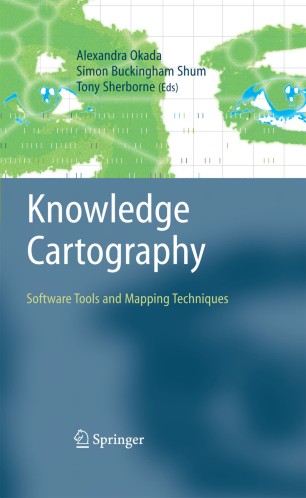
Knowledge Cartography : Software Tools and Mapping Techniques
The authors see mapping software as a set of visual tools for reading and writing in a networked age. In an information ocean, the primary challenge is to find meaningful patterns around which we can weave plausible narratives. Maps of concepts, discussions and arguments make the connections between ideas tangible and disputable.With 17 chapters from the leading researchers and practitioners, the reader will find the current state–of-the-art in the field. Part 1 focuses on educational applications in schools and universities, before Part 2 turns to applications in professional communities.
Knowledge and Skill Chains in Engineering and Manufacturing : Information Infrastructure in the Era of Global Communications
Explores knowledge and skill chains in engineering and manufacturing in the age of global communications. Information infrastructure involves a range of activities from product planning, engineering, and manufacturing trough transportation, marketing, and repair/upgrade to returns and recycling/disposal. Distinct from the traditional engineering database, life-cycle support information has its own characteristic requirements, -- flexible extensibility, distributed architecture, multiple viewpoints, long-time archiving, and product usage information. Several authors address the architecture of the information infrastructure, its services and its requirements. Other papers focus on the knowledge and skill chains that develop in a variety of situations: the supply chain, the factory floor, the man-system interaction, etc. For each of these, state-of-the-art and state-of-research scenarios for various industrial sectors address both engineering and operations requirements in the current socio-economic environment.
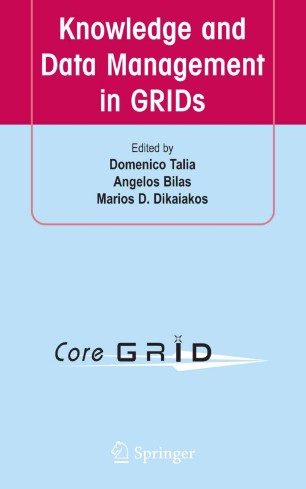
Knowledge and Data Management in GRIDs
Knowledge and Data Management in GRIDs is the third volume of the CoreGRID series and brings together scientific contributions by researchers and scientists working on storage, data, and knowledge management in GRID and Peer-to-Peer systems. This volume presents the latest GRID solutions and research results in key areas of knowledge and data management such as distributed storage management, GRID databases, Semantic GRID and GRID-aware data mining.
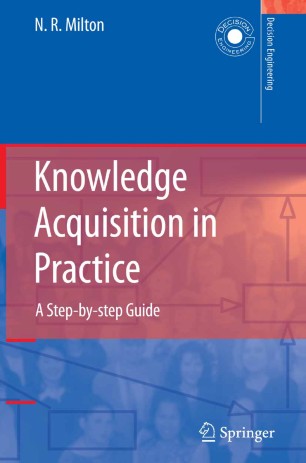
Knowledge acquisition in practice: A step-by-step guide
Recent years have seen an upsurge of interest in knowledge. Leading organisations now recognise the importance of identifying what they know, sharing what they know and using what they know for maximum benefit. Many organisations employ knowledge engineers to capture knowledge from experts using the principles and techniques of knowledge engineering. The emphasis is on a structured approach built on a sound understanding of the psychology of expertise and making use of knowledge modelling methods and the latest web technologies. Knowledge Acquisition in Practice is the first book to provide a detailed step-by-step guide to the methods and practical aspects of acquiring, modelling, storing and sharing knowledge. The reader is led through 47 steps from the inception of a project to its successful conclusion. Each step is described in terms of the reasons for the step, the required resources, the activities to be undertaken, and the solutions to common problems.
Journal on Data Semantics IV
• Semantics in data visualization • Semantic services for mobile users • Supporting tools • Applications of semantic-driven approaches These topics are to be understood as specifically related to semantic issues. Contributions submitted to the journal and dealing with semantics of data will be considered even if they are not within the topics in the list. While the physical appearance of the journal issues is like the books from the we- known Springer LNCS series, the mode of operation is that of a journal. Contributions can be freely submitted by authors and are reviewed by the Editorial Board. Contributions may also be invited, and nevertheless carefully reviewed, as in the case for issues that contain extended versions of the best papers from major conferences addressing data semantics issues. Special issues, focusing on a specific topic, are coordinated by guest editors once the proposal for a special issue is accepted by the Editorial Board. Finally, it is also possible that a journal issue be devoted to a single text.
Complex systems concurrent engineering : Collaboration, technology innovation and sustainability
Concurrent engineering is well-established as an approach to engineer product parts. However, the concept has much broader application. Complex Systems Concurrent Engineering: Collaboration, Technology Innovation and Sustainability demonstrates how concurrent engineering can be used to benefit the development of complex systems, to produce results that sustain balanced stakeholder satisfaction over time. Gathered from the 14th ISPE International Conference on Concurrent Engineering, the collected papers cover all aspects of the sustainable and integrated development of complex systems, such as airplanes, satellites, space vehicles, automobiles and ships.

Communities of practice to actively manage best practices
Stefano Borzillo examines a large variety of CoPs by means of six success factors and identifies three basic types: innovating strategic, operational excellence, and social and productive space CoPs.

Communications and Discoveries from Multidisciplinary Data
In this book, we aim at urging the development of data-based methods and methodologies for interdisciplinary and creative communications for solving emerging social problems. The reader shall view the direction to combine three methodological frameworks: data mining, data sharing, and communication in the contexts of sciences and businesses.

Case-based reasoning research and development ; 6th International conference on case-based reasoning, ICCBR 2005, Chicago, IL, USA, August 23-26, 2005, Proceedings
This book constitutes the refereed proceedings of the 6th International Conference on Case-Based Reasoning, ICCBR 2005, held in Chicago, IL, USA, in August 2005. The 19 revised full research papers and 26 revised poster papers presented together with the abstracts of 3 invited talks were carefully reviewed and selected from 74 submissions. The papers address all current foundational, theoretical and research aspects of case-based reasoning as well as advanced applications either with innovative commercial deployment or practical, social, environmental or economic significance.

Business processes : An archival science approach to collaborative decision making, records, and knowledge management
Collaborative decision making processes are a form of communication inside organizations. Their functioning can teach lessons for the design of electronic office systems. Those processes are open ended and therefore decide themselves on their form. Like oral deliberations which cannot be modelled in advance any open ended communication process needs means for common control over the further advancement and the ending of the process.The book is a reworked English version of a thesis for the official qualification for university professorship accepted by the German University of Administrative Sciences Speyer. Germany.

Business Information Systems ; 11th International Conference, BIS 2008, Innsbruck, Austria, May 5-7, 2008. Proceedings
This book contains the refereed proceedings of the 11th International Conference on Business Information Systems, BIS 2008, held in Innsbruck, Austria, in May 2008.
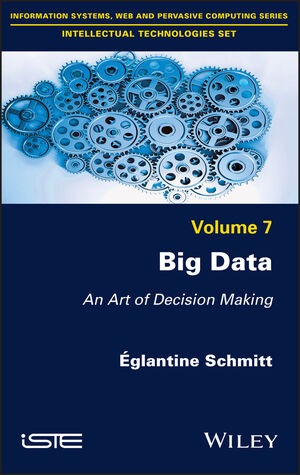
Big Data : An Art of Decision Making
Manipulating and processing masses of digital data is never a purely technical activity. It requires an interpretative and exploratory outlook - already well known in the social sciences and the humanities - to convey intelligible results from data analysis algorithms and create new knowledge. Big Data is based on an inquiry of several years within Proxem, a software publisher specializing in big data processing. The book examines how data scientists explore, interpret and visualize our digital traces to make sense of them, and to produce new knowledge. Grounded in epistemology and science and technology studies, Big Data offers a reflection on data in general, and on how they help us to better understand reality and decide on our daily actions.

Becoming virtual : Knowledge management and transformation of the distributed organization
This book examines the capabilities needed to transform a globally distributed organization into a virtual organization (an organization that exists and operates across time and distance with the support of global communications technologies such as the Internet). It introduces techniques for definition of goals for virtualization, for monitoring progress toward virtualization and for studying the impact of virtualization on social uncertainty, knowledge sharing and knowledge transfer, organizational memory, transactive memory, communities of practice and organizational commitment, power and control. These techniques are applied in an extended case study of a development aid organization's attempts to use knowledge management for virtualization over a two year period. The multidisciplinary team of authors examines virtualization from points of view ranging from the organizational to the technological to the sociological and psychological.

Balancing Exploration and Exploitation by Creating Organizational Think Tanks
Key for successful knowledge management is a balance between exploration and exploitation. Danger arises when exploration is neglected in favour of exploitation since that may result in an organization which lacks innovation capability. In order to prevent this, an idea has been put forward in recent knowledge management research called ambidexterity, which means the simultaneous and balanced pursuing of both exploration and exploitations activities. Tatjana-Xenia Puhan follows up on this idea by concluding that ambidexterity need not necessarily be implemented in one single organization but can also be realised in a network of associated organizations. The interorganizational ambidexterity is based on co-specialisation: one organisation is devoted solely to exploration while associated organizations focus on their competences in exploitation. Furthermore, the author develops the concept of think tanks as organizations that concentrate on radical innovations while their network associates exploit this newly generated knowledge commercially.

Automating business modelling : A guide to using logic to represent Informal methods and support reasoning
Enterprise Modelling (EM) methods are frequently used by entrepreneurs as an analysis tool for describing and redesigning their businesses. The resulting product, an enterprise model, is commonly used as a blueprint for reconstructing organizations and such effort is often a part of business process re-engineering and improvement initiatives. Automating Business Modelling describes different techniques of providing automated support for enterprise modelling methods and introduces universally used approaches. A running example of a business modelling method is included; providing a framework and detailed explanation as to how to construct automated support for modelling, allowing readers to follow the method to create similar support. Suitable for senior undergraduates and postgraduates of Business Studies, Computer Science and Artificial Intelligence, practitioners in the fields of Knowledge Management, Enterprise Modelling and Software Engineering, this book offers insight and know-how to both student and professional.
