



Page 43
Page 43
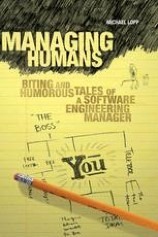
Managing Humans : Biting and Humorous Tales of a Software Engineering Manager
Managing Humans is a selection of the best essays from Michael Lopp's web site, Rands in Repose. Drawing on Lopp's management experiences at Apple, Netscape, Symantec, and Borland, this book is full of stories based on companies in the Silicon Valley where people have been known to yell at each other. It is a place full of dysfunctional bright people who are in an incredible hurry to find the next big thing so they can strike it rich and then do it all over again. Among these people are managers, a strange breed of people who through a mystical organizational ritual have been given power over your future and your bank account.
Managing Dynamic Networks : Organizational Perspectives of Technology Enabled Inter-firm Collaboration
Collaboration of organizations reshapes traditional managerial practices and creates new inter-organizational contexts for strategy, coordination and control, information and knowledge management. Heralded as organizational forms of the future, networks are at the same time fragile and precarious organizational arrangements, which regularly fail. In order to investigate the new realities created by technology-enabled forms of network organizations and to address the emerging managerial challenges, this book introduces an integrative view on inter-firm network management. Centred on a network life cycle perspective, strategic, economic and relational facets of business networking are explored.

Managing Distributed Cloud Applications and Infrastructure : A Self-Optimising Approach
The emergence of the Internet of Things (IoT), combined with greater heterogeneity not only online in cloud computing architectures but across the cloud-to-edge continuum, is introducing new challenges for managing applications and infrastructure across this continuum.

Managing Development and Application of Digital Technologies : Research Insights in the Munich Center for Digital Technology & Management (CDTM)
Digital technology determines today’s world and will be one of the key technologies of the future. Successful technology development, introduction and management are not only a question of technical issues; due to their complexity a close cooperation between different scientific disciplines is required to discuss various consequences, chances and risks from manifold points of view as a starting point for the design of adequate solutions. The ability to integrate business and technology decisions will become a crucial core competence.
Managing Complexity : Insights, Concepts, Applications
Each chapter in Managing Complexity focuses on analyzing real-world complex systems and transferring knowledge from the complex-systems sciences to applications in business, industry and society. The interdisciplinary contributions range from markets and production through logistics, traffic control, and critical infrastructures, up to network design, information systems, social conflicts and building consensus. They serve to raise readers' awareness concerning the often counter-intuitive behavior of complex systems and to help them integrate insights gained in complexity research into everyday planning, decision making, strategic optimization, and policy.
Management of Multimedia Networks and Services ; 8th International Conference on Management of Multimedia Networks and Services, MMNS 2005, Barcelona, Spain, October 24-26, 2005, Proceedings
We are delighted to present the proceedings of the 8th IFIP/IEEE International Conference on Management of Multimedia Networks and Services (MMNS 2005). The MMNS 2005 conference was held in Barcelona, Spain on October 24–26, 2005. As in previous years, the conference brought together an international audience of researchers and scientists from industry and academia who are researching and developing state-of-the-art management systems, while creating a public venue for results dissemination and intellectual collaboration. This year marked a challenging chapter in the advancement of management systems for the wider management research community, with the growing complexities of the “so-called” multimedia over Internet, the proliferation of alternative wireless networks (WLL, WiFi and WiMAX) and 3G mobile services, intelligent and high-speed networks scalable multimedia services and the convergence of computing and communications for data, voice and video delivery. Contributions from the research community met this challenge with 65 paper submissions; 33 high-quality papers were subsequently selected to form the MMNS 2005 technical program. The diverse topics in this year’s program included wireless networking technologies, wireless network applications, quality of services, multimedia, Web applications, overlay network management, and bandwidth management.
Management of Convergence Networks and Services ; 9th Asia-Pacific Network Operations and Management Symposium, APNOMS 2006, Busan, Korea, September 27-29, 2006, Proceedings
Constitutes the refereed proceedings of the 9th Asia-Pacific Network Operations and Management Symposium, APNOMS 2006. This book presents 50 revised full papers and 25 revised short papers, organized in topical sections on management of ad hoc and sensor networks, network measurements and monitoring, mobility management, QoS management, and more
Managed Software Evolution
This book presents the outcomes of the “Design for Future – Managed Software Evolution” .The different lifecycles of software and hardware platforms lead to interoperability problems in such systems. Instead of separating the development, adaptation and evolution of software and its platforms, as well as aspects like operation, monitoring and maintenance, they should all be integrated into one overarching process. Accordingly, the book is split into three major parts, the first of which includes an introduction to the nature of software evolution, followed by an overview of the specific challenges and a general introduction to the case studies used in the project. The second part of the book consists of the main chapters on knowledge carrying software, and cover tacit knowledge in software evolution, continuous design decision support, model-based round-trip engineering for software product lines, performance analysis strategies, maintaining security in software evolution, learning from evolution for evolution, and formal verification of evolutionary changes. In turn, the last part of the book presents key findings and spin-offs. The individual chapters there describe various case studies, along with their benefits, deliverables and the respective lessons learned. An overview of future research topics rounds out the coverage.
Manage IT! : Organizing IT Demand and IT Supply
Discusses the IT management tasks and the objects involved. This book outlines traditional IT management; deals with controlling IT; and, tackles the financial, personnel, purchasing, legal and security aspects in IT. It explains the effects of striving for 'utility computing' and control of IT by means of 'IT portfolio management'.

Making Grids Work ; Proceedings of the CoreGRID Workshop on Programming Models Grid and P2P System Architecture Grid Systems, Tools and Environments 12-13 June 2007, Heraklion, Crete, Greece
Making Grids Work includes selected articles from the CoreGRID Workshop on Grid Programming Models, Grid and P2P Systems Architecture, Grid Systems, Tools and Environments held at the Institute of Computer Science, Foundation for Research and Technology - Hellas in Crete, Greece, June 2007. This workshop brought together representatives of the academic and industrial communities performing Grid research in Europe. Organized within the context of the CoreGRID Network of Excellence, this workshop provided a forum for the presentation and exchange of views on the latest developments in Grid Technology research. This volume is the 7th in the series of CoreGRID books.
Making Globally Distributed Software Development a Success Story : International Conference on Software Process, ICSP 2008 Leipzig, Germany, May 10-11, 2008 Proceedings
This volume contains papers presented at the International Conference on Software Process (ICSP 2008) held in Leipzig, Germany, during May 10-11, 2008. ICSP 2008 was the second conference of the ICSP series. The theme of ICSP 2008 was “Making Globally Distributed Software Development a Success Story. ” Software developers work in a dynamic context of frequently changing technologies and with limited resources. Globally distributed development teams are under ev- increasing pressure to deliver their products more quickly and with higher levels of qu- ity. At the same time, global competition is forcing software development organizations to cut costs by rationalizing processes, outsourcing part of or all development activities, reusing existing software in new or modified applications, and evolving existing systems to meet new needs, while still minimizing the risk of projects failing to deliver.

Machines, Computations, and Universality ; 5th International Conference, MCU 2007, Orleans, France, September 10-13, 2007, Proceedings
The 18 revised full papers presented together with nine invited papers cover Turing machines, register machines, word processing, cellular automata, tiling of the plane, neural networks, molecular computations, BSS machines, infinite cellular automata, real machines, and quantum computing.

Machines, Computations, and Universality ; 4th International Conference, MCU 2004, Saint Petersburg, Russia, September 21-24, 2004, Revised Selected Papers
Constitutes the post-proceedings of the 4th International Conference on Machines, Computations, and Universality, MCU 2004, held in St Petersburg, Russia in September 2004. This book covers a variety of foundational aspects in theoretical computer science such as cellular automata, molecular computing, quantum computing, and formal languages
Machine-learning-assisted intelligent processing and optimization of complex systems
Focuses on the most recent developments in intelligent optimization methods and their applications in various test cases. The reprint covers various topics, including distributed multiagent modeling, metaheuristic algorithms, multisource data fusion, mobile computing and mobile sensing, machine learning-based intelligent processing for modeling complex manufacturing systems, and data-driven intelligent modeling
Machine Learning Techniques and Analytics for Cloud Security
covers new methods, surveys, case studies, and policy with almost all machine learning techniques and analytics for cloud security solutions

Machine Learning for Multimodal Interaction ; Vol.4299 ; 3rd International Workshop, MLMI 2006, Bethesda, MD, USA, May 1-4, 2006, Revised Selected Papers
This book contains a selection of refereed papers presented at the 3rd Workshop on Machine Learning for Multimodal Interaction (MLMI 2006), held in Bethesda MD, USA during May 1–4, 2006.

Machine Learning for Multimodal Interaction ; Vol.3869 ; 2nd International Workshop, MLMI 2005, Edinburgh, UK, July 11-13, 2005, Revised Selected Papers
The papers are organized in topical sections on multimodal processing, HCI and applications, discourse and dialogue, emotion, visual processing, speech and audio processing, and NIST meeting recognition evaluation
Machine learning approach for cloud data analytics in IoT
Covers the multidimensional perspective of machine learning through the perspective of cloud computing and Internet of Things ranging from fundamentals to advanced applications. Elucidates some of the best practices and their respective outcomes in cloud and fog computing environments. It focuses on all the various research issues related to big data storage and analysis, large-scale data processing, knowledge discovery and knowledge management, computational intelligence, data security and privacy, data representation and visualization, and data analytics. The featured technologies presented in the book optimizes various industry processes using business intelligence in engineering and technology. Light is also shed on cloud-based embedded software development practices to integrate complex machines so as to increase productivity and reduce operational costs. The various practices of data science and analytics which are used in all sectors to understand big data and analyze massive data patterns are also detailed in the book.
Machine Learning Applications in Civil Engineering
Discusses machine learning and deep learning models for different civil engineering applications. These models work for stochastic methods wherein internal processing is done using randomized prototypes. The book explains various machine learning model designs that will assist researchers to design multi domain systems with maximum efficiency. It introduces Machine Learning and its applications to different Civil Engineering tasks, including Basic Machine Learning Models for data pre-processing, models for data representation, classification models for Civil Engineering Applications, Bioinspired Computing models for Civil Engineering, and their case studies.
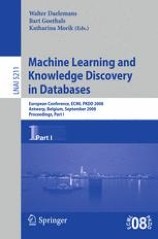
Machine Learning and Knowledge Discovery in Databases ; European Conference, ECML PKDD 2008, Antwerp, Belgium, September 15-19, 2008, Proceedings, Part I
Constitutes the refereed proceedings of the joint conference on Machine Learning and Knowledge Discovery in Databases: ECML PKDD 2008, held in Antwerp, Belgium, in September 2008.The 100 papers presented in two volumes, together with 5 invited talks, were carefully reviewed and selected from 521 submissions. In addition to the regular papers the volume contains 14 abstracts of papers appearing in full version in the Machine Learning Journal and the Knowledge Discovery and Databases Journal of Springer.
