



Page 4
Page 4
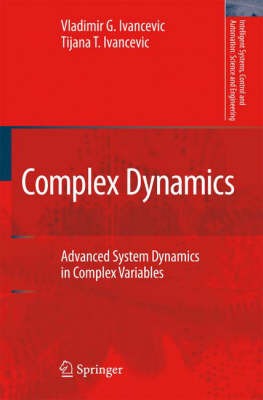
Complex dynamics : Advanced system dynamics in complex variables
Complex Dynamics: Advanced System Dynamics in Complex Variables is a graduate-level monographic textbook. It is designed as a comprehensive introduction into methods and techniques of modern complex-valued nonlinear dynamics with its various physical and non-physical applications.
Bio-inspired computational intelligence and applications ; International conference on life system modeling, and simulation, LSMS 2007, Shanghai, China, September 14-17, 2007. Proceedings
It covers both micro and macro c- ponents ranging from cells, tissues and organs across to organisms and ecologic niches. These interact and evolve to produce an overall complex system whose beh- ior is difficult to comprehend and predict.The arrival of the 21st century has been marked by a resurgence of research interest both in arriving at a systems-level und- standing of biology and in applying such knowledge in complex real-world appli- tions. Consequently, computational methods and intelligence in systems, biology, as well as bio-inspired computational intelligence, have emerged as key drivers for new computational methods. For this reason papers dealing with theory, techniques and real-world applications relating to these two themes were especially solicited.
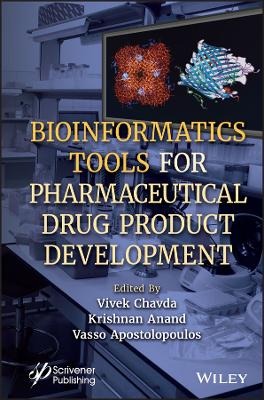
Bioinformatics tools for pharmaceutical drug product development
Presents the latest information on bioinformatics tools, artificial intelligence, machine learning, computational methods, protein interactions, peptide-based drug design, and omics technologies. And include bioinformatics tools for the pharmaceutical sector and the healthcare sector. Bioinformatics brings a new era in research to accelerate drug target and vaccine design development, improving validation approaches as well as facilitating and identifying side effects and predicting drug resistance. As such, this will aid in more successful drug candidates from discovery to clinical trials to the market, and most importantly make it a more cost-effective process overall.

Bioinformatics technologies
Solving modern biological problems requires advanced computational methods. Bioinformatics evolved from the active interaction of two fast-developing disciplines, biology and information technology. The central issue of this emerging field is the transformation of often distributed and unstructured biological data into meaningful information. This book describes the application of well-established concepts and techniques from areas like data mining, machine learning, database technologies, and visualization techniques to problems like protein data analysis, genome analysis and sequence databases. Chen has collected contributions from leading researchers in each area. The chapters can be read independently, as each offers a complete overview of its specific area, or, combined, this monograph is a comprehensive treatment that will appeal to students, researchers, and R&D professionals in industry who need a state-of-the-art introduction into this challenging and exciting young field.
Bioinformatics
In this textbook present mathematical models in bioinformatics and they describe the biological problems that inspire the computer science tools used to handle the enormous data sets involved. The first part of the book covers the mathematical and computational methods, while the practical applications are presented in the second part. The mathematical presentation is descriptive and avoids unnecessary formalism, and yet remains clear and precise. Emphasis is laid on motivation through biological problems and cross applications. Each of the four chapters in the first part is accompanied by exercises and problems to support an understanding of the techniques presented. Each of the six chapters of the second part is devoted to some specific application domain: sequence alignment, molecular phylogenetics and coalescence theory, genomics, proteomics, RNA, and DNA microarrays. Each chapter concludes with a problems and projects section, to deepen the reader's understanding and to allow for the design of derived methods. Many of the projects involve publicly available software and/or Web-based bioinformatics depositories. Finally, the book closes with a thorough bibliography, reaching from classic research results to very recent findings, providing many pointers for future research.Overall, this volume is ideally suited for a senior undergraduate or graduate course on bioinformatics, with a strong focus on its mathematical and computer science background.

Basics of fluid mechanics and introduction to computational fluid dynamics
Brings together the theoretical basics of fluid dynamics with a systemaic overview of the appropriate numerical and computational methods for solving the problems presented in the book. Also, effective codes for a majority of the examples are included.
Atomistic modeling of materials failure
Atomistic Modeling of Materials Failure is an introduction to molecular and atomistic modeling techniques applied to solid deformation and fracture. Focusing on a variety of brittle, ductile and geometrically confined materials, this detailed overview includes computational methods at the atomic scale, and describes how these techniques can be used to model the dynamics of cracks, dislocations and other deformation mechanisms.
Applied mathematics and machine learning
The simultaneous availability of large datasets and high-performance computing capability in recent years has enabled the rapid development of powerful machine learning algorithms. On the one hand, state-of-the-art machine learning techniques have transformed many areas of science and engineering; on the other hand, theoretical discoveries in mathematical algorithms, differential equations, and statistical inferences, to name a few, have provided the foundation for the exploration of new multidisciplinary models for solving practical problems. This Special Issue endeavors to continue the journey that started in our previous Special Issue (Applied Mathematics and Computational Physics) by providing a platform for researchers from both academia and industry, as well as government, to present their new computational methods that have engineering and physics applications.
Applied computational materials modeling : Theory, simulation and experiment
this book provides the average person working in the materials field with a more balanced perspective of the role that computational modeling can play in every day research and development efforts. This is done by presenting a series of examples of the successful application of various computational modeling procedures (everything from first principles to quantum approximate to CALPHAD methods) to real life surface and bulk alloy problems.This book should have a large appeal in the materials community, both for experimentalists who would greatly benefit from adding computational methods to their everyday research regimes, as well as for those scientists/engineers familiar with a particular computational method who would like to add complementary techniques to their arsenal of research and development tools

Applications of simulation methods in environmental and resource economics
Simulation methods are revolutionizing the practice of applied economic analysis. This volume collects eighteen chapters written by leading researchers from prestigious research institutions the world over. The common denominator of the papers is their relevance for applied research in environmental and resource economics. The topics range from discrete choice modeling with heterogeneity of preferences, to Bayesian estimation, to Monte Carlo experiments, to structural estimation of Kuhn-Tucker demand systems, to evaluation of simulation noise in maximum simulated likelihood estimates, to dynamic natural resource modeling. Empirical cases are used to show the practical use and the results brought forth by the different methods.
Analyzing uncertainty in civil engineering
This volume addresses the issue of uncertainty in civil engineering from design to construction. Failures do occur in practice. Attributing them to a residual system risk or a faulty execution of the project does not properly cover the range of causes. A closer scrutiny of the adopted design, the engineering model, the data, the soil-construction-interaction and the model assumptions is required. Usually, the uncertainties in initial and boundary conditions are abundant. Current engineering practice often leaves these issues aside, despite the fact that new scientific tools have been developed in the past decades that allow a rational description of uncertainties of all kinds, from model uncertainty to data uncertainty. It is the aim of this volume to have a critical look at current engineering risk concepts in order to raise awareness of uncertainty in numerical computations, shortcomings of a strictly probabilistic safety concept, geotechnical models of failure mechanisms and their implications for construction management, execution, and the juristic question of responsibility. In addition, a number of the new procedures for modelling uncertainty are explained.

Analysis, design and construction of foundations
Outlines methods for analysis and design the construction of shallow and deep foundations with particular reference to case studies in Hong Kong and China, as well as a discussion of methods used in other countries. It introduces the main approaches used by geotechnical and structural engineers, and the precautions required for planning and designing foundation structures. Some computational methods and computer programs are reviewed to provide tools for performing more realistic analysis of foundation systems.

Analysis of Low-Speed Unsteady Airfoil Flows
This book provides an introduction to unsteady aerodynamics with emphasis on the analysis and computation of inviscid and viscous two-dimensional flows over airfoils at low speeds. It begins with a discussion of the physics of unsteady flows and an explanation of lift and thrust generation, airfoil flutter, gust response and dynamic stall. This is followed by an exposition of the four major calculation methods in currents use, namely inviscid-panel, boundary-layer, viscous-inviscid interaction and Navier-Stokes methods. Undergraduate and graduate students, teachers, scientists and engineers concerned with aeronautical, hydronautical and mechanical engineering problems will gain understanding of the physics of unsteady low-speed flows and an ability to analyze these flows with modern computational methods.
Analysis and Numerics for Conservation Laws
The physical and chemical mechanisms as well as the sizes of these processes are quite different. So are the motivations for studying them scientifically.The super- 8 nova is a thermo-nuclear explosion on a scale of 10 cm. Astrophysicists try to understand them in order to get insight into fundamental properties of the universe. In hows around airfoils of commercial airliners at the scale of 3 10 cm shock waves occur that influence the stability of the wings as well as fuel consumption in ight. This requires appropriate design of the shape and structure of airfoils by engineers. Knocking occurs in combustion, a chemical 1 process, and must be avoided since it damages motors. The scale is 10 cm and these processes must be optimized for efficiency and environmental conside- tions. The common thread is that the underlying ?uid ?ows may at a certain scale of observation be described by basically the same type of hyperbolic s- tems of partial differential equations in divergence form, called conservation laws. Astrophysicists, engineers and mathematicians share a common interest in scientific progress on theory for these equations and the development of computational methods for solutions of the equations. Due to their wide applicability in modeling of continua. A substantial portion of mathematical research is related to the analysis and numerical approximation of solutions to such equations. Hyperbolic conservation laws in two or more space dimensions still poseone of the main challenges to modern mathematics.
An Introduction to Scientific Computing : Twelve Computational Projects Solved with MATLAB
This book provides twelve computational projects aimed at numerically solving problems from a broad range of applications including Fluid Mechanics, Chemistry, Elasticity, Thermal Science, Computer Aided Design, Signal and Image Processing. For each project the reader is guided through the typical steps of scientific computing from physical and mathematical description of the problem, to numerical formulation and programming and finally to critical discussion of numerical results. Considerable emphasis is placed on practical issues of computational methods. The last section of each project contains the solutions to all proposed exercises and guides the reader in using the MATLAB scripts.
Algorithmic Aspects of Bioinformatics
Advances in bioinformatics and systems biology require improved computational methods for analyzing data, while progress in molecular biology is in turn influencing the development of computer science methods. This book introduces some key problems in bioinformatics, discusses the models used to formally describe these problems, and analyzes the algorithmic approaches used to solve them. After introducing the basics of molecular biology and algorithmics, Part I explains string algorithms and alignments; Part II details the field of physical mapping and DNA sequencing; and Part III examines the application of algorithmics to the analysis of biological data. Exciting application examples include predicting the spatial structure of proteins, and computing haplotypes from genotype data. This book describes topics in detail and presents formal models in a mathematically precise, yet intuitive manner, with many figures and chapter summaries, detailed derivations, and examples. It is well suited as an introduction into the field of bioinformatics, and will benefit students and lecturers in bioinformatics and algorithmics, while also offering practitioners an update on current research topics.
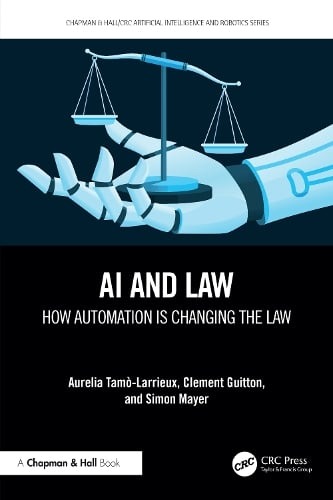
AI and law : How automation is changing the law
Provides insights into how AI is changing legal practice, government processes, and individuals’ access to those processes, encouraging each of us to consider how technological advances are changing the legal system. Particularly, and distinct from current debates on how to regulate AI, this books focuses on how the progressive merger between computational methods and legal rules changes the very structure and application of the law itself.
Advanced computer simulation approaches for soft matter sciences II
This series presents critical reviews of the present and future trends in polymer and biopolymer science including chemistry, physical chemistry, physics and materials science. It is addressed to all scientists at universities and in industry who wish to keep abreast of advances in the topics covered.The second volume contains four contributions, and has a very strong topical focus on long range interactions.
Advanced computer simulation approaches for soft matter sciences I
Soft matter science is nowadays an acronym for an increasingly important class of materials, which ranges from polymers, liquid crystals, colloids up to complex macromolecular assemblies, covering sizes from the nanoscale up the microscale. Computer simulations have proven as an indispensable, if not the most powerful, tool to understand properties of these materials and link theoretical models to experiments. In this first volume of a small series recognized leaders of the field review advanced topics and provide critical insight into the state-of-the-art methods and scientific questions of this lively domain of soft condensed matter research.

Advanced computational methods and geomechanics
Helps readers comprehensively grasp the intrinsic features of typical advanced computational methods. These methods are created in recent three decades for the understanding of the post-failure of geo-materials accompanied with discontinuous and finite deformation/dislocation, as well as the violent fluid-structure interaction accompanied with strong distortion of water surface. The strong points and weak points of the formalisms for governing equations, the discretization schemes, the nodal interpolation /approximation of field variables, and their connectivity (via support domains, covers, or enrichments), the basic algorithms, etc., are clarified.
