



Page 22
Page 22

Effective Resource Management in Manufacturing Systems : Optimization Algorithms for Production Planning
Effective Resource Management in Manufacturing Systems aims to provide robust methods for achieving effective resource allocation and to solve related problems that occur daily and often generate cost overruns, specifically focusing on problems like resource levelling, sizing of machines and production layouts, cost optimization in production planning and scheduling. This approach is based on providing quantitative methods, covering both mathematical programming and algorithms, leading to high quality solutions for the analysed problems. Details of extensive experimentation is provided for the proposed techniques to put them in a practical perspective, so that, on the one hand, the reader can reproduce them, and, on the other hand, it appears clear how they can be implemented in real scenarios.

Effective Functional Verification : Principles and Processes
Effective Functional Verification is organized into 4 parts. The first part contains 3 chapters designed appeal to newcomers and experienced people to the field. There is a survey of various verification methodologies and a discussion of them. The second part with 3 chapters is targeted towards people in management and higher up on the experience ladders. New verification engineers reading these chapters learn what is expected and how things work in verification. Some case studies are also presented with analysis of proposed improvements. The last two parts are the result of experience of several years. It goes into how to optimize a verification plan and an environment and how to get results effectively.

Effective Computational Geometry for Curves and Surfaces
Computational geometry emerged as a discipline in the seventies and has had considerable success in improving the asymptotic complexity of the solutions to basic geometric problems including constructions of data structures,convex hulls, triangulations, Voronoi diagrams and geometric arrangements as well as geometric optimisation. The goal of this book is to take into consideration the multidisciplinary nature of the problem and to provide solid mathematical and algorithmic foundations for effiective computational geometry fo rcurves and surfaces. This book covers two main approaches. In a first part, we discuss exact geometric algorithms for curves and s- faces. We revisit two prominent data structures of computational geometry, namely arrangements (Chap. 1) and Voronoi diagrams (Chap. 2) in order to understand how these structures, which are well-known for linear objects, behave when de?ned on curved objects.

ECOOP’ 87 European Conference on Object-Oriented Programming ; Paris, France, June 15-17, 1987. Proceedings
In October 1983 an informal meeting was organized in Le Cap d'Agde with the help of the BIGRE bulletin. Sixty people turned out to hear more than ten presentations on object-oriented programming. More important was their unanimous demand for other, more structured encounters. So, about one year later, the Object group was created by AFCET.

ECOOP 2008 - Object-Oriented Programming ; 22nd European Conference Paphos, Cyprus, July 7-11, 2008 Proceedings
This book constitutes the refereed proceedings of the 22nd European Conference on Object-Oriented Programming, ECOOP 2008, held in Paphos, Cyprus, in July 2008.

ECOOP 2007 – Object-Oriented Programming ; 21th European Conference, Berlin, Germany, July 30 - August 3, 2007, Proceedings
This book contains sections on runtime implementation, empirical studies, programs and predicates, language design, inheritance and derivation, aspects, as well as language about language.

ECOOP 2006 - Object-Oriented Programming ; 20th European Conference, Nantes, France, July 3-7, 2006, Proceedings
This book constitutes the refereed proceedings of the 20th European Conference on Object-Oriented Programming, ECOOP 2006, held in Nantes, France in July 2006.20 revised full papers, together with 3 keynote papers were carefully reviewed and selected.

ECOOP 2005 - object-oriented programming ; 19th European Conference, Glasgow, UK, July 25-29, 2005. Proceedings
The 19th Annual Meeting of the European Conference on Object-Oriented Programming—ECOOP 2005—took place during the last week of July in Glasgow, Scotland, UK. This volume includes the refereed technical papers p- sented at the conference, and two invited papers. It is traditional to preface a volume of proceedings such as this with a note that emphasizes the importance of the conference in its respective ?eld. Although such self-evaluations should always be taken with a large grain of salt, ECOOP is undisputedly the pre- inent conference on object-orientation outside of the United States. In its turn, object-orientationis today’s principaltechnology not only for programming,but also for design, analysisand speci?cation of softwaresystems.

ECOOP 2002 - Object-Oriented Programming ; 16th European Conference Malaga, Spain, June 10-14, 2002 Proceedings
Constitutes the proceedings of the 16th European Conference on Object-Oriented Programming held in Spain in 2002. The 25 papers cover aspect-oriented software development, Java virtual machines, distributed systems, patterns and architectures, languages, optimization and more.

Early Nutrition and its Later Consequences : New Opportunities; Perinatal Programming of Adult Health - EC Supported Research
Health problems such as hypertension, tendency to diabetes, obesity, blood lipids, vascular disease, bone health, behaviour and learning and longevity may be ‘imprinted’ during early life. This process is defined as ‘programming’ whereby a nutritional stimulus operating at a critical, sensitive period of pre and postnatal life imprints permanent effects on the structure, physiology and metabolism. For this reason, academics and industry set-up the EC supported Scientific Workshop -Early Nutrition and its Later Consequences: New Opportunities. The prime objective of the Workshop was to generate a sound exchange of the latest scientific developments within the field of early nutrition to look for opportunities for new preventive health concepts. Further, a closer look was taken at the development of food applications which could provide (future) mothers and infants with improved nutrition that will ultimately lead to better future health. The Workshop was organised by the Dept. of Pediatrics, University of Munich, Germany in collaboration with the Danone Institutes and the Infant Nutrition Cluster, a collaboration of three large research projects funded by the EU.

Dynamic Programming : A Computational Tool
This book provides a practical introduction to computationally solving discrete optimization problems using dynamic programming. From the unusually numerous and varied examples presented, readers should more easily be able to formulate dynamic programming solutions to their own problems of interest. We also provide and describe the design, implementation, and use of a software tool, named DP2PN2Solver, that has been used to numerically solve all of the problems presented earlier in the book. This computational tool can be used by students to solve academic problems if this book is used in coursework, and by practitioners to solve many real-world problems if the state space is not too large.

Dynamic Fleet Management : Concepts, Systems, Algorithms & Case Studies
Dynamic Fleet Management will focus on real time management of a distribution system. The book will integrate the latest results in system design, algorithm development and system implementation, to capture the state-of-the art research and application trends.

Dynamic Asset Allocation with Forwards and Futures
DYNAMIC ASSET ALLOCATION WITH FORWARD AND FUTURES is an advanced text on the theory of forward and futures markets which aims at providing readers with a comprehensive knowledge of how prices are established and evolve over time, what optimal strategies one can expect from the participants, what characterizes such markets, and what major theoretical and practical differences distinguish futures from forward contracts. The book proposes an approach of these markets from the perspective of dynamic asset allocation and asset pricing theory within an inter-temporal framework. The main ingredients that are used are the assumed absence of frictions and arbitrage opportunities in financial and real markets, the uniqueness of the economic general equilibrium, when such an equilibrium is required and the tools of continuous time finance, namely martingale theory and stochastic dynamic programming. The scope of DYNAMIC ASSET ALLOCATION WITH FORWARD AND FUTURES is essentially theoretical, with emphasis on economic meaning and financial interpretation. Regarding investment and/or hedging, focus is on optimal strategies rather than on actual practice. Simulations, however, are performed when important insights can be delivered as to the practical relevance of some theoretical results. Also, optimal strategies using futures are shown to differ markedly from those using forwards. The following issues are examined: pure hedging, investment and hedging in complete or incomplete markets, currency risk, optimal spreading, presence of stochastic dividend or convenience yields, pricing of non-redundant futures or forwards by means of general equilibrium analysis, and revisiting of existing Capital Asset Pricing Models.

Drawing from the model : Fundamentals of digital drawing, 3D modeling, and visual programming in architectural design
Bridges traditional and contemporary methods of creating architectural design drawings and 3D models through digital tools and computational processes.

Domain-driven design with Java, a practitioner's guide : create simple, elegant, and valuable software solutions for complex business problems
Helps you as a developer and architect to put your knowledge to work in order to create elegant software designs that are enjoyable to work with and easy to reason about. You'll begin with an introduction to the concepts of domain-driven design and discover various ways to apply them in real-world scenarios. You'll also appreciate how DDD is extremely relevant when creating cloud native solutions that employ modern techniques such as event-driven microservices and fine-grained architectures. As you advance through the chapters, you'll get acquainted with core DDD's strategic design concepts such as the ubiquitous language, context maps, bounded contexts, and tactical design elements like aggregates and domain models and events. You'll understand how to apply modern, lightweight modeling techniques such as business value canvas, Wardley mapping, domain storytelling, and event storming, while also learning how to test-drive the system to create solutions that exhibit high degrees of internal quality.

Domain Decomposition Methods in Science and Engineering XVII
This volume contains a selection of papers presented at the 17th International Conference on Domain Decomposition Methods in Science and Engineering held at St. Wolfgang / Strobl, Austria, July 3 - 7, 2006. Domain decomposition is an active, interdisciplinary research area concerned with the development, analysis, and implementation of coupling and decoupling strategies in mathematical and computational models. Domain decomposition techniques provide efficient tools for treating problems in all Computational Sciences. The reader will become familiar with the newest domain decomposition technologies and their use for modeling and simulating of complex problems from different fields of applications.
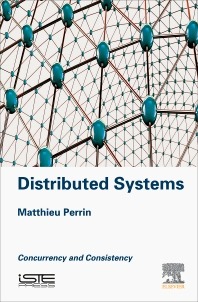
Distributed systems : Concurrency and consistency
Explores the gray area of distributed systems and draws a map of weak consistency criteria, identifying several families and demonstrating how these may be implemented into a programming language. Unlike their sequential counterparts, distributed systems are much more difficult to design, and are therefore prone to problems. On a large scale, usability reminiscent of sequential consistency, which would provide the same global view to all users, is very expensive or impossible to achieve.

Distributed Embedded Control Systems : Improving Dependability with Coherent Design
Distributed Embedded Control Systems handles the domains encountered when designing a distributed embedded computer control system as an integrated whole. First to be discussed are some basic issues about real-time systems and their properties, specifically safety. Then, system and hardware architectures are dealt.

Distributed computing in sensor systems Vol. 4026 ; 2nd IEEE International Conference, DCOSS 2006, San Francisco, CA, USA, June 18-20, 2006, Proceedings
The book constitutes the refereed proceedings of the Second International Conference on Distributed Computing in Sensor Systems, DCOSS 2006, held in San Francisco, California, USA in June 2006. The papers focus on distributed computing issues in large-scale networked sensor systems, including systematic design techniques and tools; they cover topics such as distributed algorithms and applications, programming support and middleware, data aggregation and dissemination, security, information fusion, lifetime maximization, and localization.

Distributed computing in sensor systems ; Vol. 3560 ; 1st IEEE International Conference, DCOSS 2005, Marina del Rey, CA, USA, June 30-July 1, 2005, Proceedings
Constitutes the refereed proceedings of the First International Conference on Distributed Computing in Sensor Systems, DCOSS 2005, held in Marina del Rey, California, USA in June/July 2005. The 26 revised full papers presented were carefully reviewed and selected from 85 submissions; also included are the abstracts of 3 invited talks, 2 short papers, 9 invited poster abstracts, and 10 contributed abstracts.The papers address all current aspects of distributed computing issues in large-scale networked sensor systems, including systematic design techniques and tools, algorithms, and applications.
