



Page 19
Page 19

Hands-On Data Structures and Algorithms with Python : Store, manipulate, and access data effectively ; 3rd ed.
Expands your understanding of key structures, including stacks, queues, and lists, and also show you how to apply priority queues and heaps in applications. You'll learn how to analyze and compare Python algorithms, and understand which algorithms should be used for a problem based on running time and computational complexity. You will also become confident organizing your code in a manageable, consistent, and scalable way, which will boost your productivity as a Python developer. By the end of this Python book, you'll be able to manipulate the most important data structures and algorithms to more efficiently store, organize, and access data in your applications

Handover in DVB-H : Investigation and Analysis
This book gives a detail description of the handover issues in DVB-H networks, in converged DVB-H/UMTS networks and in hybrid DVB-H/DMB-T networks. Besides, the DVB-H signalling information including ESG is discussed. The current status and the future research directions of DVB-H and DVB-H handover are presented so that the readers can also get an overview of the research methods being used.

Handbook on Modelling for Discrete Optimization
This handbook couples the difficult, critical-thinking aspects of mathematical modeling with the hot area of discrete optimization. It will be done in an academic handbook treatment outlining the state-of-the-art for researchers across the domains of the Computer Science, Math Programming, Applied Mathematics, Engineering, and Operations Research. Included in the handbook's treatment are results from Graph Theory, Logic, Computer Science, and Combinatorics.
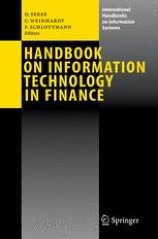
Handbook on Information Technology in Finance
This Handbook contains surveys of state-of-the-art concepts, systems, applications, best practices as well as contemporary research in the intersection between IT and finance. Included are recent trends and challenges, IT systems and architectures in finance, essential developments and case studies on management information systems, service oriented architecture modelling, IT architectures for securities trading, IT-systems in banking, process-oriented systems in corporate treasuries, grid computing and networking. The IT applications in banking, trading and insurance cover risk management and controlling, financial portals, electronic payment and others. In addition, also finance-related IT applications in non-financial companies are considered. The concept-oriented part of the book focuses on IT methods in finance like financial models and modelling financial data, planning and processes, security, algorithms and complexity.

Handbook of Optimization in Telecommunications
The Handbook of Optimization in Telecommunications includes planning and design of telecommunication networks, routing, network protection, grooming, restoration, wireless communications, network location and assignment problems, Internet protocol, World Wide Web, and stochastic issues in telecommunications. The editors’ objective is to provide a reference tool for the increasing number of scientists and engineers in telecommunications who depend upon optimization in some way. Each chapter in the handbook is of an expository nature, but of scholarly treatment, and includes a brief overview of the state-of-the-art thinking relative to the topic, as well as pointers to the key references in the field. Specialists as well as nonspecialists should find this handbook stimulating and helpful.

Handbook Of Operations Research In Natural Resources
Handbook of Operations Research in Natural Resources will be the first systematic handbook treatment of quantitative modeling natural resource problems, their allocated efficient use, and societal and economic impact. Andrés Weintraub is the very top person in Natural Resource research. Moreover, he has an international reputation in OR and a former president of the International Federation of Operational Research Societies (IFORS). He has selected co-editors who are at the top of the sub-fields in natural resources: agriculture, fisheries, forestry, and mining. The book will cover these areas in terms with contributions from researchers on modeling natural research problems, quantifying data, developing algorithms, and discussing the benefits of research implementations. The handbook will include tutorial contributions when necessary.
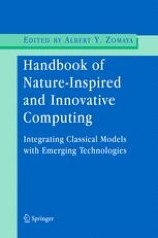
Handbook of Nature-Inspired and Innovative Computing : Integrating Classical Models with Emerging Technologies
This comprehensive handbook, the first of its kind to address the connection between nature-inspired and traditional computational paradigms, is a repository of case studies dealing with different problems in computing and solutions to these problems based on nature-inspired paradigms. The "Handbook of Nature-Inspired and Innovative Computing: Integrating Classical Models with Emerging Technologies" is an essential compilation of models, methods, and algorithms for researchers, professionals, and advanced-level students working in all areas of computer science, IT, biocomputing, and network engineering.

Handbook of Mathematical Models in Computer Vision
In this edited volume we present the most prominent mathematical models that are considered in computational vision. To this end, tasks of increasing complexity are considered and we present the state-of-the-art methods to cope with such tasks. The volume consists of six thematic areas that provide answers to the most dominant questions of computational vision: Image reconstruction, Segmentation and object extraction, Shape modeling and registration, Motion analysis and tracking, 3D from images, geometry and reconstruction Applications in medical image analysis

Handbook of Fractional Calculus for Engineering and Science
Provides reliable methods for solving fractional-order models in science and engineering. Contains efficient numerical methods and algorithms for engineering-related equations. Contains comparison of various methods for accuracy and validity. Demonstrates the applicability of fractional calculus in science and engineering. Examines qualitative as well as quantitative properties of solutions of various types of science- and engineering-related equations.

Handbook of Face Recognition
This authoritative handbook is the first to provide complete coverage of face recognition, including major established approaches, algorithms, systems, databases, evaluation methods, and applications. After a thorough introductory chapter from the editors, 15 chapters address the sub-areas and major components necessary for designing operational face recognition systems. Each chapter focuses on a specific topic, reviewing background information, reviewing up-to-date techniques, presenting results, and offering challenges and future directions.

Handbook of Combinatorial Optimization : Supplement ; Vol. B
It presents chapters dealing with various aspects of the subject, including optimization problems and algorithmic approaches for discrete problems.
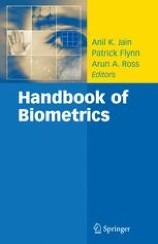
Handbook of Biometrics
The Handbook of Biometrics -- an edited volume by prominent invited researchers in biometrics -- describes the fundamentals as well as the latest advancements in the burgeoning field of biometrics. It is designed for professionals, practitioners and researchers in biometrics, pattern recognition and computer security. The Handbook of Biometrics can be used as a primary textbook for an undergraduate biometrics class. This book is also suitable as a secondary textbook or reference for advanced-level students in computer science.

Handbook of biomedical image analysis : Vol.3: Registration models
Handbook of Biomedical Image Analysis: Registration Models (Volume III) is dedicated to the algorithms for registration of medical images and volumes. This volume is aimed at researchers and educators in imaging sciences, radiological imaging, clinical and diagnostic imaging, biomedical engineering, physicists covering different medical imaging modalities and researchers in applied mathematics, algorithmic development, computer vision, signal processing, computer graphics and multimedia in general, both in academia and industry.

Handbook of biomedical image analysis : Vol.1 : Segmentation bodels ; Part A
Handbook of Biomedical Image Analysis: Segmentation Models (Volume I) is dedicated to the segmentation of complex shapes from the field of imaging sciences using different mathematical techniques. This volume is aimed at researchers and educators in imaging sciences, radiological imaging, clinical and diagnostic imaging, physicists covering different medical imaging modalities, as well as researchers in biomedical engineering, applied mathematics, algorithmic development, computer vision, signal processing, computer graphics and multimedia in general, both in academia and industry .
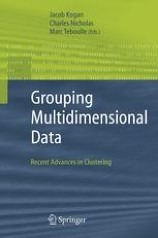
Grouping Multidimensional Data : Recent Advances in Clustering
Clustering is one of the most fundamental and essential data analysis techniques. Clustering can be used as an independent data mining task to discern intrinsic characteristics of data, or as a preprocessing step with the clustering results then used for classification, correlation analysis, or anomaly detection.

Grid-based problem solving environments ; IFIP TC2/WG2.5 Working Conference on Grid-based problem solving environments : Implications for development and deployment of numerical software, July 17-21, 2006, Prescott, Arizona, USA
The IFIP series publishes state-of-the-art results in the sciences and technologies of information and communication. The principal aim of the IFIP series is to encourage education and the dissemination and exchange of information about all aspects of computing.

Grid computing in life science ; 1st International Workshop on Life Science Grid, LSGRID 2004 Kanazawa, Japan, May 31-June 1, 2004, Revised Selected and Invited Papers
Researchers in the ?eld of life sciences rely increasingly on information te- nology to extract and manage relevant knowledge. The complex computational and data management needs of life science research make Grid technologies an attractive support solution. However, many important issues must be addressed before the Life Science Grid becomes commonplace. The 1st International Life Science Grid Workshop (LSGRID 2004) was held in Kanazawa Japan, May 31–June 1, 2004. This workshop focused on life s- ence applications of grid systems especially for bionetwork research and systems biology which require heterogeneous data integration from genome to phenome, mathematical modeling and simulation from molecular to population levels, and high-performance computing including parallel processing, special hardware and grid computing.

Grid computing : Achievements and prospects
Grid Computing: Achievements and Prospects, the 9th edited volume of the CoreGRID series, includes selected papers from the CoreGRID Integration Workshop, held April 2008 in Heraklion-Crete, Greece. This event brings together representatives of the academic and industrial communities performing Grid research in Europe. The workshop was organized in the context of the CoreGRID Network of Excellence in order to provide a forum for the presentation and exchange of views on the latest developments in grid technology research.

Grid and cooperative computing - GCC 2005 ; 4th International Conference, Beijing, China, November 30 -- December 3, 2005, Proceedings
This volume presents the accepted papers for the 4th International Conference on Grid and Cooperative Computing (GCC2005),held in Beijing, China, during November 30 – December 3, 2005.The conferenceseries of GCC aims to provide an international forum for the presentation and discussion of research trends on the theory, method, and design of Grid and cooperative computing as well as their scienti?c, engineering and commercial applications. It has become a major annual event in this area. The First International Conference on Grid and Cooperative Computing (GCC2002) received 168 submissions. GCC 2003 received 550 submissions, from which 176 regular papers and 173 short papers were accepted. The acceptance rate of regular papers was 32%, and the total acceptance rate was 64%. GCC 2004 received 427 main-conference submissions and 154 workshop submissions. The main conference accepted 96 regular papers and 62 short papers. The - ceptance rate of the regular papers was 23%. The total acceptance rate of the main conference was 37%. For this conference, we received 576 submissions. Each was reviewed by two independent members of the International Program Committee. After carefully evaluating their originality and quality, we accepted 57 regular papers and 84 short papers. The acceptance rate of regular papers was 10%. The total acc- tance rate was 25%.

Green, pervasive, and cloud computing ; 15th International conference, GPC 2020, Xi'an, China, November 13–15, 2020, Proceedings
This book constitutes the refereed proceedings of the 15th International Conference on Green, Pervasive, and Cloud Computing, GPC 2020, held in Xi'an, China, in November 2020. The 30 full papers presented in this book together with 8 short papers were carefully reviewed and selected from 96 submissions. They cover the following topics: Device-free Sensing; Machine Learning; Recommendation Systems; Urban Computing; Human Computer Interaction; Internet of Things and Edge Computing; Positioning; Applications of Computer Vision; CrowdSensing; and Cloud and Related Technologies.
