


تحسين النتائح
ترتيب حسب
من
الى


Divided into three parts. The first part discusses the architectural and design aspects of Flex 3 application development. It explains the internals of a Flex 3 application and advocates a few best practices to fine-tune your application to ensure maximum performance. It includes tutorials on creating custom components, data binding, and creating AIR-powered desktop applications. The second part concentrates on effectively integrating Flex 3 with server- and client-side technologies. Techniques for integration with Java and PHP are covered in detail, and content covering interaction with client-side technologies is also included. After reading the chapter on JavaScript integration, you will be ready to create applications that can use Ajax and Flex 3 together. The third and final part of the book is a unique and eclectic mix of some advanced topics like mash-ups, collaborative applications, 3D rendering, highly interactive visualization, and audio and video streaming.

Flash allows users to create some amazing interactive interfaces to interact with rich Internet applications, e-learning systems, and simple web sites. In this book, two of the most talented Flash designers in the world will show you how to use them effectively to create breathtaking visuals for your Flash web sites. You'll also learn how to take advantage of Flash's powerful built-in vector-based drawing tools.

Establishes scientific foundations for adaptive autonomous cyber systems and ultimately brings about a more secure and reliable Internet. The recent advances in adaptive cyber defense (ACD) have developed a range of new ACD techniques and methodologies for reasoning in an adaptive environment.

Access Control Systems: Security, Identity Management and Trust Models provides a thorough introduction to the foundations of programming systems security, delving into identity management, trust models, and the theory behind access control models. The book details access control mechanisms that are emerging with the latest Internet programming technologies, and explores all models employed and how they work. The latest role-based access control (RBAC) standard is also highlighted.

The world of marketing is changing every day ― and in order for students tohave a competitive edge, they need a text that reflects the best and mostrecent marketing theory and practices. Marketing Management collectivelyuses a managerial orientation, an analytical approach, a multidisciplinaryperspective, universal applications, and balanced coverage to distinguish itfrom all other marketing management texts out there.

Explains the greatest problem facing marketers today how to integrate three major movements that are changing global markets and customer behavior: Dramatic advances in technology such as AI, Sensors, and the Internet of Things, which are enabling extreme forms of customer targeting and personalization; Dramatic shifts in customer behavior, such as Whatever-Whenever-Wherever (WWW) and the differences between Generations X, Y, Z, and Alpha; And dramatic shifts in business models such as Everything as a Service, Physical/Digital business models.

Managing in the Information Economy: Current Research Issues presents the recent research directions that address the issue of management in this economy. The contributors include leading researchers with interests in a diverse set of topics. While the volume cannot give a complete and comprehensive picture, it can provide introductions to important areas, and point to some important topics for future research. Therefore the book begins with perspectives at the level of the economy as a whole and then progressively addresses industrial structure, sectors, functions (e-commerce) and business practices. Introductions to the main sections and the papers in each section are provided. The volume is organized around six sections: The Information Economy; Structure and the Organization of the Information Economy; Marketing and Ecommerce
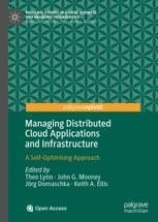
The emergence of the Internet of Things (IoT), combined with greater heterogeneity not only online in cloud computing architectures but across the cloud-to-edge continuum, is introducing new challenges for managing applications and infrastructure across this continuum.

Within companies and organizations there is an increased emphasis on making different functional areas work together seamlessly. These developments have led to an increased emphasis on research and practice in business that integrate the functional areas within and between business entities. The research community has recognized the importance of addressing these different, and often conflicting, business perspectives. This has led to research streams that address issues characterizing the domain of business interfaces. These include the benefits of coordination, new product development, product portfolio management, supply chain coordination, and partnerships and collaboration in the Internet space.

This book focuses on the following questions: Which are the implications of different approaches towards management of systemic innovations? Do differences matter and why do they matter? The author shows that Europeans can learn from the Japanese and gives advice for future approaches to developments in the European telecommunications industry.

Broadband is a key enabler of the information society, increasing productivity and competitiveness across all sectors of the economy. Unlike traditional n- rowband connections, broadband provides high speed, always-on connections to the Internet and supports innovative content and services. Direct consumer welfare gains from mass-market adoption of broadband across the EU could easily reach 50 billion euros or more per annum. This is quite apart from the more profound societal shifts that ubiquitous broadband could bring. It may allow the individual to distribute content and ideas independent of traditional media and bring together communities of interest without regard to borders. Public policy for broadband will have a big impact on whether and how quickly these benefits are realised. Getting policy right could bring large benefits for consumers.

This is a critical study of the changing relationship between media and marketing communications in the digital age. It examines the growth of content funded by brands, including brands’ own media, native advertising, and the integration of branded content across film, television, journalism and publishing, online, mobile, and social media.
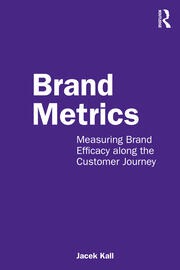
The metrics covered in the book correspond with the customer journey, moving through measuring brand awareness, consideration and purchase, to customer loyalty and brand advocacy, and finally an overall analysis of the brand's strength. The book not only shows the formula for a metric and explains how it should be interpreted, but also considers what each metric really measures, how it impacts the brand's equity and how is it related to other metrics.

This book contributes to the creation of a cyber ecosystem supported by blockchain technology in which technology and people can coexist in harmony. Blockchains have shown that trusted records, or ledgers, of permanent data can be stored on the Internet in a decentralized manner.

Combines energy economics and big data modeling analysis in energy conversion and management and comprehensively introduces the relevant theories, key technologies, and application examples of the smart energy economy. With the help of time series big data modeling results, energy economy managers develop reasonable and feasible pricing mechanisms of electricity price and improve the absorption capacity of the power grid. In addition, they also carry out scientific power equipment scheduling and cost–benefit analysis according to the results of data mining, so as to avoid the loss caused by accidental damage of equipment. Energy users adjust their power consumption behavior through the modeling results provided and achieve the effect of energy saving and emission reduction while reasonably reducing the electricity expenditure.

This book examines the capabilities needed to transform a globally distributed organization into a virtual organization (an organization that exists and operates across time and distance with the support of global communications technologies such as the Internet). It introduces techniques for definition of goals for virtualization, for monitoring progress toward virtualization and for studying the impact of virtualization on social uncertainty, knowledge sharing and knowledge transfer, organizational memory, transactive memory, communities of practice and organizational commitment, power and control. These techniques are applied in an extended case study of a development aid organization's attempts to use knowledge management for virtualization over a two year period. The multidisciplinary team of authors examines virtualization from points of view ranging from the organizational to the technological to the sociological and psychological.
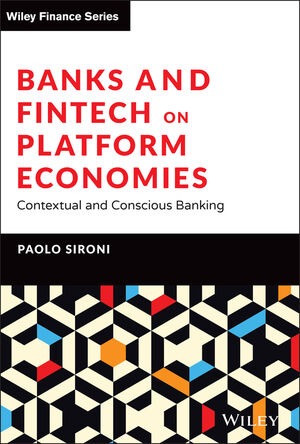
In Banks and Fintech on Platform Economies: Contextual and Conscious Banking, accomplished fintech professional and author Paolo Sironi delivers an insightful examination of how platform theory, born outside of financial services, will make its way inside banking and financial markets to radically transform the way firms do business.
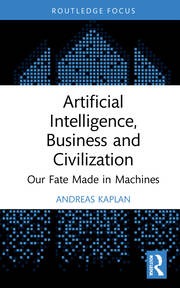
Looks at what exactly artificial intelligence is, how it can be classified, how it differentiates from other concepts such as machine learning, big data, blockchain, or the Internet-of-Things, and how it has evolved and might evolve over time.
Artificial intelligence (AI) has driven businesses to adopt new business practices rapidly, enhance product development and services, has helped to power AI-based market intelligence and customer insights, and improve customer relationship management. This timely book addresses the use of AI in marketing.

Sheds light on the challenges and solutions for companies when dealing with the online consumer on social media and in the era of Web 4.0. It investigates the digital transformation in terms of customer experience, customer empowerment, resistance, influencer marketing, and trust. The volume shows how consumers perceive, react and behave towards brands’ digital marketing strategies in addition to the barriers, constraints, advantages and modes of action of online consumers.

سوريا - اتستراد درعا - غباغب
+963-15 2050 - 15 860 380 /1/2/3 - 11 662 3900