



الصفحة 233
الصفحة 233

A healthcare professionals training system
The Objective Structured Clinical Examination (OSCE) is a type of examination often used in health sciences. It is designed to test clinical skill performance and competence in a range of skills. It is a practical, real-world approach to learning and assessment. Comprises a circuit of short (5-10 minutes) stations, in which each candidate is examined on a one-to-one basis with one or two impartial examiner(s) and patients who are either real or simulated (actors or electronic patient simulators). Each station has a different examiner; in comparison, the traditional method of clinical examination is when a candidate is assigned to an examiner for the entire examination.

A handful of happiness herbs
Depression is a multifactorial disorder that affects millions of people worldwide, and none of the currently available therapeutics can completely cure it. Thus, there is a need for developing novel, potent, and safer agents. Recent medicinal chemistry findings on the structure and function of the serotonin 2A (5-HT2A) receptor facilitated design and discovery of novel compounds with antidepressant action. The consumption of cocoa-based products rich in bioactive compounds can be related to decreased risk in coronary heart problems, hypertension, diabetes, and depression...

A Handbook of Sustainable Building Design and Engineering : An Integrated Approach to Energy, Health and Operational Performance
Equips students with the tools they will need to tackle the challenges of sustainable building design and engineering. The book looks at how to design, engineer and monitor energy efficient buildings, how to adapt buildings to climate change, and how to make buildings healthy, comfortable and secure. New material for this edition includes sections on environmental masterplanning, renewable technologies, retrofitting, passive house design, thermal comfort and indoor air quality. With chapters and case studies from a range of international, interdisciplinary authors, the book is essential reading for students and professionals in building engineering, environmental design, construction and architecture

A handbook of medical laboratory technology
Thoroughly revised and updated, manual as well as automatic methods have been incorporated into this edition. Special techniques in the field of histocytochemistry have also been added. Ever since the publication of the first edition in 1987, this book is continously in demand and has been appreciated both in India and abraod.

A Guide to Sustainable Corporate Responsibility : From Theory to Action
Discusses the challenges and opportunities faced by companies in an age that increasingly values sustainability and demands corporate responsibility. Beginning with the historical development of corporate responsibility, this book moves from academic theory to practical application. It points to ways in which companies can successfully manage their transition to a more responsible, sustainable way of doing business, common mistakes to avoid and how the UN Sustainable Development Goals are integral to any sustainability transformation.

A Guide to Methods in the Biomedical Sciences
A Guide to Methods in the Biomedical Sciences gives a basic description of common methods used in research. This is not intended to be a methods book. Rather, it is intended to be a book that outlines the purpose of the methods described, their limitations and provide alternative approaches as appropriate. Thousands of methods have been developed in the various biomedical disciplines and those covered in this book represent the basic, essential and most widely used methods in several different disciplines. The historical background (including some interesting anecdotes) leading to the development of ground-breaking techniques are described, especially those that significantly advanced the field of biomedical research. Advances that earned their inventors prestigious Nobel Prizes are emphasized. The book is divided into six sections, highlighting selected methods in protein chemistry, nucleic acids, recombinant DNA technology (including forensic based methods), antibody-based techniques, microscopy and imaging, and the use of animals in biomedical sciences.
A Guide to Lead-free Solders : Physical Metallurgy and Reliability
While tin/lead solders have dominated the electronics industry for many years, environmental considerations and new legislation are forcing change. Backed by more than ten years of research in Pb-free solders, many electronics manufacturers are poised for conversion. A Guide to Lead-free Solders is intended as a tool to help industry as it moves into a new era in the production and use of solders. An overview of the principles of soldering technology is provided beginning with the theory underlying each concept. Focusing on the most up-to-date methods for testing and characterization, these theories are then reinforced by experimental examples and industrial applications.
A Guide to Graph Algorithms
Offers high-quality content in the research area of graph algorithms and explores the latest developments in graph algorithmics. The reader will gain a comprehensive understanding of how to use algorithms to explore graphs. It is a collection of texts that have proved to be trend setters and good examples of that. The book aims at providing the reader with a deep understanding of the structural properties of graphs that are useful for the design of efficient algorithms. These algorithms have applications in finite state machine modelling, social network theory, biology, and mathematics. The book contains many exercises, some up at present-day research-level. The exercises encourage the reader to discover new techniques by putting things in a clear perspective.

A Guide to Good Occlusal Practice
Considers occlusion within the different disciplines of clinical dentistry, taking into account the challenges specific to each, in order to develop guidelines of good occlusal practice (GGOP). The GGOP for each discipline has benefited from an authoritative contribution of a recognised specialist in that field. Readers will find full description of what constitutes good occlusal practice in, for example, simple and advanced restorative dentistry, removable prosthodontics, the restoration of the worn dentition and implantology. It is clearly explained why and how the GGOP differ in the various branches of dentistry, the key point being that it is the support for the occlusal surfaces that determines GGOP.

A Guide to Fluid Mechanics
The theory is explained using ordinary and accessible language, where fluid mechanics is presented in analogy to solid mechanics to emphasize that they are all the application of Newtonian mechanics and thermodynamics. All the informative and helpful illustrations are drawn by the author, uniting the science and the art with figures that complement the text and provide clear understanding.

A guide to dental sedation
This concise guide bridges the gap between classroom instruction and the actual application of various methods of sedation. The considerations for each dental specialty are covered, with special focus on pediatric and special needs patients. Chapters summarize the medications used in sedation, including dosages, warnings, and reversal agents, and sections on nitrous oxide discuss how to administer it without harm to the provider.

A guide to business mathematics
A guide to using metrics to manage and measure performance, and business economics. Foundations on algebra, number theory, sequences and series, matrix theory and calculus are included as is a complete chapter on using software.
A guide for delineation of lymph nodal clinical target volume in radiation therapy
This book will facilitate the understanding of cross-sectional anatomy details and assist radiation oncologists in the difficult task of a detailed delineation of lymph node targets in multiple anatomical locations.
A Graph-Theoretic Approach to Enterprise Network Dynamics
This monograph treats the application of numerous graph-theoretic algorithms to a comprehensive analysis of dynamic enterprise networks. Network dynamics analysis yields valuable information about network performance, efficiency, fault prediction, cost optimization, indicators and warnings.
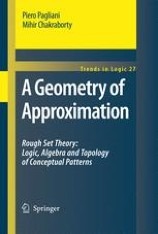
A Geometry of Approximation : Rough Set Theory: Logic, Algebra and Topology of Conceptual Patterns
A Geometry of Approximation' addresses Rough Set Theory, a field of interdisciplinary research first proposed by Zdzislaw Pawlak in 1982, and focuses mainly on its logic-algebraic interpretation. The theory is embedded in a broader perspective that includes logical and mathematical methodologies pertaining to the theory, as well as related epistemological issues. Any mathematical technique that is introduced in the book is preceded by logical and epistemological explanations. Intuitive justifications are also provided, insofar as possible, so that the general perspective is not lost.
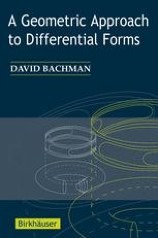
A Geometric Approach to Differential Forms
The modern subject of differential forms subsumes classical vector calculus. This text presents differential forms from a geometric perspective accessible at the undergraduate level. The book begins with basic concepts such as partial differentiation and multiple integration and gently develops the entire machinery of differential forms. Each new concept is presented with a natural picture that students can easily grasp. Algebraic properties then follow. This facilitates the development of differential forms without assuming a background in linear algebra. Throughout the text, emphasis is placed on applications in 3 dimensions, but all definitions are given so as to be easily generalized to higher dimensions. A centerpiece of the text is the generalized Stokes' theorem. Although this theorem implies all of the classical integral theorems of vector calculus, it is far easier for students to both comprehend and remember.
A Generalization of Bohr-Mollerup's Theorem for Higher Order Convex Functions
This book develops a far-reaching generalization of Bohr-Mollerup's theorem to higher order convex functions, along lines initiated by Wolfgang Krull, Roger Webster, and some others but going considerably further than past work. In particular, this generalization shows using elementary techniques that a very rich spectrum of functions satisfy analogues of several classical properties of the gamma function, including Bohr-Mollerup's theorem itself, Euler's reflection formula, Gauss' multiplication theorem, Stirling's formula, and Weierstrass' canonical factorization.
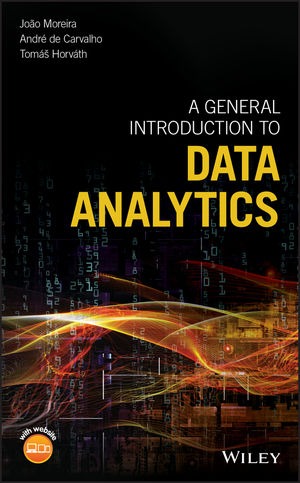
A General introduction to data analytics
A guide to the principles and methods of data analysis that does not require knowledge of statistics or programming. A guide to the reasoning behind data mining techniques. A unique illustrative example that extends throughout all the chapters. Exercises at the end of each chapter and larger projects at the end of each of the text’s two main parts
A First Course in Statistics for Signal Analysis
This essentially self-contained, deliberately compact, and user-friendly textbook is designed for a first, one-semester course in statistical signal analysis for a broad audience of students in engineering and the physical sciences. The emphasis throughout is on fundamental concepts and relationships in the statistical theory of stationary random signals, explained in a concise, yet fairly rigorous presentation.
A First Course in Statistical Inference
Offers a modern and accessible introduction to Statistical Inference, the science of inferring key information from data. Aimed at beginning undergraduate students in mathematics, it presents the concepts underpinning frequentist statistical theory. Written in a conversational and informal style, this concise text concentrates on ideas and concepts, with key theorems stated and proved. Detailed worked examples are included and each chapter ends with a set of exercises, with full solutions given at the back of the book. Examples using R are provided throughout the book, with a brief guide to the software included. Topics covered in the book include: sampling distributions, properties of estimators, confidence intervals, hypothesis testing, ANOVA, and fitting a straight line to paired data.
