



الصفحة 2
الصفحة 2

Cybersecurity in Poland : Legal Aspects
This book explores the legal aspects of cybersecurity in Poland. The authors are not limited to the framework created by the NCSA (National Cybersecurity System Act – this act was the first attempt to create a legal regulation of cybersecurity and, in addition, has implemented the provisions of the NIS Directive) but may discuss a number of other issues. The book presents international and EU regulations in the field of cybersecurity and issues pertinent to combating cybercrime and cyberterrorism. Moreover, regulations concerning cybercrime in a few select European countries are presented in addition to the problem of collision of state actions in ensuring cybersecurity and human rights.

Cybersecurity for business : Organization-wide strategies to ensure cyber risk Is not just an IT Issue
Important and cost-effective innovations can substantially increase cyber risk and the loss of intellectual property, corporate reputation and consumer confidence. Over the past several years, organizations around the world have increasingly come to appreciate the need to address cybersecurity issues from a business perspective, not just from a technical or risk angle. Cybersecurity for Business builds on a set of principles developed with international leaders from technology, government and the boardroom to lay out a clear roadmap of how to meet goals without creating undue cyber risk.

Cybercrimes and financial crimes in the global era
Presents the latest and most relevant studies, surveys, and succinct reviews in the field of financial crimes and cybercrime, conducted and gathered by a group of top professionals, scholars, and researchers from China, India, Spain, Italy, Poland, Germany, and Russia. Focusing on the threats posed by and corresponding approaches to controlling financial crime and cybercrime, management.

Countering Counterfeit Trade : Illicit Market Insights, Best-Practice Strategies, and Management Toolbox
The book constitutes a unique combination of in-depth insights into the counterfeit market, best-practice strategies, novel management tools, and product protection technologies.

Contemporary Issues in Luxury Brand Management
Provides a comprehensive overview of the key themes surrounding luxury brand management and the core issues faced by luxury firms today. The luxury industry has undergone a series of dynamic changes in the past twenty years. Economic trends, digital transformation, and changing consumer habits are creating a new competitive landscape where traditional strategies will not necessarily provide continued growth and profitability. Approaching luxury from a realistic brand management perspective, this book works step-by-step through a typical luxury course structure, covering sustainability, heritage, emerging brands, digital marketing and analytics, curation, intellectual property, and start-ups.

Masterpieces of Swiss Entrepreneurship : Swiss SMEs Competing in Global Markets
This book focuses on Switzerland-based medium-sized companies with a longstanding export tradition and a proven dominance in global niche markets. Based upon in-depth documentation and analysis of 36 Swiss companies over their entire history, an expert team of authors presents several parallels in the pathways and success factors which allowed these firms to become dominant and operate from a high-cost location such as Switzerland.
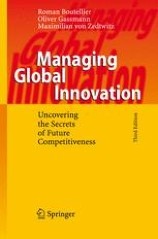
Managing Global Innovation : Uncovering the Secrets of Future Competitiveness
"Managing Global Innovation is a rich compendium of new concepts of global R&D, enlivened by 18 excellent best-in-class case studies. What is especially impressive, the authors bridge seamlessly theoretical and practical issues about how companies create, transform and implement new technology in an expanding marketplace. This will be intriguing to both the industry and the academic world. The lessons learned are invaluable. The book is a real tour de force, probably destined to become a standard in this field for some time to come." Professor Jeff Huang, Harvard University "This excellent book demonstrates how the dynamics of innovation and creativity can be mastered. Important reading for senior management and a must for R&D leaders."

Linked Democracy : Foundations, Tools, and Applications
This book shows the factors linking information flow, social intelligence, rights management and modelling with epistemic democracy, offering licensed linked data along with information about the rights involved. This model of democracy for the web of data brings new challenges for the social organisation of knowledge, collective innovation, and the coordination of actions. Licensed linked data, licensed linguistic linked data, right expression languages, semantic web regulatory models, electronic institutions, artificial socio-cognitive systems are examples of regulatory and institutional design (regulations by design). The web has been massively populated with both data and services, and semantically structured data, the linked data cloud, facilitates and fosters human-machine interaction. Linked data aims to create ecosystems to make it possible to browse, discover, exploit and reuse data sets for applications. Rights Expression Languages semi-automatically regulate the use and reuse of content.

Legal Programming : Designing Legally Compliant RFID and Software Agent Architectures for Retail Processes and Beyond
LEGAL PROGRAMMING: Designing Legally Compliant RFID and Software Agent Architectures for Retail Processes and Beyond provides a process-oriented discussion of the legal concerns presented by agent-based technologies, processes and programming. It offers a general outline of the potential legal difficulties that could arise in relation to them, focusing on the programming of negotiation and contracting processes in a privacy, consumer and commercial context. The authors will elucidate how it is possible to create form of legal framework and design methodology for transaction agents, applicable in any environment and not just in a specific proprietary framework, that provides the right level of compliance and trust. Key elements considered include the design and programming of legally compliant methods, the determination of rights in respect of objects and variables, and ontologies and programming frameworks for agent interactions. Examples are used to illustrate the points made and provide a practical perspective.

Bergeys manual of systematic bacteriology ; Vol.2 : The proteobacteria ; Part A : Introductory essays
Includes introductory chapters on classification of prokaryotes, the concept of bacterial species, numerical and polyphasic taxonomy, bacterial nomenclature and the etymology of prokaryotic names, nucleic acid probes and their application in environmental microbiology, culture collections, and the intellectual property of prokaryotes.

Antisense RNA Design, Delivery, and Analysis
This volume gathers a variety of models, delivery systems, and approaches that can be used to assess RNA technology for exploiting antisense as a therapeutic intervention. Beginning with a section on the design of antisense technology and their delivery, the book continues by covering model systems developed to evaluate efficacy, both in vivo and in vitro, as well as methods to evaluate preclinically the toxicity associated with these new potential drugs, and intellectual property considerations. Written for the highly successful Methods in Molecular Biology series, chapters include introductions to their respective topics, lists of the necessary materials and reagents, step-by-step, readily reproducible laboratory protocols, and tips on troubleshooting and avoiding known pitfalls.

Accessing and Sharing the Benefits of the Genomics Revolution
This edited volume explores the legal, economic and political context for the debate about intellectual property rights for traditional knowledge and genetic resources and critically analyses the theory and practice of access and benefits sharing efforts around the world. The book also investigates the current flashpoints—the David and Goliath battle between Monsanto and Percy Schmeiser over farmers’ rights; the dispute over coexistence of GM and organic production; and the ownership and control of human genetic materials stored in human gene banks around the world.

Access to medicines and vaccines : Implementing flexibilities under intellectual property law
This book is the outcome of a Global Forum on Innovation, Intellectual Property and Access to Medicines held in December 2019 at the Max Plank Instititute in Munich, organised by the South Centre and the Max Plank Institute. The academics and experts from international organisations participating have contributed chapters to this book. The book is for policy makers (in Ministries of Health, Ministries of Trade, Ministries of Foreign Affairs, patent offices), but also relevant for academics (law, trade, public health), on the flexibilities available in the Agreement on Trade Related Aspects of Intellectual Property Rights (TRIPS) of the World Trade Organization to promote access to medicines.

Academic Integrity in Canada : An Enduring and Essential Challenge
Firmly grounded in the scholarly literature globally, it engages with the experience of local practicioners. It presents aspects of academic integrity that is specific to Canada, such as the existence of an "honour culture", rather than relying on an "honour code". It also includes Indigenous voices and perspectives that challenge traditional understandings of intellectual property, as well as new understandings that have arisen as a consequence of Covid-19 and the significant shift to online and remote learning.
