



الصفحة 1
الصفحة 1

Fundamentals of information systems security ; 3rd ed.
Provides a comprehensive overview of the essential concepts readers must know as they pursue careers in information systems security. The text opens with a discussion of the new risks, threats, and vulnerabilities associated with the transition to a digital world. Part 2 presents a high level overview of the Security+ Exam and provides students with information as they move toward this certification. The book closes with information on information security standards, education, professional certifications, and compliance laws. With its practical, conversational writing style and step-by-step examples, this text is a must-have resource for those entering the world of information systems security.

Fundamentals of information systems security ; 4th ed.
Provides a comprehensive overview of the concepts readers must know as they pursue careers in information systems security. The text opens with a discussion of emerging technologies and the risks, threats, and vulnerabilities associated with our digital world. Part II takes a deeper dive into the foundational knowledge areas and functions associated with a career in information security. The book closes with a survey of information security standards, professional certifications, and compliance laws. With its practical, conversational writing style and step-by-step examples, this text is a must-have resource for those entering the world of information systems security.

Expanding Horizons in Bioethics
What are the resources and needs, the strengths and the vulnerabilities of patients, of society, or of nature? How do we evaluate the societal potential of scientific discovery? It is fairly well assured that we are influencing the terms of existence of many inhabitants of this planet, from flora to fauna to humans. Moreover, history has shown that while technologies can be used neutrally, they can be (and have been) used to the great benefit – or the great detriment – of human life and the fate of the world as a whole. How various types of knowledge and technological ability will be deployed is up to us, individually and collectively. How such information and ability should be deployed, and for what reasons, are questions at the core of bioethical inquiry. These are the "expanding horizons in bioethics" to which this volume refers. This volume is comprised of fourteen essays. It is a rare gathering of scholarly opinion, featuring well-known experts from a diversity of disciplines. The topics addressed are of immediate concern to the public. The essays ask questions about human nature, genetic technologies, reproductive rights, human subjects research, and environmental issues – all in provocative and challenging new ways. Yet the themes that emerge throughout the volume are of enduring interest to anyone concerned about the interactions of scientific development, ethics, and society. This volume is of interest to students and teachers of bioethics and related topics, as well as to professionals working in these disciplines.

Environmental Security in Harbors and Coastal Areas : Management Using Comparative Risk Assessment and Multi-Criteria Decision Analysis
This book explores the challenges facing coastal areas during the next few decades and the difficult decisions needed to prevent a repeat of the past. Establishing, maintaining or enhancing a sense of environmental security in different coastal regions and improving the management of critical infrastructure will require (i) matching human demands with available environmental resources; (ii) recognition of environmental security threats and infrastructure vulnerabilities; and, (iii) identification of the range of available options for preventing and/or minimizing natural disasters, technological failures, and/or terror actions. This book emphasizes beliefs that the convergence of seemingly disparate viewpoints and often uncertain and limited information is possible only by using one or more available risk assessment methodologies and decision-making tools such as multi-criteria decision analysis (MCDA).

Critical Infrastructures at Risk : Securing the European Electric Power System
This book explores the potential risks and vulnerabilities of the European electricity infrastructure, other infrastructures and our society as whole increasingly depend on. The work was initiated by the need to verify the potential effects of the ongoing market and technical transformation of the infrastructure, which is fundamentally changing its operation and performance. The final aim is to set the basis for an appropriate industrial and political European-wide response to the risk challenges.

Crisis Reporters, Emotions, and Technology : An Ethnography
This book explores the emotional labour of crisis reporters in an original style that combines fictional and factual narrative. Exploring how journalists make sense of their emotional experience and development in relation to their professional ideology, it illustrates how media professionals learn to think and act within crisis situations. Drawing on in-depth interviews with journalists reporting on wars, terror attacks and natural disasters, the book rethinks traditional concepts in journalistic thought. Finally, it reflects on the specific, contemporary vulnerabilities of industry professionals, including the impact of new technologies, specific forms of precarity, and a particular strain of cynicism central to the industry. Combining comprehensive, empirical research with the fictional narrative of a journalist protagonist, Crisis Reporters, Emotions and Technology establishes an innovative approach to academic storytelling.

Computer Network Security
As society becomes increasingly dependent on computers and computer networks, computer problems continue to rise in number. Yet despite the proliferation of expert remedies, a viable solution to these security issues remains elusive, and society continues to suffer at the hands of cyber vandalism and computer viruses. This comprehensive text outlines and discusses today’s most important issues and concerns in computer network and information safety and security, and promises to ignite debate and participation in the ongoing global security dialog Computer Network Security is foremost an educational tool that aims to explore computer network infrastructure and protocol design security flaws and discusses current security solutions and best practices. It explores the security threats and vulnerabilities in the current network infrastructure and protocols and outlines current efforts including: Access Control and Authorization, Cryptography, Firewalls and VPNs, Web Security and Content Filtering, among others. The text further discusses various security proposals This text is an invaluable instructional and research tool for courses in computer and information security. Students or practitioners in computer science, information science, technology studies, library sciences, and information management studies will find this text particularly useful for their purposes. In addition, it is a rich resource for those looking to gain an understanding of computer infrastructures and network security threats.
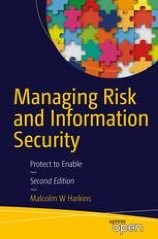
Managing Risk and Information Security : Protect to Enable
Examine the evolving enterprise security landscape and discover how to manage and survive risk. While based primarily on the author’s experience and insights at major companies where he has served as CISO and CSPO, the book also includes many examples from other well-known companies and provides guidance for a management-level audience. Managing Risk and Information Security provides thought leadership in the increasingly important area of enterprise information risk and security. It describes the changing risk environment and why a fresh approach to information security is needed. Because almost every aspect of an enterprise is now dependent on technology not only for internal operations but increasing as a part of product or service creation, the focus of IT security must shift from locking down assets to enabling the business while managing and surviving risk. This edition discusses business risk from a broader perspective, including privacy and regulatory considerations. It describes the increasing number of threats and vulnerabilities and offers strategies for developing solutions. These include discussions of how enterprises can take advantage of new and emerging technologies—such as social media and the huge proliferation of Internet-enabled devices—while minimizing risk.
Machine Learning for Cyber Agents : Attack and Defence
The cyber world has been both enhanced and endangered by AI. On the one hand, the performance of many existing security services has been improved, and new tools created. On the other, it entails new cyber threats both through evolved attacking capacities and through its own imperfections and vulnerabilities. Moreover, quantum computers are further pushing the boundaries of what is possible, by making machine learning cyber agents faster and smarter.

Cell Adhesion and Cytoskeletal Molecules in Metastasis
In this volume, the expression of specific adhesion molecules within human cancer tissues are highlighted. The expression signatures from published DNA microarray and immunohistochemistry studies are detailed. The concept that the alteration of specific adhesion molecules influence the cancer migration ability and cancer damage responses is detailed in this volume; both features are essential for the survival of an invading tumor cell. Defining the minimal adhesion receptors preserved on cancer cells during tumor progression will define the metastatic adhesion signature. Understanding the metastatic adhesion signature will reveal vulnerabilities that could be exploited for the prevention and/or eradication of the invading cancer cell.
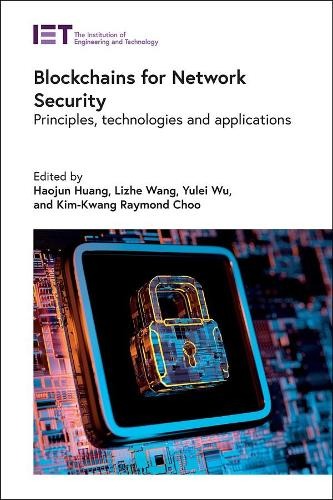
Blockchains For Network Security : Principles, technologies and applications
Blockchain technology is a powerful, cost-effective method for network security. Essentially, it is a decentralized ledger for storing all committed transactions in trustless environments by integrating several core technologies such as cryptographic hash, digital signature and distributed consensus mechanisms. Over the past few years, blockchain technology has been used in a variety of network interaction systems such as smart contracts, public services, Internet of Things (IoT), social networks, reputation systems and security and financial services. With its widespread adoption, there has been increased focus on utilizing blockchain technologies to address network security concerns and vulnerabilities as well as understanding real-world security implications.
Beyond global food supply chains : Crisis, disruption, regeneration
Through a set of incisive essays, this incredibly timely book shows how much the COVID-19 pandemic has exposed both vulnerabilities and opportunities - for (racial) capitalism and its discontents alike to intervene in food supply chains. A most welcome publication! This book takes the upheaval of the global COVID-19 pandemic as a springboard from which to interrogate a larger set of structural, environmental and political fault lines running through the global food system. In a context in which disruptions to the production, distribution, and consumption of food are figured as exceptions to the smooth, just-in-time efficiencies of global supply chains, these essays reveal the global food system as one that is inherently disruptive of human lives and flourishing, and of relationships between people, places, and environments. The pandemic thus represents a particular, acute moment of disruption, offering a lens on a deeper, longer set of systemic processes, and shining new light on transformational possibilities.
